Cambodia. When we arrived we knew little about it, however after the visit today we are both interested in learning more and coming back to explore it in more detail. We had an absolute blast touring the ruins of Angkor Wat and the other temples in the area; it was an incredibly interesting experience that taught us a great deal not just about the ruins, but also about Buddhism, Hinduism, and their somewhat unhappy intersections throughout this part of the world’s history.
The day started early; our tour guide, Bunleat, picked us up at the hotel at 7:00 AM. I didn’t sleep well; I wasn’t sure if it was due to the side effects of the malaria medication we were taking, or if it was still jet-lag. I was, however, excited to go, so I wasn’t feeling tired when we left the hotel. Our first stop was a quick one; the required purchase of a park pass. All tourists need to purchase a visitor pass; this helps to pay for the preservation and upkeep of the ruins. After receiving our passes we started our tour at the back entrance to the Angkor Wat ruins. It was breathtaking to drive up to the man-made moat which surrounds the complex and see nothing but forest on the other side.
I didn’t realize that the moat was man-made until the guide started describing the design of the complex. We could not see the ruins themselves from the road, it took us about 10 minutes to walk from a small wall just on the inside of the moat to the main temple.
Our guide chose the approach from the back to avoid the crowd of tourists which gather at the entrance to the temple, and this decision was a wise one. Our first views of the temple were unspoiled; we were able to experience the scale, and the beauty, of the temple as if we were the first people to discover it. I imagine that visiting the pyramids of Giza for the first time yields a similar reaction - it is difficult for the mind to comprehend the vast scale of this man-made structure.
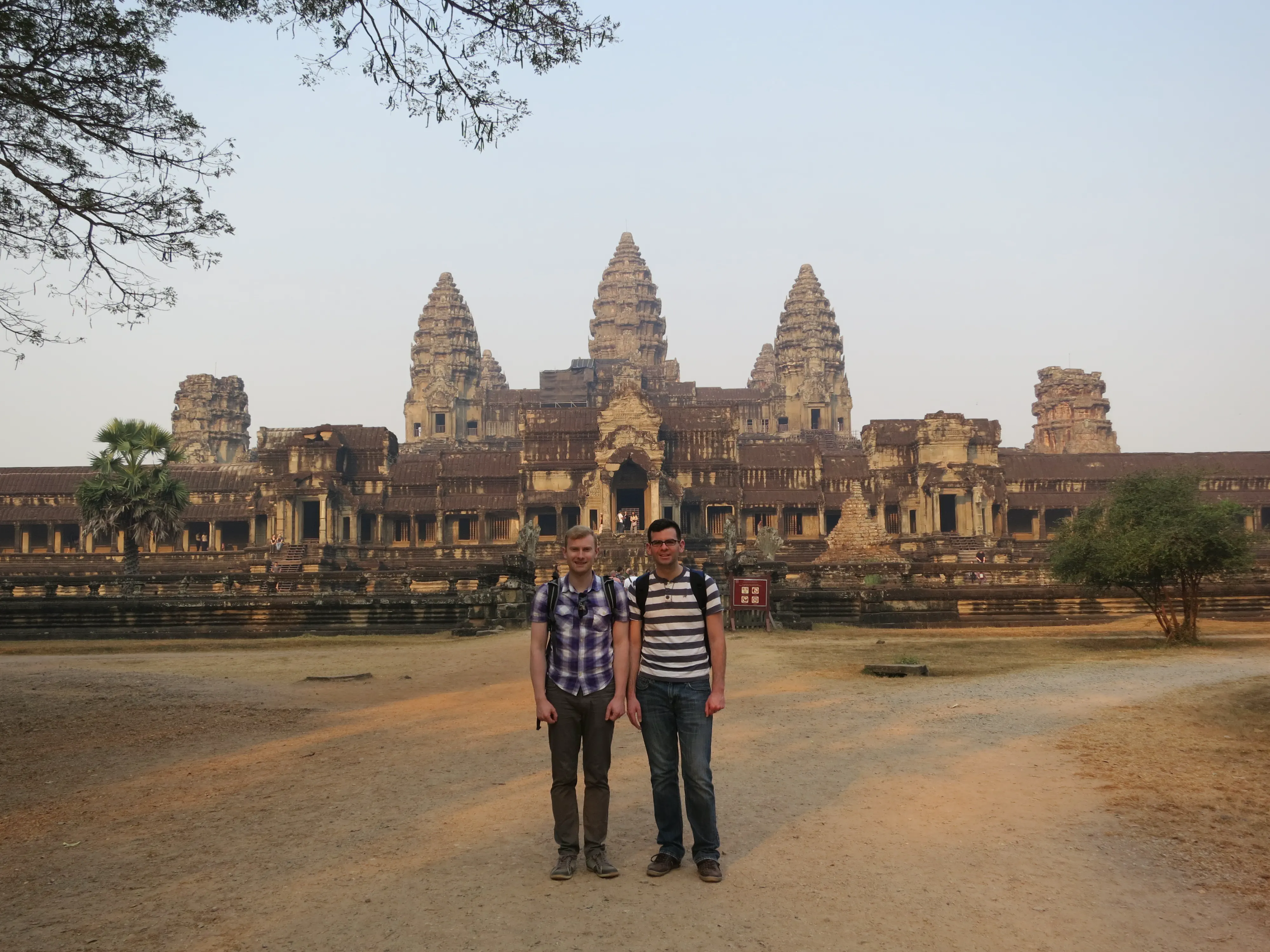
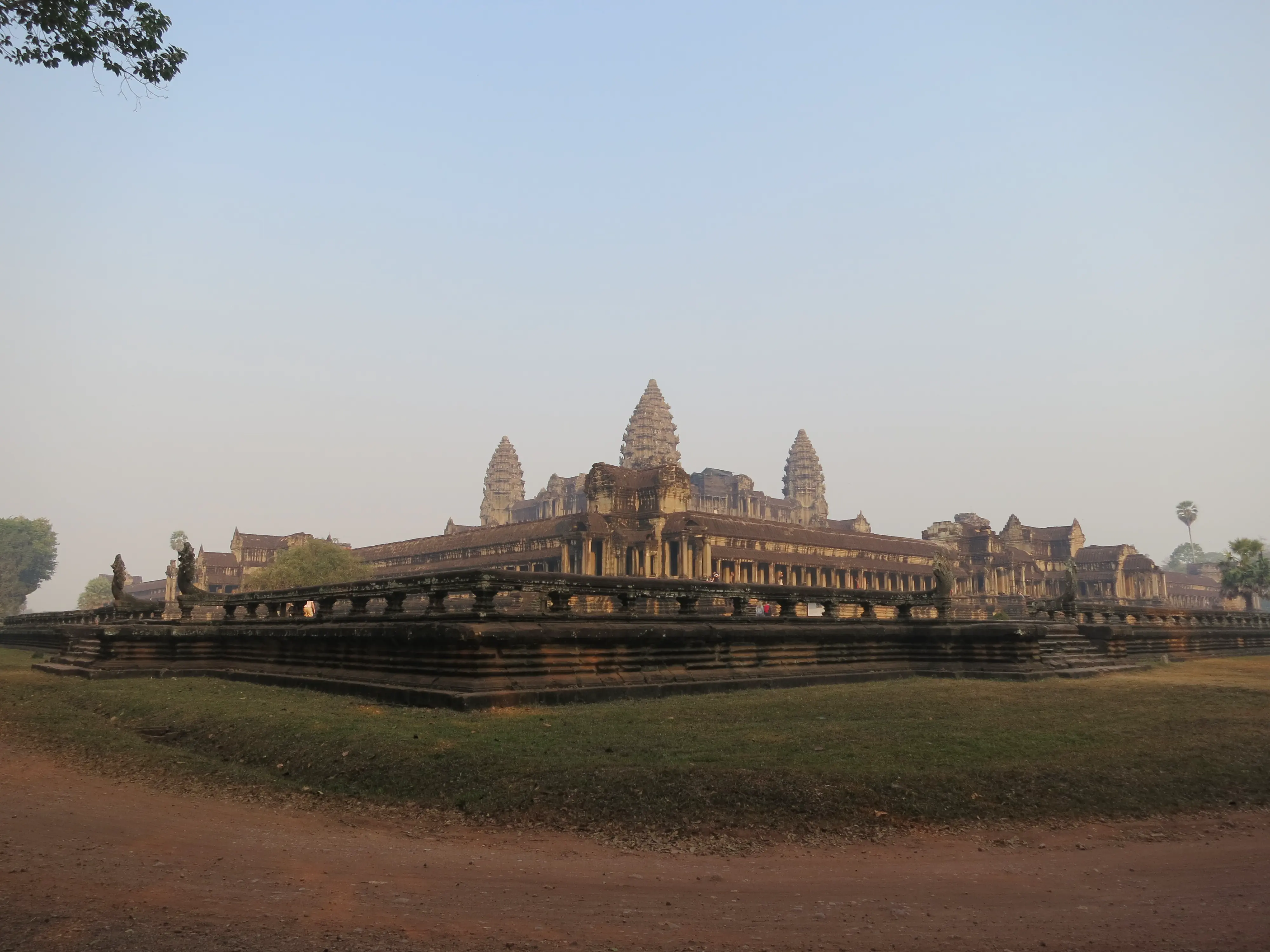
After walking from the edge of the forest to the main temple complex we began walking around the exterior of the first of the three tiers. The walls of the temple have murals carved into them, and our guide Bunleat was quick to explain the significance of the story each mural represented. He also explained how the many years of disrepair has caused damage to much of the temple; and how UNESCO is attempting to restore part of the complex to prevent further damage. We climbed a very steep staircase to reach the first level of the structure; it was impressive to see the precision that would have been required to build this structure up-close. After reaching the top of the staircase we encountered a mural which showed the Hindu myth “Churning of the Ocean of Milk”, which Bunleat described as we walked alongside the mural.
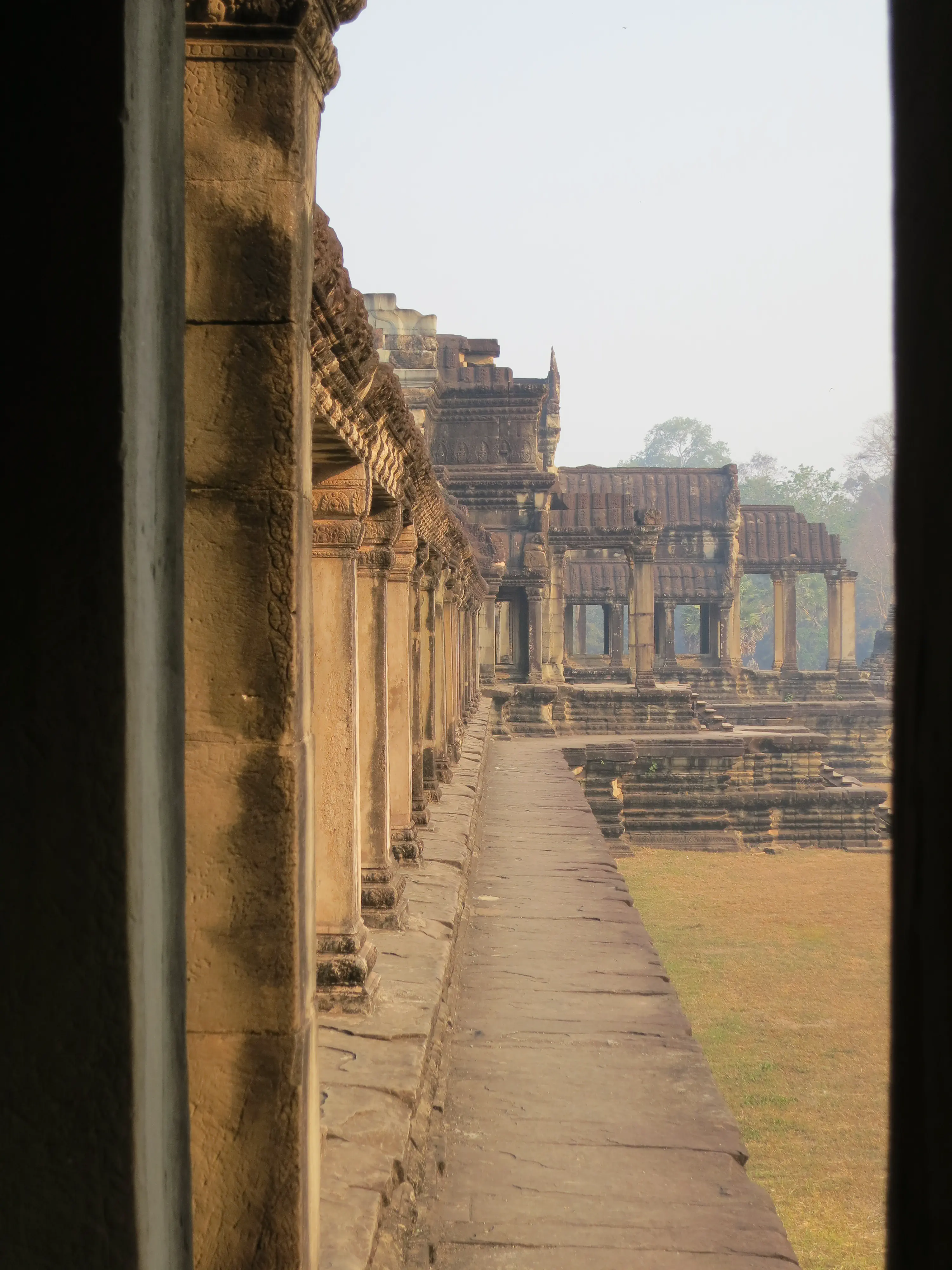
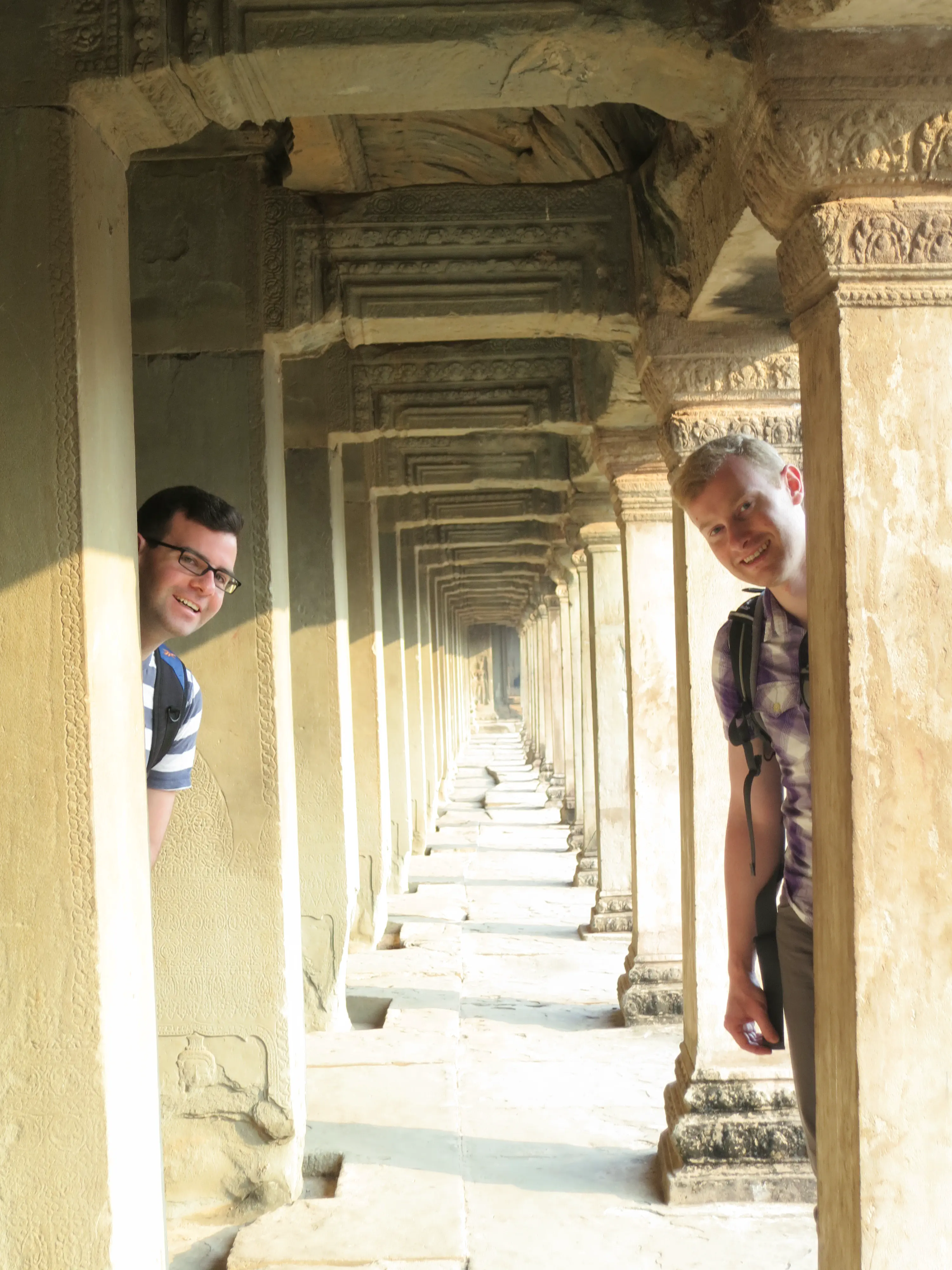
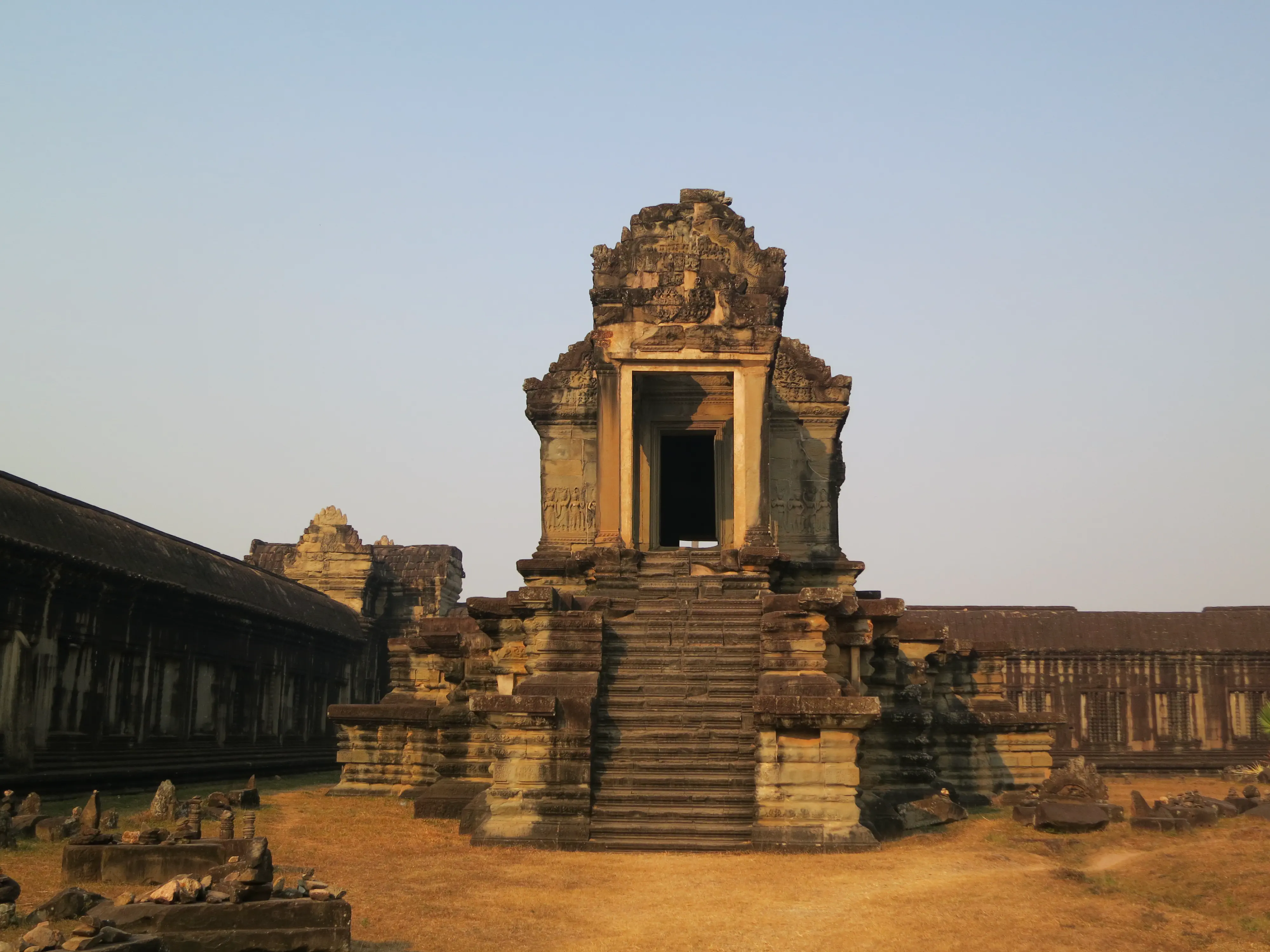
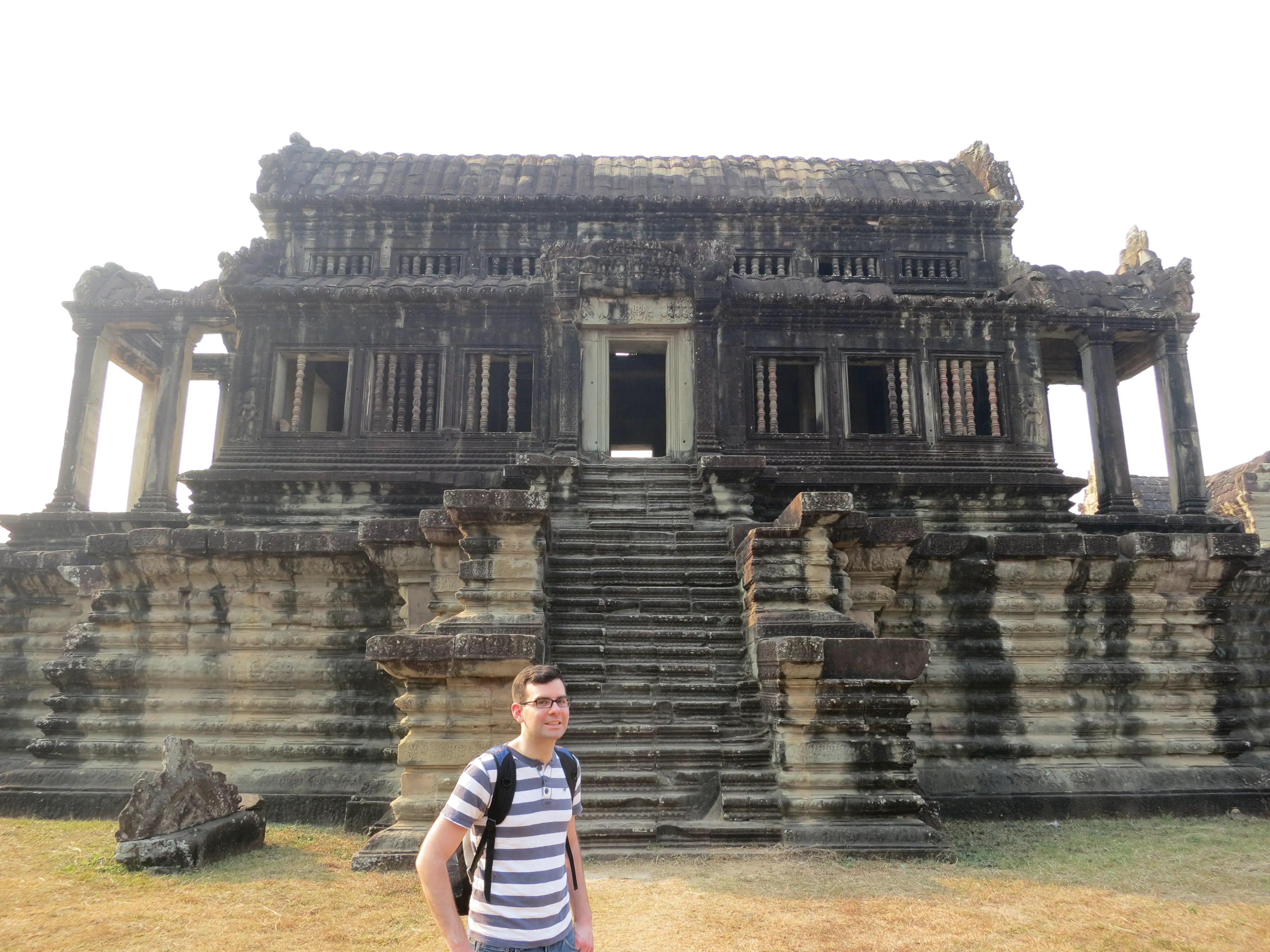
The mural led us to a large atrium near the front of the complex. The atrium was located just inside the front entrance of the temple complex, and was flanked on either side by a deep pool that was designed to fill with rainwater. Turning away from the atrium we received our first view of the temple entrance; a causeway extended in a straight line from where we stood as far as the eye could see. It is a hot day, and the heat was radiating off the ground in such a way as to obscure the ending of the causeway at the moat on the far side of the complex. The front of the temple was definitely busier than the back; a number of vendors had set up stalls on either side of the causeway, which kind of ruined the lost civilization vibe we had experienced to this point. We took several photos in the front atrium, then proceeded up a staircase to the second level of the complex. The second level was similar in many respects to the first; the stonework was just as impressive and there were many rooms to explore. We were not able to access the third level of Angkor Wat because it is closed on Wednesdays - when we return we’ll make sure that we come on a different day of the week so we can climb to the top of the complex!
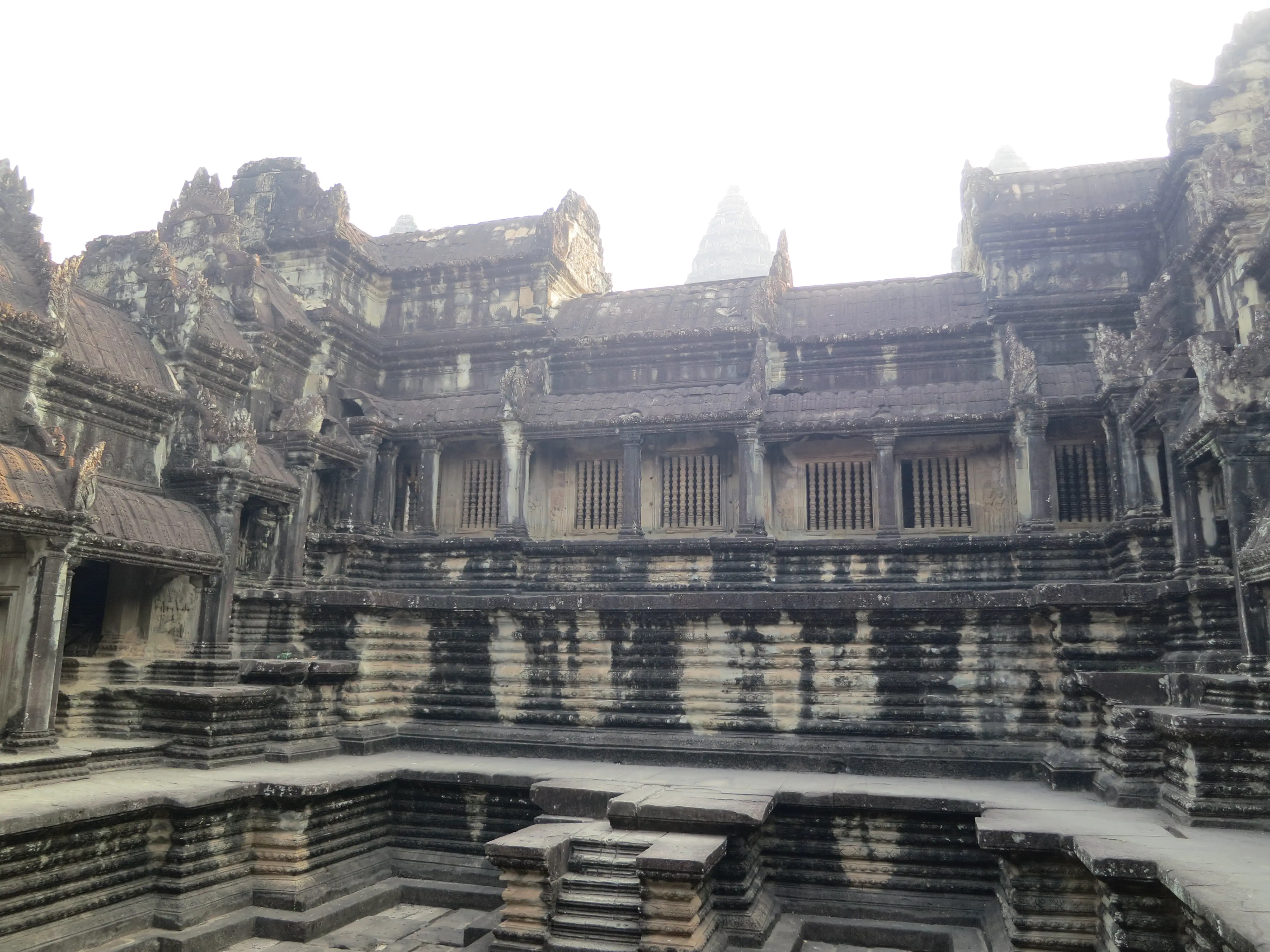
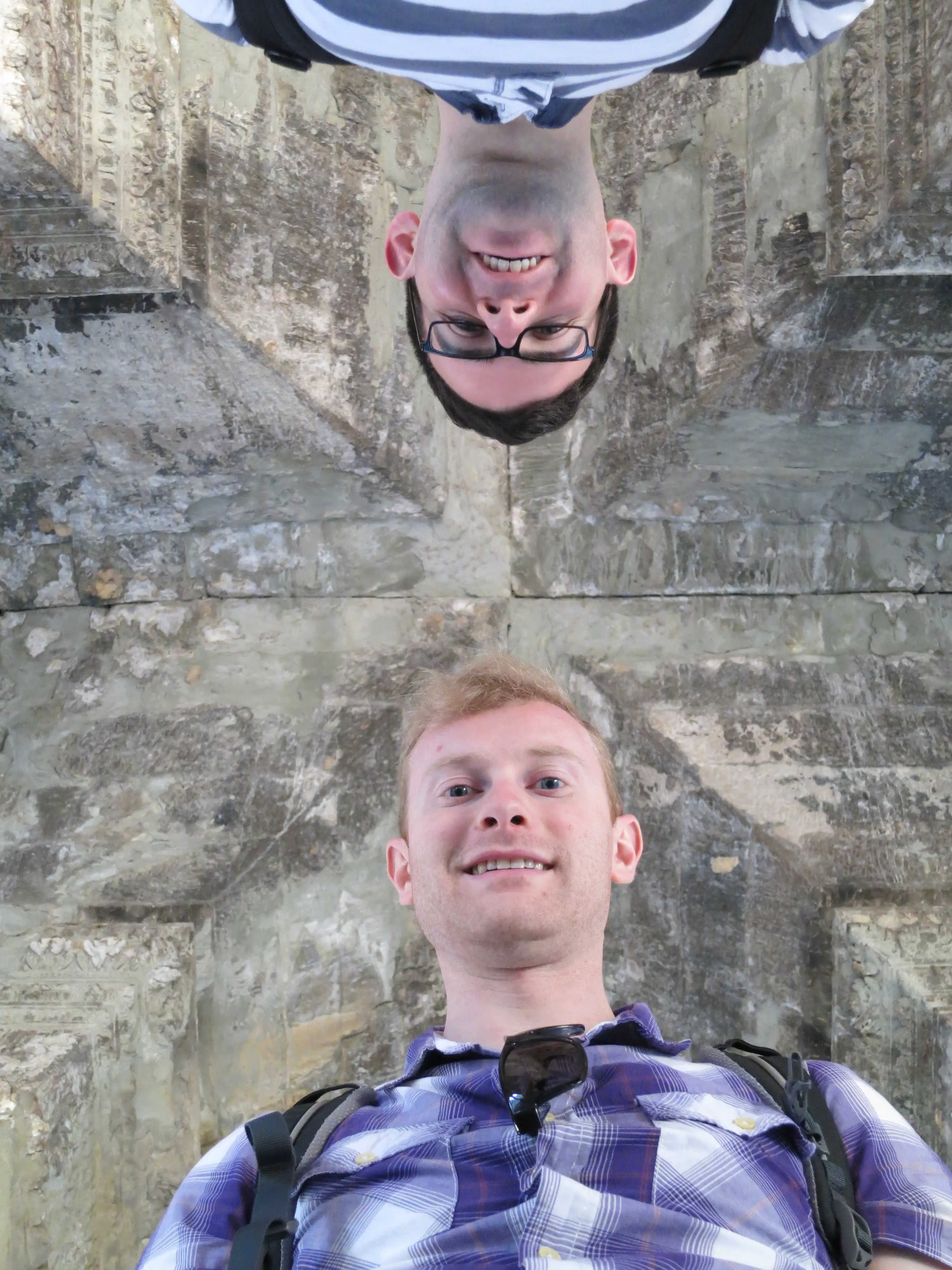
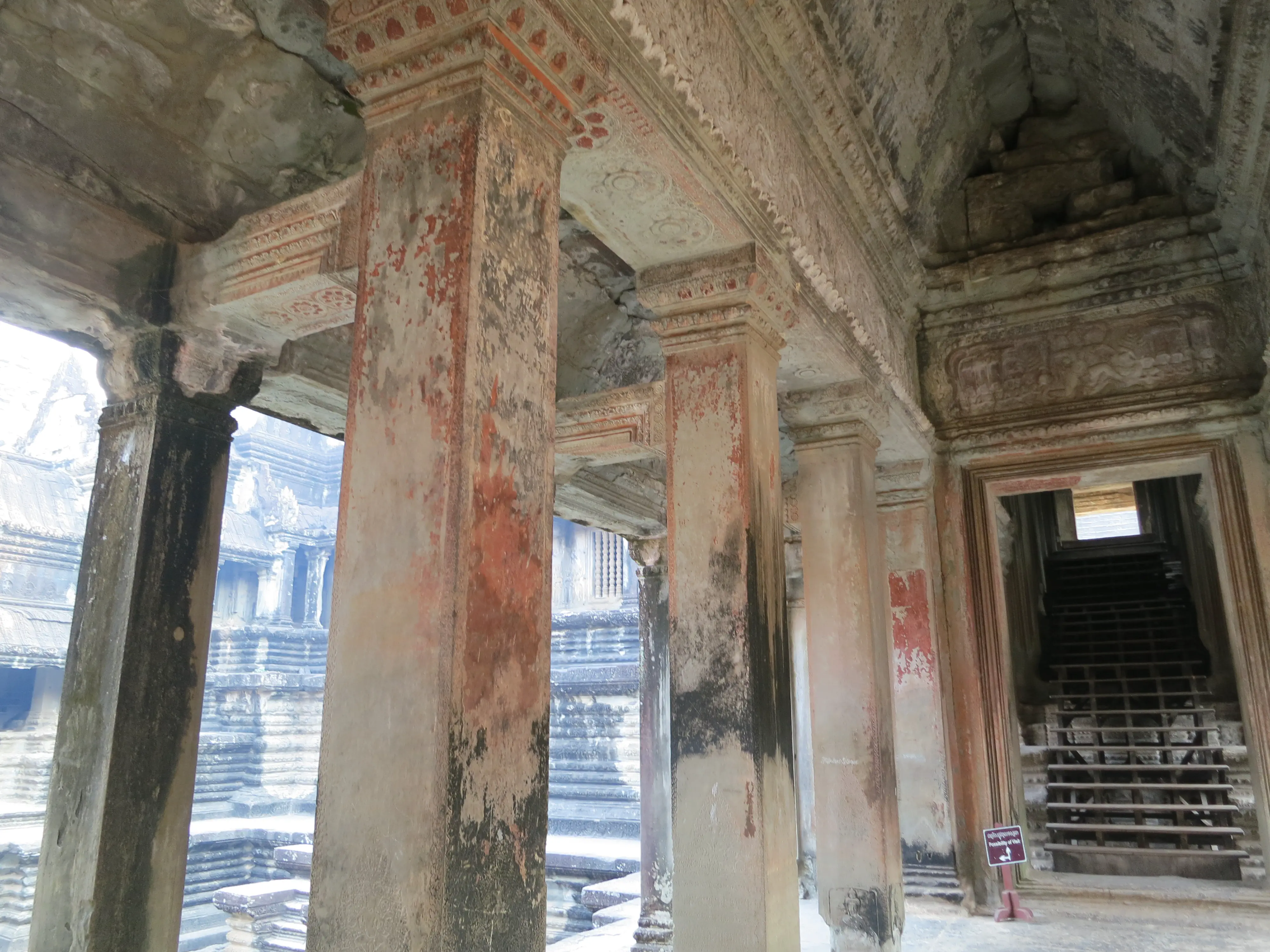
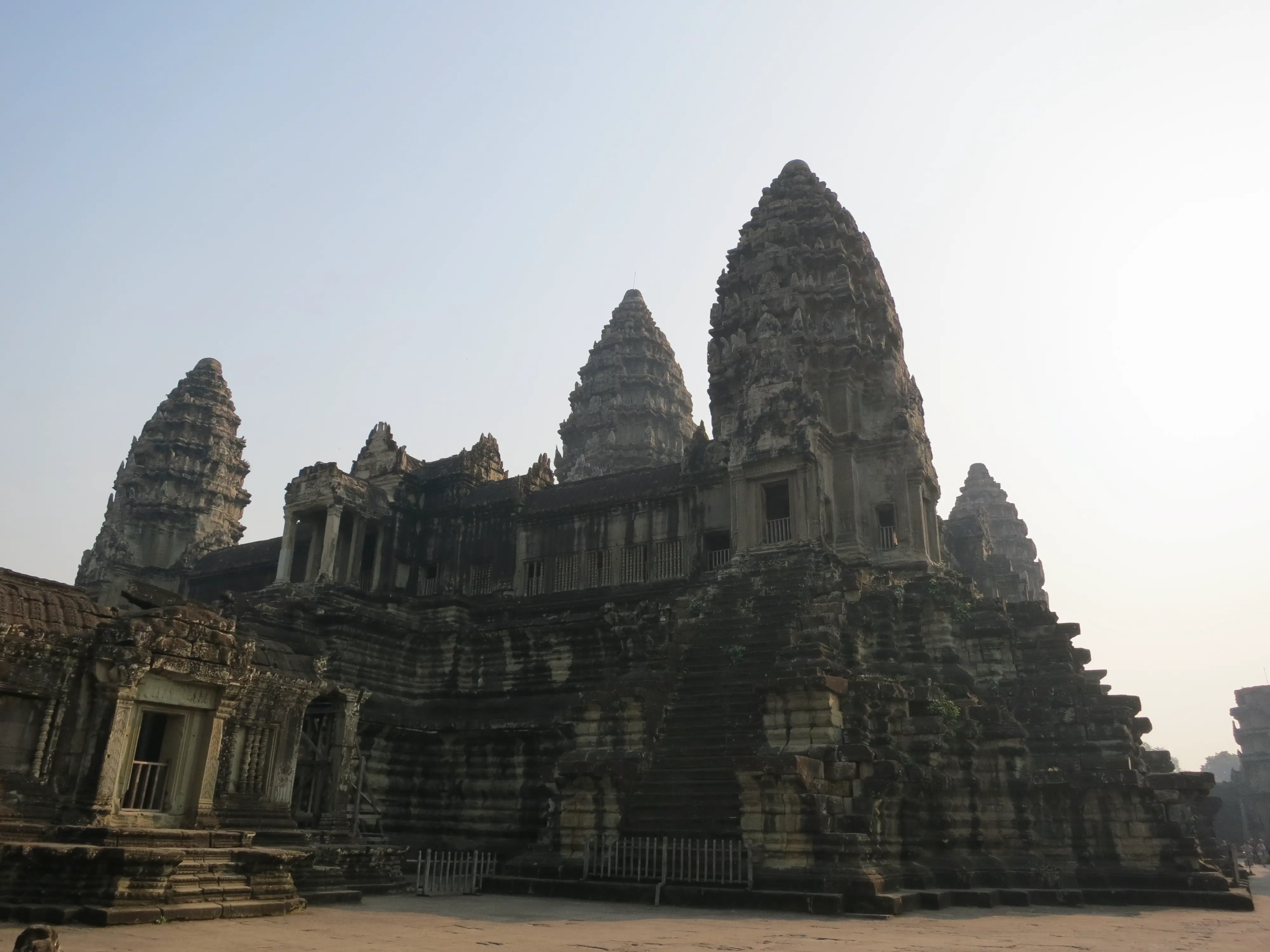
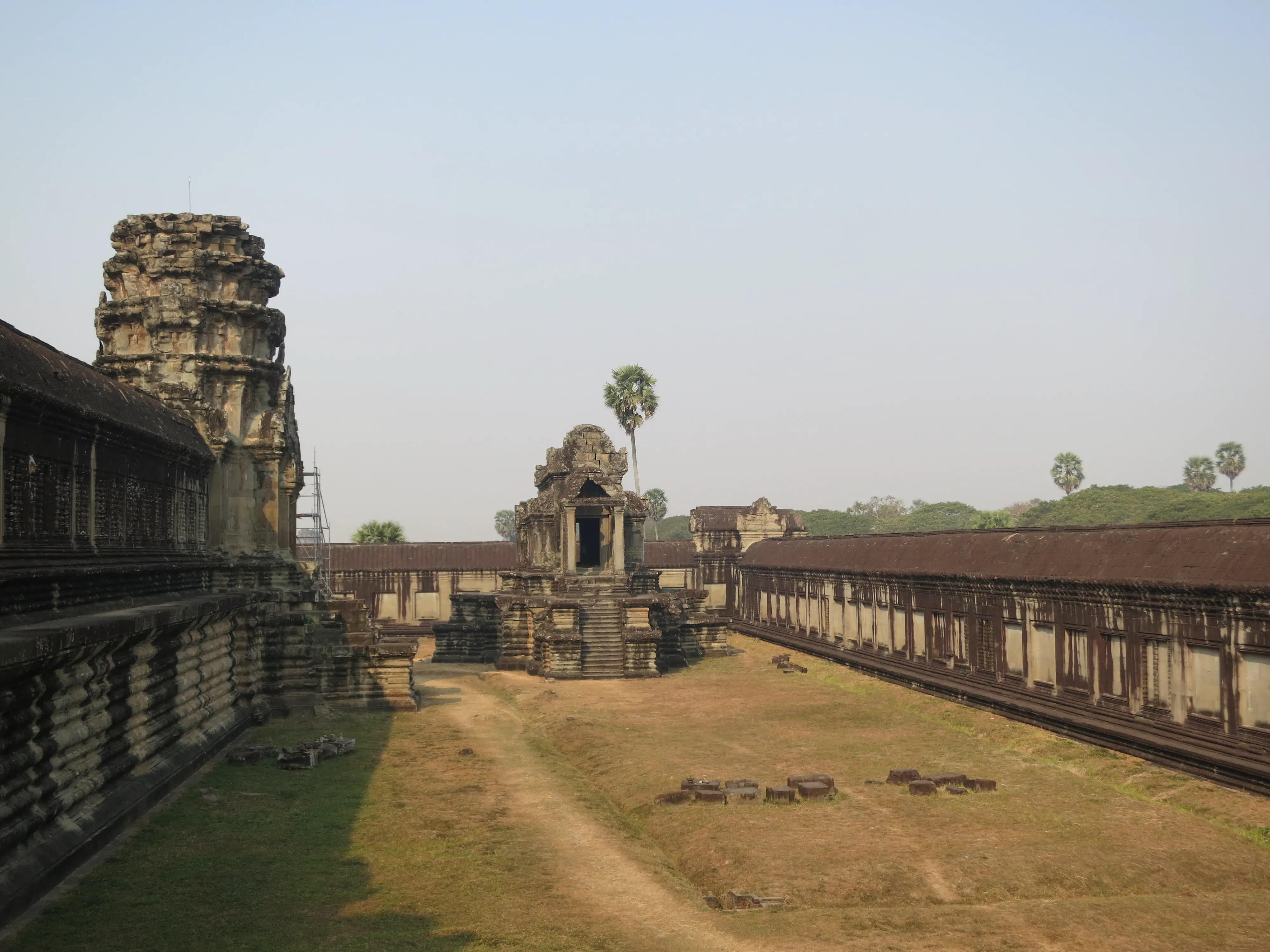
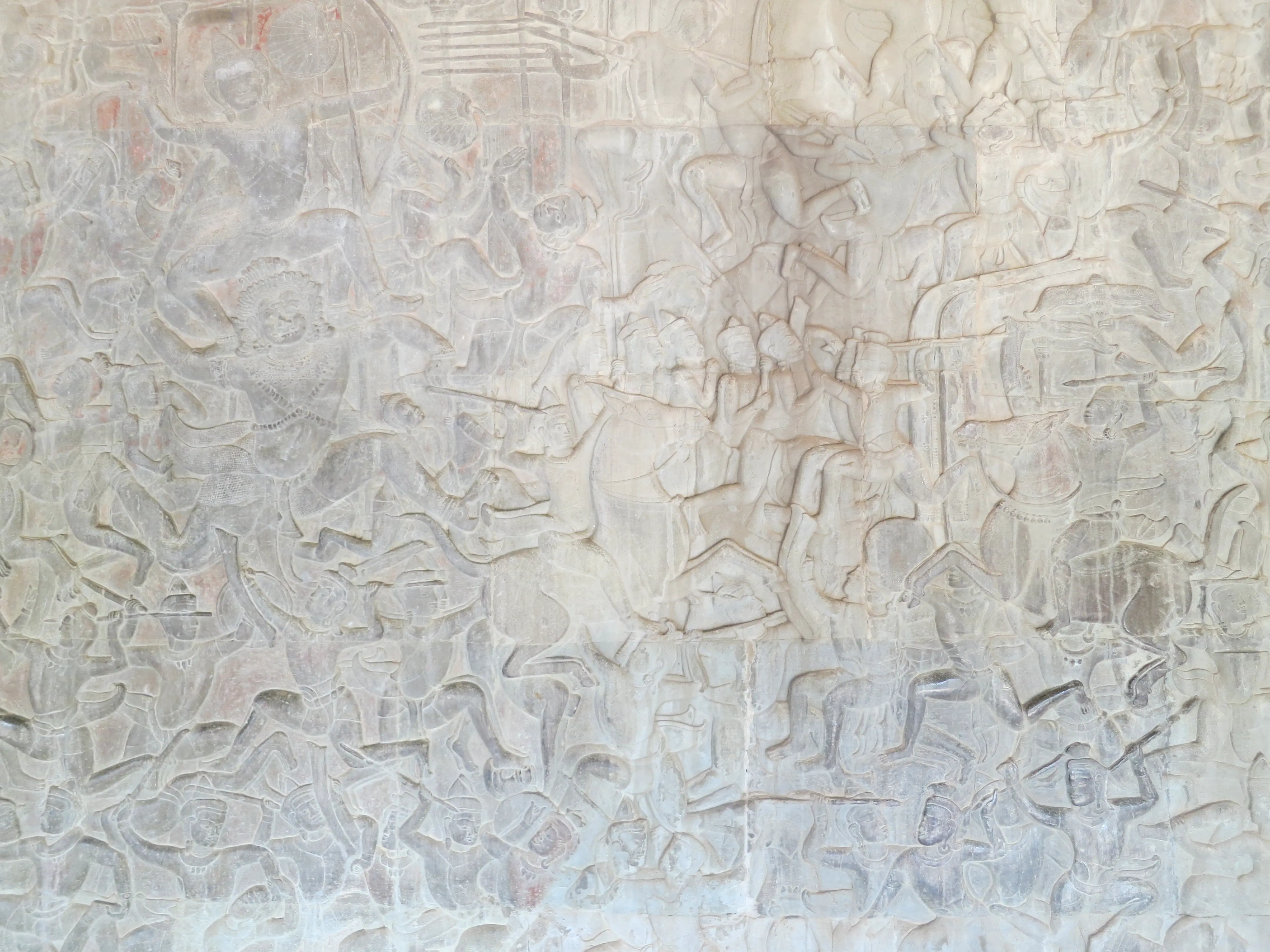
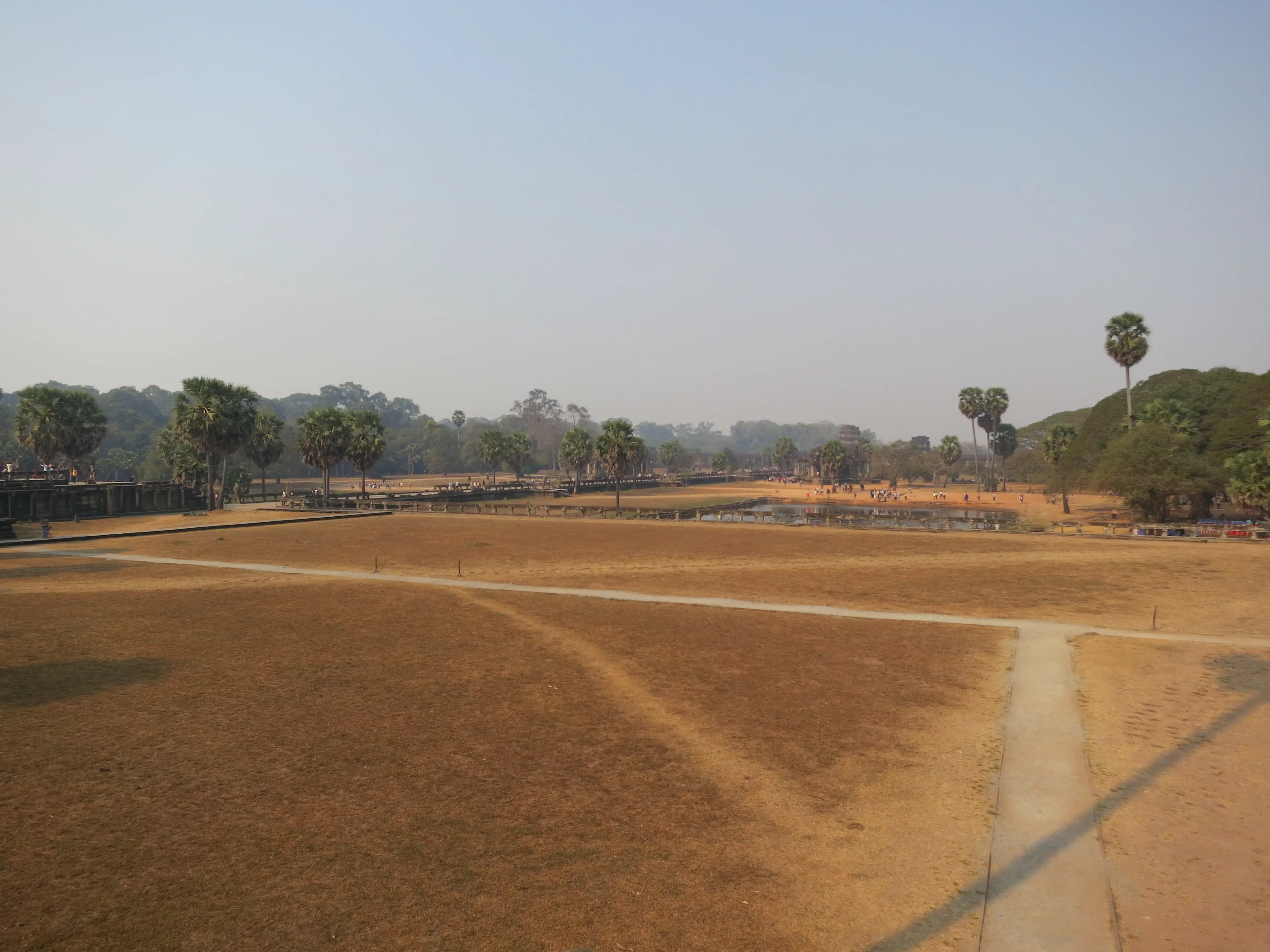
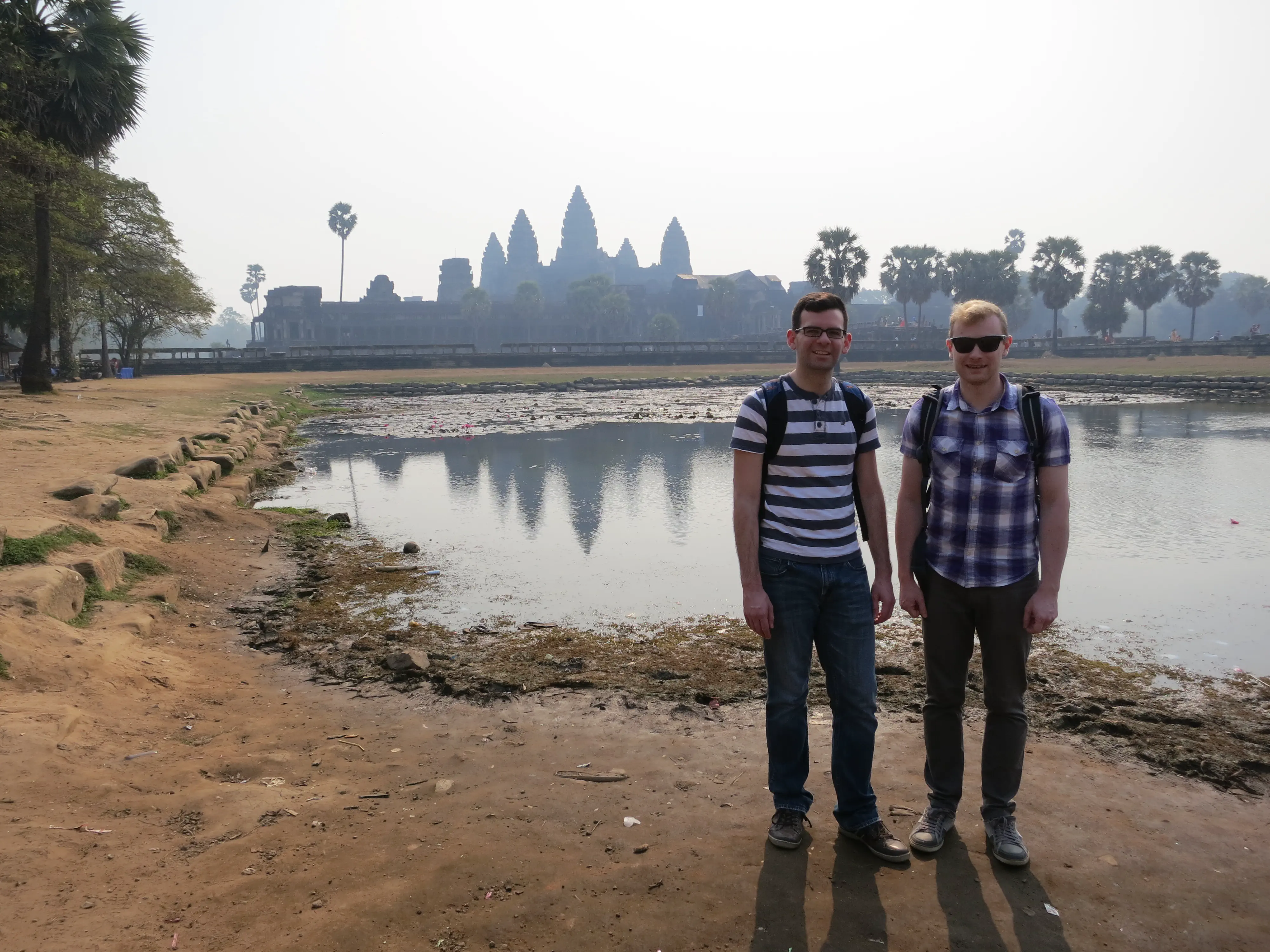
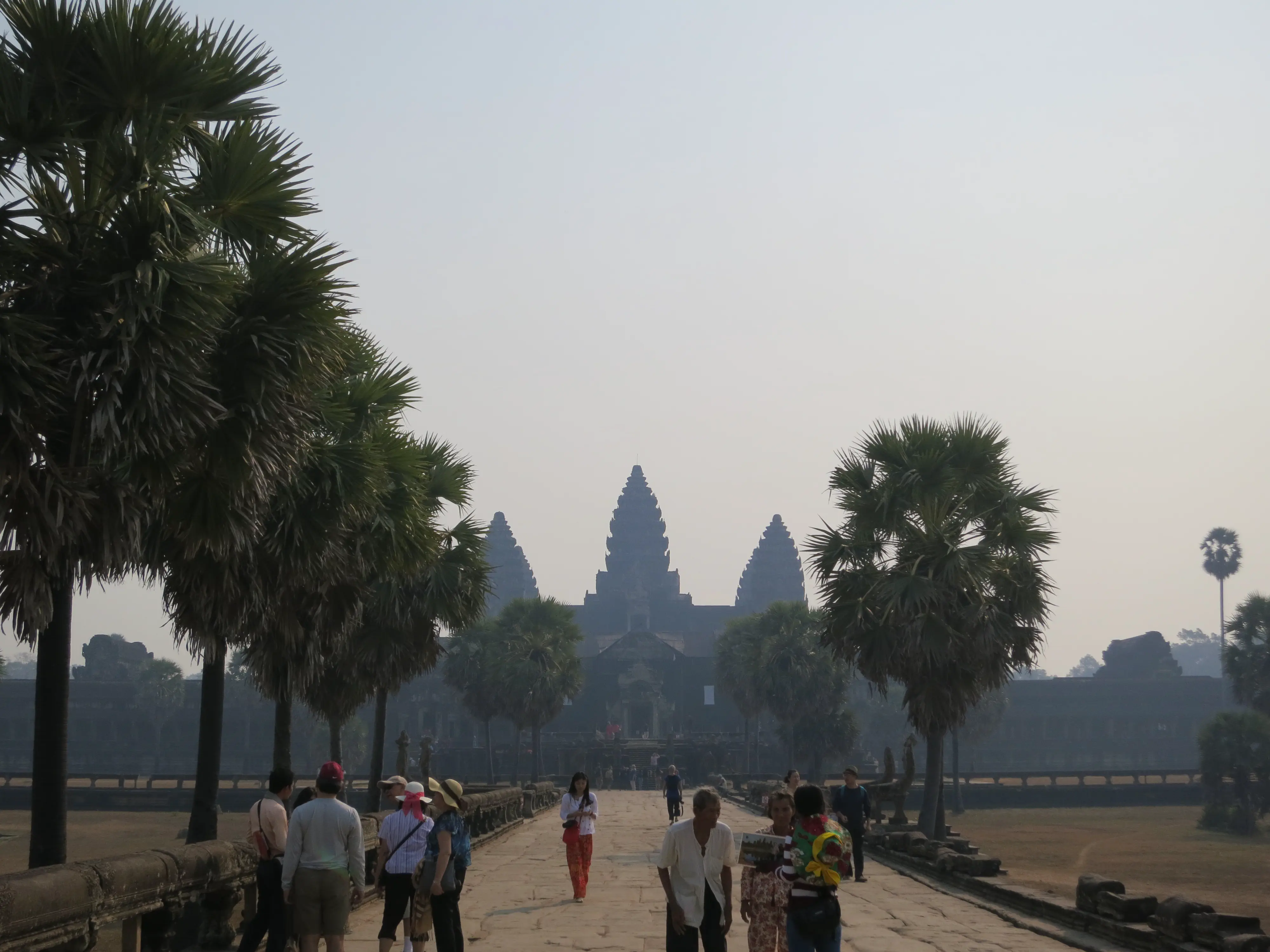
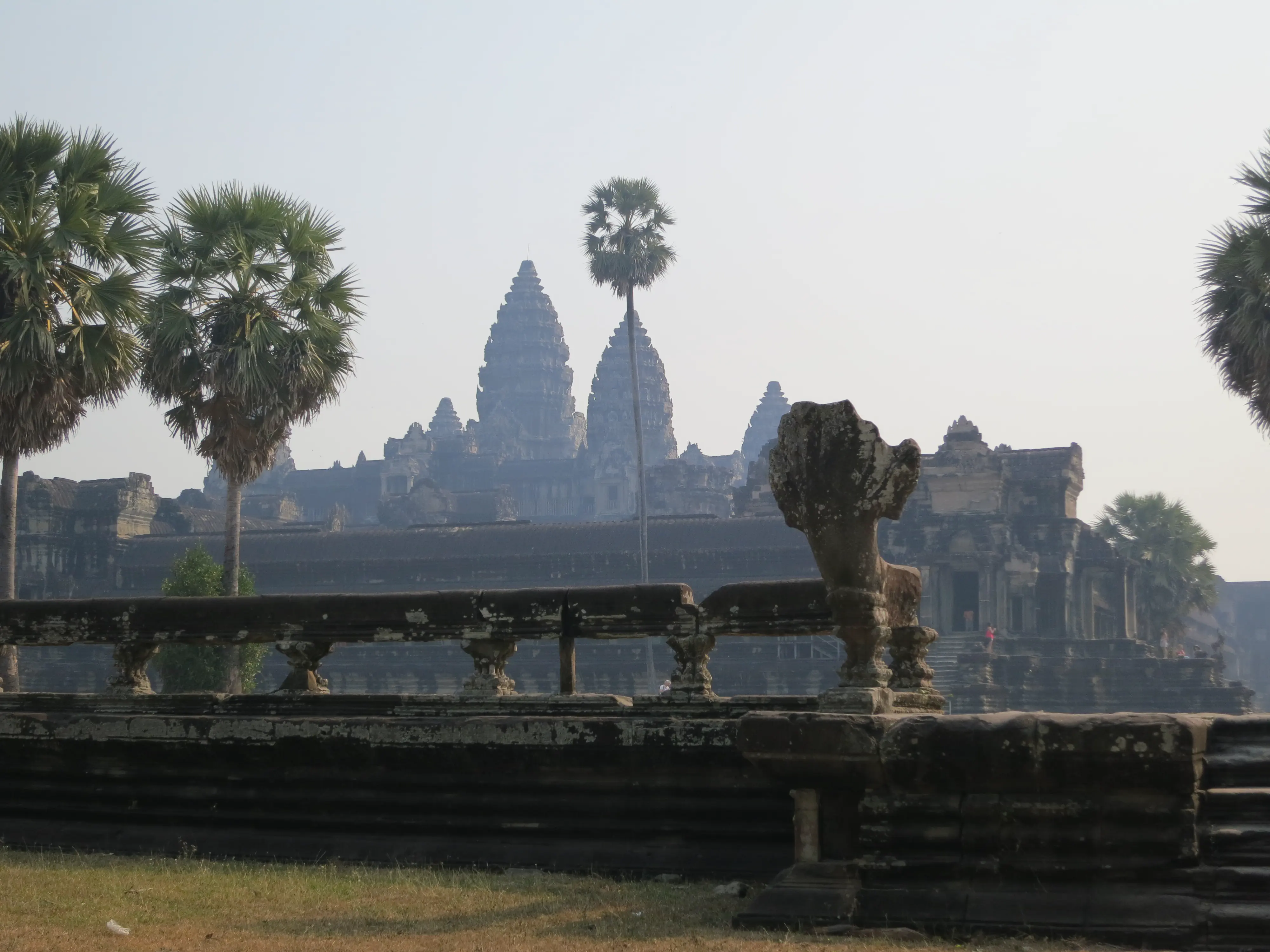
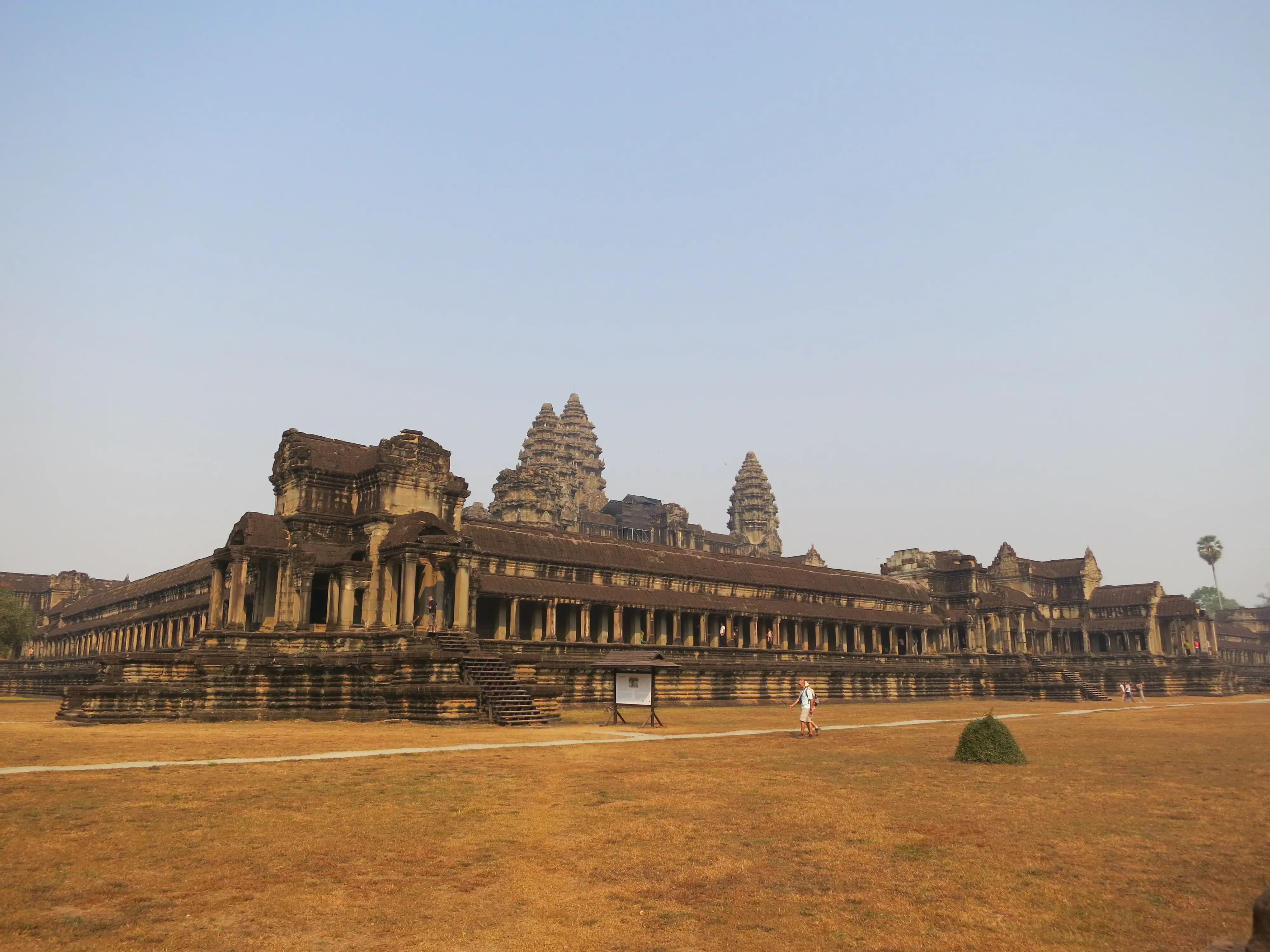

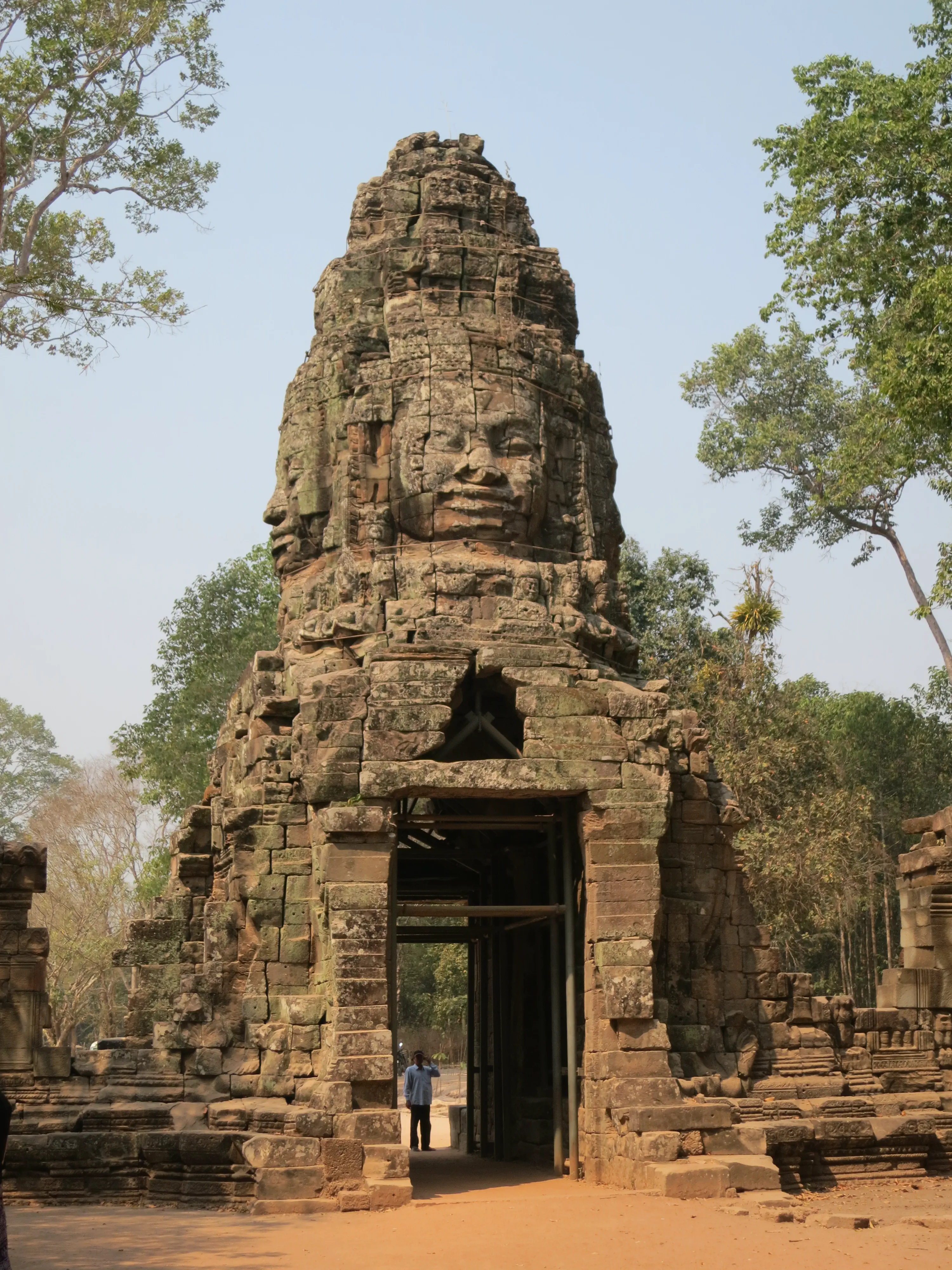
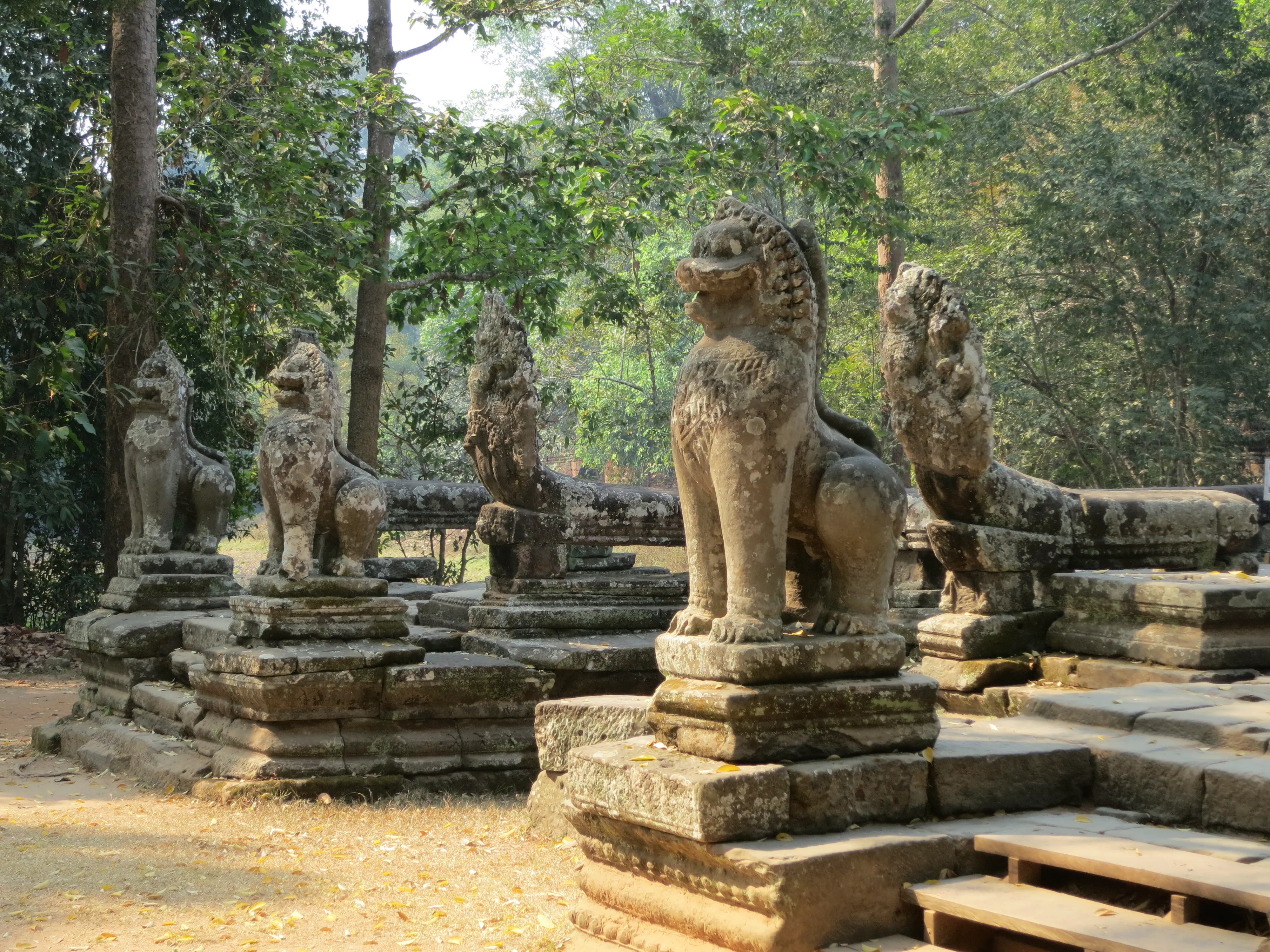
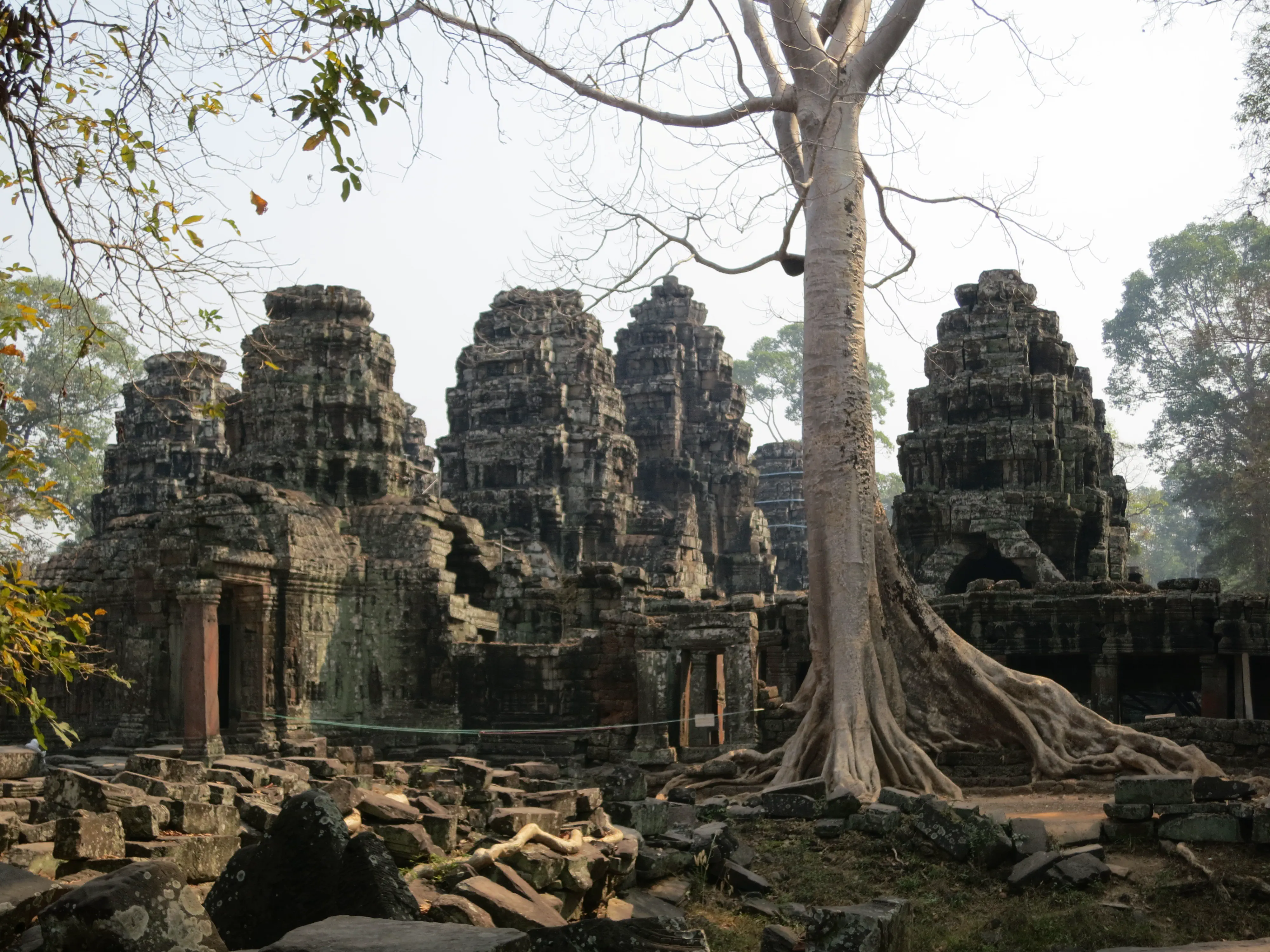
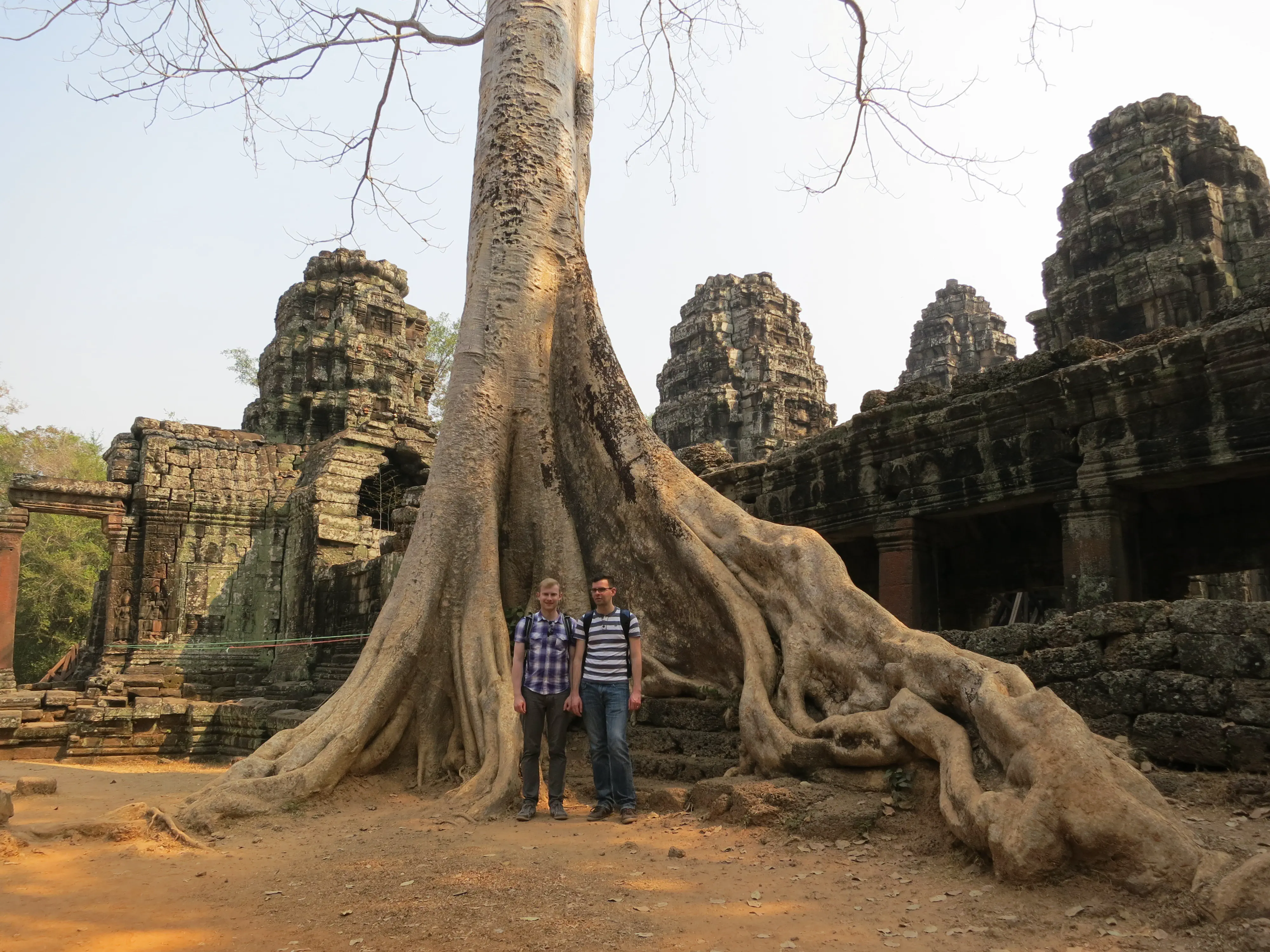
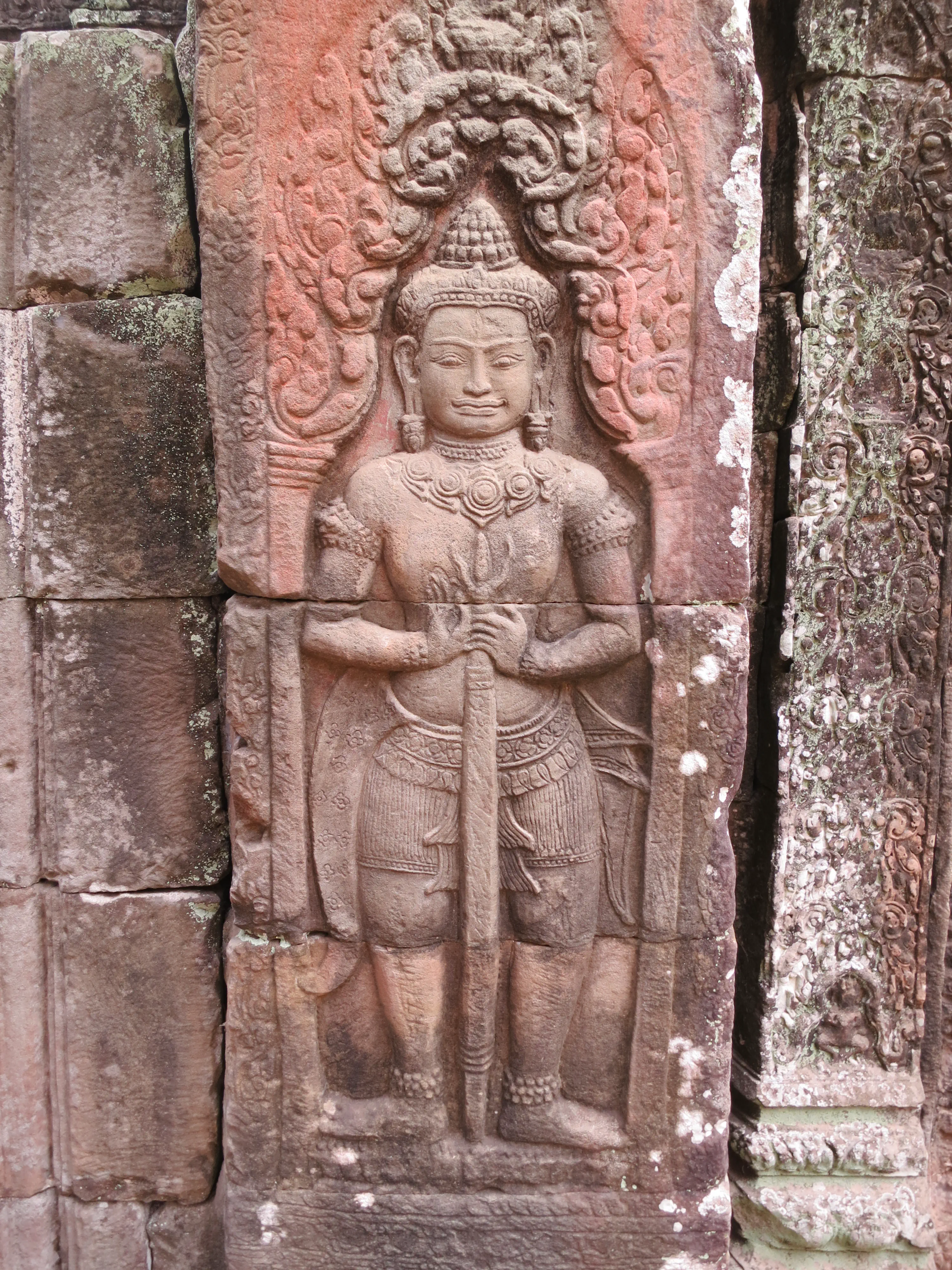
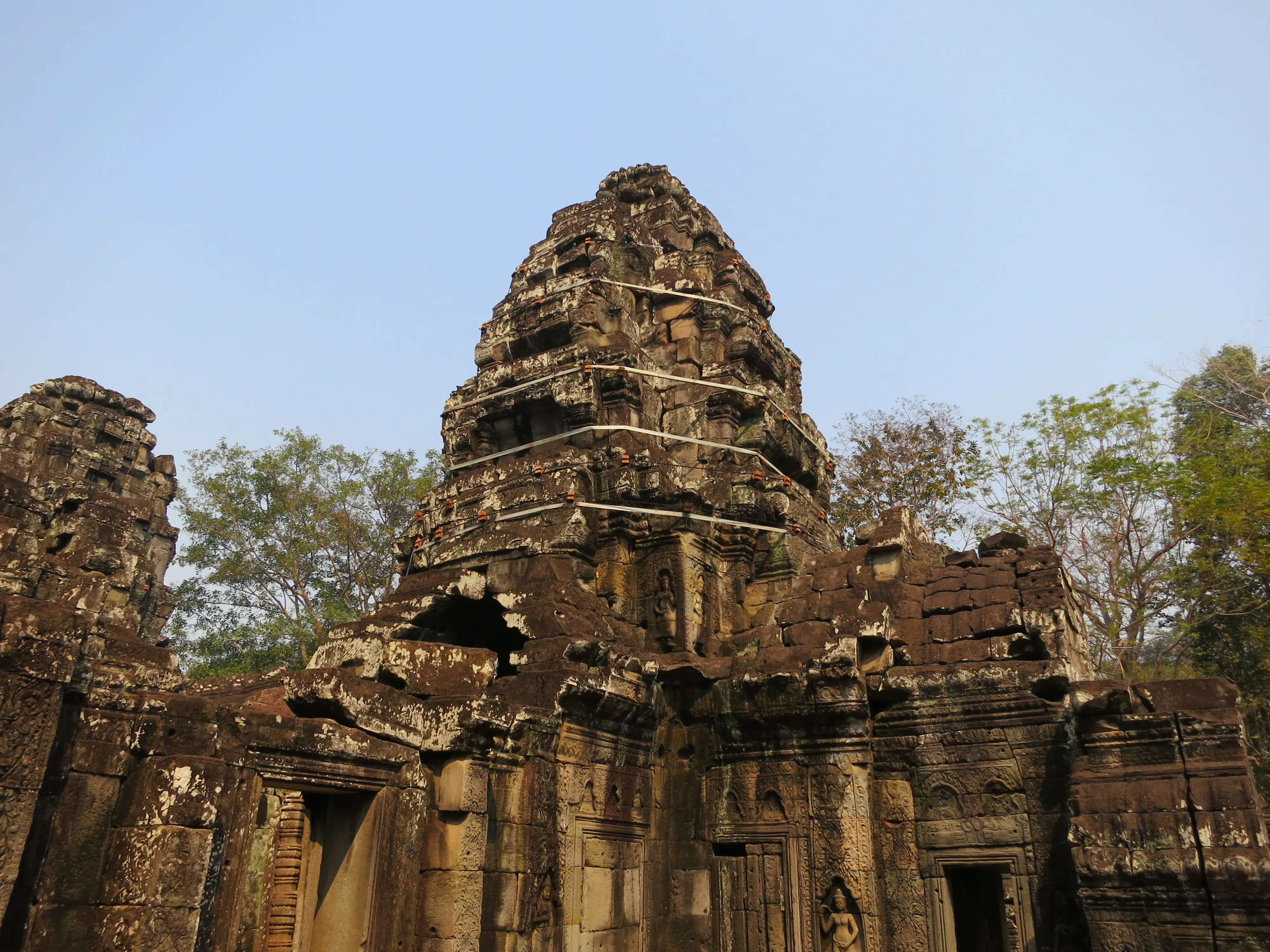
We spent the better part of 2 hours exploring the Angkor Wat complex, and took a number of photos. We probably could have spent all day taking photos, but we had a schedule to keep to, so we proceeded to the next temple. The next temple on our stop, Banteay Kdei, was quite a bit smaller than Angkor Wat. Constructed only 50 years after, it embodied a different style of construction which was much less impressive than the results at Angkor Wat. It has functioned as a Buddhist monastery at various times in history, but it is currently in poor condition due to issues with the construction of the buildings. While the walls were crumbling in many places there are still a number of well-preserved reliefs carved into the walls. We took a number of pictures here, then proceeded to our next stop, Ta Prohm. When we arrived we discovered that the temple was quite busy, so we instead decided to take an early lunch to avoid the crowd.

Lunch was served at a Cambodian restaurant not far from many of the temples. I had an amazing dish called fish amok, a fresh fish served in a delicious green curry. The lunch was very filling and totally tasty.