We awoke to a clear and sunny day. We ended up sleeping in a bit because we had been up late taking photos the night before, so we didn’t leave Egilsstaðir until about 10:30 AM. After having a quick breakfast at the AirBnB, we packed up the car and got on the road. We filled up the car with diesel before leaving the town, since we had a long drive ahead of us. We headed to Lake Mývatn by way of the ring road.
Unlike our previous days of driving, most of the 170 km we spent driving to Lake Mývatn crossed a fairly barren wasteland of volcanic rock, moss and a few grasses growing here and there. The coast is definitely more inhabited and habitable than the interior - there were no sheep farms, which makes sense since it didn’t look like there would be anything for the sheep to eat. The drive itself was pretty uneventful.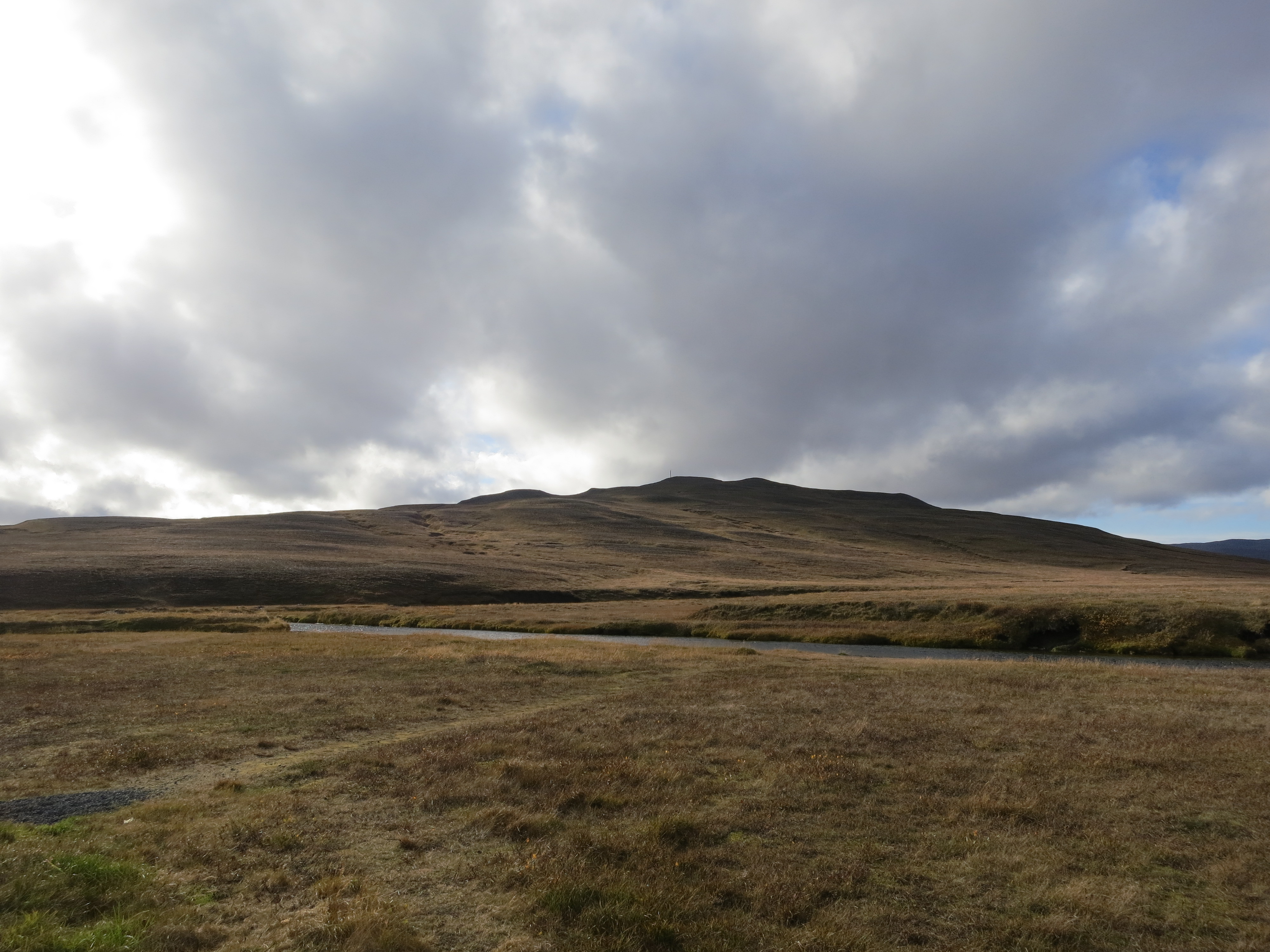
The interior is pretty barren
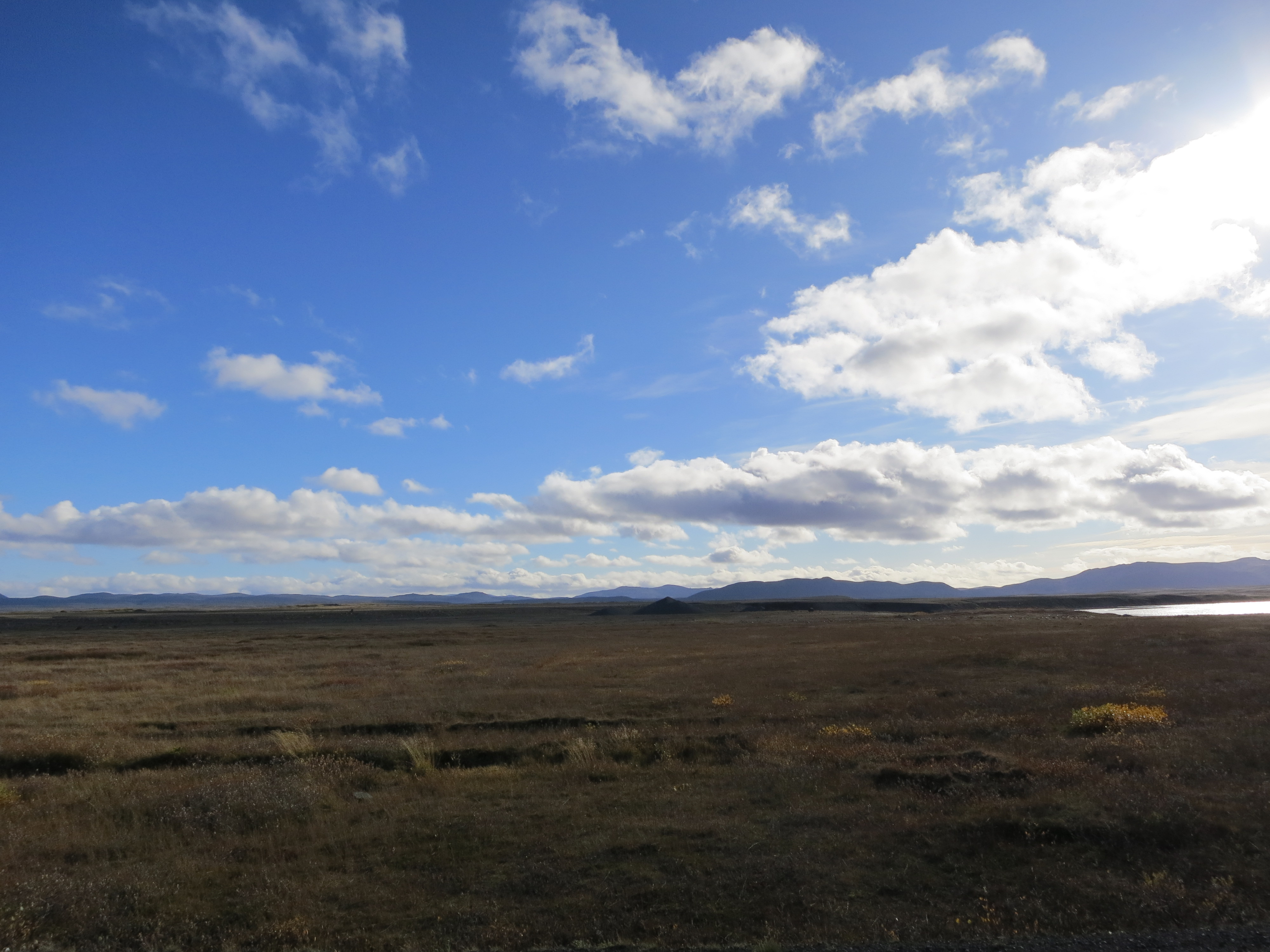
The sky was incredibly blue
We stopped just before getting to Lake Mývatn to visit the Krafla volcanic field. We drove past an active geothermal power station which was just a kilometre away from the crater, and saw a number of steam collection stations all connected to the plant via large metal pipes. We had to drive through an arch of these pipes where they crossed the road. The smell of sulphur in the air was stronger than any other we’d experienced to this point - it was almost unbearably strong.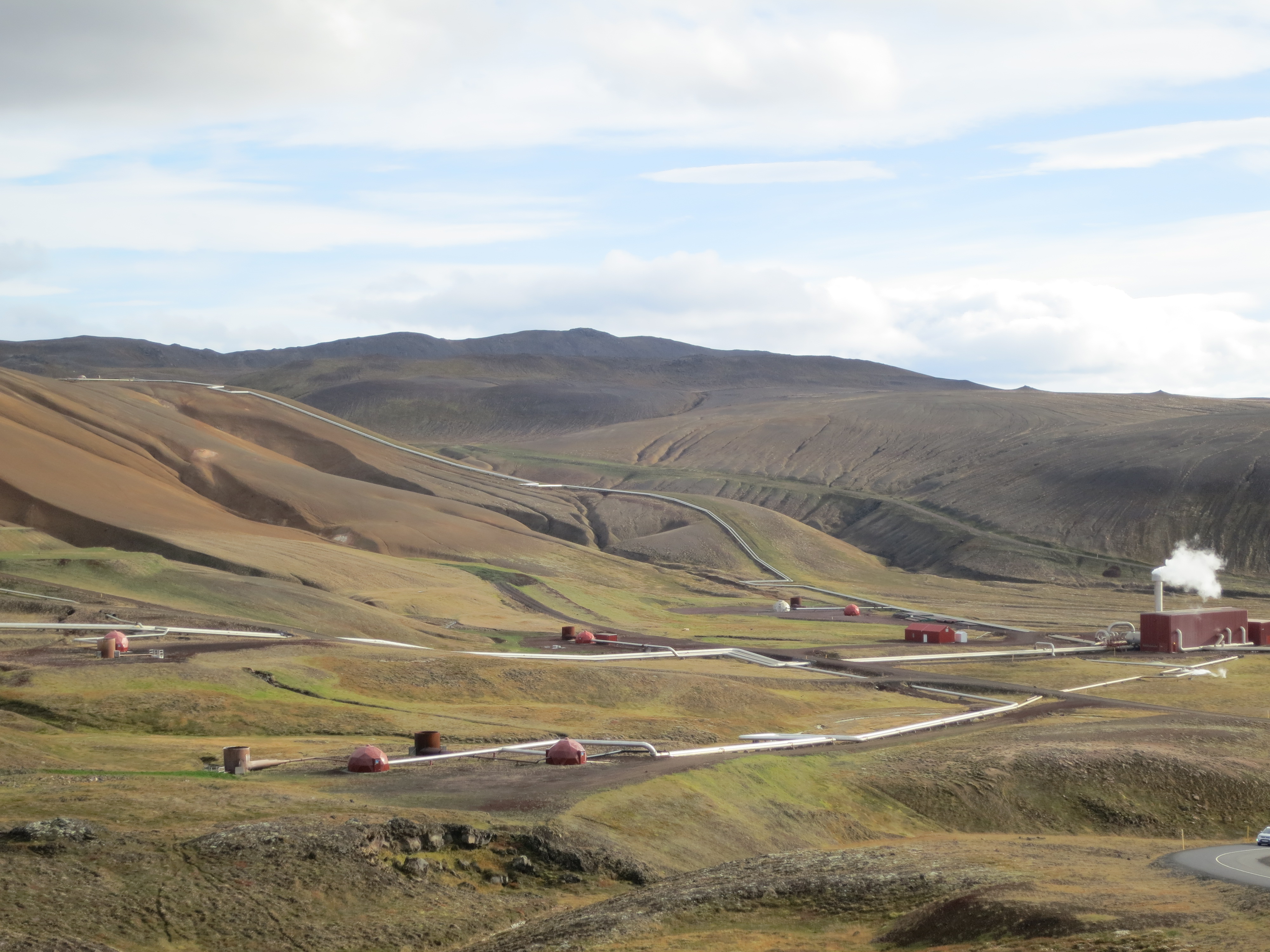
The steam collection stations, piping to a power plant
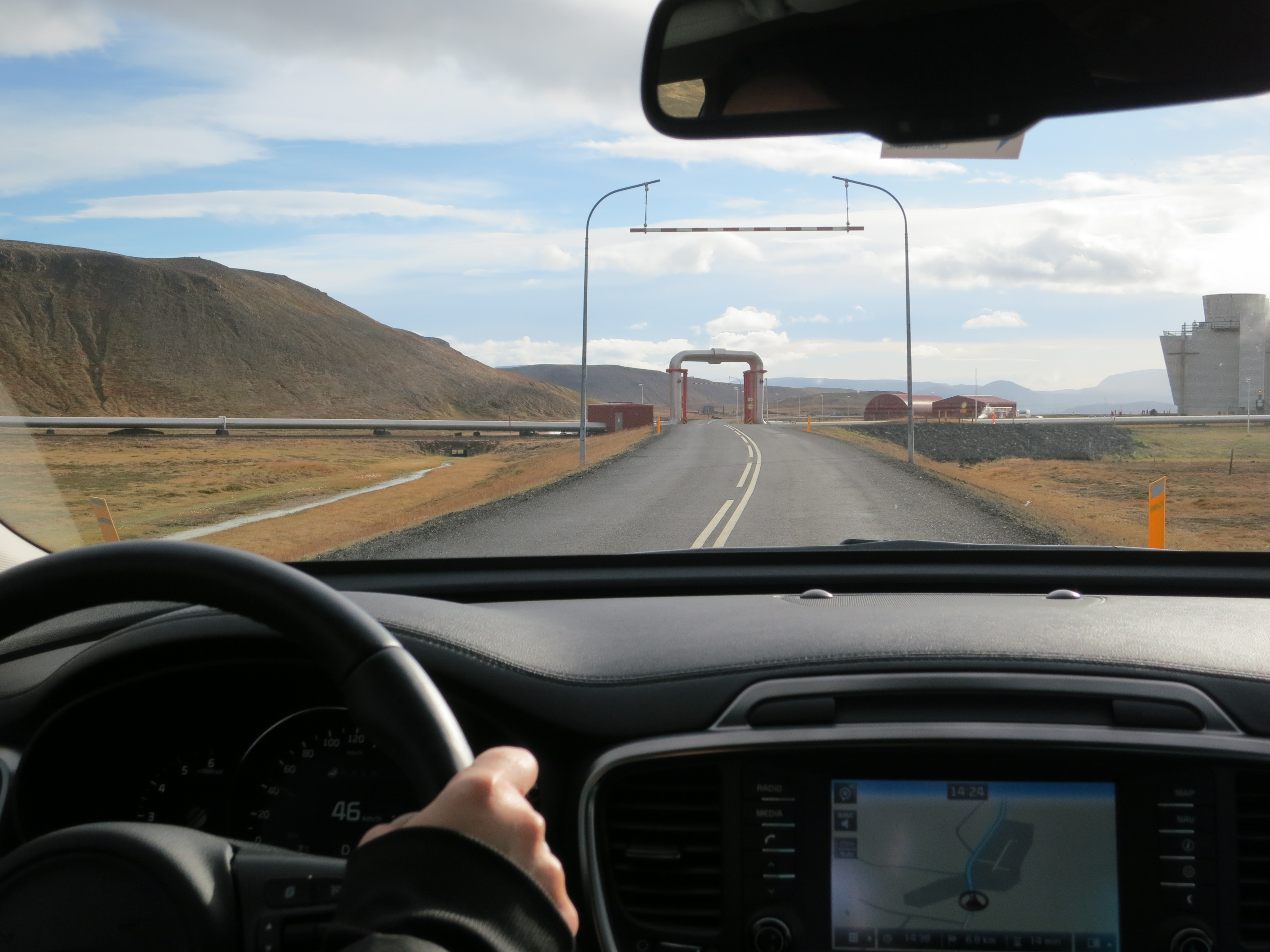
The steam pipes crossing the road, with the power plant visible at the right
We parked in front the Viti crater, then walked up to the top of the caldera to look down into the water below. There was a small lake at the bottom of the crater that was a beautiful shade of blue. We decided to do a bit of exploring, and so we started walking along the right side of the crater. About halfway around the top of the crater we followed a path down the back side, where we discovered some small thermal vents and mud pits. Past the thermal vents we encountered one of the steam collection points for the geothermal plant, which was cool to see up close. The smell of sulphur was in the air, but it wasn’t so strong that breathing was difficult.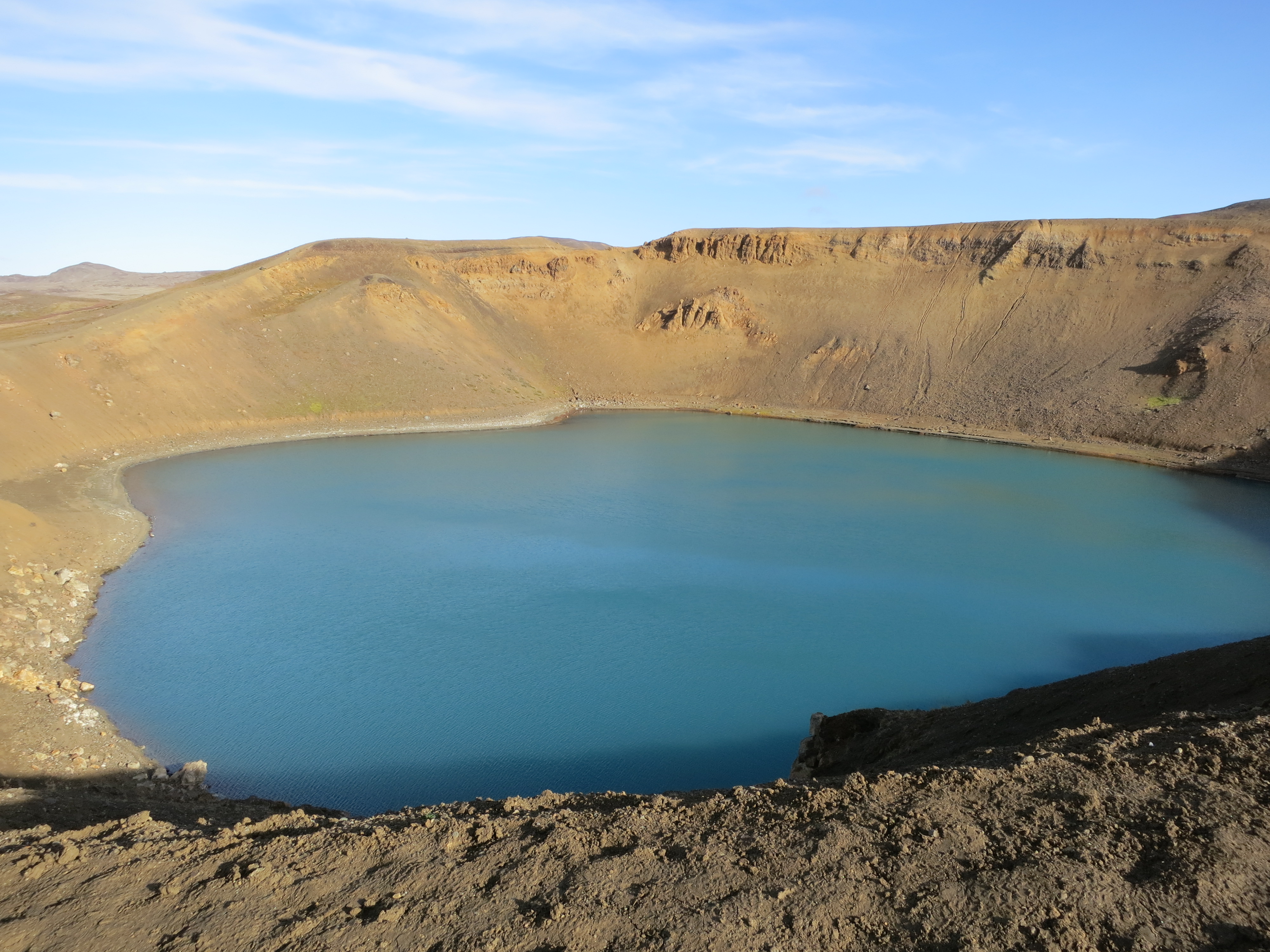
The lake at the bottom of the Viti crater
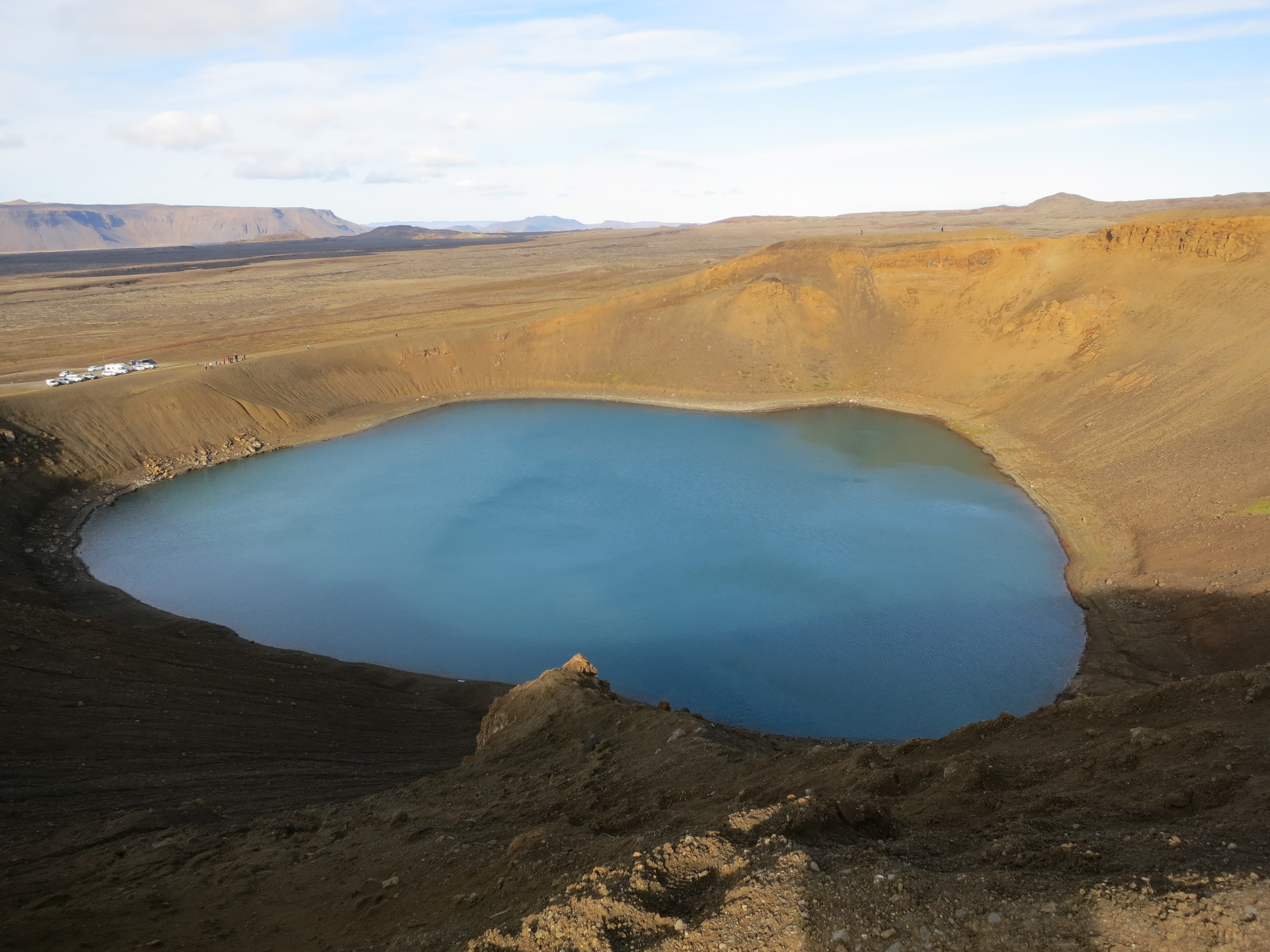
The Viti crater
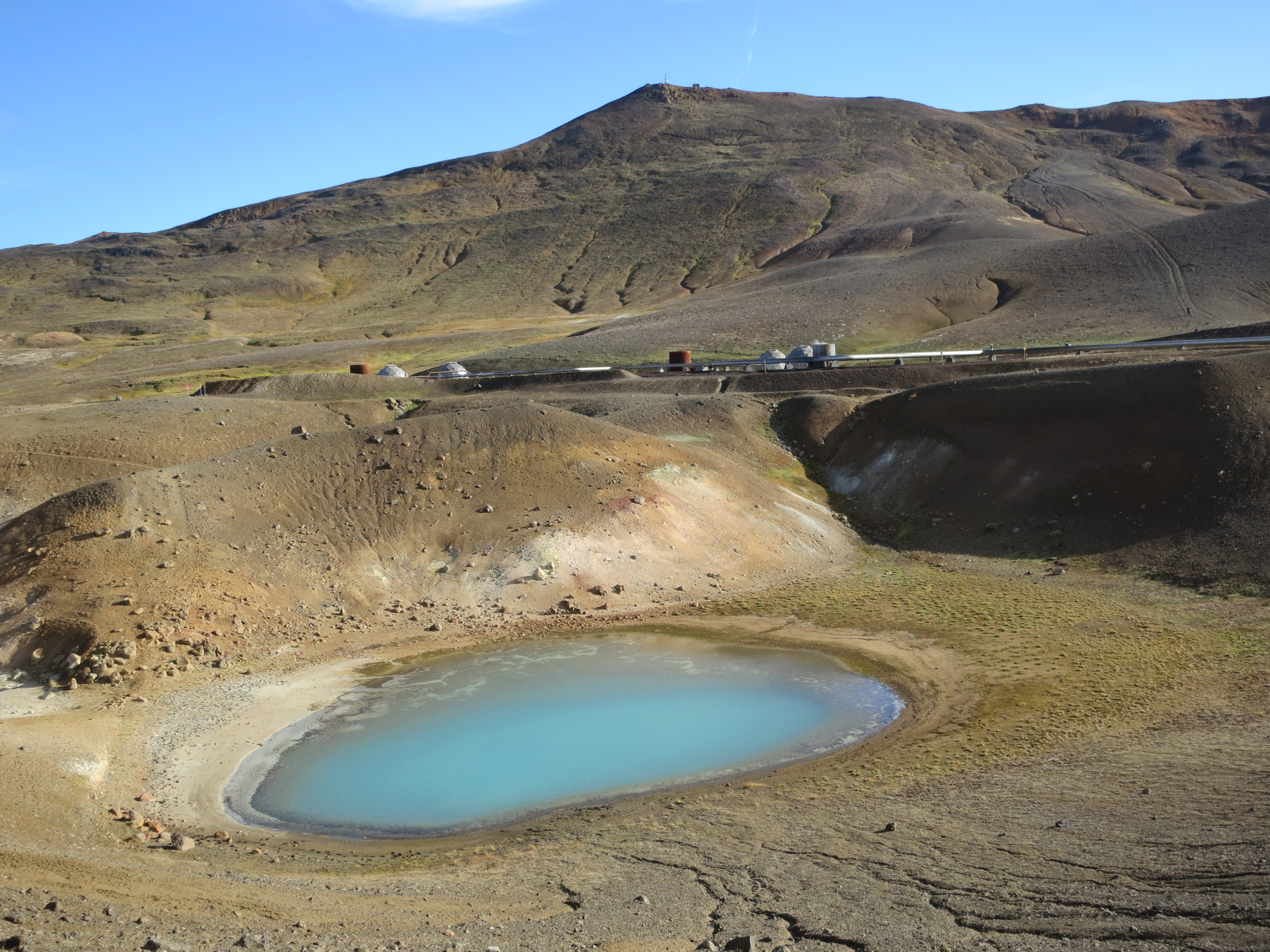
A small geothermal pond behind the Viti crater, with steam collection points visible in the distance
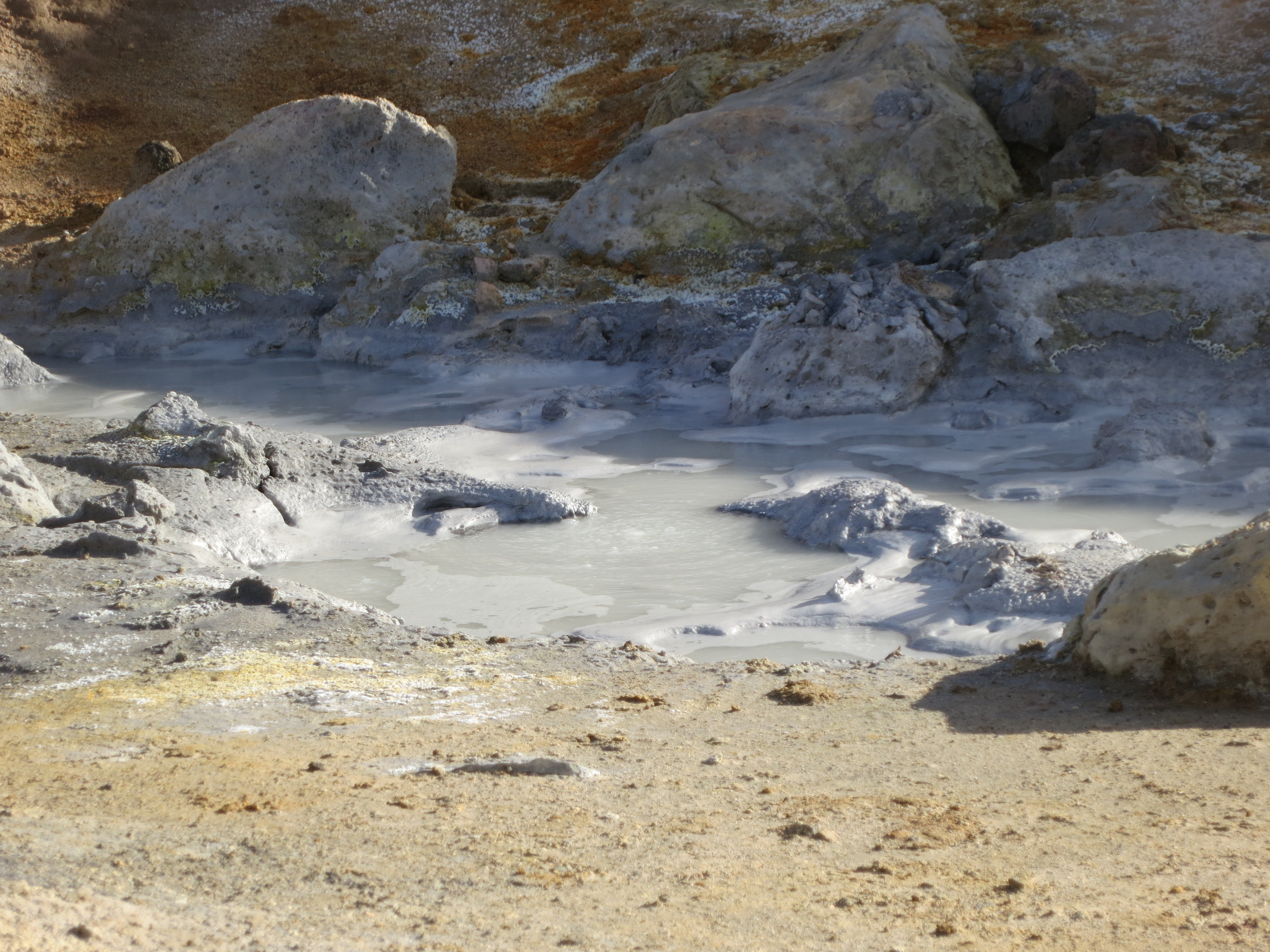
Mud pits. There was steam bubbling out of the water, visible in the centre of the photo
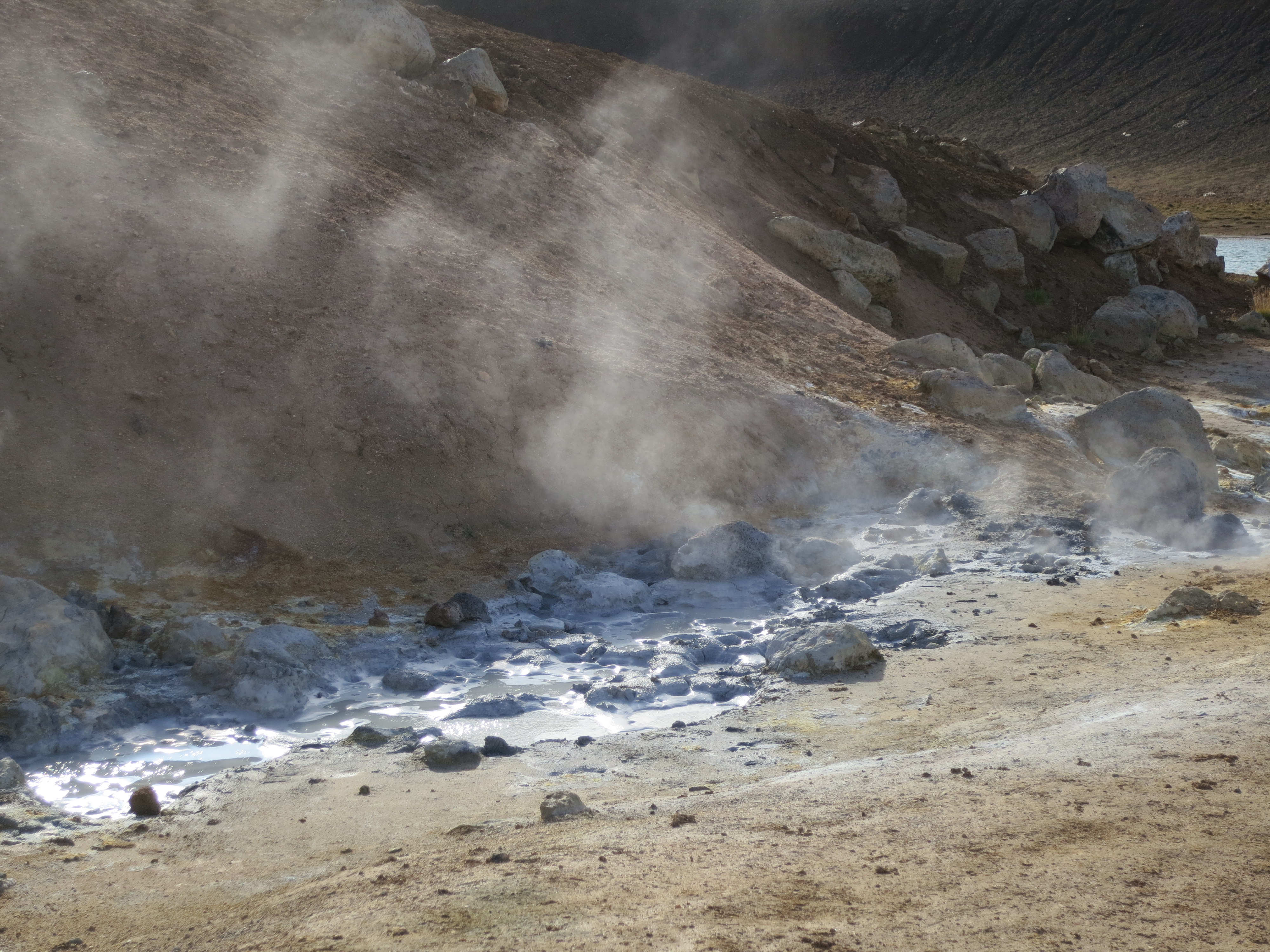
The ground was steaming here
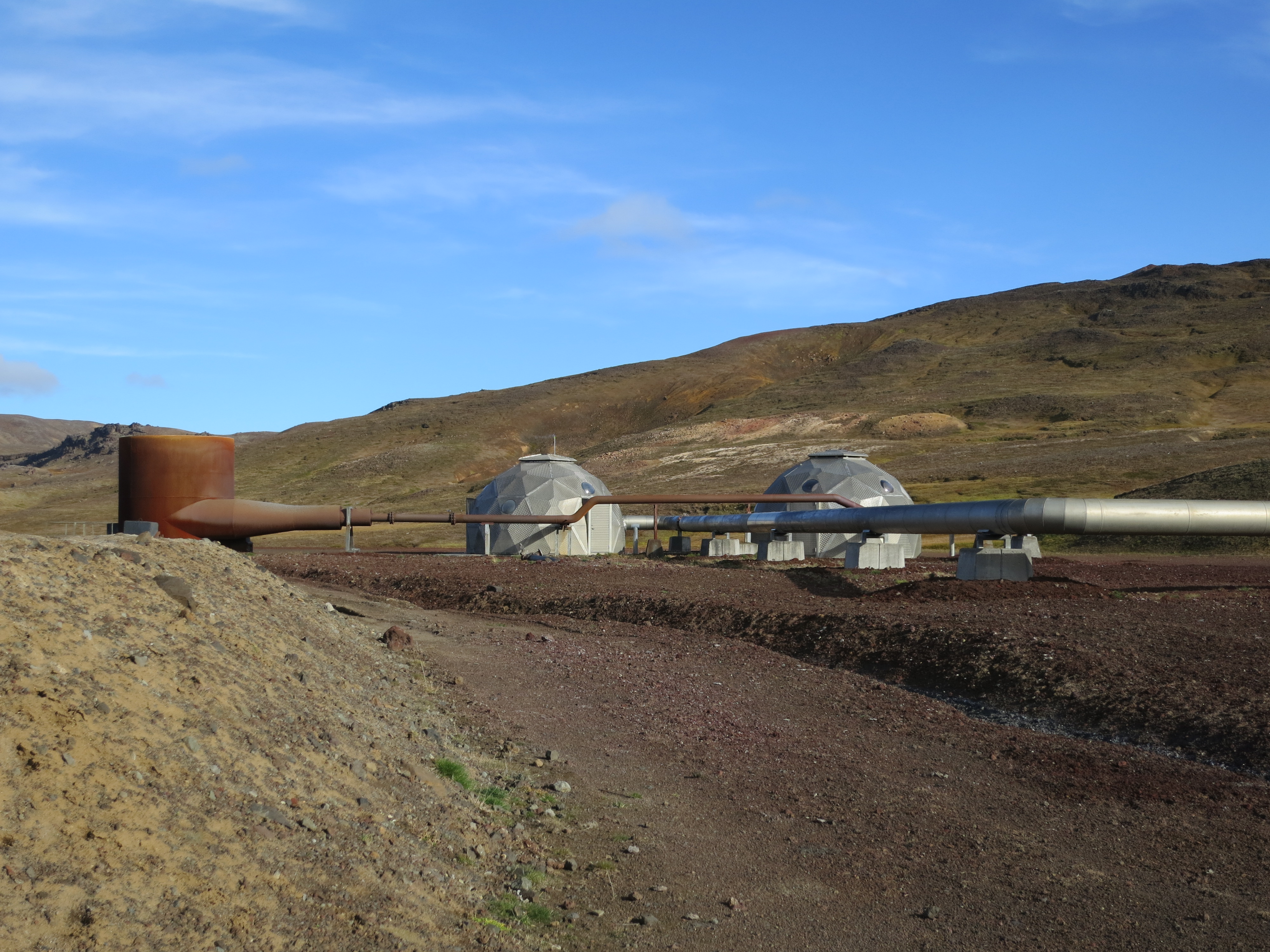
The steam collection points up close
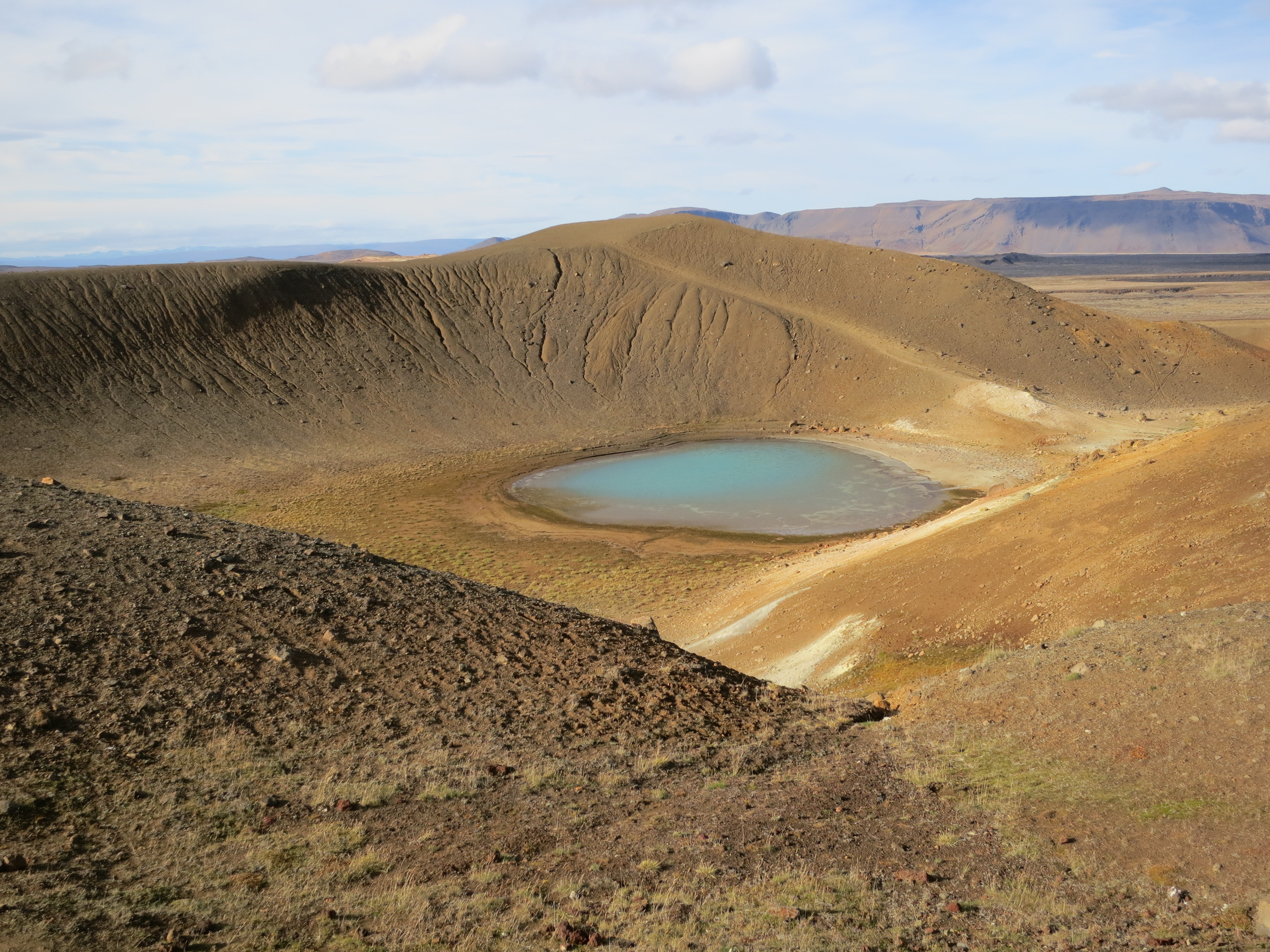
Looking back towards the Viti crater
We returned to the car and backtracked slightly to the Leirhnjúkur parking lot, then we began walking towards the Leirhnjúkur lava fields. Quickly the terrain changes from flat ground to jagged lava boulders left after the last eruption. The walk itself was not too strenuous, but we got some fantastic views of a landscape that looks entirely unlike anything you’d expect to see on Earth. The walk took us past some dry pools that are still venting steam, and even into a portion of the lava field where you can still feel heat coming off the ground some 40 years after the last eruption. There were some partially collapsed lava tubes visible. All in all it was a very cool experience.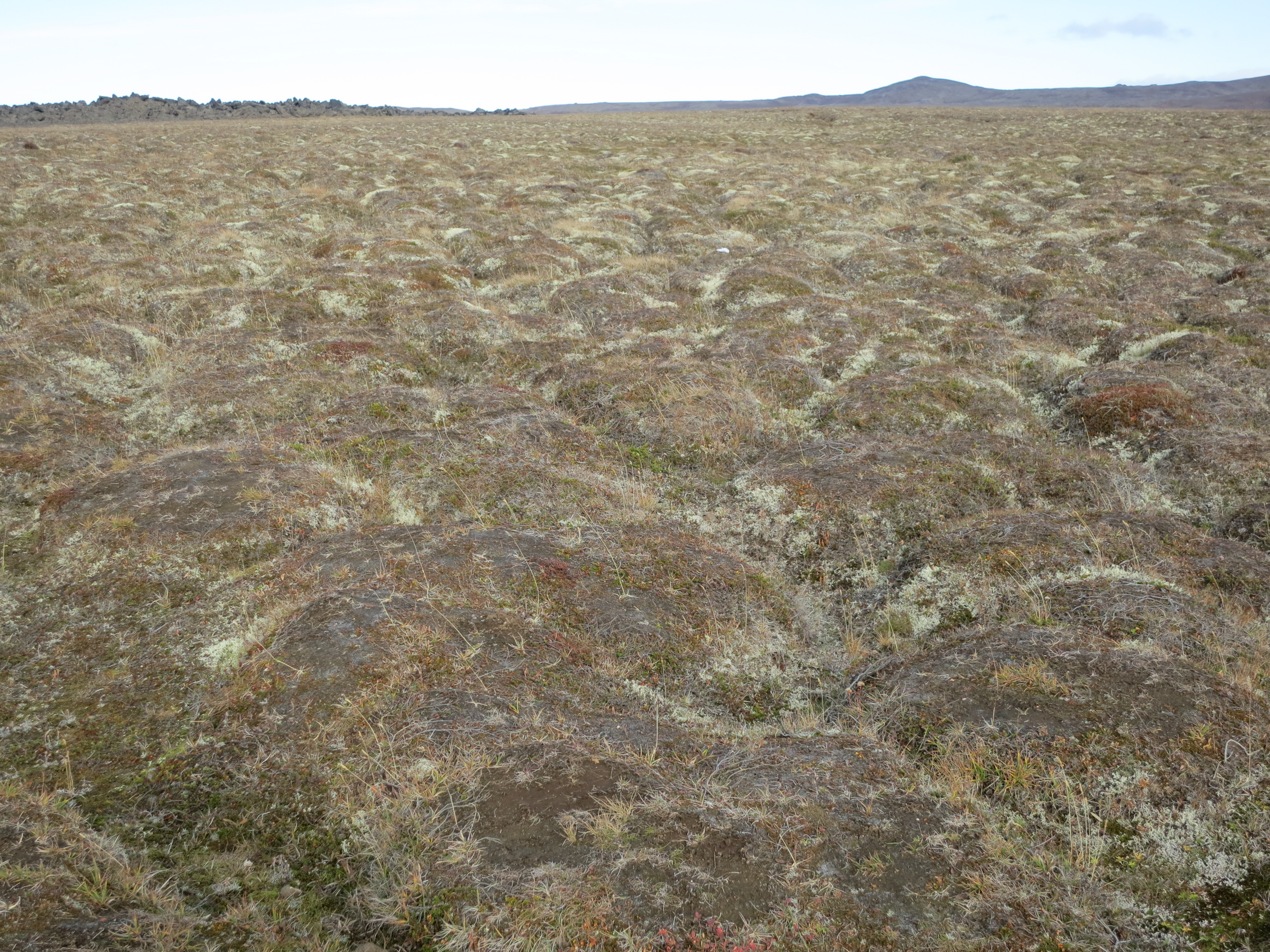
The ground started out looking almost pillowy, the lava boulders are visible in the background
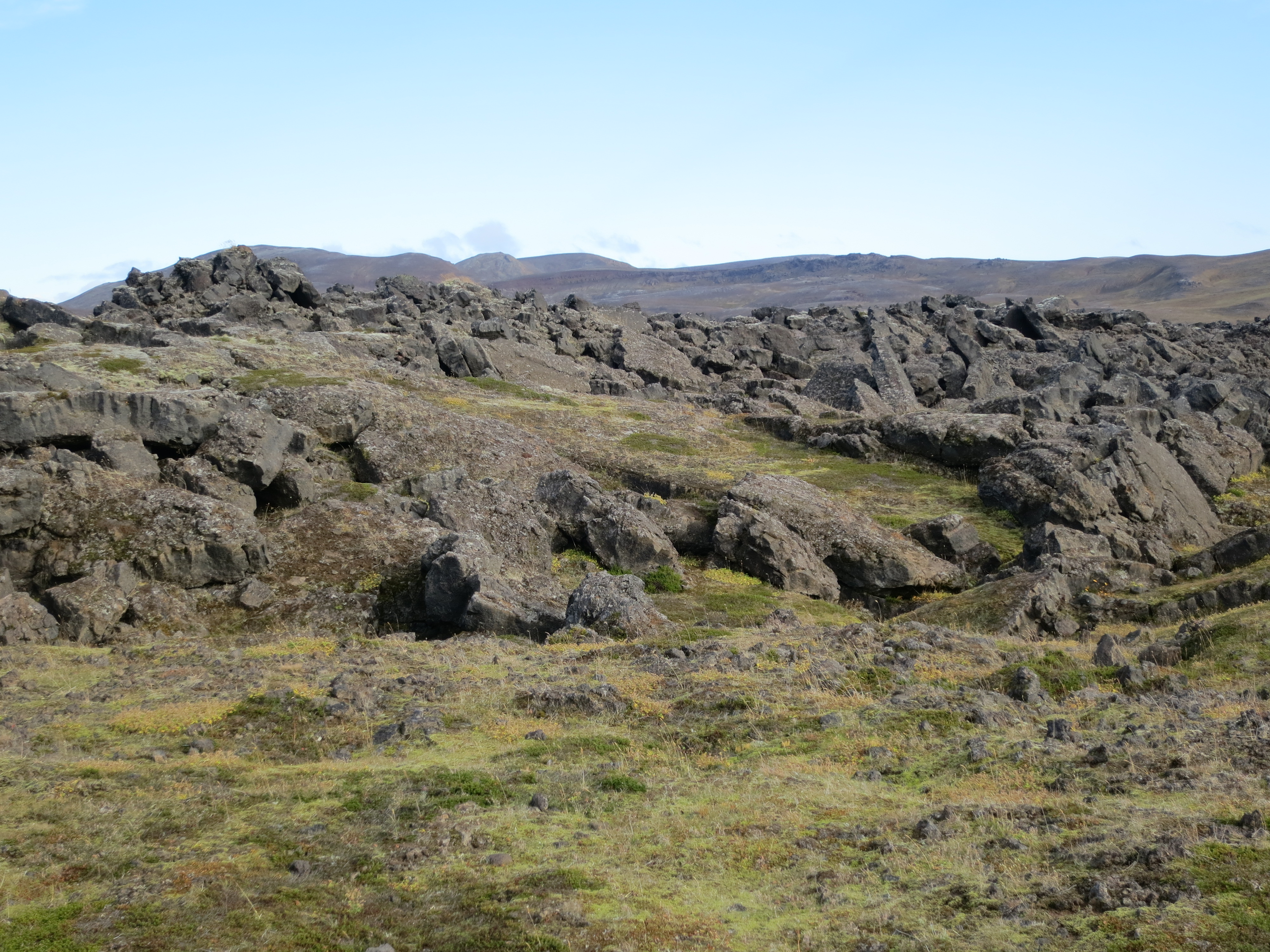
The lava boulders
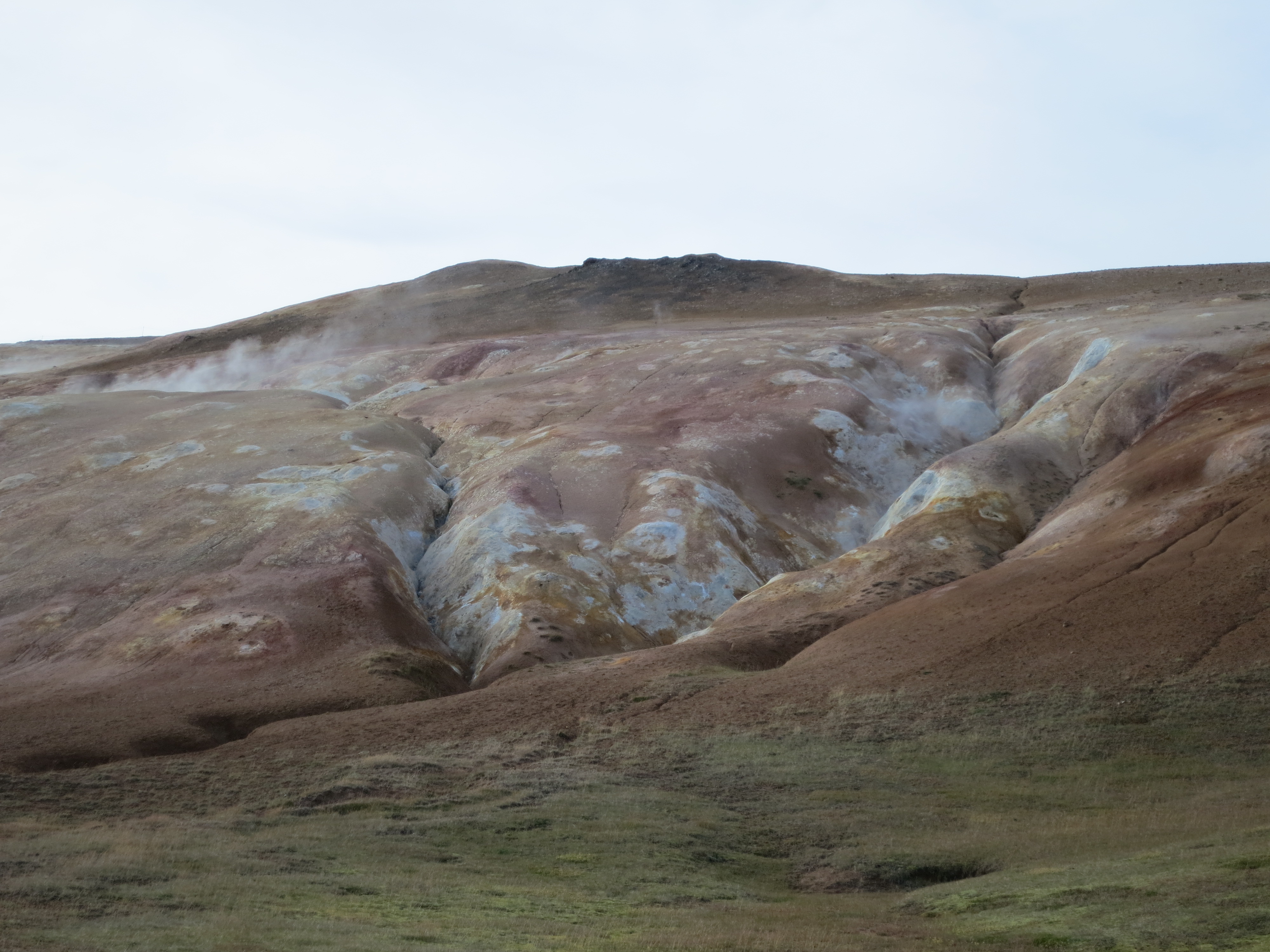
Steam rising off of the hills that are discoloured with sulphur and other volcanic minerals
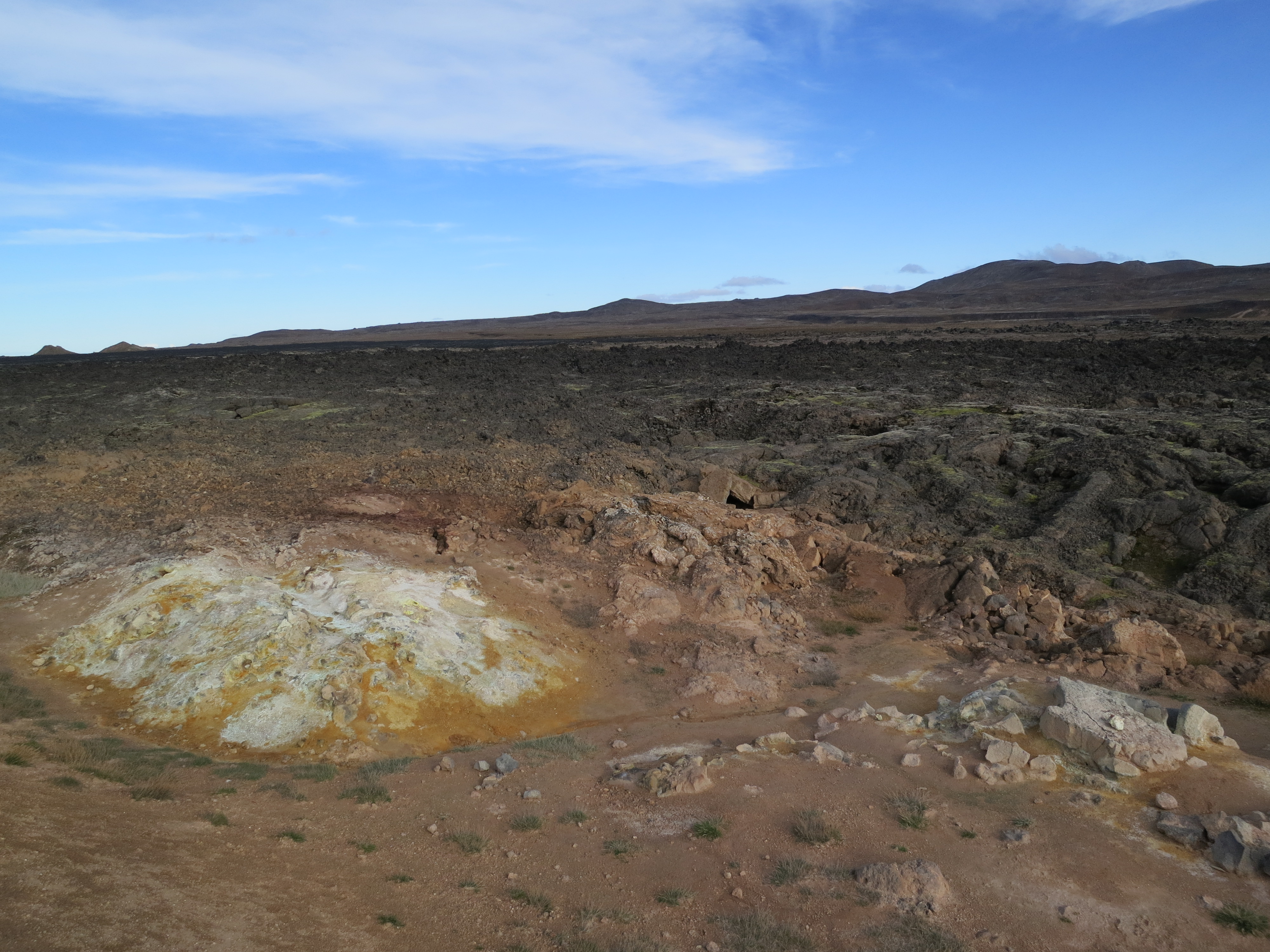
The Leirhnjúkur lava field
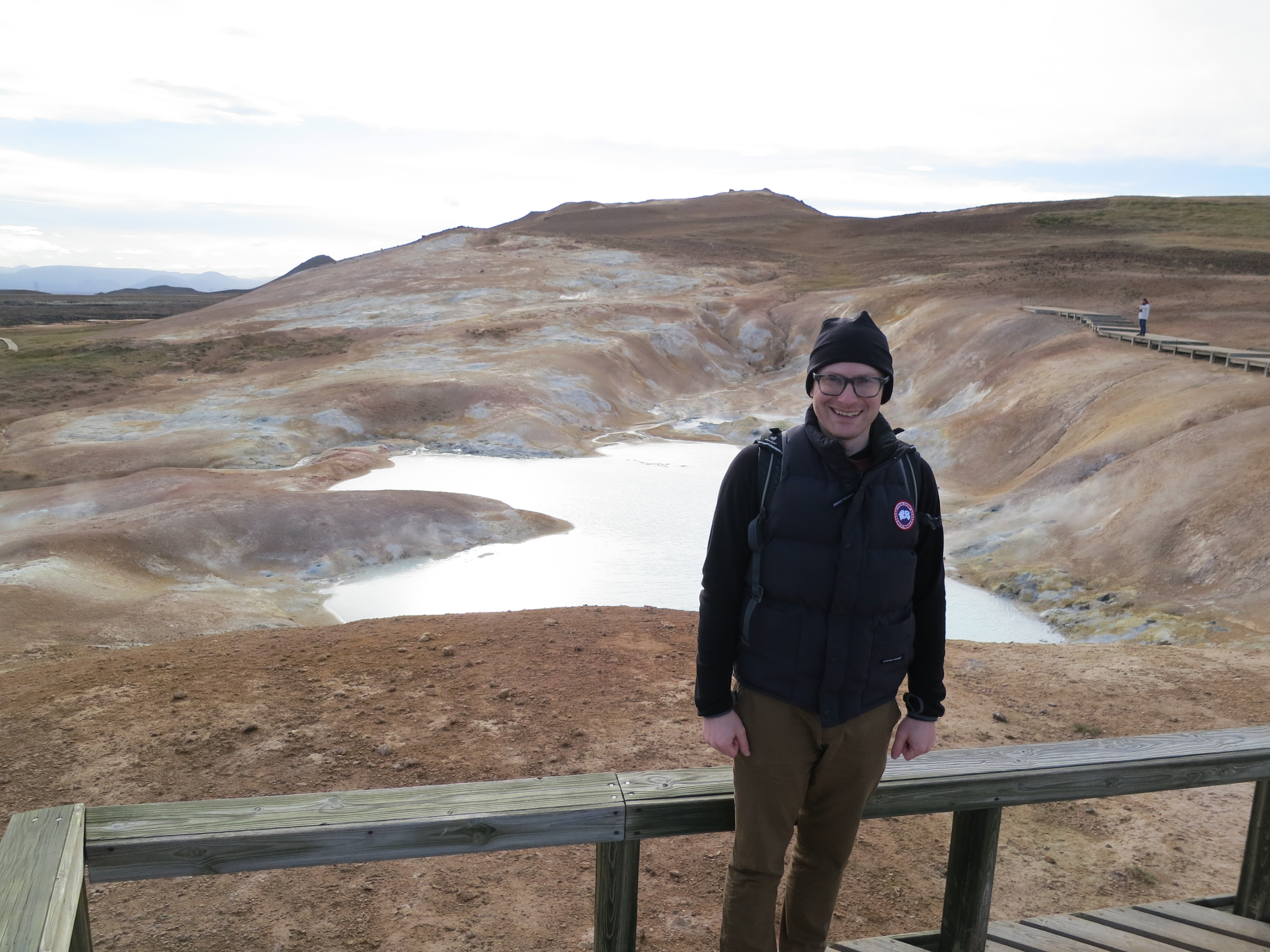
A steaming lake in the lava field
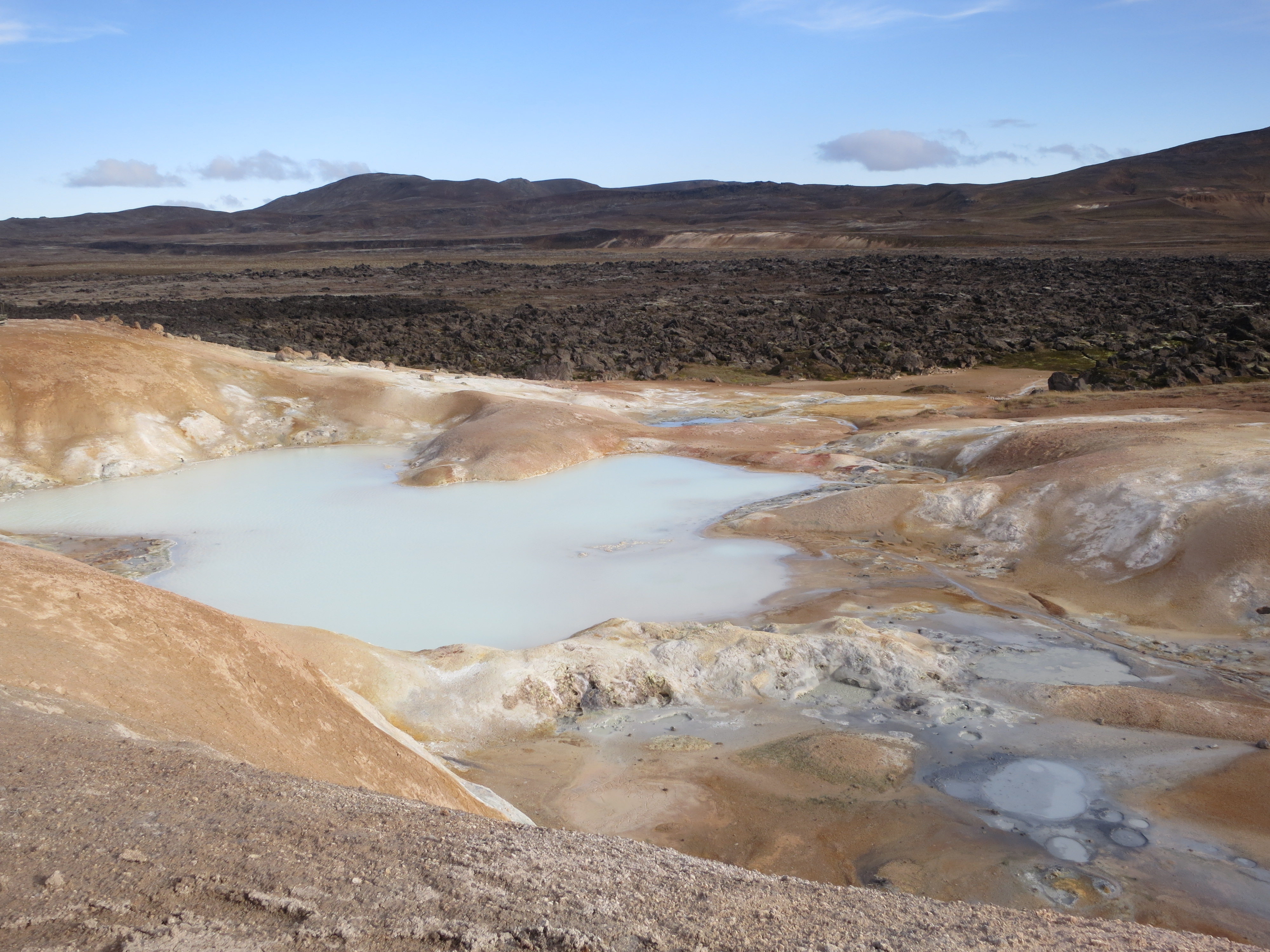
Lake with the lava field in the background
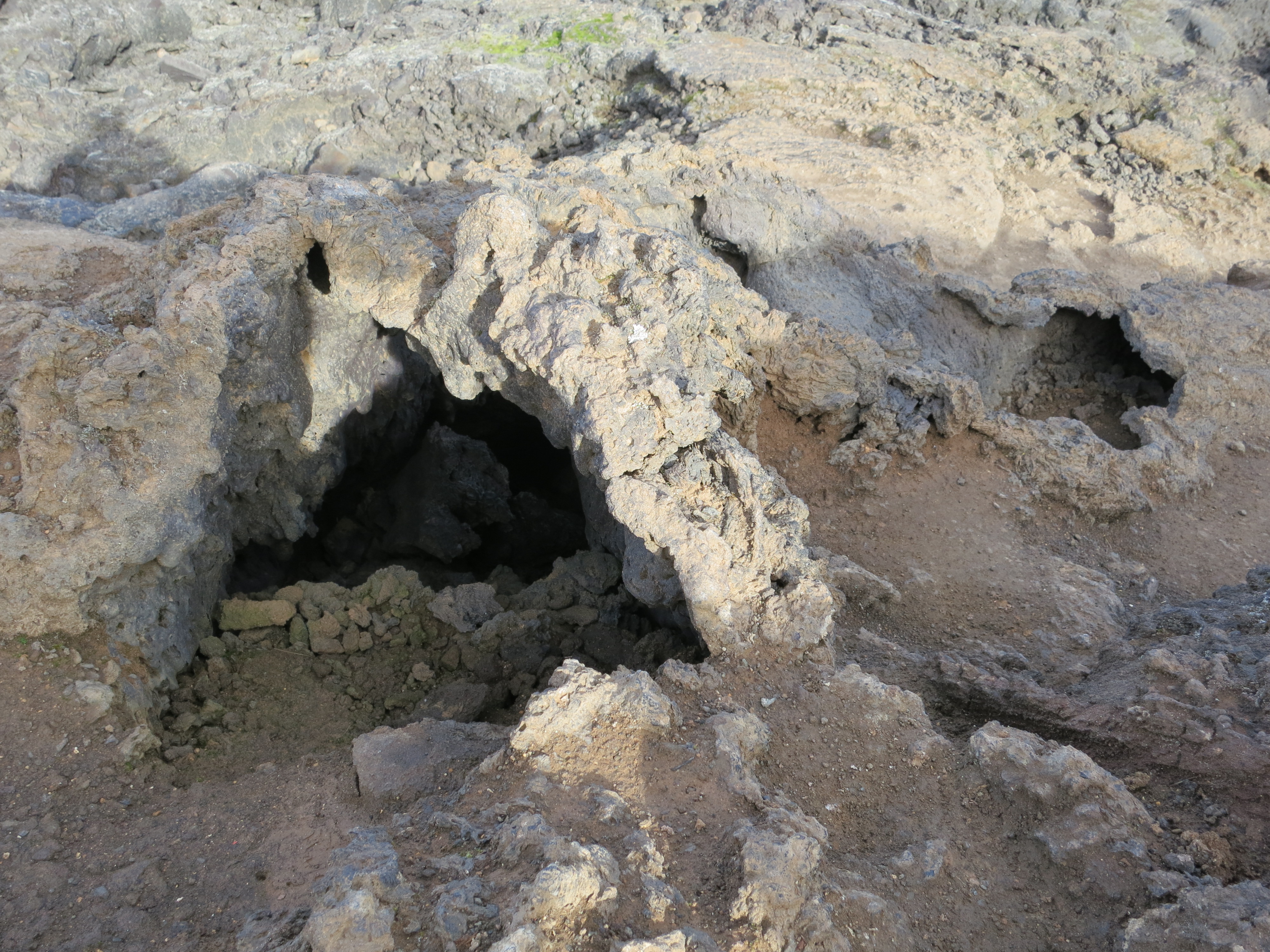
Collapsed lava tube
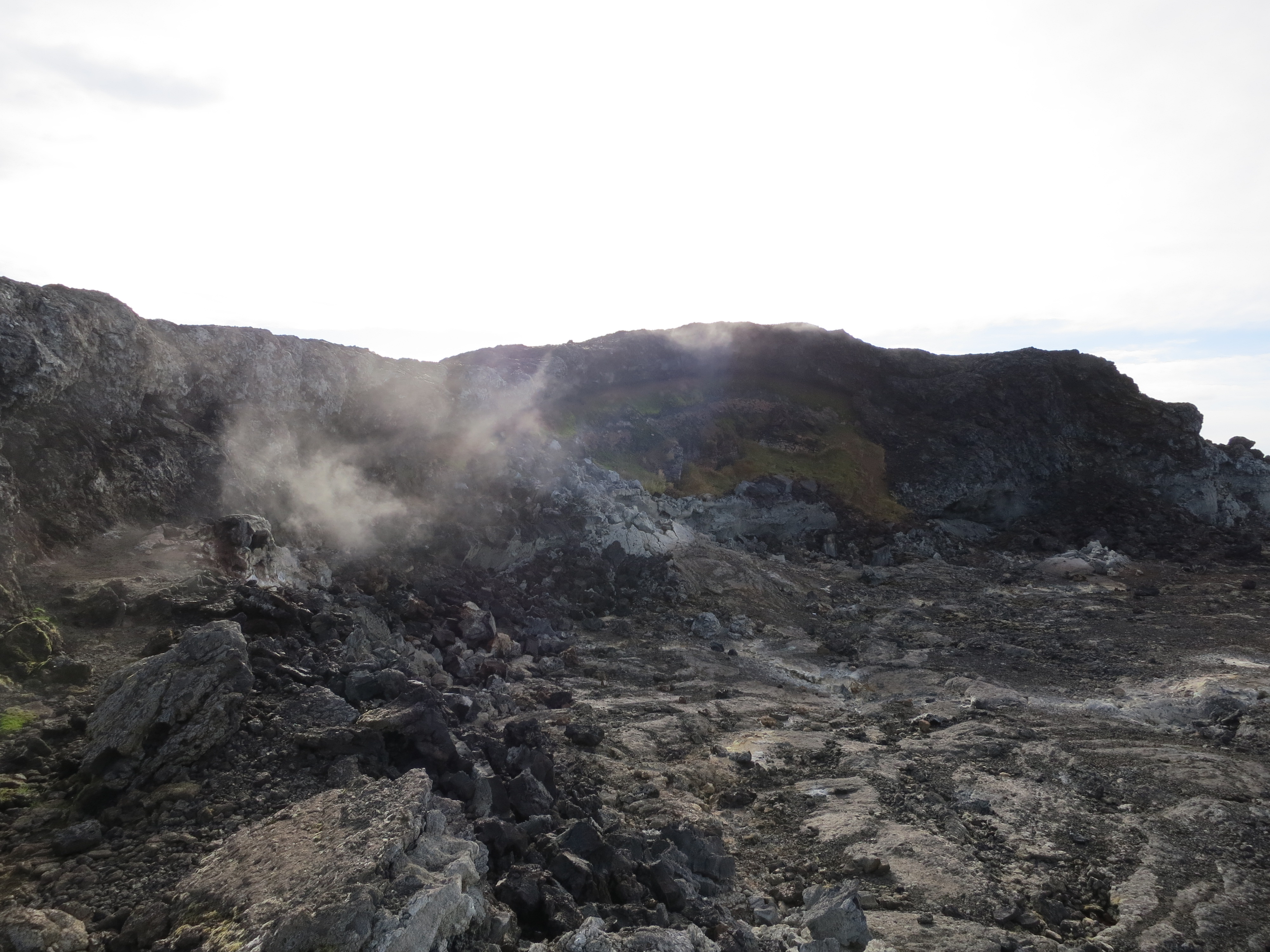
The lava field is still hot; the ground is steaming here
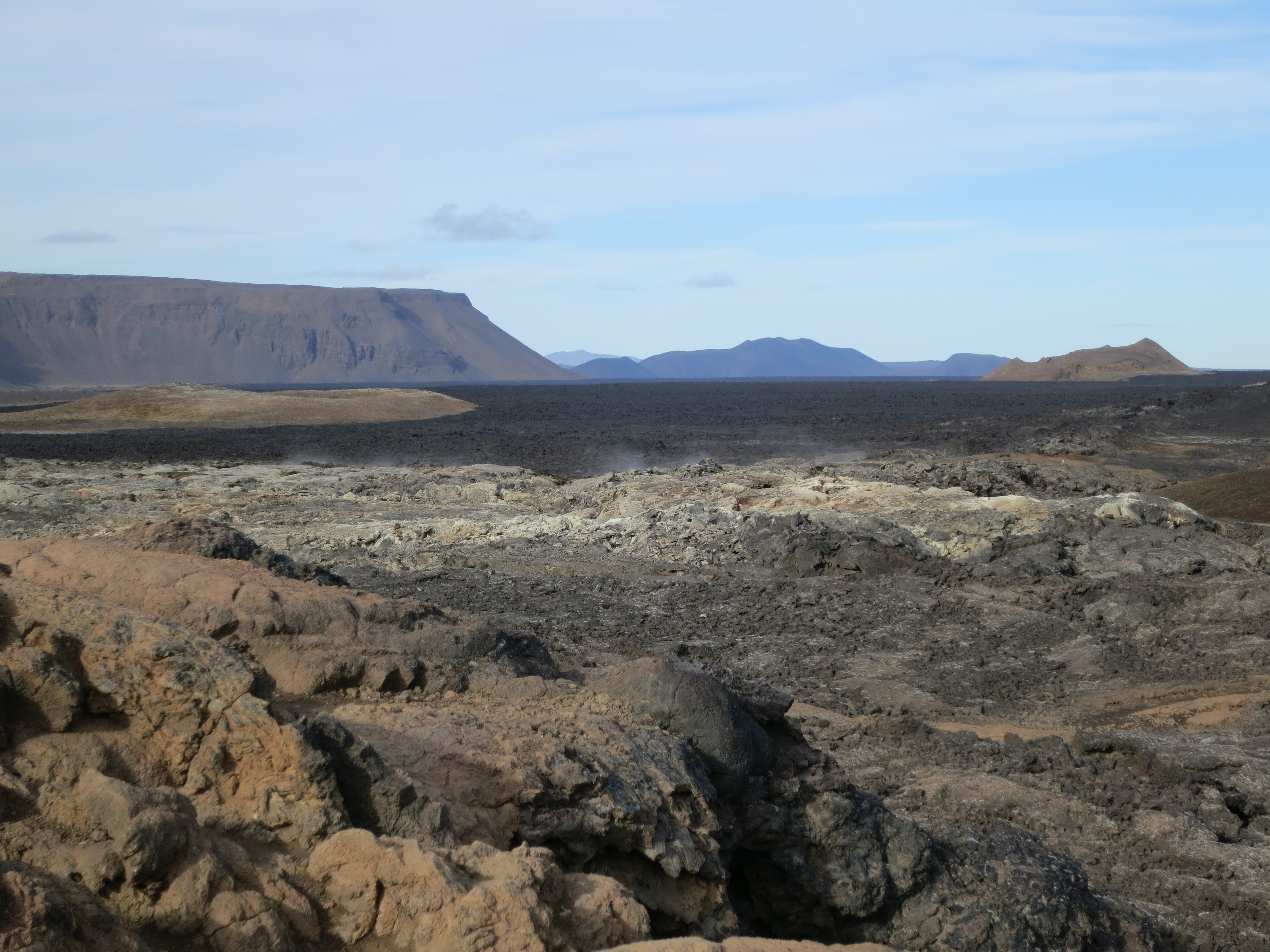
The lava flow left higher parts of the ground isolated like islands
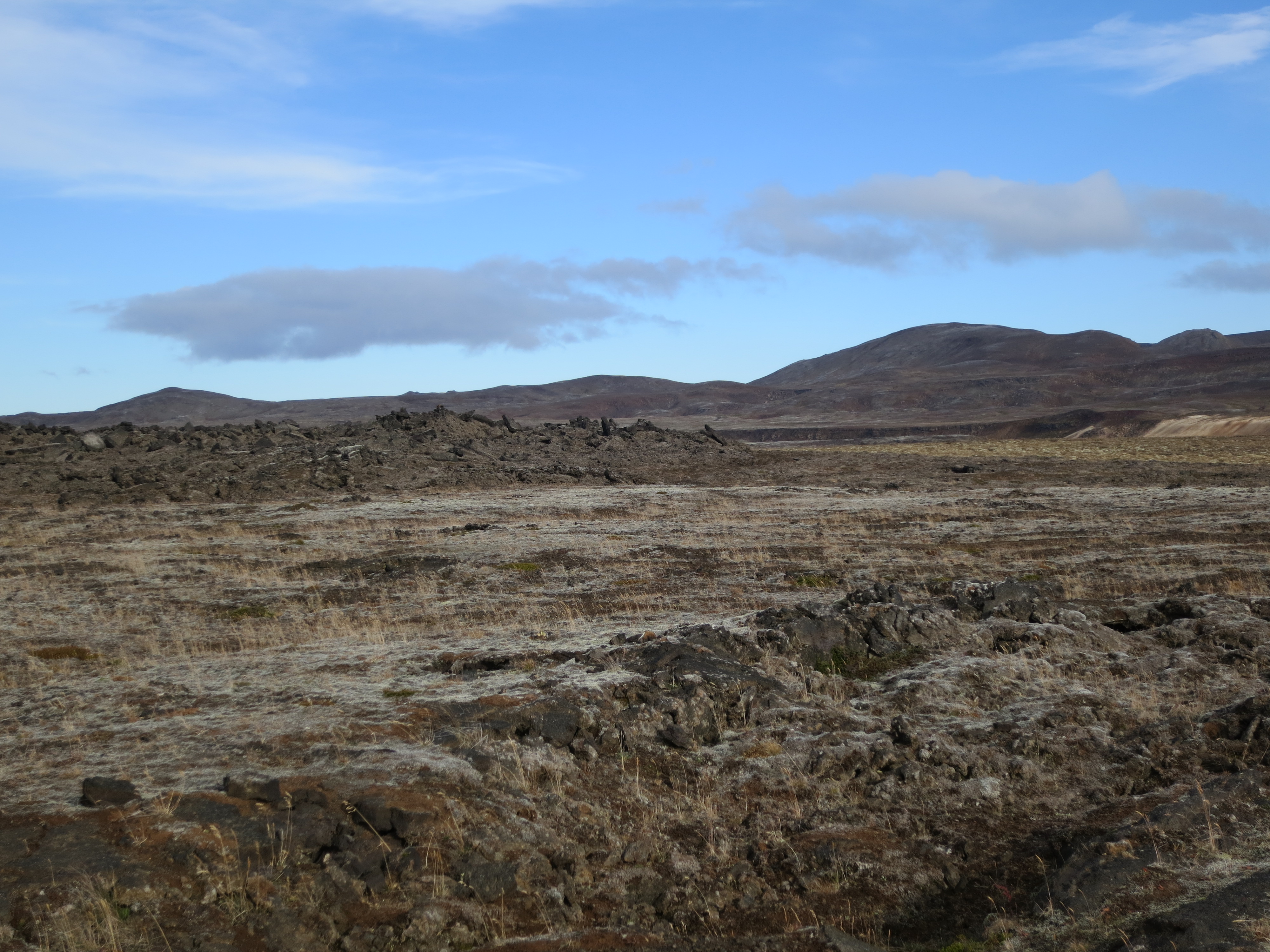
Another view of the hike towards the lava field
We walked back to the car, drove back to the ring road, then crossed the ring road to access the parking lot for Hverarönd. This area of mud flats is still geothermally active, and has a number of steam vents. The smell of sulphur here is quite strong. Some parts of the mud flats have small rivers of hot sulphur water running through them; other areas the mud can be seen bubbling up from the earth. We didn’t spend too long here (the smell was quite strong if you were downwind of the vents), before we continued on.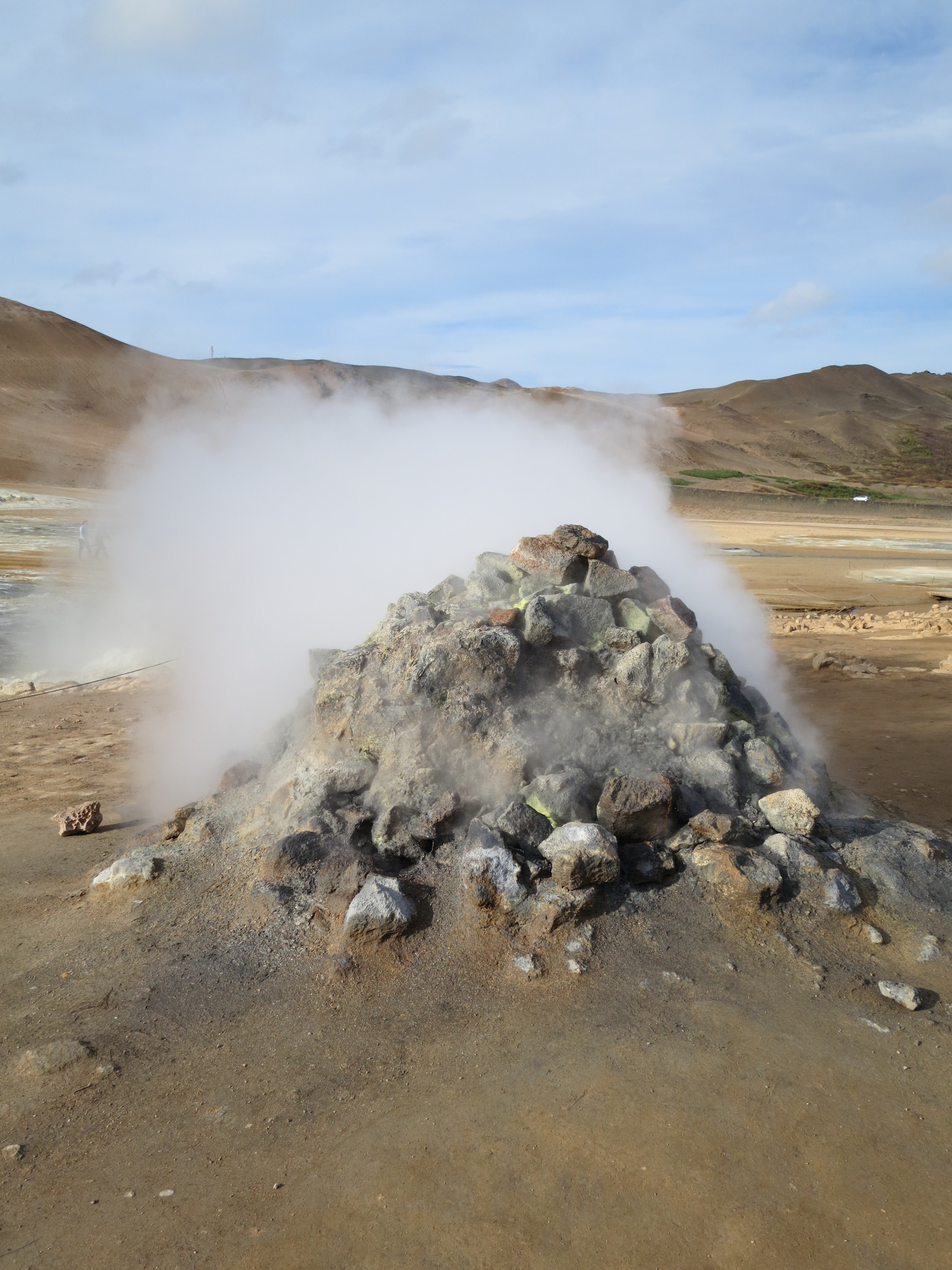
A steam vent
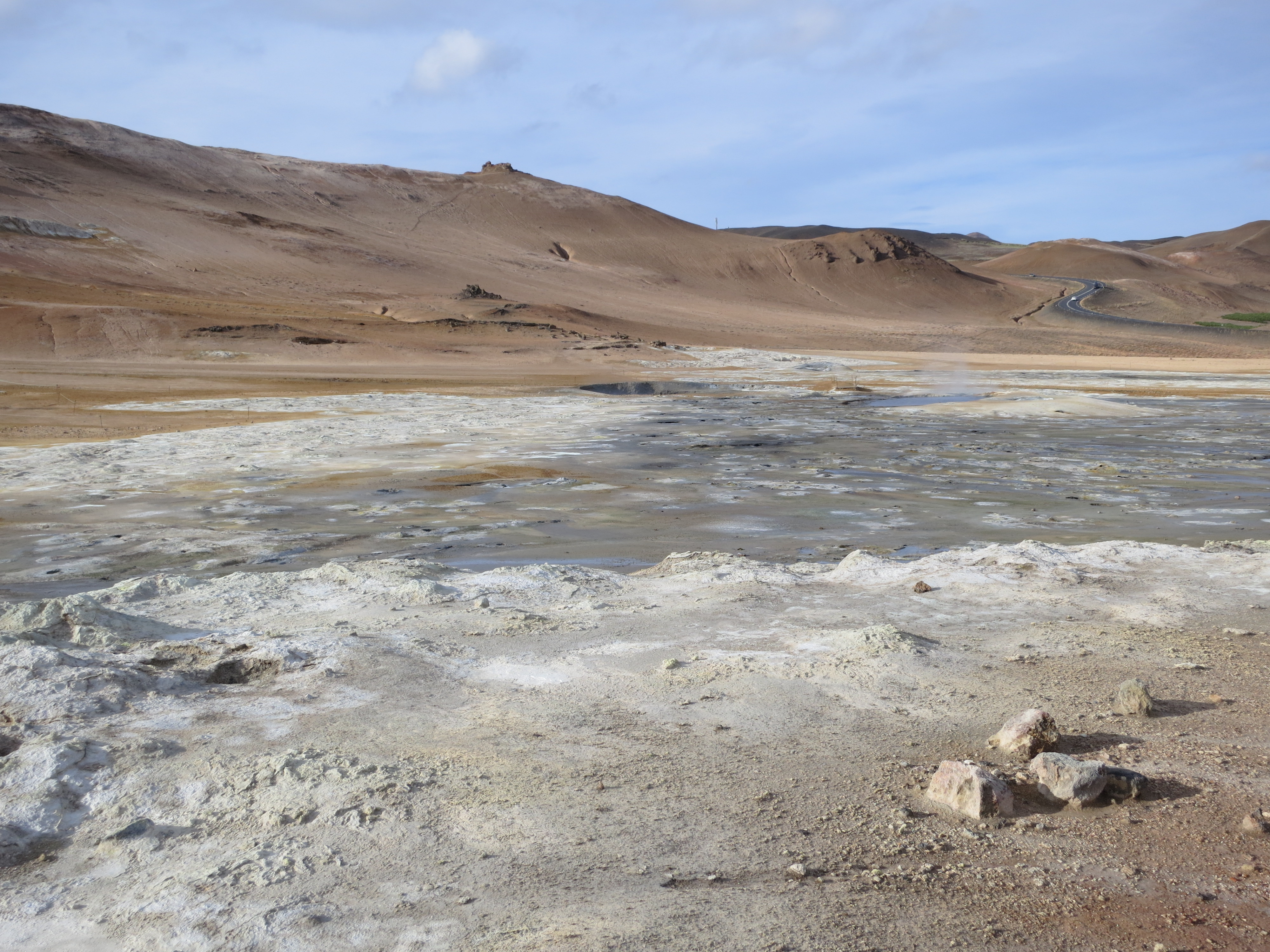
The mud flats, with the ring road visible in the back right
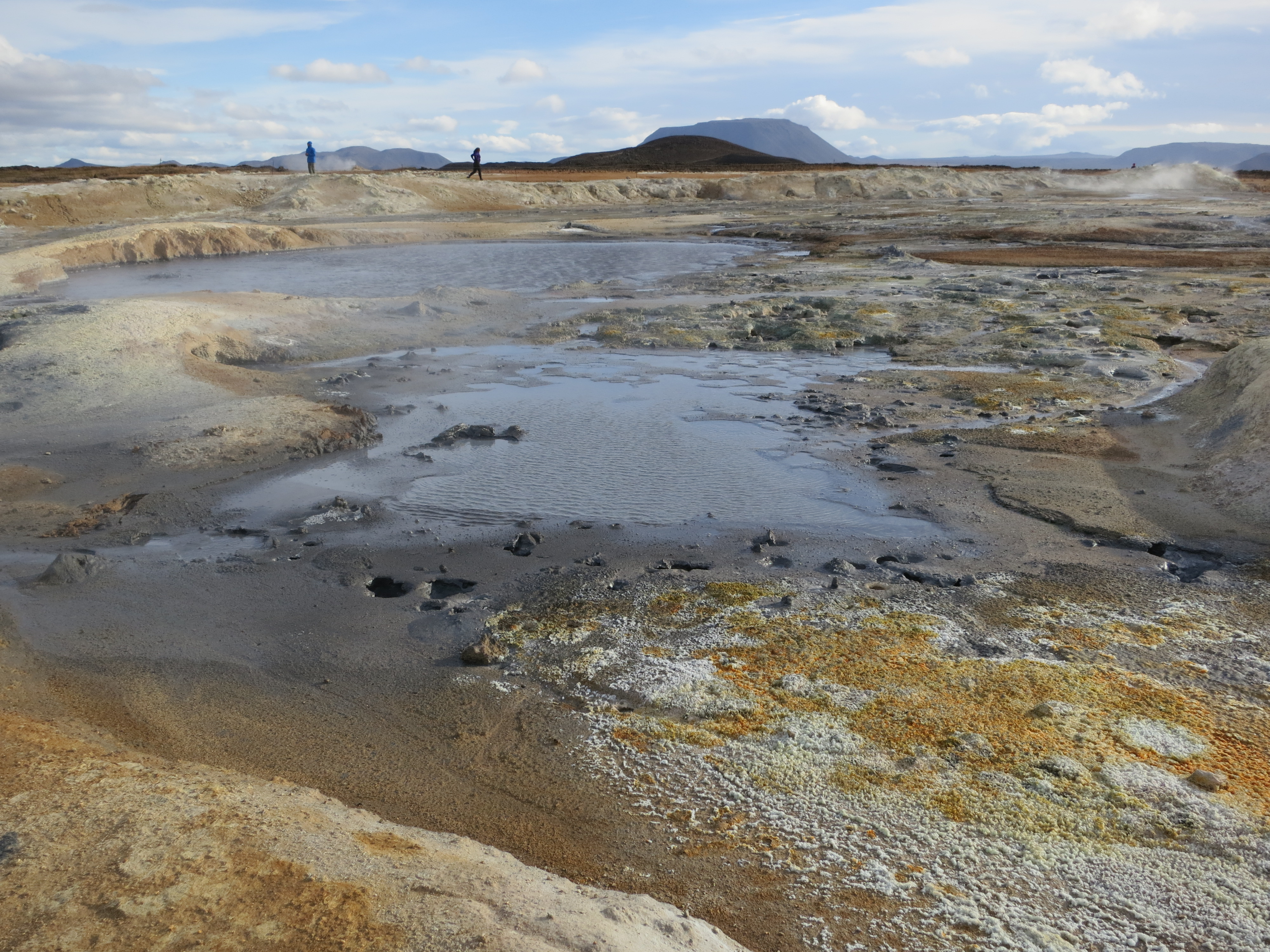
The sulphur ponds
We left the mud flats and drove into Mývatn. Our first stop was at the visitor centre, where we quickly saw some exhibits about the formation of the lake and the wildlife that currently inhabits it. We had a quick lunch at the grocery store next door (a sub sandwich with ham, cheese, pepperoni and mustard) before we continued on. We began driving around Lake Mývatn, stopping at a couple of view points to get photos of the lake and the surrounding environment. We got about halfway around the lake before we arrived at the Skútustaðagígar pseudo craters. We parked here and hiked around the pseudo craters. These were formed by steam explosions that occurred when lava flowed over the wetlands; they now form a habit used by a number of different birds. We saw some birds floating on the surface of the lake, but none were in the wetland area. The walk took about half an hour.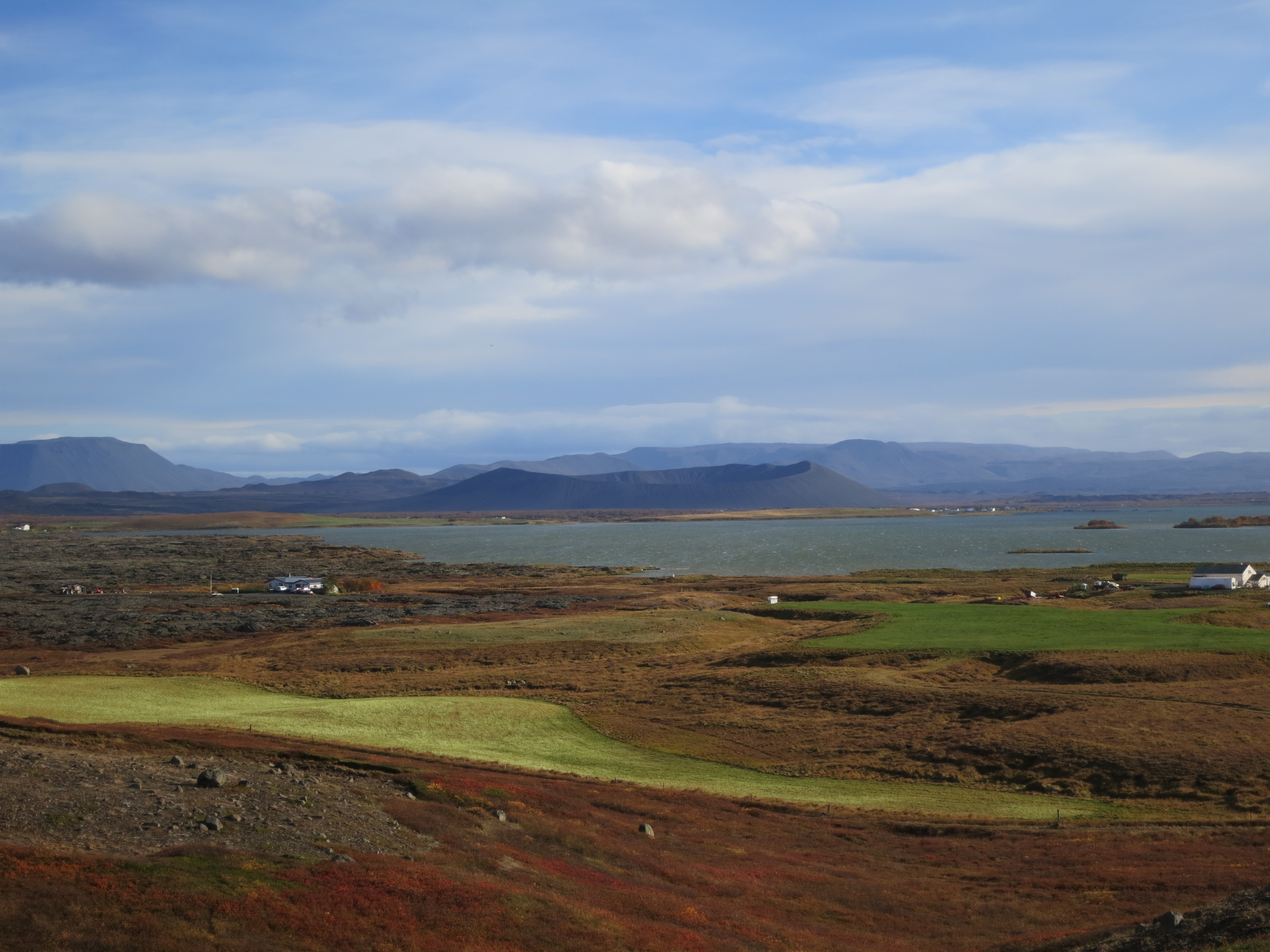
Lake Mývatn, with the Hverfjall crater in the background
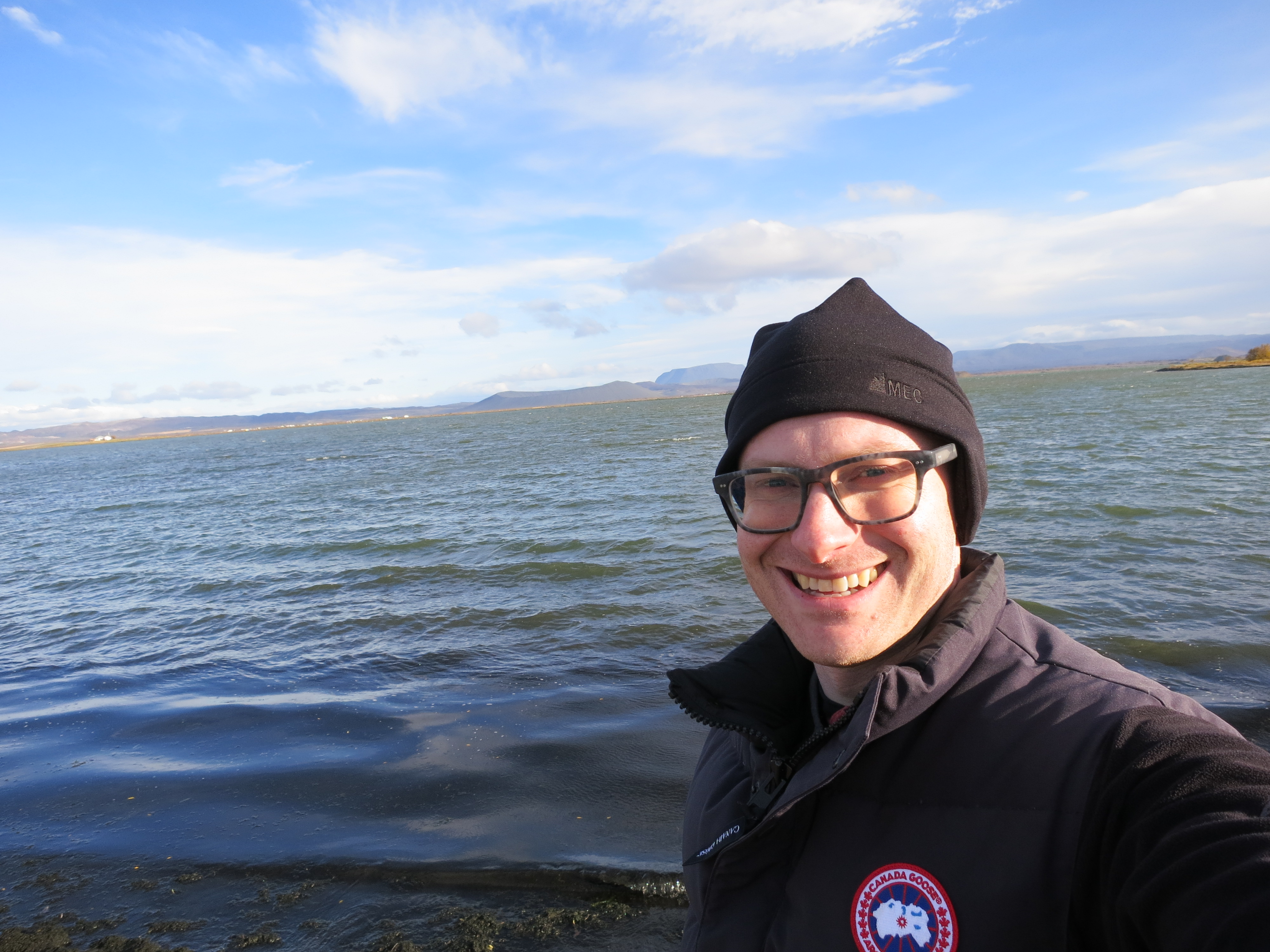
Standing at the edge of the lake
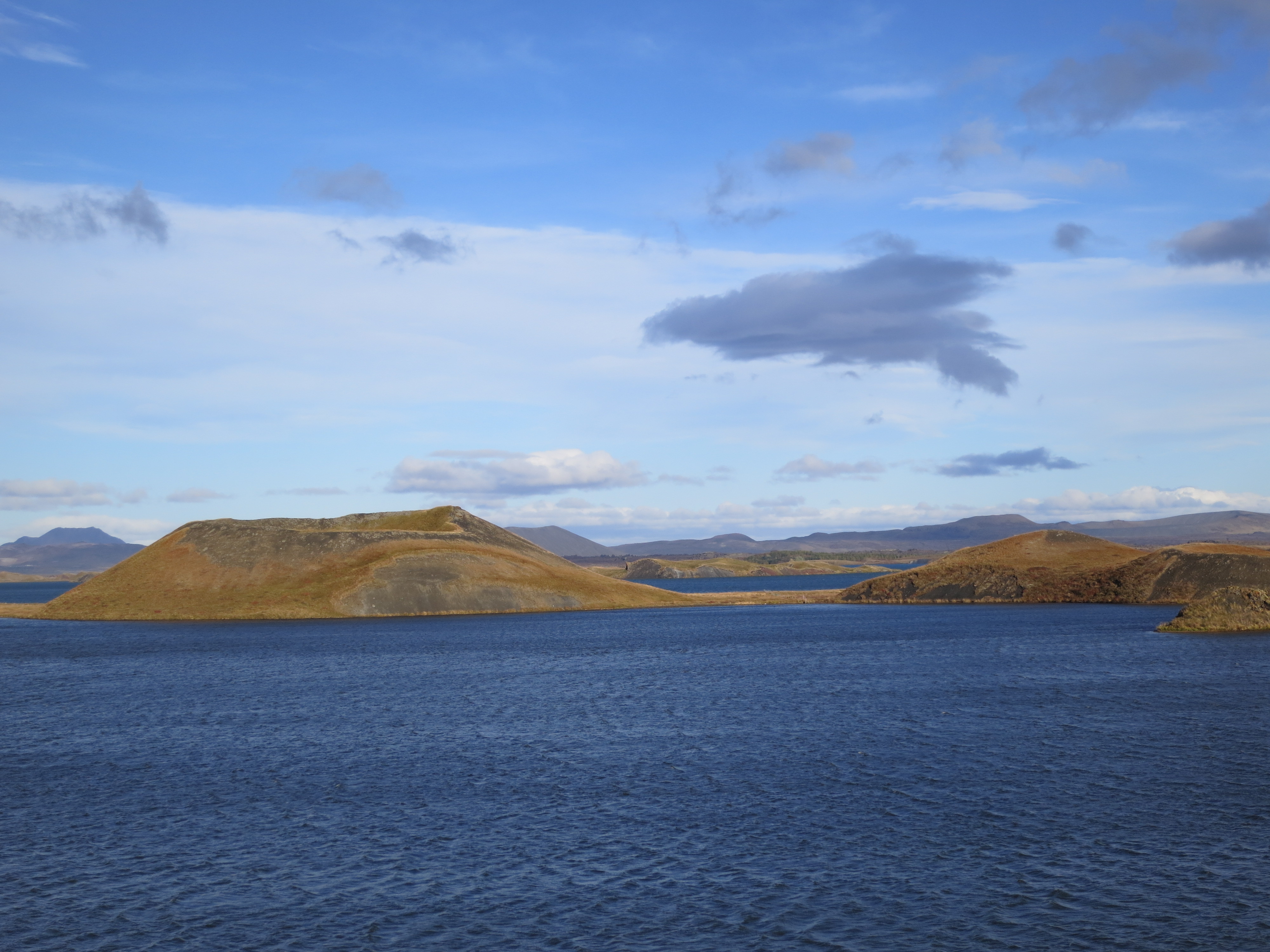
Pseudo craters
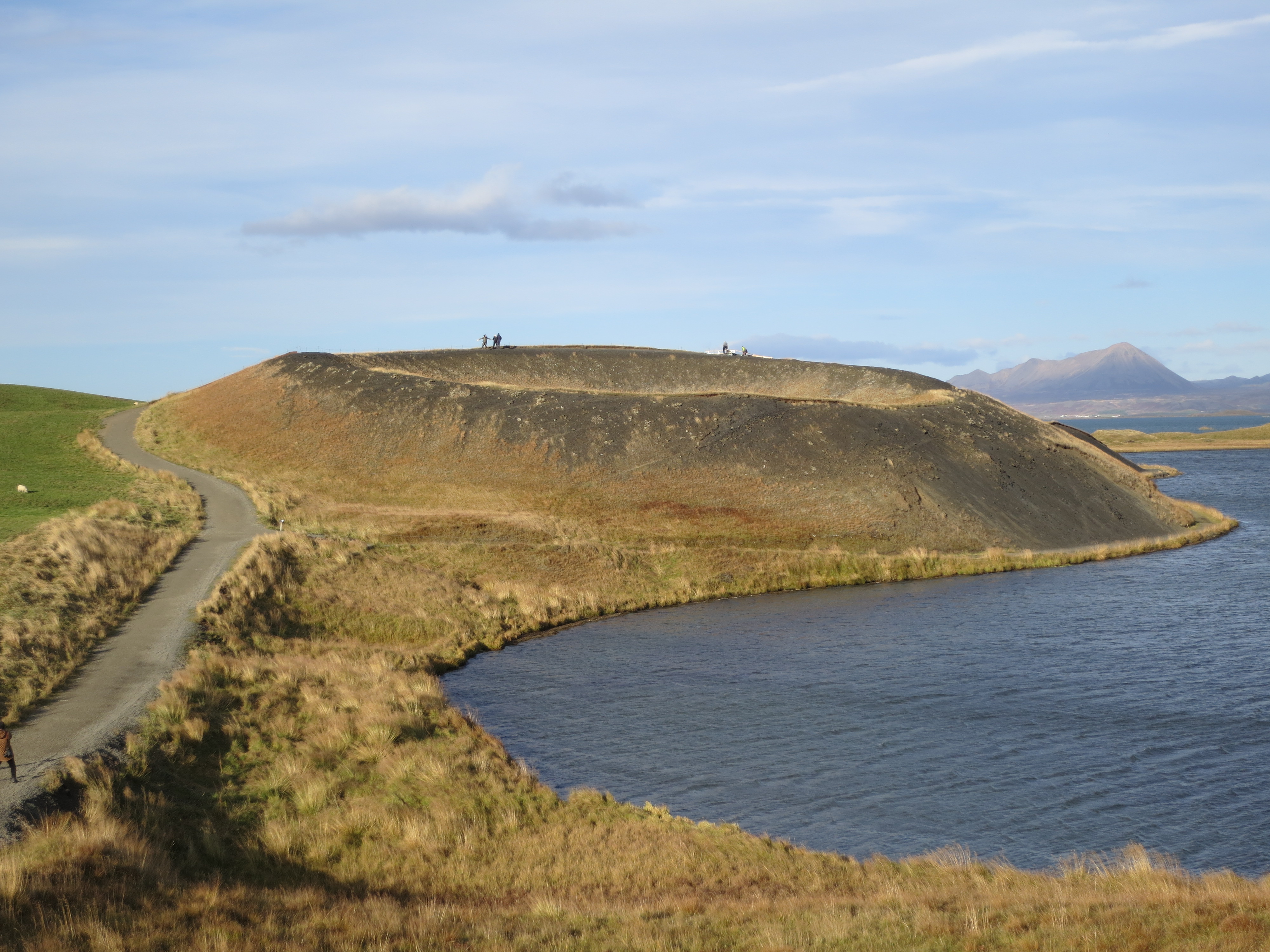
A pseudo crater. It isn't terribly large
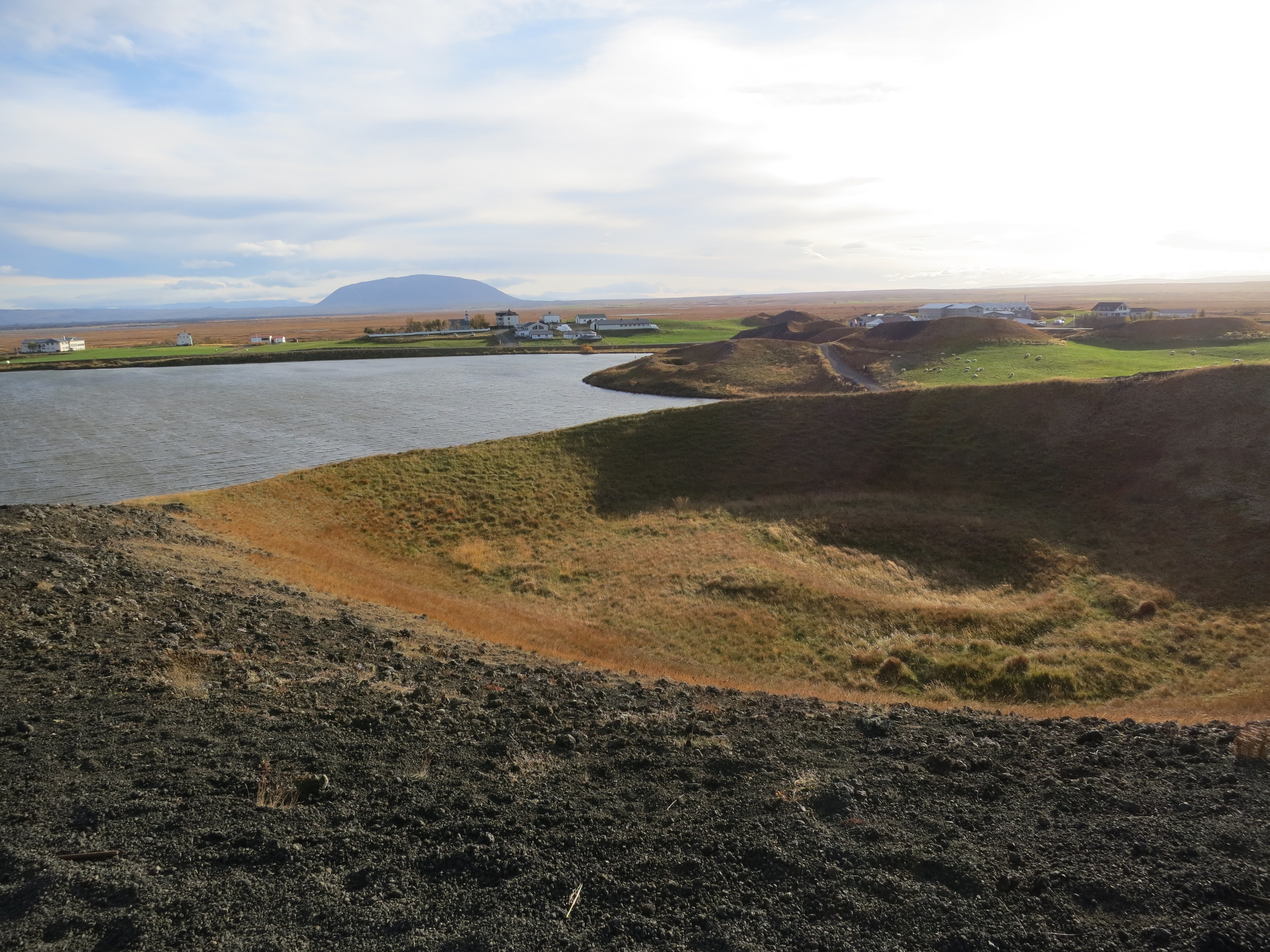
The pseudo craters all have grass growing in them now
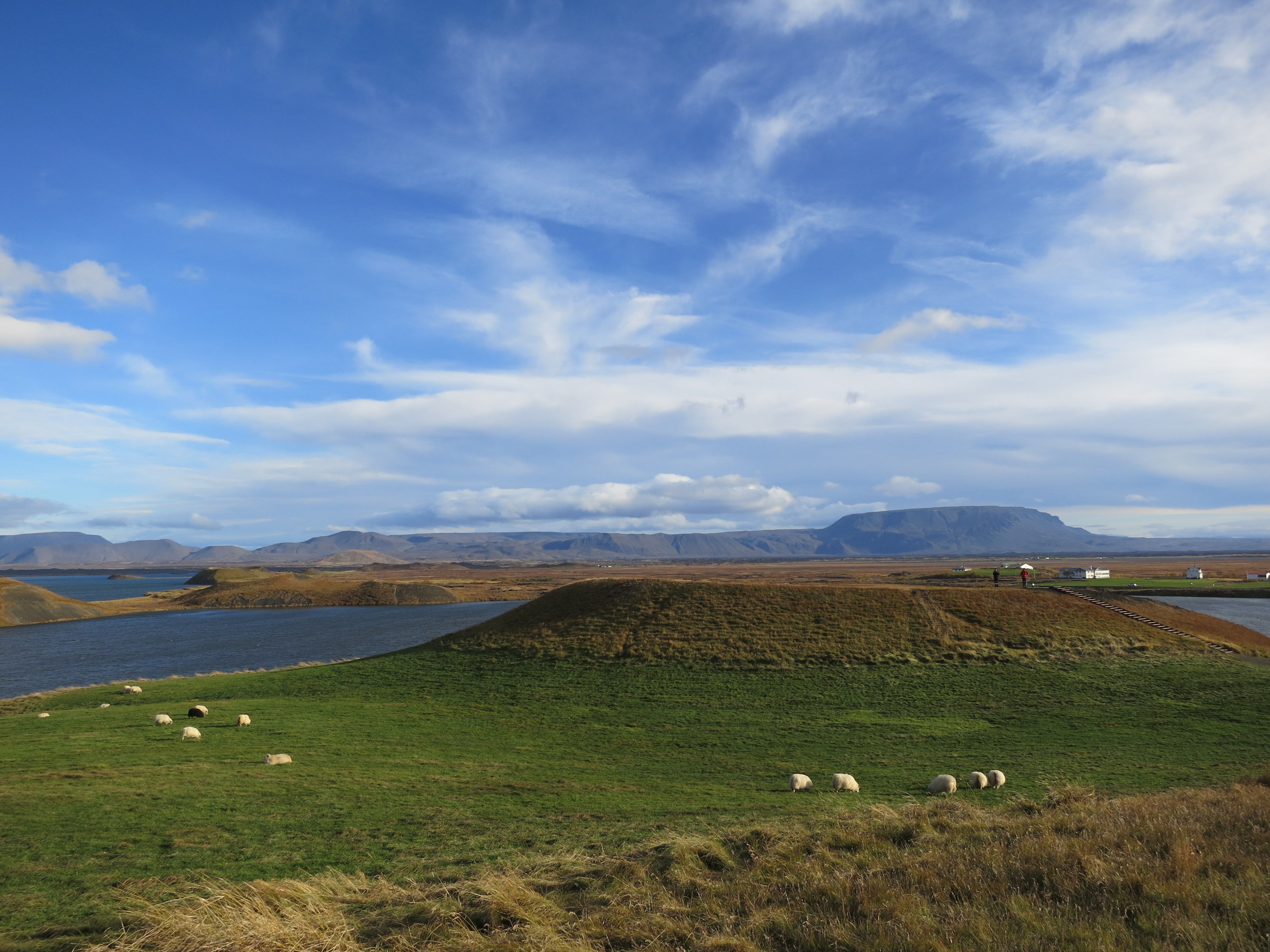
Sheep grazing between the pseudo craters
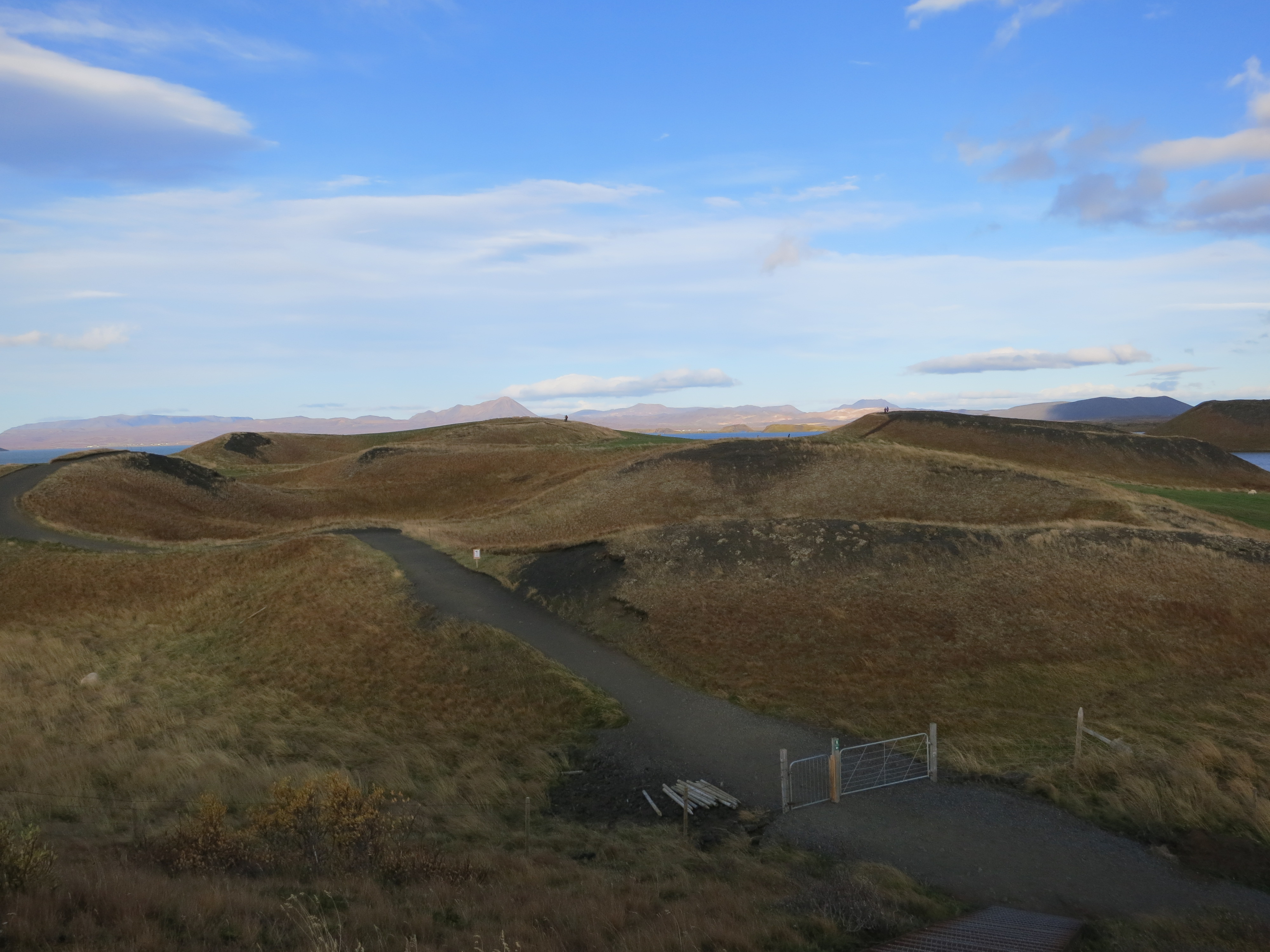
A view of the Skútustaðagígar pseudo crater field
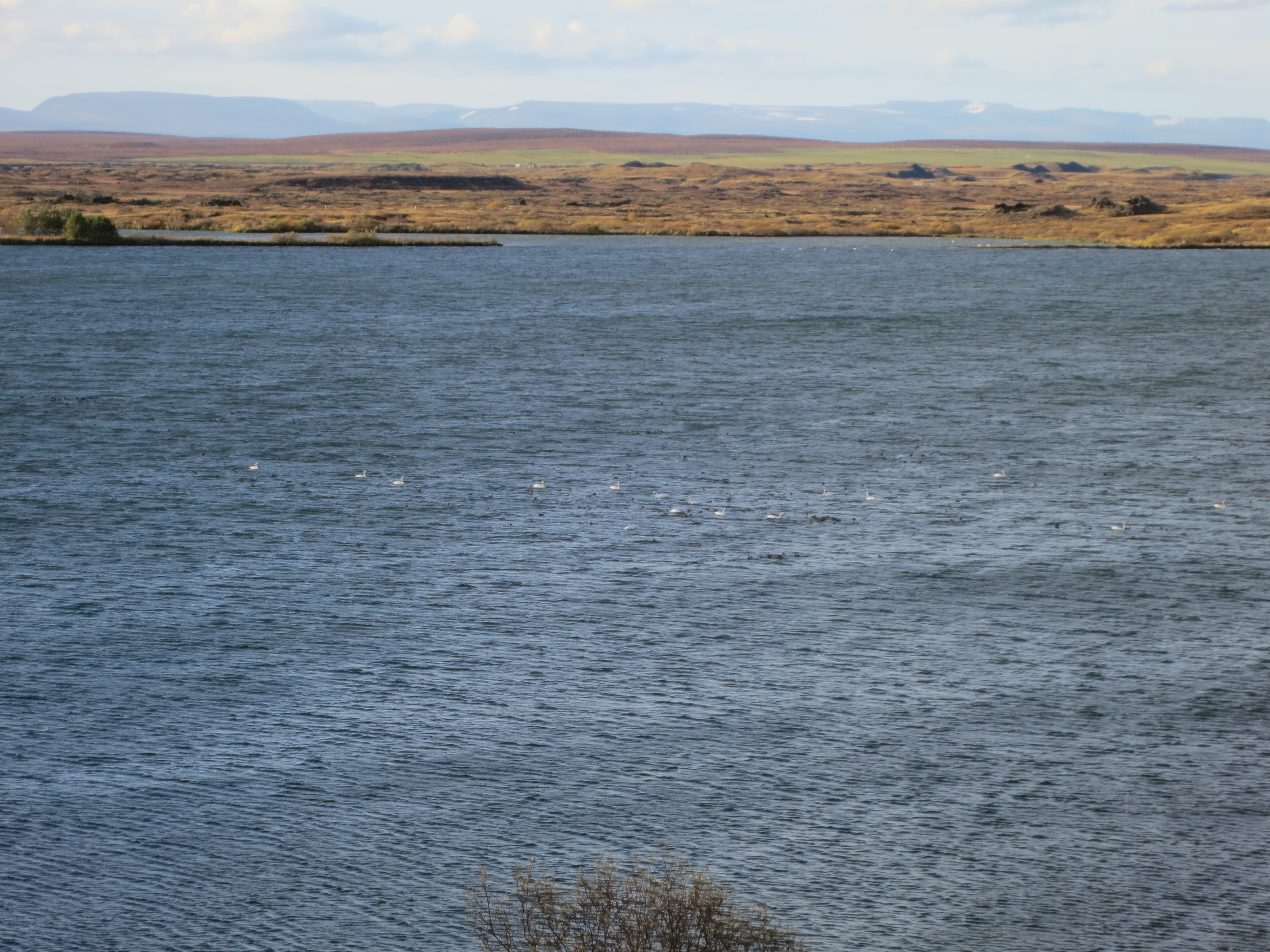
Birds in the lake by the pseudo craters
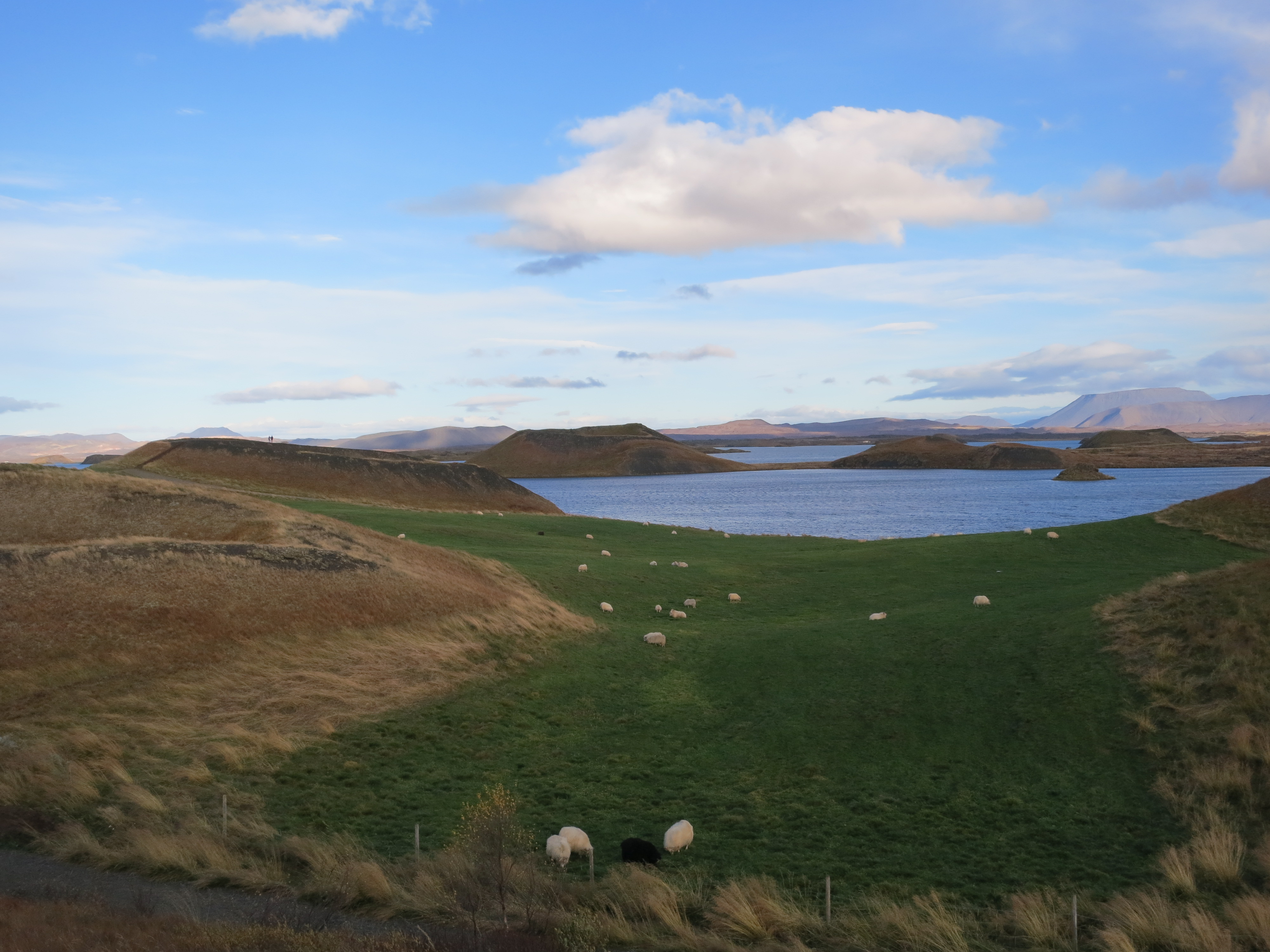
Another perspective of the pseudo craters
We got back into the car and continued onto our guesthouse for the evening, where we checked in and unpacked the car. The guesthouse was right on the lake, and had a gorgeous view of the area. We didn’t stay here long; we got back into the car and drove about 20 minutes to reach the Hverfjall crater.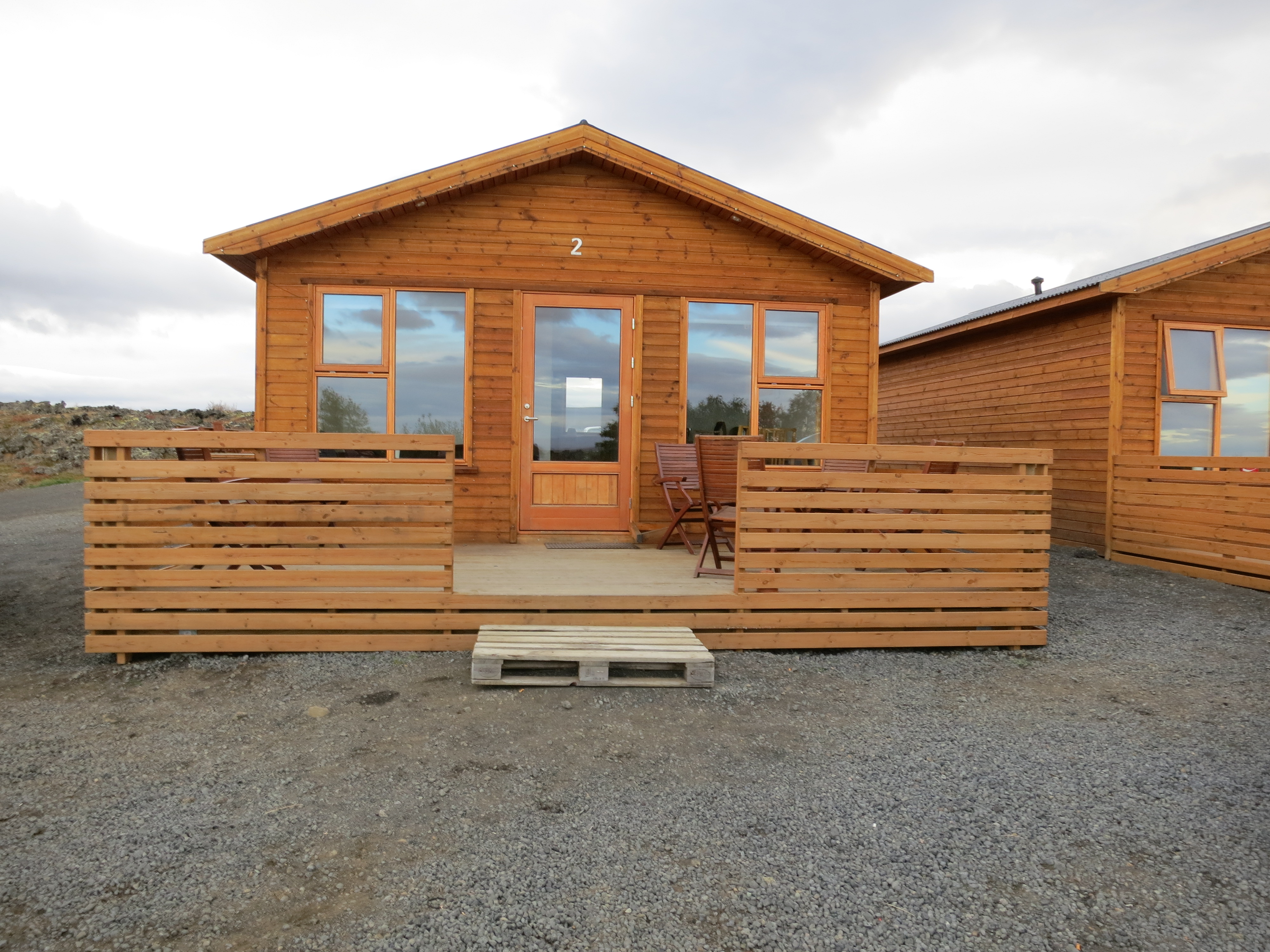
Our guesthouse
Hverfjall had been visible during our drive around the lake, and as we got closer to it the volcano seemed to grow until it filled the front windshield of the car. The conical shape of the volcano was super cool to see. We parked right at the base, and took the north path to the top of the volcano. The path was quite steep and the path was quite loose - the gravel kept moving beneath my shoes, however the hike was not terribly strenuous and only took about 15 minutes to complete. Once we reached the top we were greeted with a fantastic view into the volcano. No lake has formed in Hverfjall, instead there is a gravel dome in the centre. We decided against hiking around the top ring, as the volcano is quite large, and it was already 5:30 PM. After a few moments taking in the fantastic views of Lake Mývatn, we descended and continued on.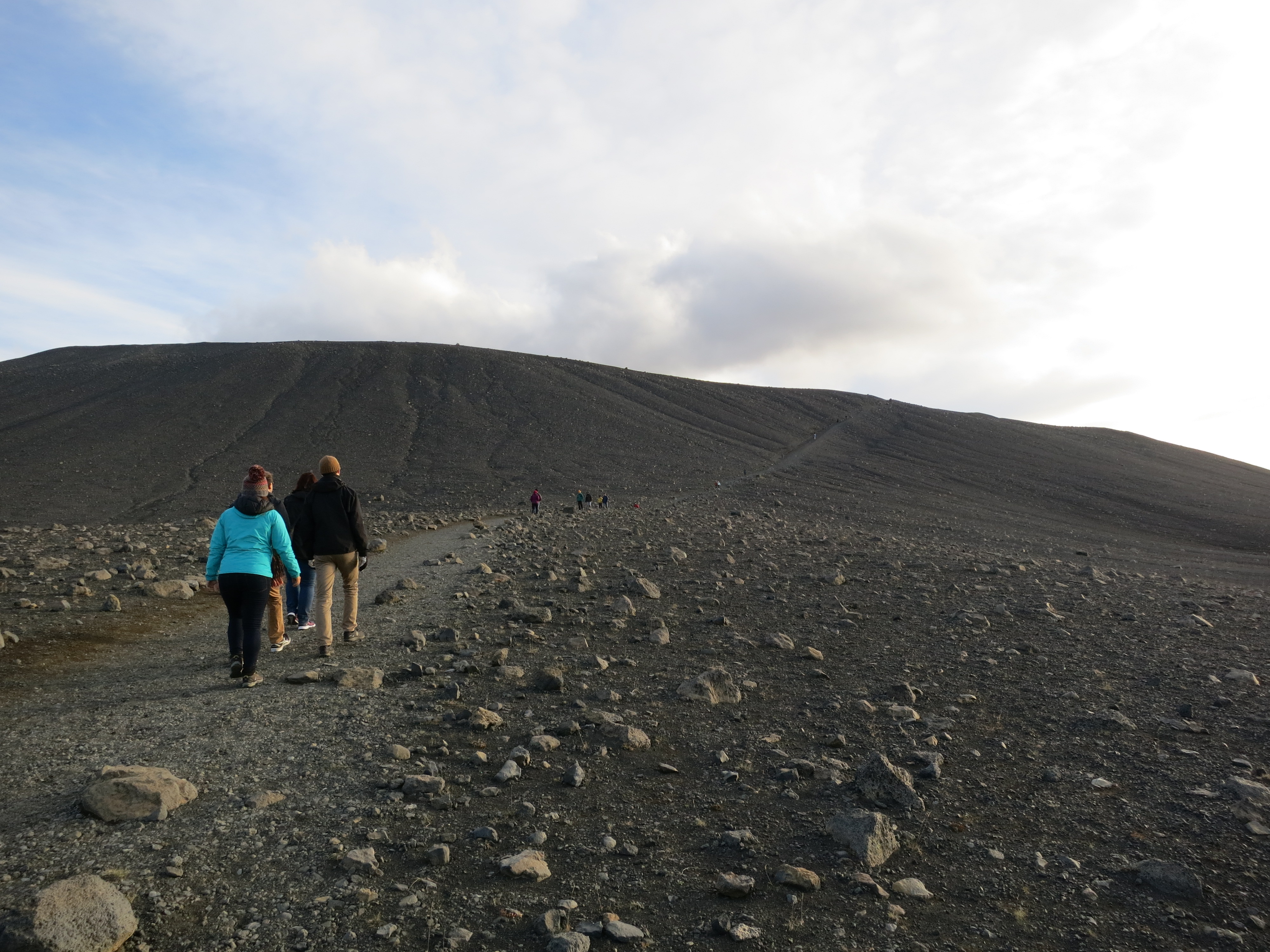
The group beginning the hike to the top of Hverfjall
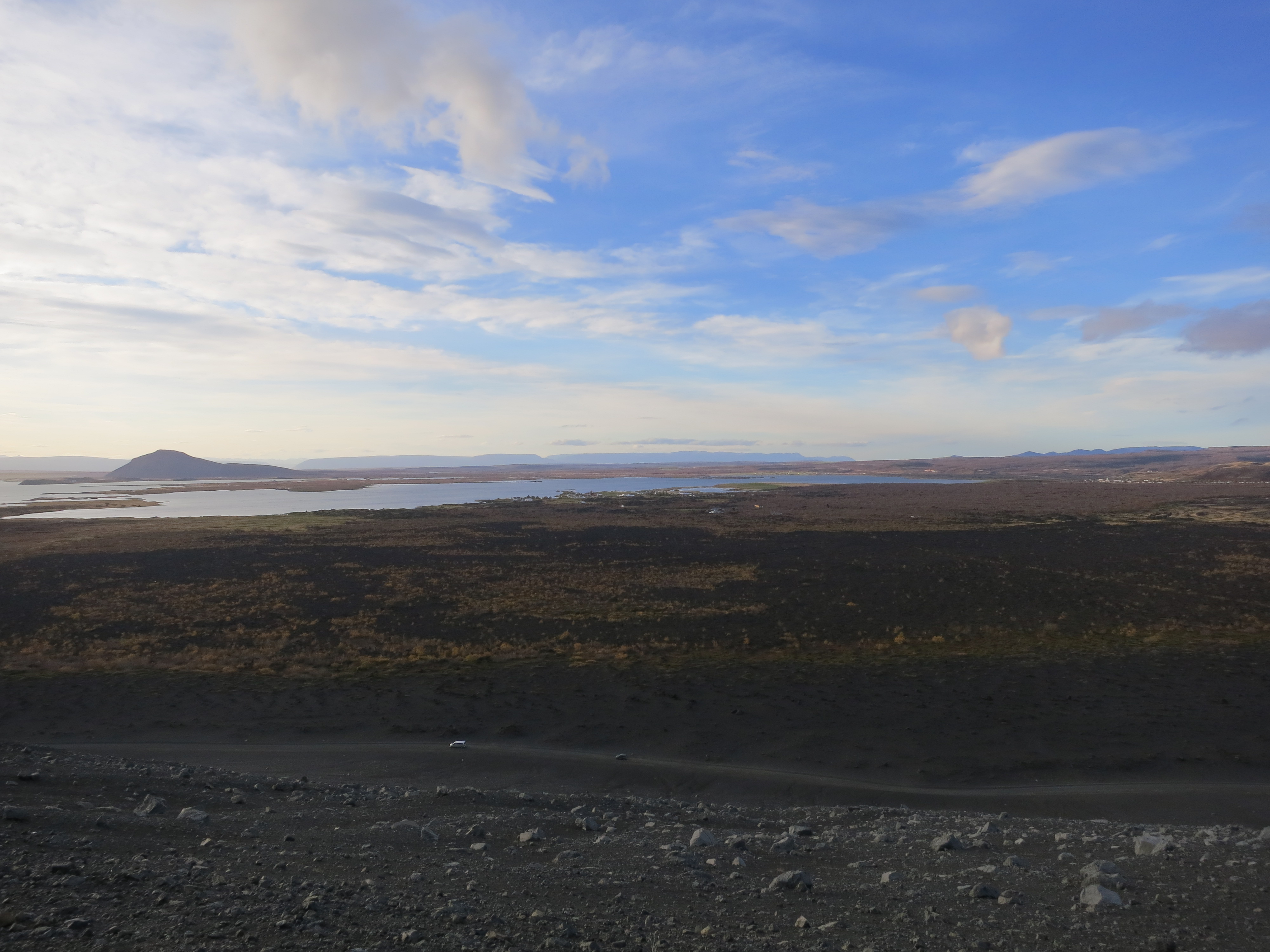
A view of Lake Mývatn from the top of Hverfjall

A 360 degree panorama. We ran around to make it into the picture a few times
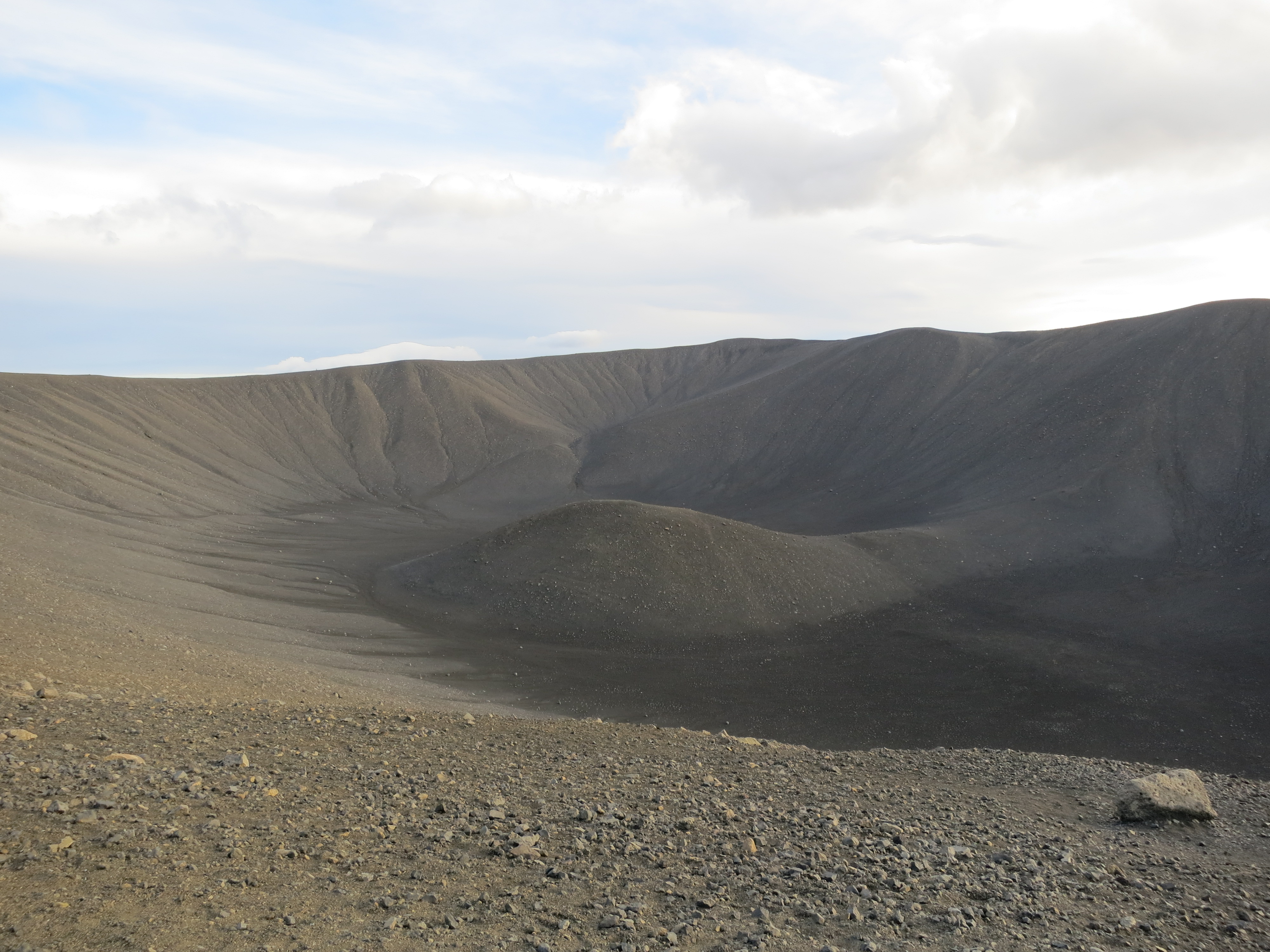
The dome at the centre of Hverfjall
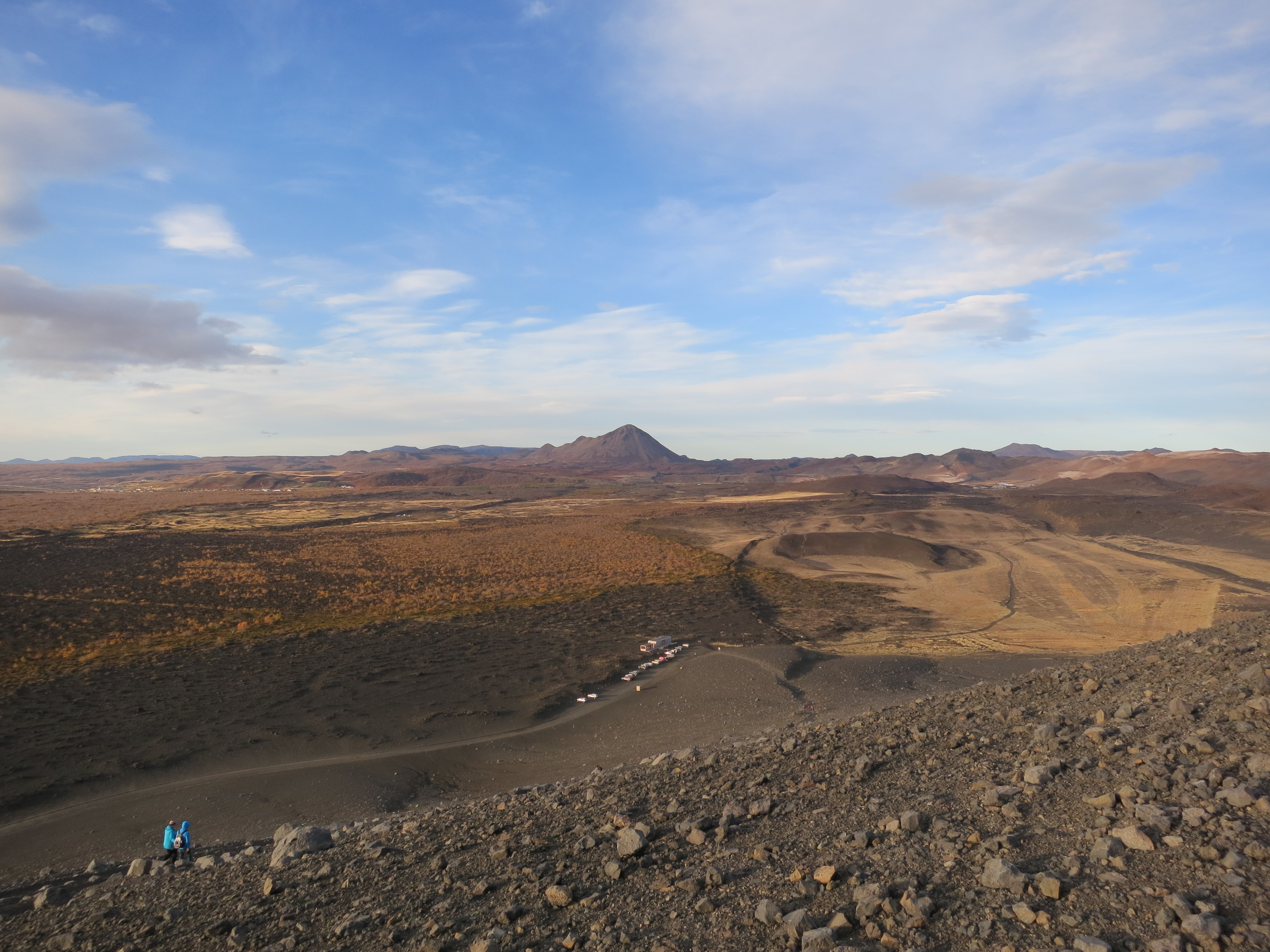
A look back towards the parking lot from the top of Hverfjall
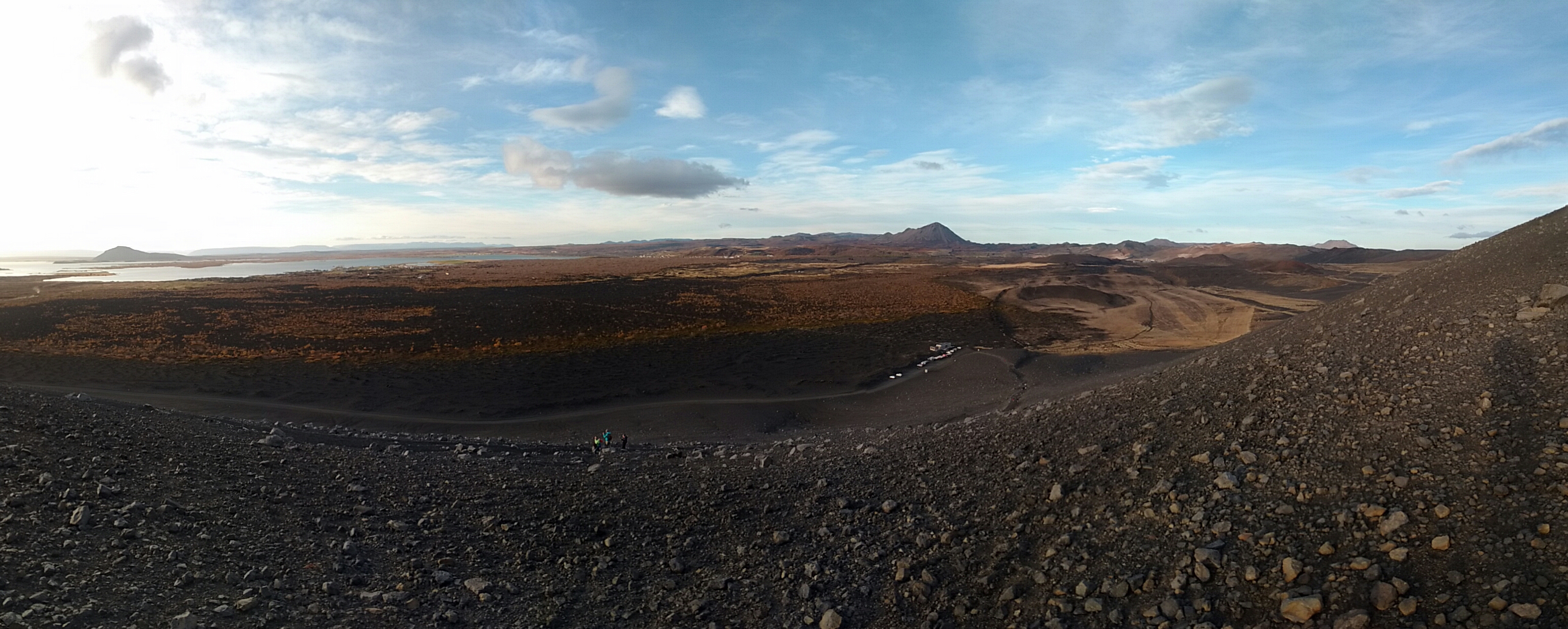
A panorama taken from the top of Hverfjall
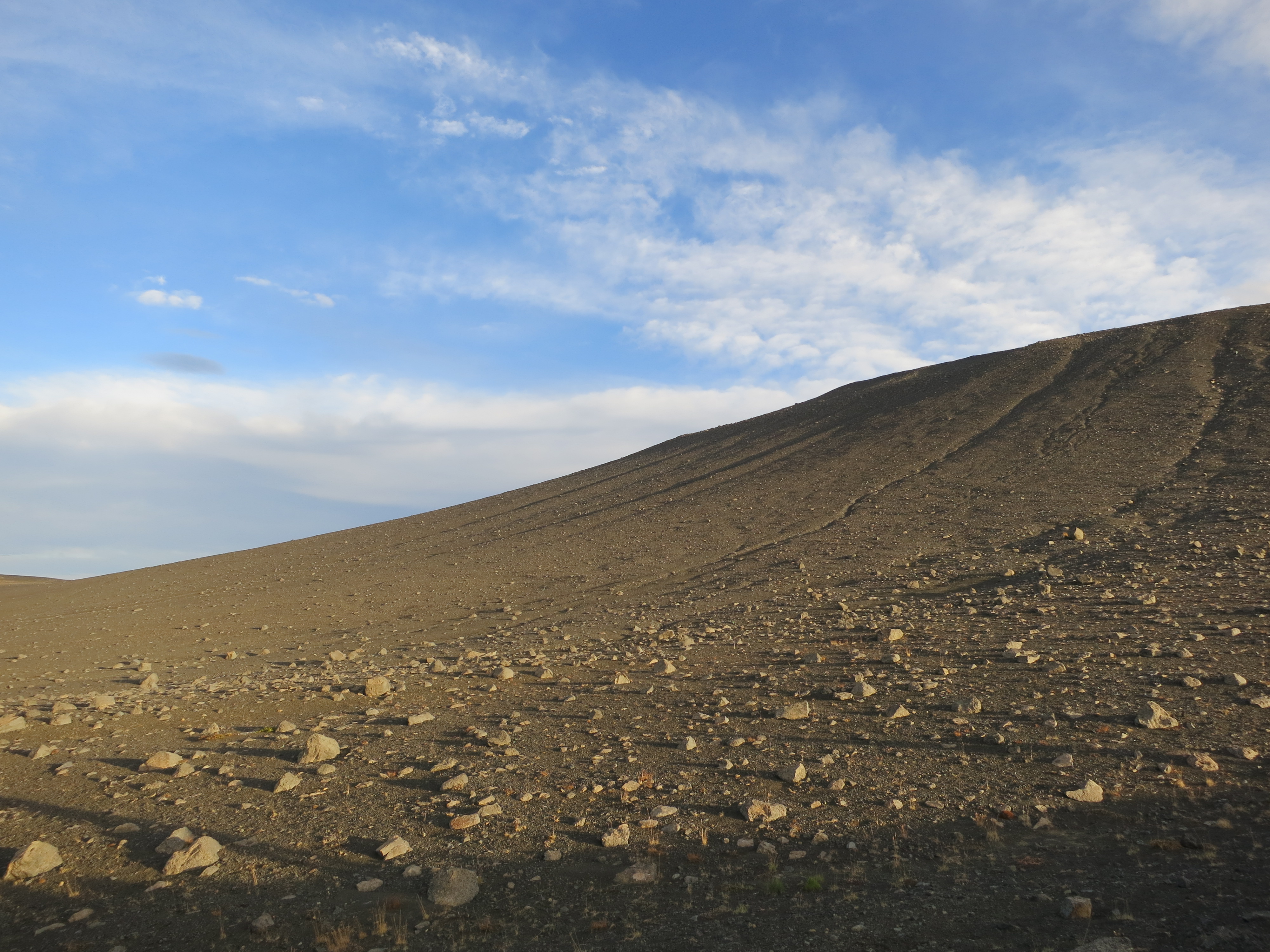
The side of Hverfjall
The next stop was at the Grjótagjá cave, a small natural geothermal bath in the Lake Mývatn area. This bath was used when they were filming a particular scene in Game of Thrones with Jon Snow and Ygritte, though it was apparently just used in some establishing shots and the interior of that scene was filmed in a studio. The Grjótagjá caves themselves look like just a couple of caves, however when you walk into them the smell of sulphur is apparent and the temperature increase is obvious. The water is calm and blue, however we didn’t touch it since the signs warned how hot the water was. They used to be used for swimming, however after a volcanic eruption in 1975 the temperature in them increased enough it became dangerous for people to continue using them so today they are only available for photos.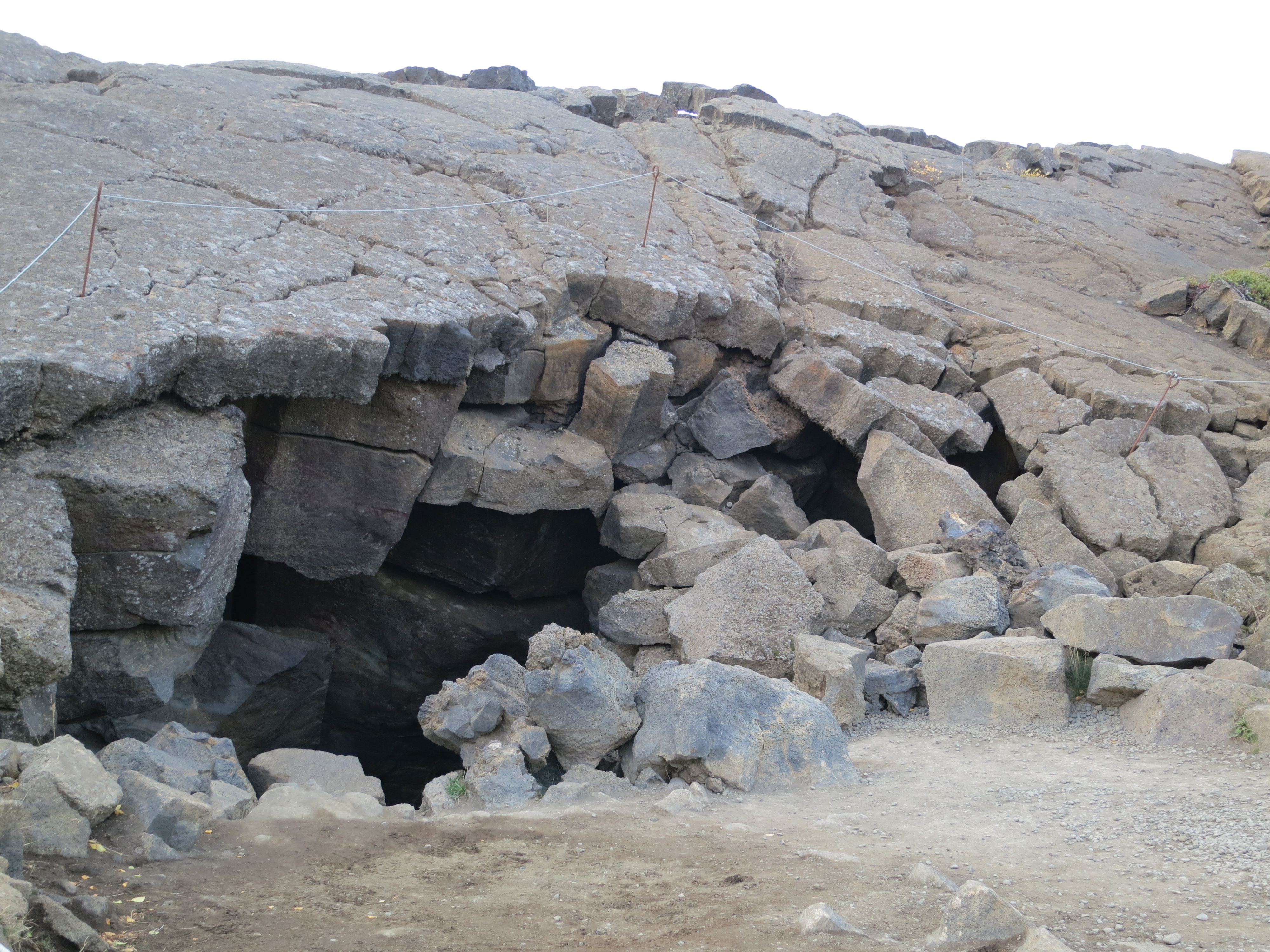
An entrance to Grjótagjá
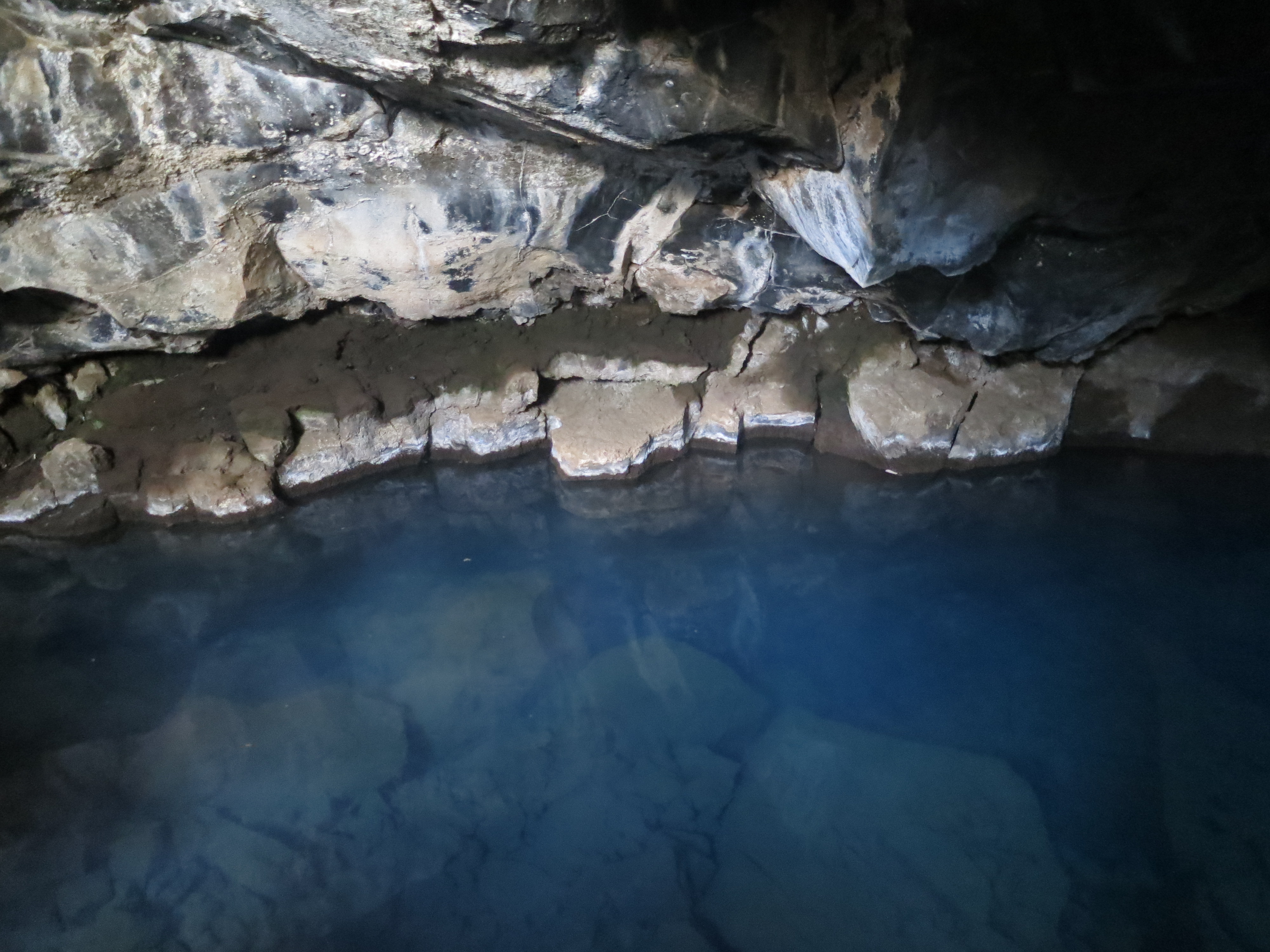
Inside the cave
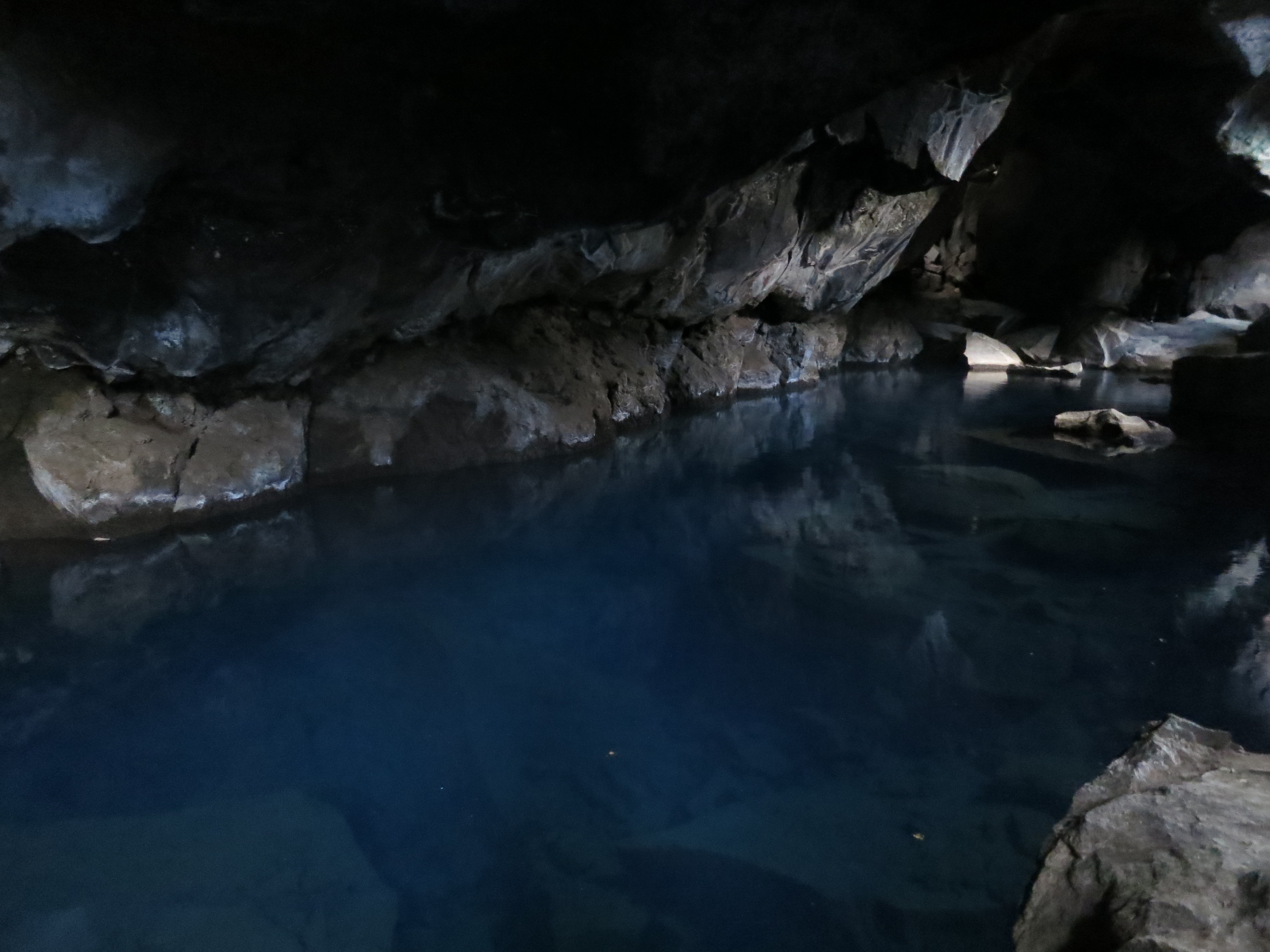
The cave was quite cramped inside
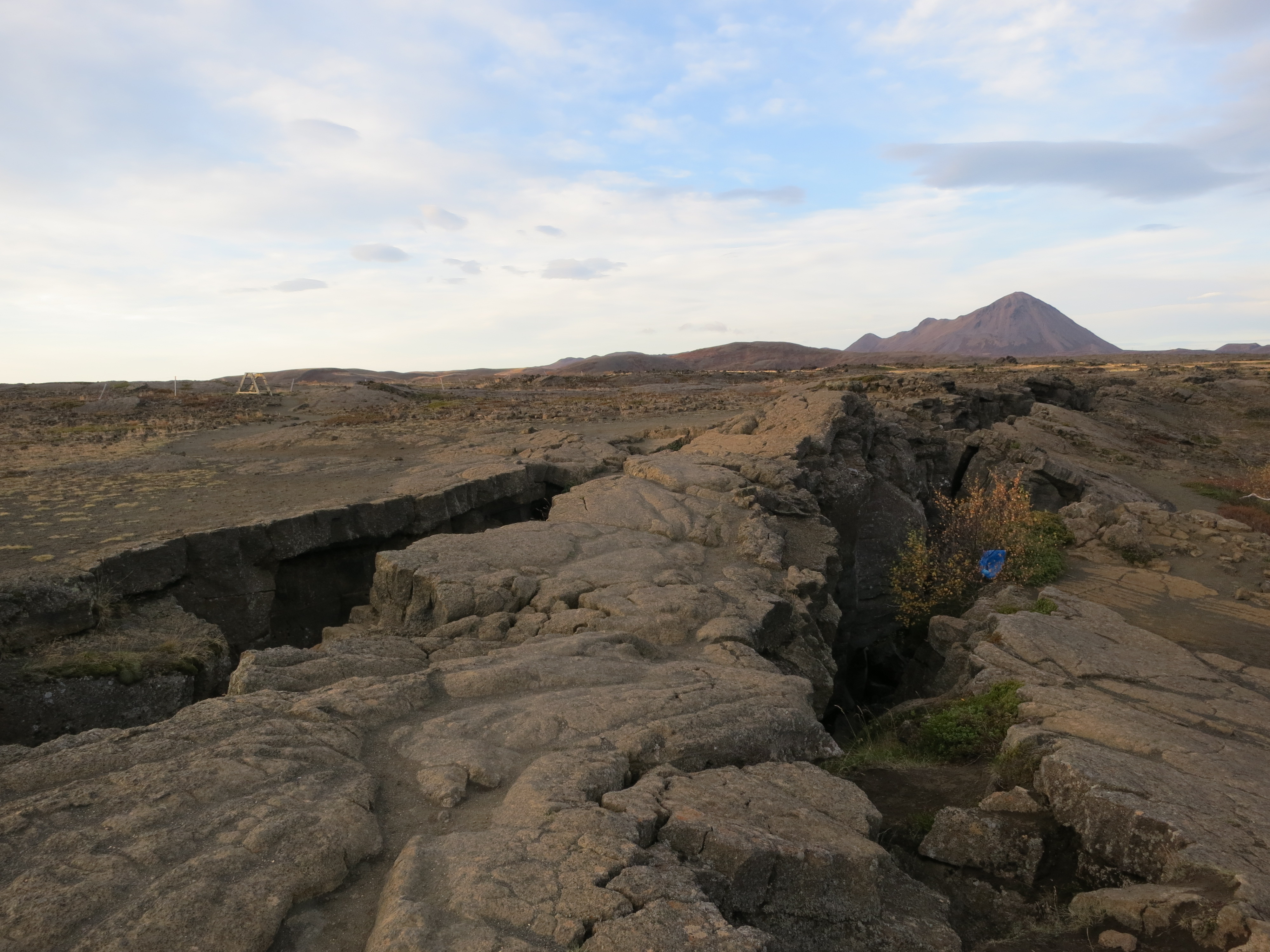
The cave is part of a fissure in the ground that expends quite a ways
Once we had taken some pictures we got back into the car and decided to find some food. We ended up settling on the Vogafjós Cowshed Cafe, a farm-to-table restaurant on Lake Mývatn. We parked and walked up to the restaurant to discover that the restaurant was built beside the barn, and once we were seated at our table we were able to see some of the cows in their barn stalls through a series of glass windows. The food was quite good; I had a beef burger cooked from a cow that used to live in the barn. After dinner we returned to the guesthouse.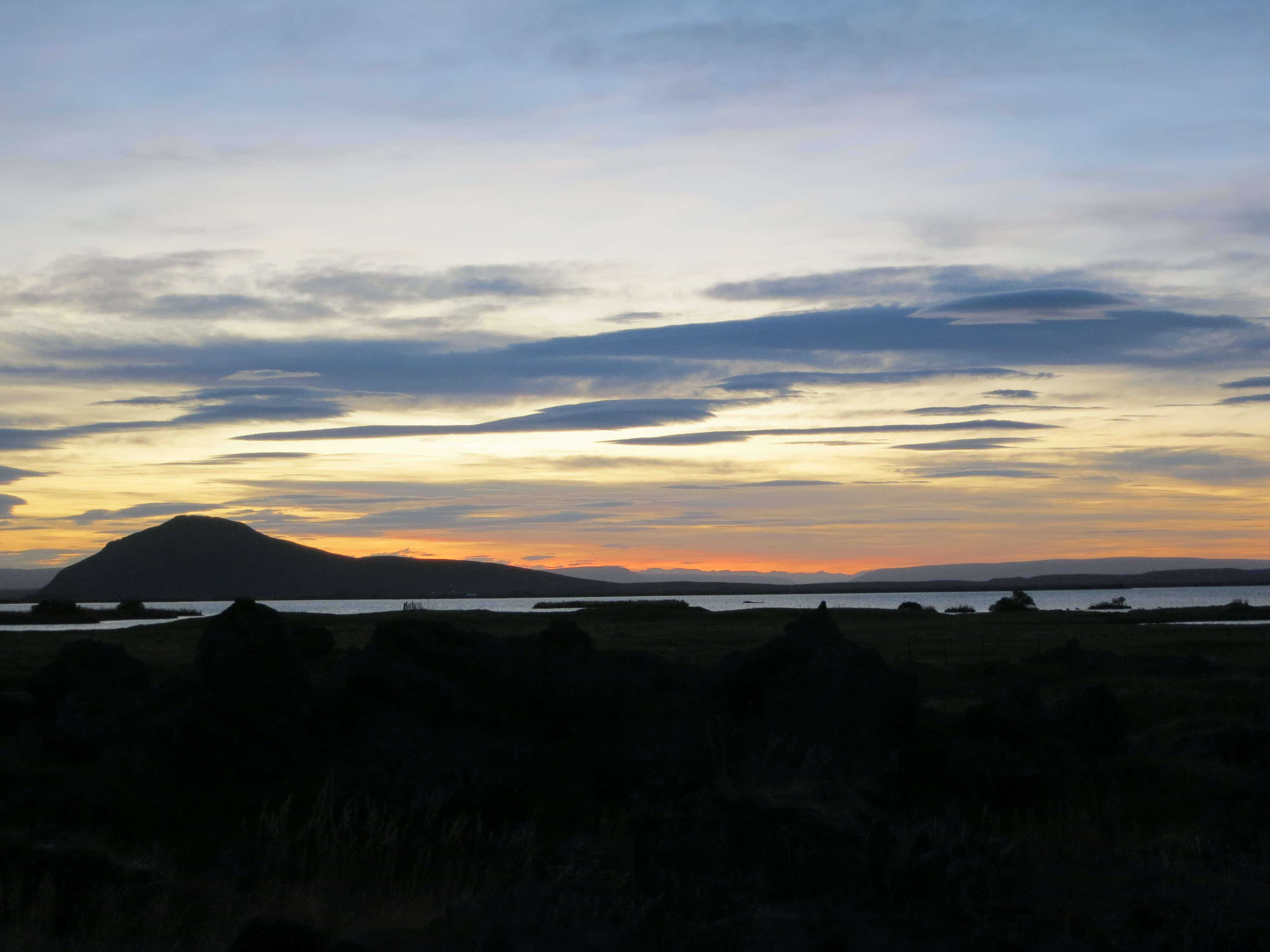
The sun setting over Lake Mývatn
Our final activity of the night was a visit to the Mývatn Nature Baths. The nature baths are a series of pools that are naturally heated by geothermal springs in the area. They offer fantastic views of the night sky as there is essentially no light pollution in the area, and if the conditions are right the Aurora Borealis are visible. We arrived just after 8:30 PM, quickly changed and sunk into the warmth of the pool. It was a nice pool, though the waters of the Secret Lagoon were definitely hotter. We relaxed in the water, took in some views of the night sky, but unfortunately we were not treated to a second night of the northern lights. We spent about 75 minutes in the pool before we decided we were done; much relaxing took place in that time. We drove back to guesthouse and had some quiet time before bed. I worked on updating this journal with the last few days of activities before going to sleep just before midnight.