We spent the last full day of our trip to South Africa on our own. We slept in, had a lazy breakfast in the hotel restaurant, and enjoyed the freedom of not being on a schedule. The first leg of our flight home was scheduled to depart Johannesburg at 18:50, giving us a half day to do whatever we wanted. We were allowed to check out late from the hotel; the time coinciding with our shuttle’s scheduled departure for the airport - 2:30 PM. I had done a bit of research on things to see in Johannesburg the previous day, and we decided to spend the morning visiting Constitution Hill. It was a 20 minute drive from the hotel, and shortly after 9:15 I booked us an Uber and we were off.
We arrived at the entrance to the Old Fort at Constitution Hill shortly after 9:30, and set off to explore. We walked through the Old Fort, and then found our way to a small building beside the Constitutional Court that was the starting point for tours of the complex. The tour started at 10:00, and after picking up our wristbands we walked through the entrance hall of the Constitutional Court as we waited. At 9:50 we headed to the starting point of the tour and watched a short video outlining the history of the area.
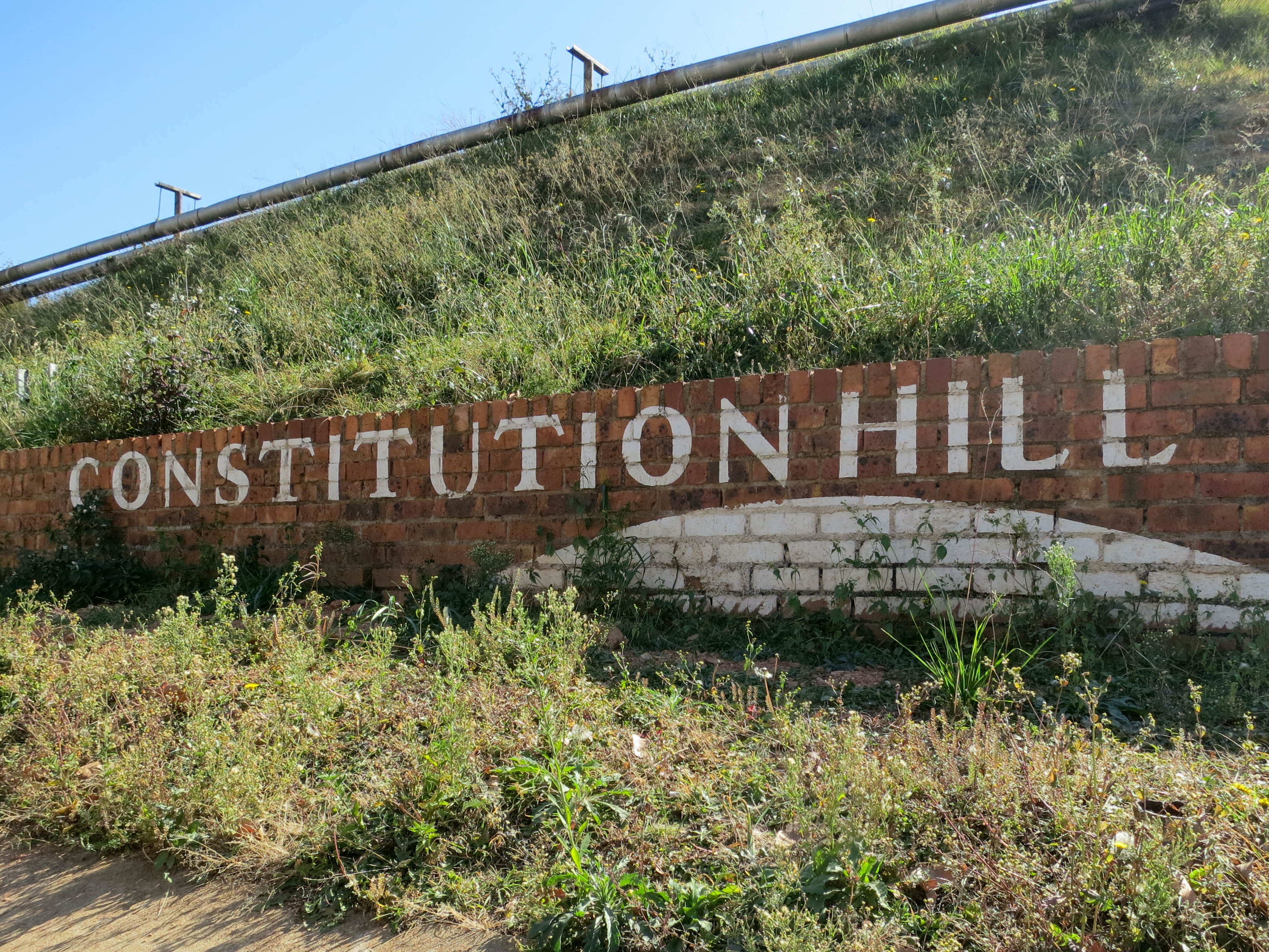
The exterior wall of Constitution Hill
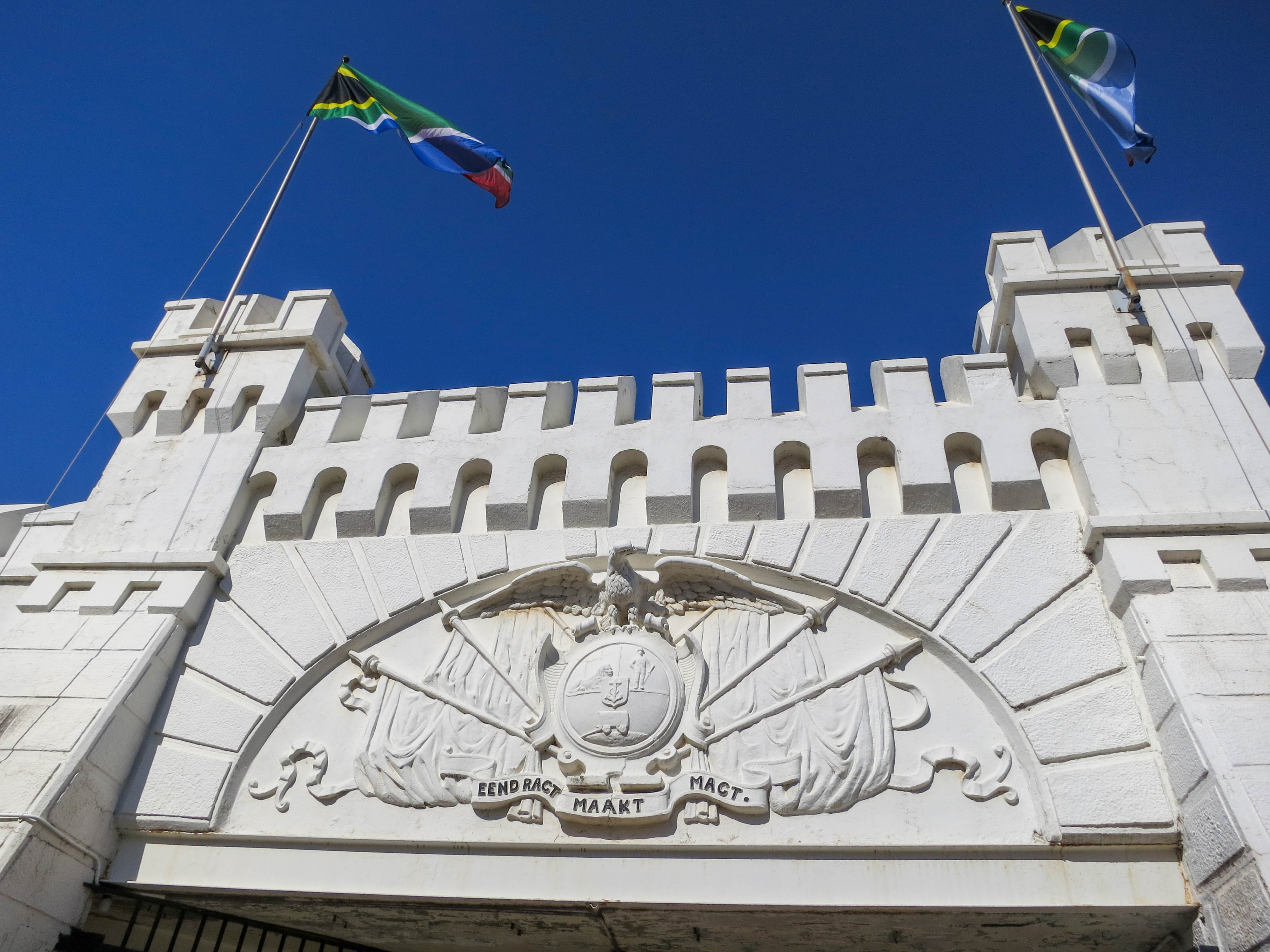
The entrance to the complex
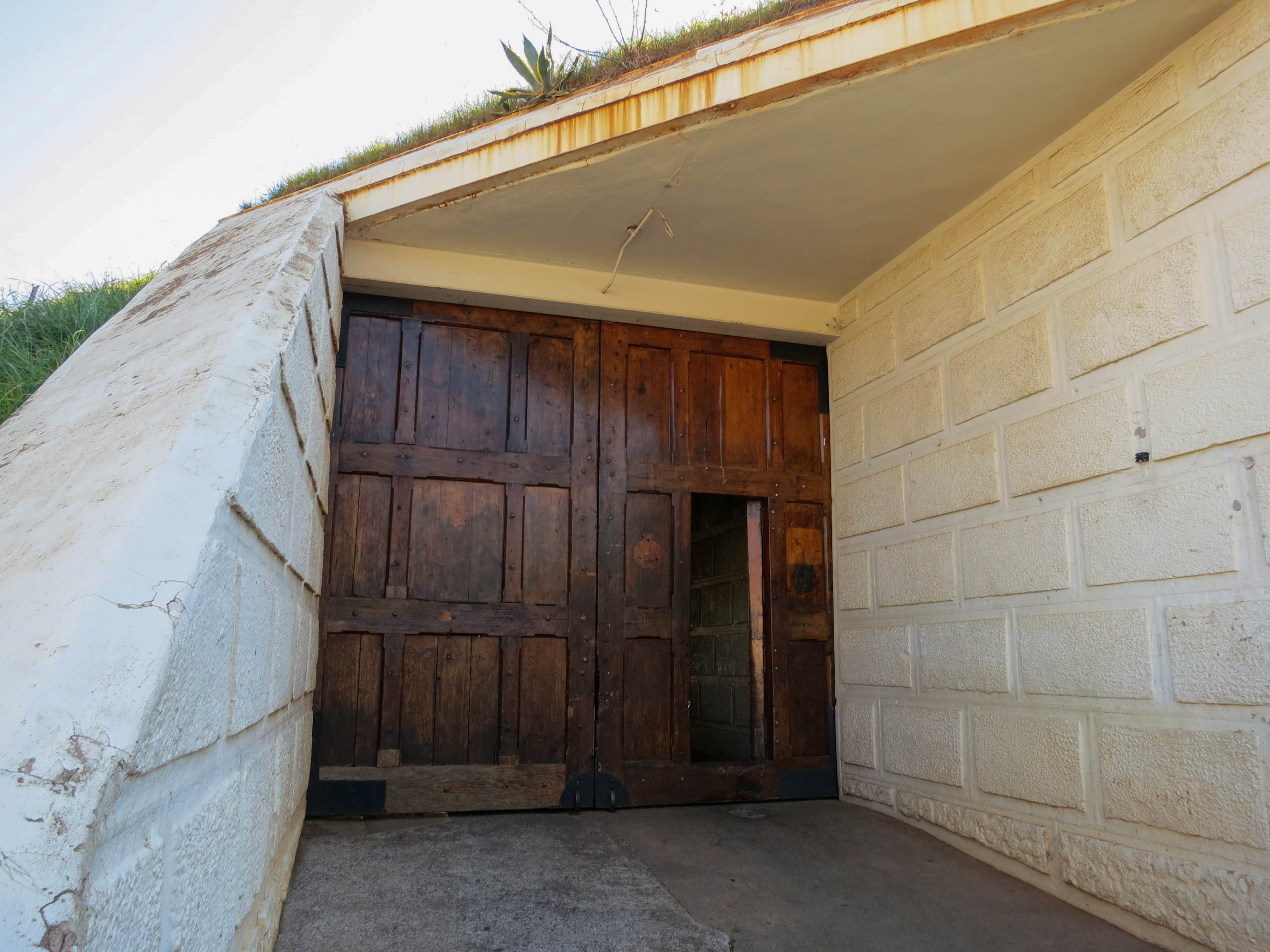
Door in a door
The Constitution Hill area was the site of several prisons, some dating back to the early 1900’s. The Old Fort was the site of the white men’s prison during the apartheid area, while Block 4 and 5 were the sites of the coloured and black prisons. There was also the women’s prison in the complex.
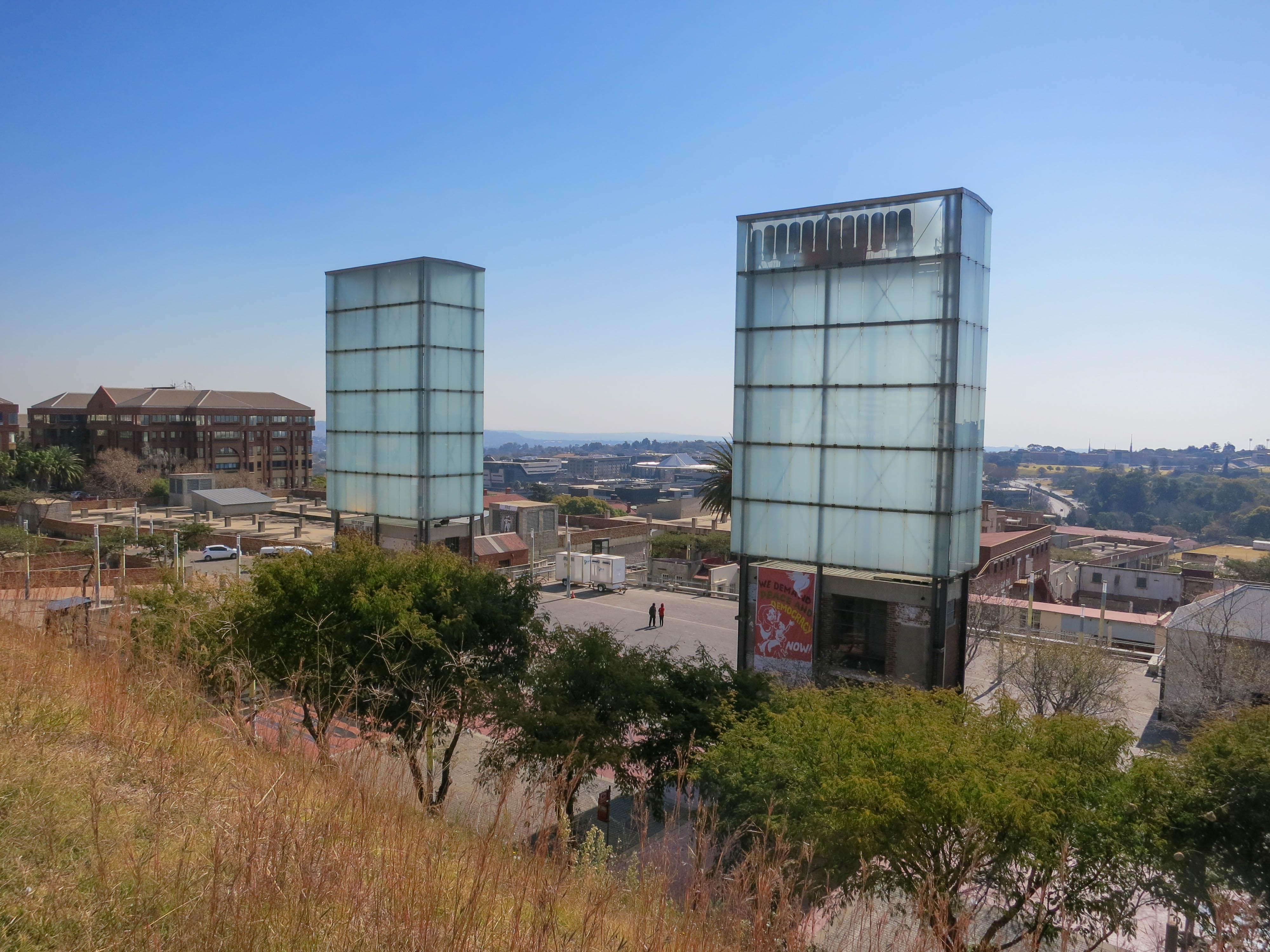
The overall site. The Constitutional Court at the far right; the black men's prison in the background. The old awaiting trial block staircases are capped with glass.
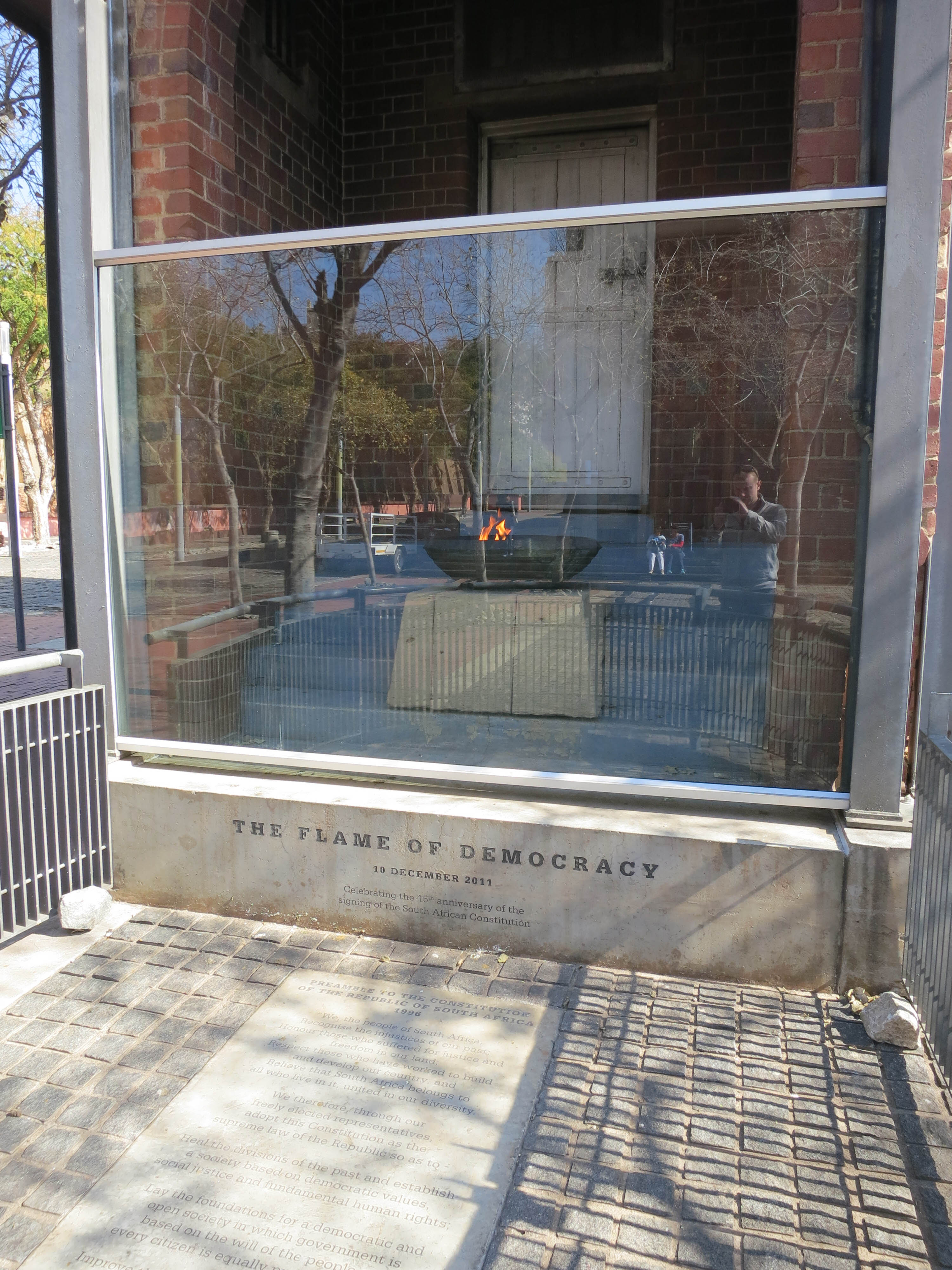
The Flame of Democracy, burning in one of the old awaiting trial block staircases
The tour started at the women’s prison, where we toured through the non-white prison section and the white prison section. There were a number of informative placards that described notable political prisoners held here, along with background information on the laws and conditions that led to imprisonment. It was both disturbing and informative to see how poor the conditions were for the non-white prisoners, and how different the levels of care were based on race.
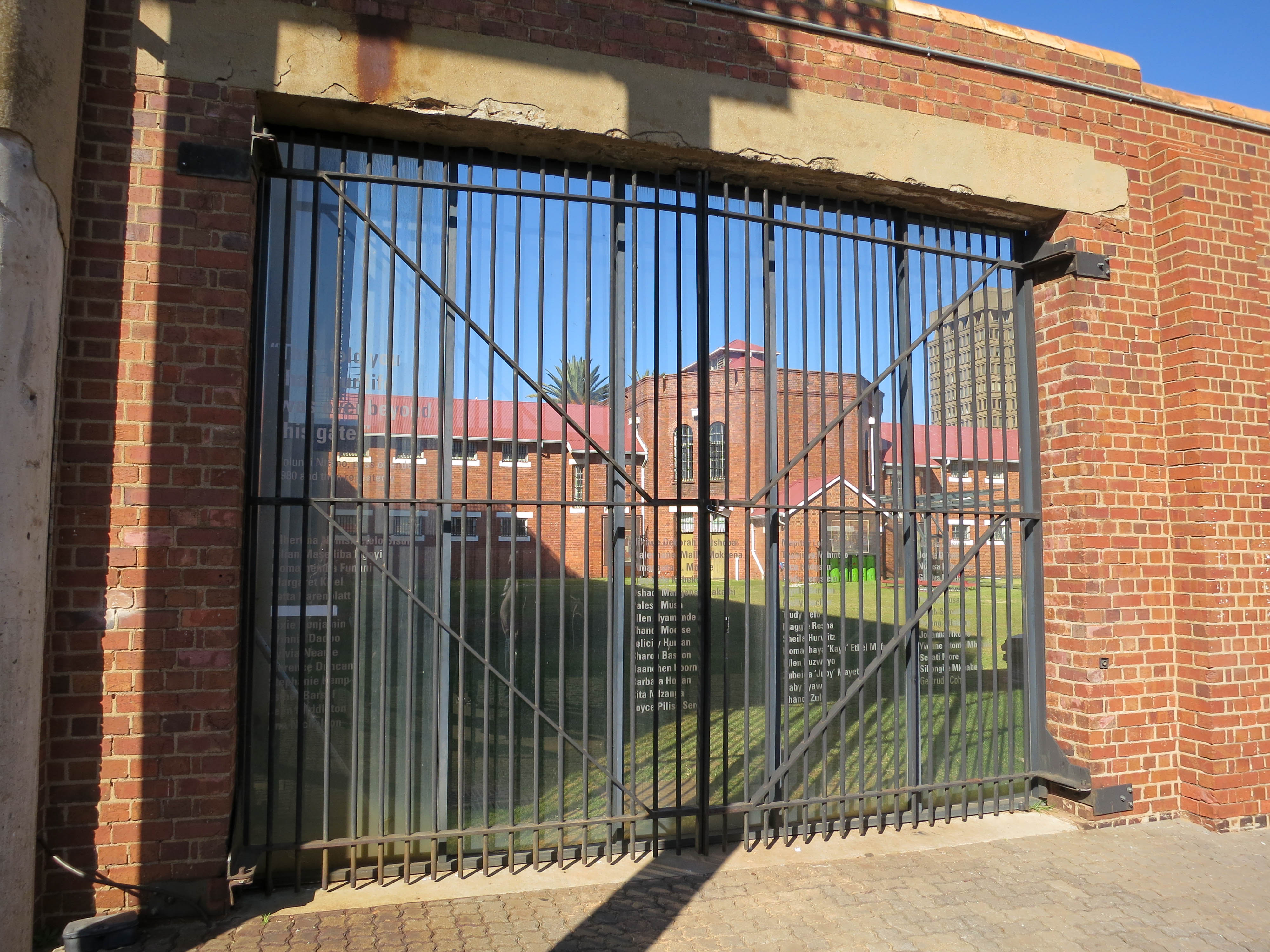
The entrance to the women's prison
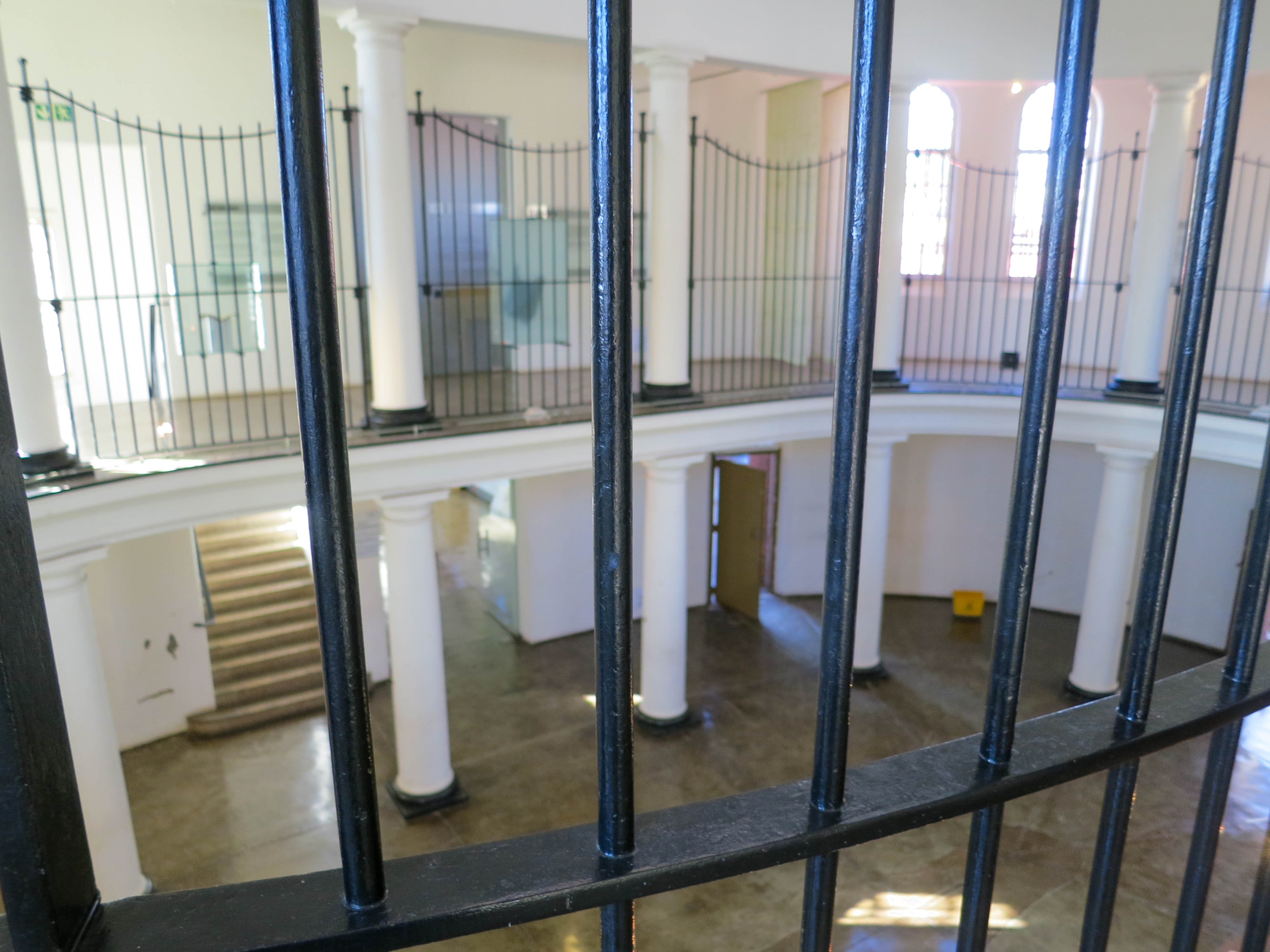
The atrium of the black women's prison
We then proceeded to the Old Fort where we saw some of the white men’s prison conditions, along with the cell that Nelson Mandela had been held in for several weeks prior to his transfer to a prison in Pretoria. He was held in a room that was part of the hospital area in the white men’s prison; this was done to isolate him from the other black prisoners and to make it more difficult for an escape to occur. We read some of the letters he had written during his time in this prison, before we walked out of the Old Fort and to the Block 4 and 5.
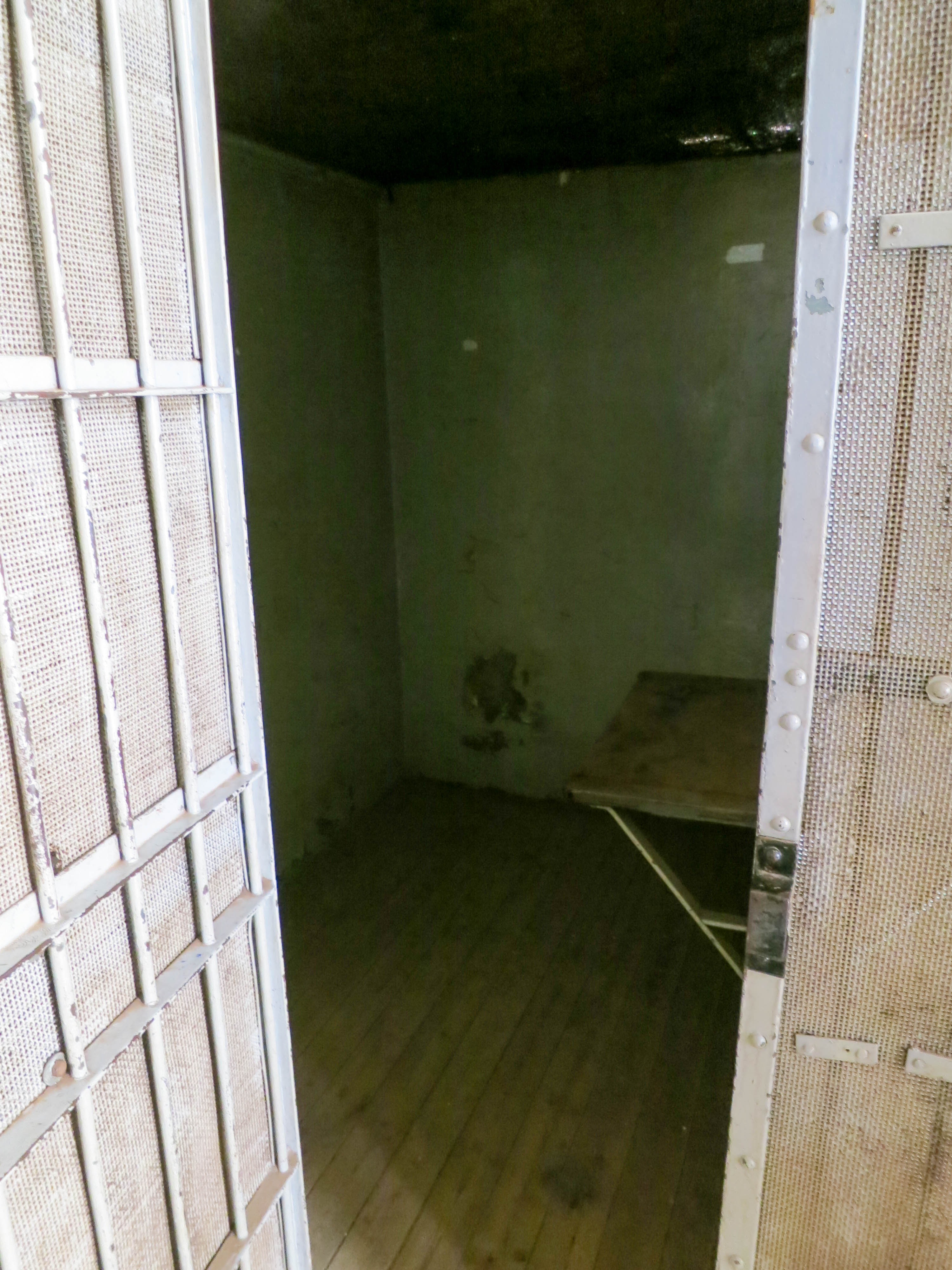
A prison cell in the white men's section
Here we encountered the brutal conditions that the black male prisoners were held in. Medieval is about the most appropriate yet also least meaningful word that can describe the prison. It really is hard to describe, it is something to be experienced.
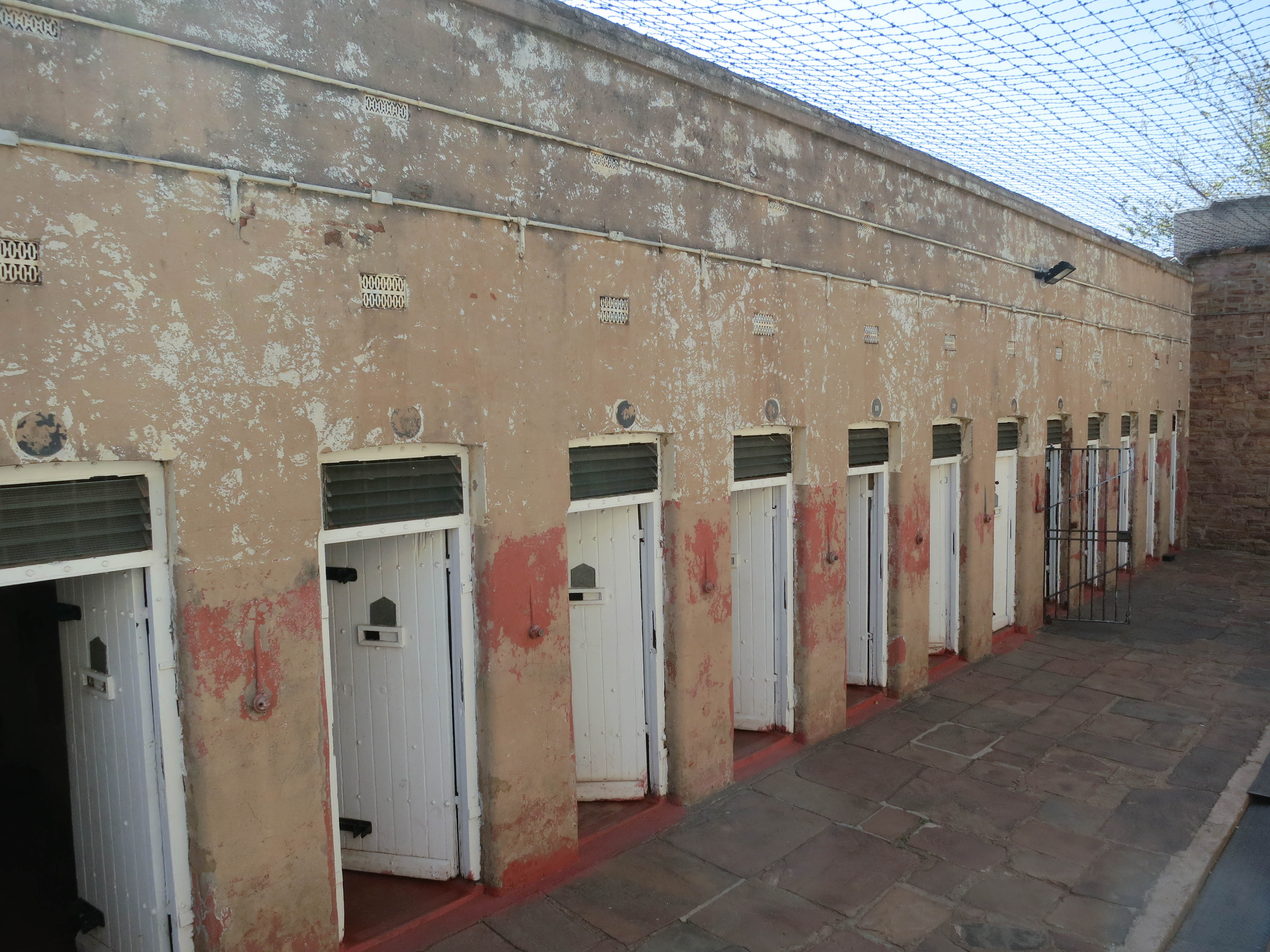
Cells for solitary confinement in the black men's prison section
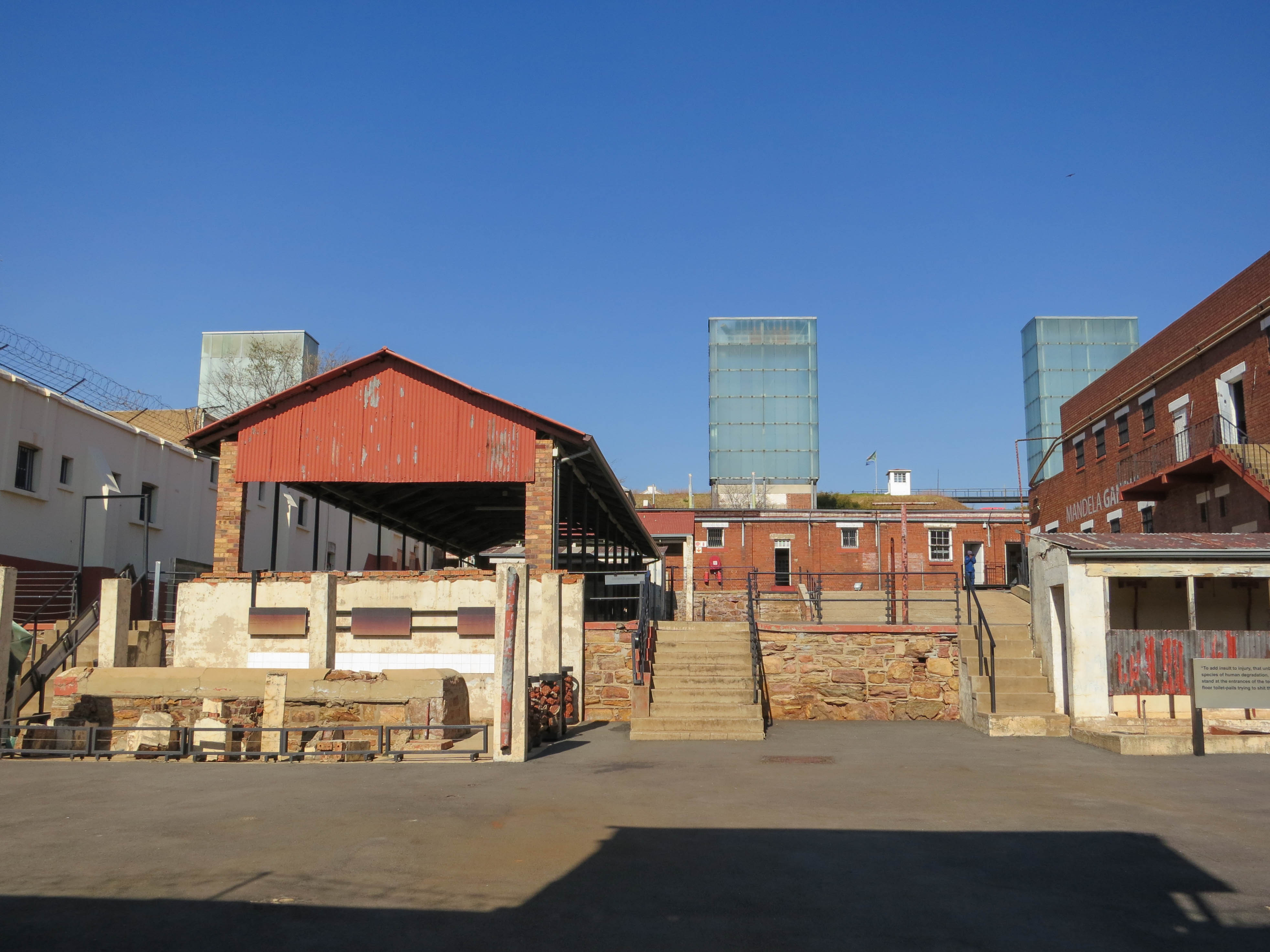
Black men's prison section. Courtyard in the middle; communal cell rooms in the buildings at the left and right. Bathrooms are at the front left
We then walked back to the front entrance to the Constitutional Court and had the history of the courtyard explained to us. The building that used to hold black male prisoners awaiting trial used to occupy the space, however in the early 2000s it was torn down to make space for the Constitutional Court. They left the 4 staircases of the building in place; two of them are situated in the courtyard with glass panels on top; while the remaining two were incorporated into the structure of the court building. The bricks that made up the awaiting trial block were kept and reused in the construction of the court; they also built a stairway using these bricks to symbolize the links between the past atrocities conducted on the site and the new source of protections that will prevent similar things from occurring again. We entered the court, and were able to walk into the hall where hearings are held. Our guide described a number of symbolic elements that had been incorporated into the design of the space. It was nice to be able to learn about the role of the court today and how its hearings are held.
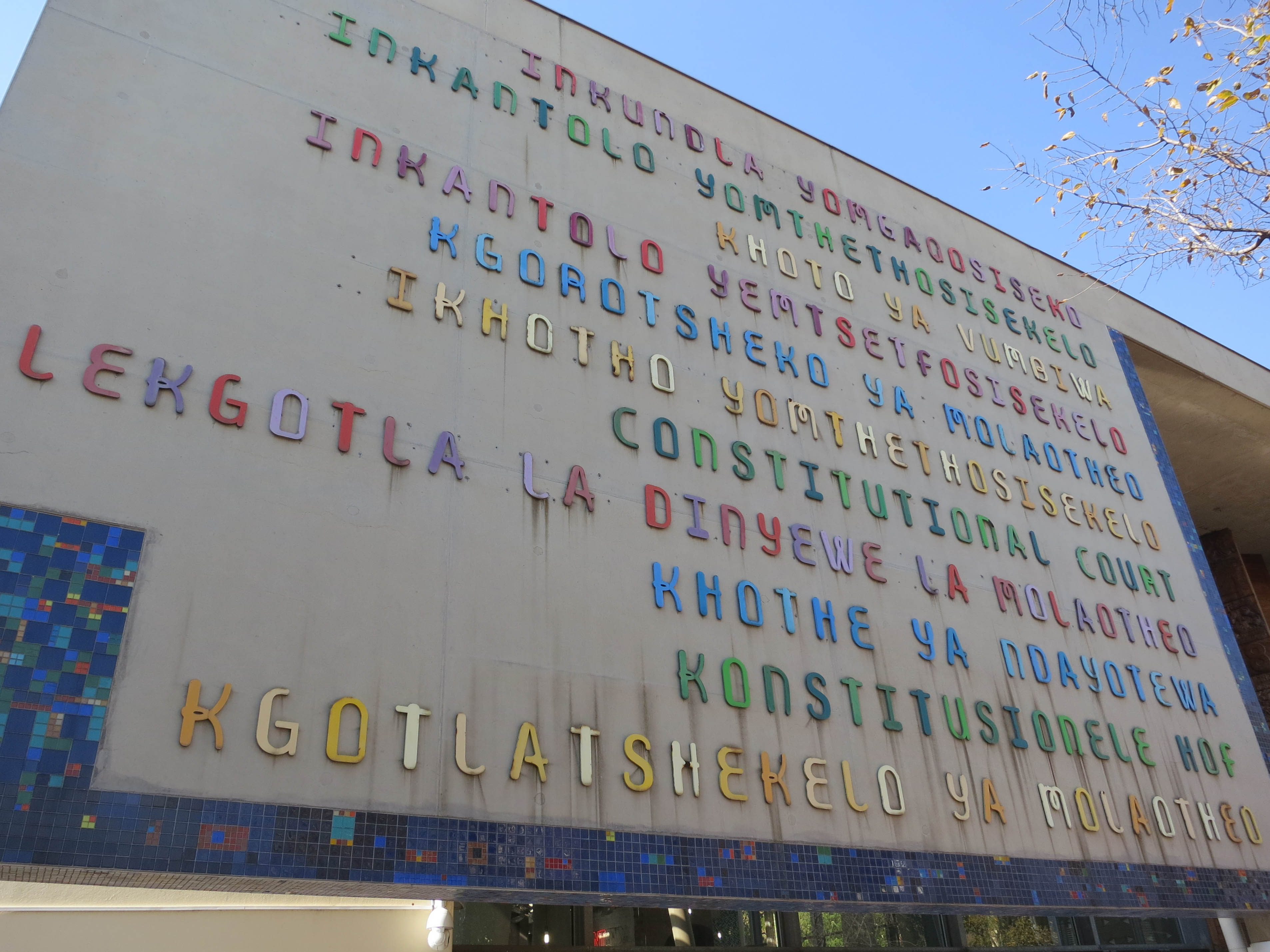
'Constitutional Court' written in many of the official languages of South Africa
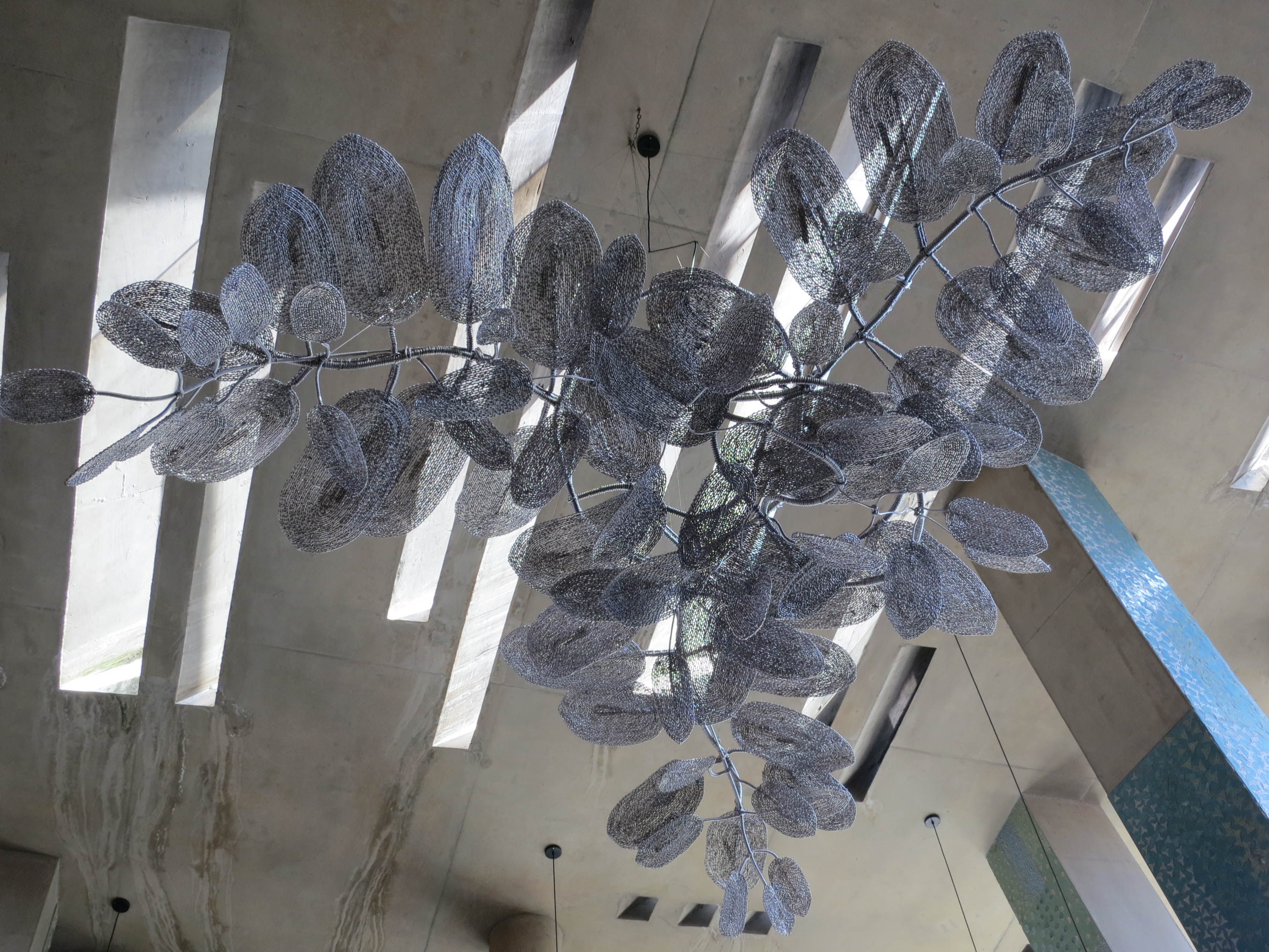
Art in the atrium of the court
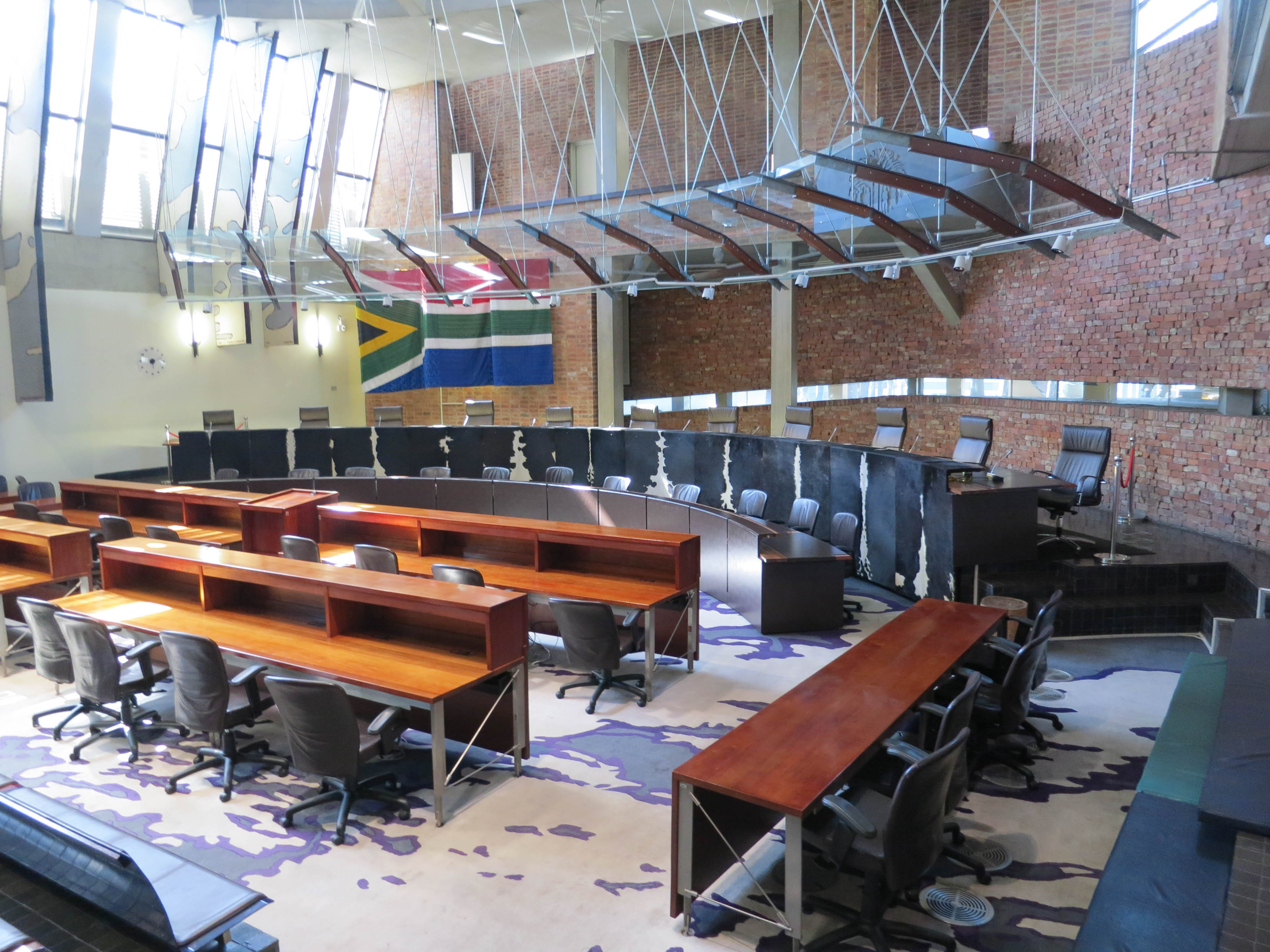
Hearing area in the court
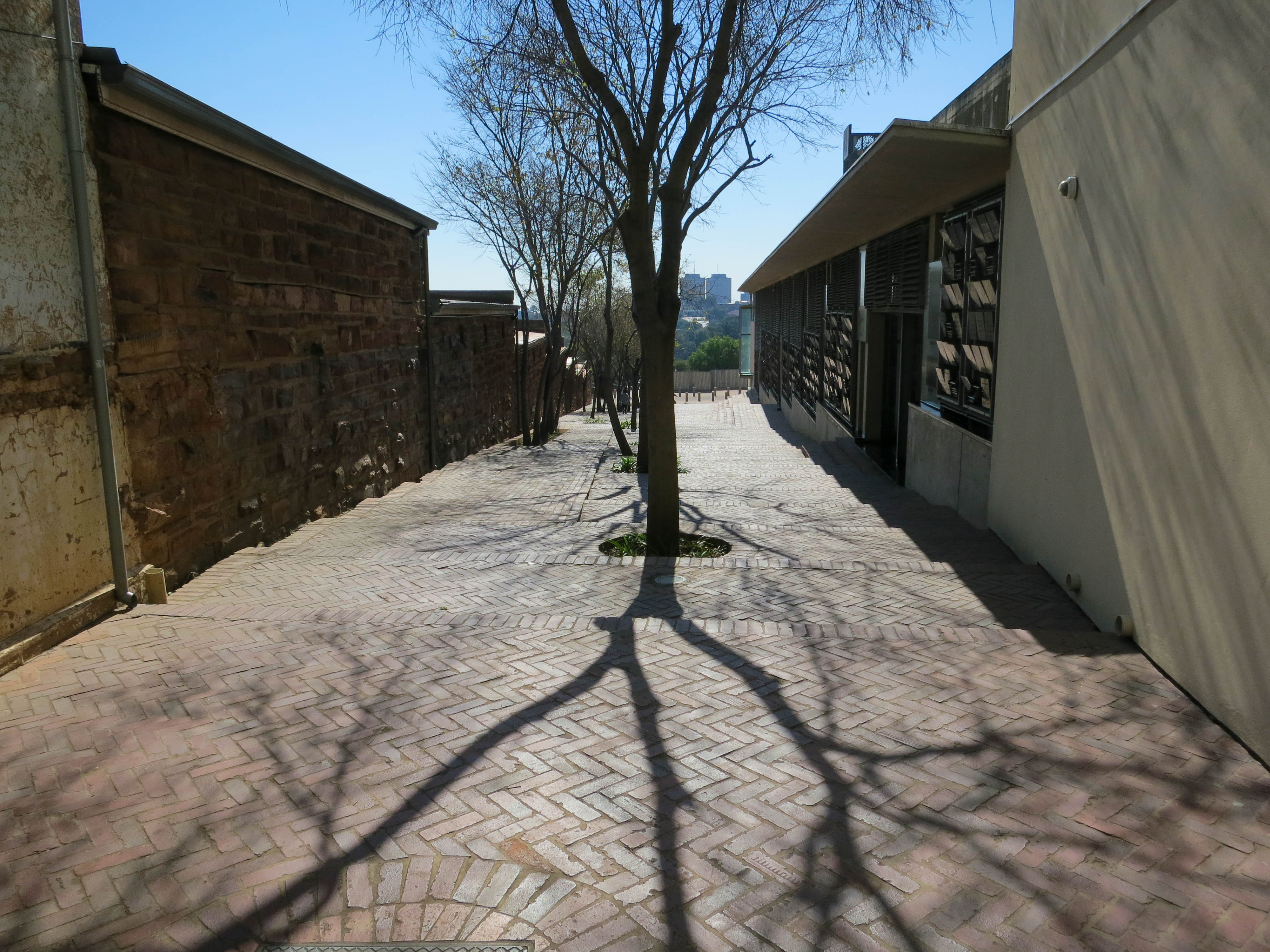
Exterior staircase leading to the court entrance
By this point it was shortly after 12:00, so we left the tour, took a few photos from the ramparts of the Old Fort over the city, then hailed an Uber back to the hotel. We packed up, checked out, and met up with most of the tour group that was heading home as we were mostly all booked into the same airport shuttle. We left the hotel just after 14:40, and arrived at the airport shortly after 15:00. We said our goodbyes, printed our baggage tags, cleared immigration and security, and then walked to our gate. I worked on my coding project while Todd read; we grabbed a bite to eat at a restaurant cafe at 17:00 and boarded our plane shortly after 18:00.