The sun was still rising when we got up this morning. After a quick breakfast we left the AirBnB and walked to the Museum subway stop, the first stop on our trip to reach the Taronga Zoo. We took the subway towards Circular Quay, and disembarked at the station there just before 9:20. There were several routes we could have taken public transit to reach the zoo; we chose the route that includes a ferry trip from the Central Business District to the Taronga Zoo Wharf as it would be the fastest. The Sydney public transit network includes a number of ferry routes which also use the Opal cards, which made it easy to transfer from the subway to the ferry at the Central Quay station. We were aiming to take the 9:20 ferry from Circular Quay to the Taronga Zoo Wharf, however we didn’t know which pier the ferry was departing from and we weren’t able to find the pier before the ferry pulled away. While we waited for the next ferry to arrive I got a coffee, and then we waited on Pier 4. It didn’t take long before the next ferry docked, and we boarded ahead of a good sized crowd. We were able to grab seats on the second level at the back, which was uncovered, anticipating good views of the harbour on the ride over. Right at 9:40 the engines revved and we began pulling back from the wharf.
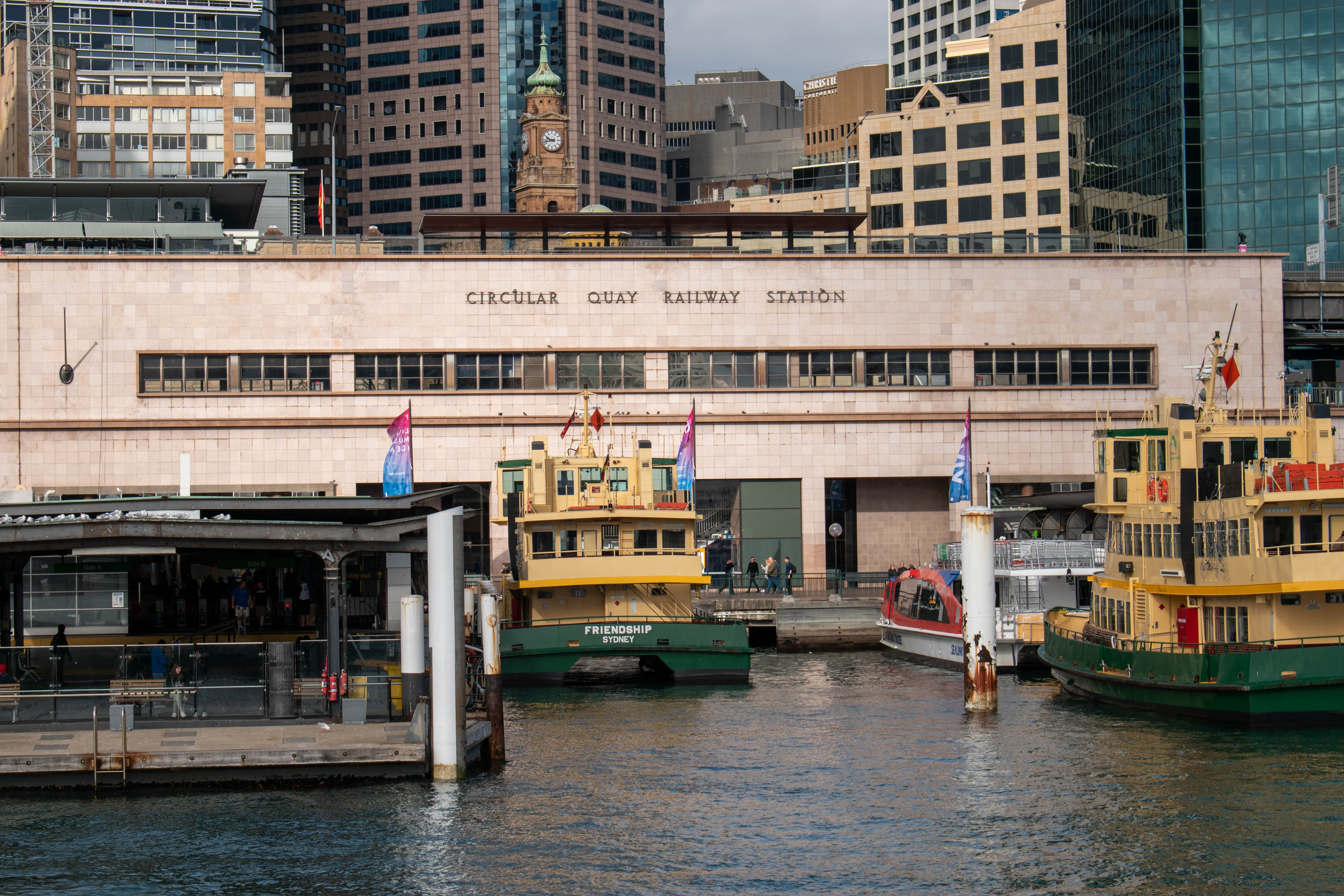
The station as seen from a departing ferry
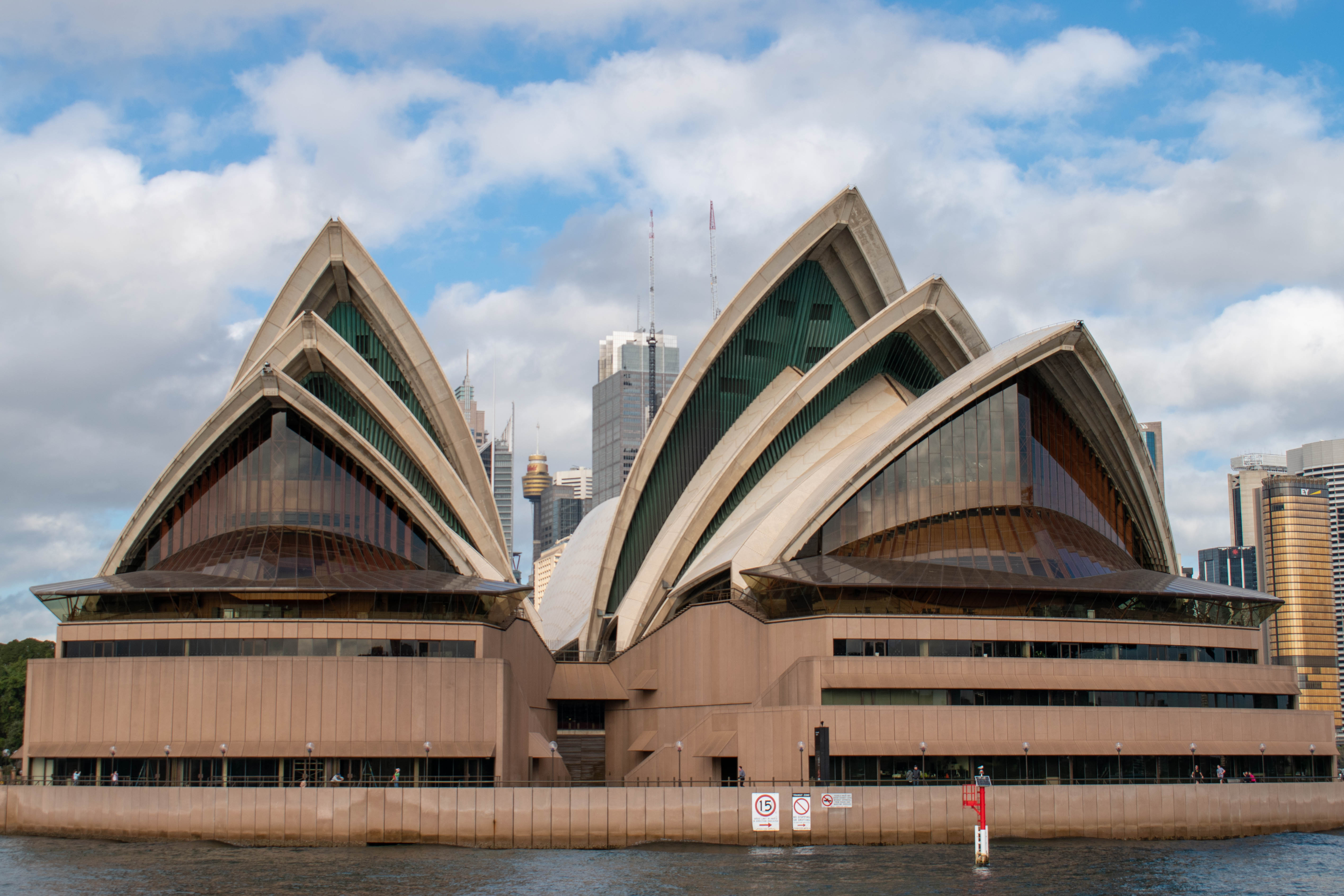
The Opera House as seen from the ferry
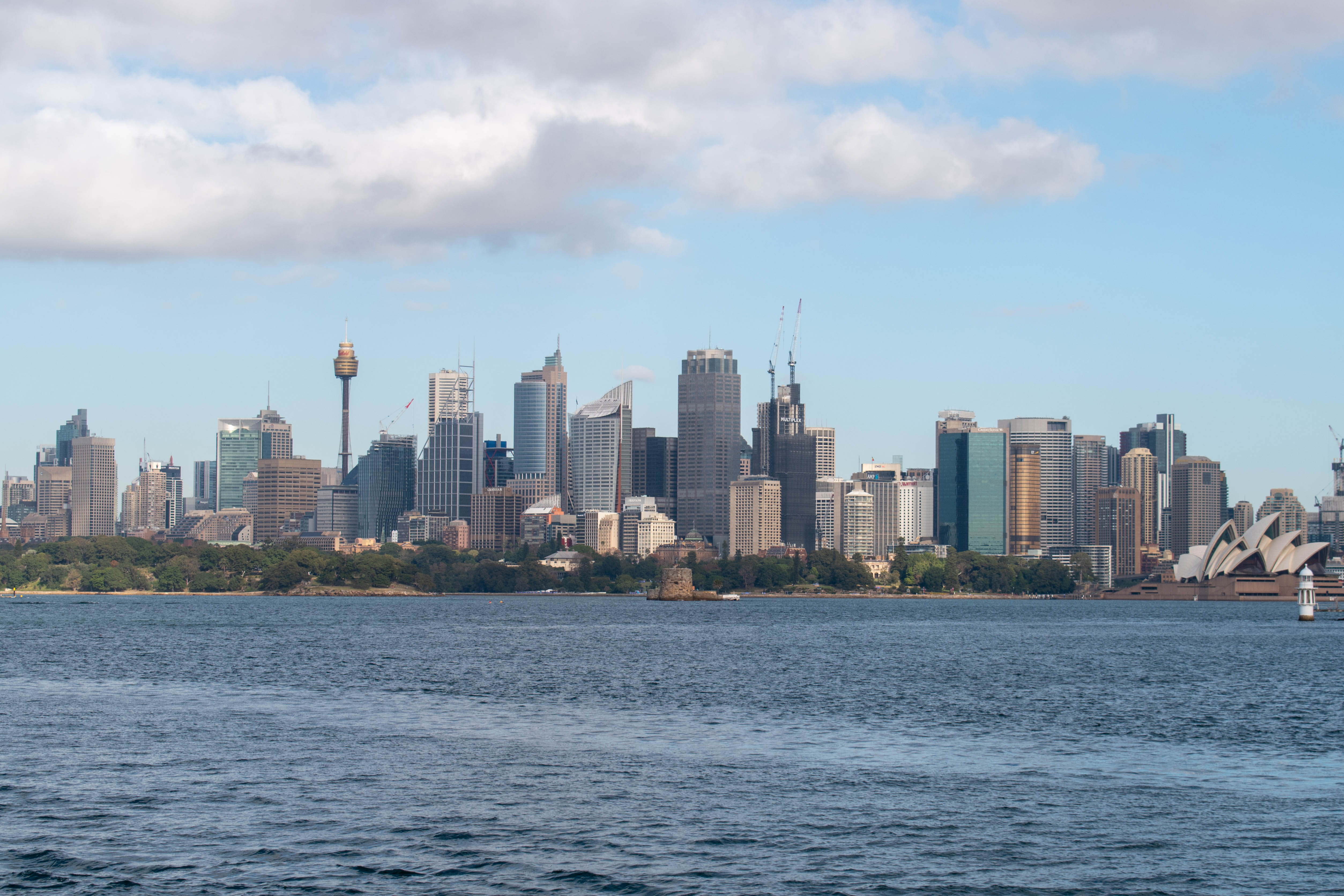
The skyline of the Sydney Central Business District
The ferry ride to the Taronga Zoo didn’t take more than 15 minutes, and gave us some great views of the opera house, the harbour bridge, and the Central Business District. After disembarking at the Taronga Zoo Wharf we had a short, 3 minute walk to the zoo’s lower entrance, where we purchased our day passes. We then walked to the Sky Safari, and got into a gondola cabin that took us from the wharf up to the main entrance of the zoo. The Taronga Zoo is somewhat unique in that it is built on a hill, with the main entrance being at the top of the hill and the ferry wharf being at the bottom. The Sky Safari takes passengers up this hill from the wharf to the main entrance, which then lets them experience the zoo by walking downhill.
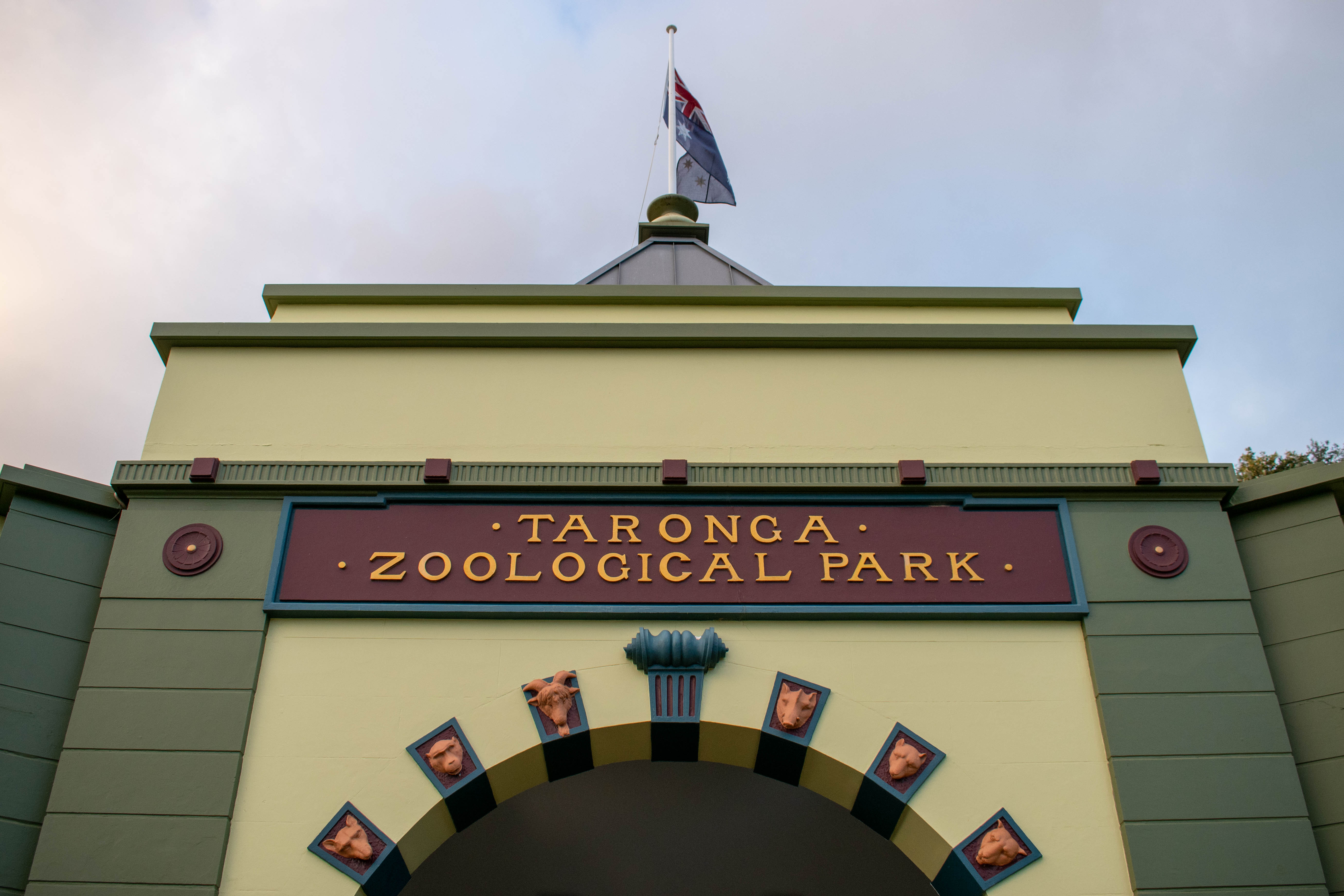
The entrance to the zoo
As we rode the Sky Safari up to the main entrance, we had views of animals like giraffes and elephants in their enclosures, and the skyline of the Central Business District in the distance. The views were a great introduction to the zoo! After we reached the top of the hill and disembarked from the gondola we had a short walk down to the main entrance, and we were in the zoo. We started by going to the right, towards the reptile world. The first enclosure in that direction was for the koalas, which we turned into. This was just one of several places in the zoo where koalas live; but this area was notable in that it had a viewing platform that started on ground level, and spiralled up on top of itself, giving visitors a 360 degree view of the koalas living in the trees here. The first koalas we saw were not particularly active; they all appeared to be sleeping.
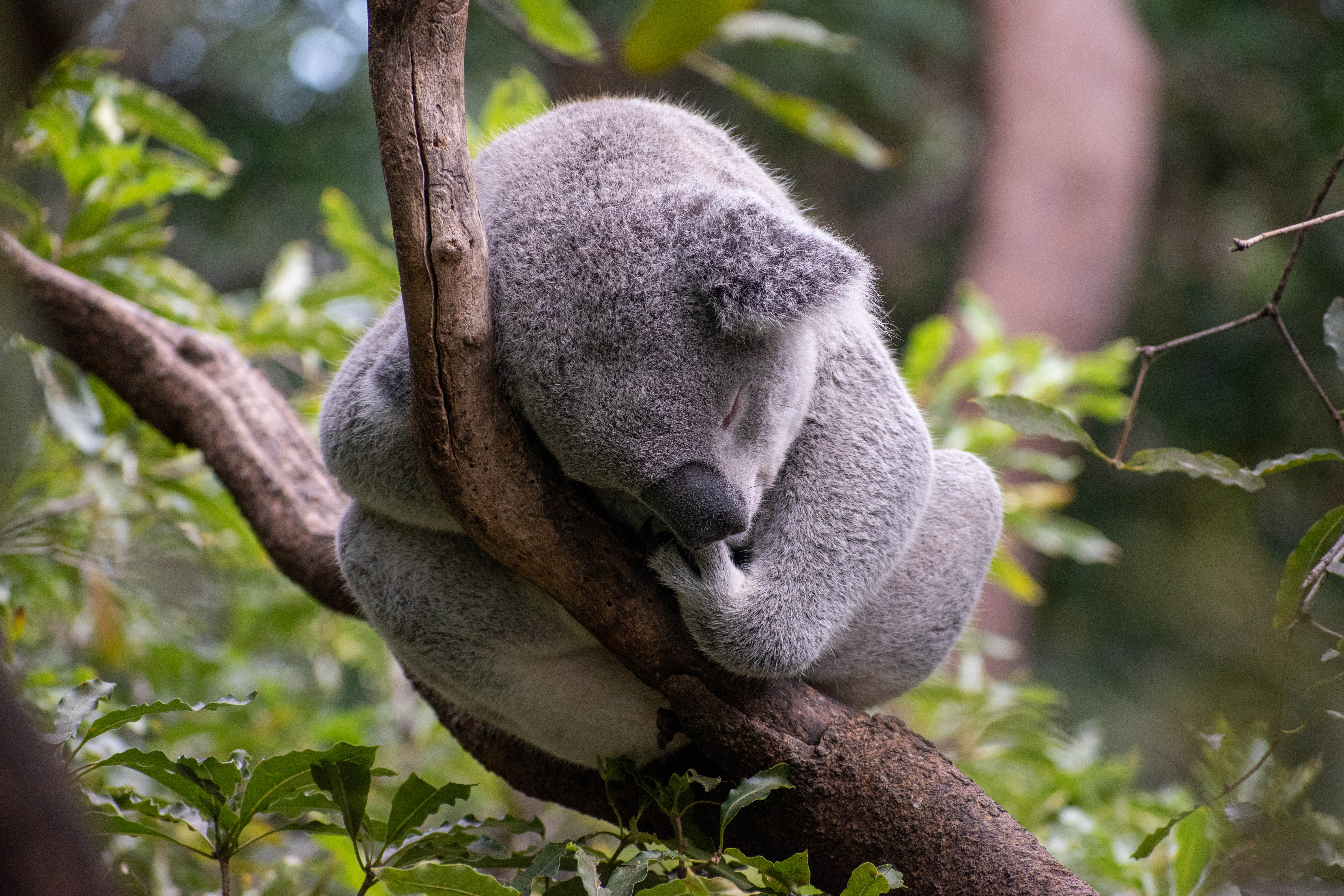
A napping koala
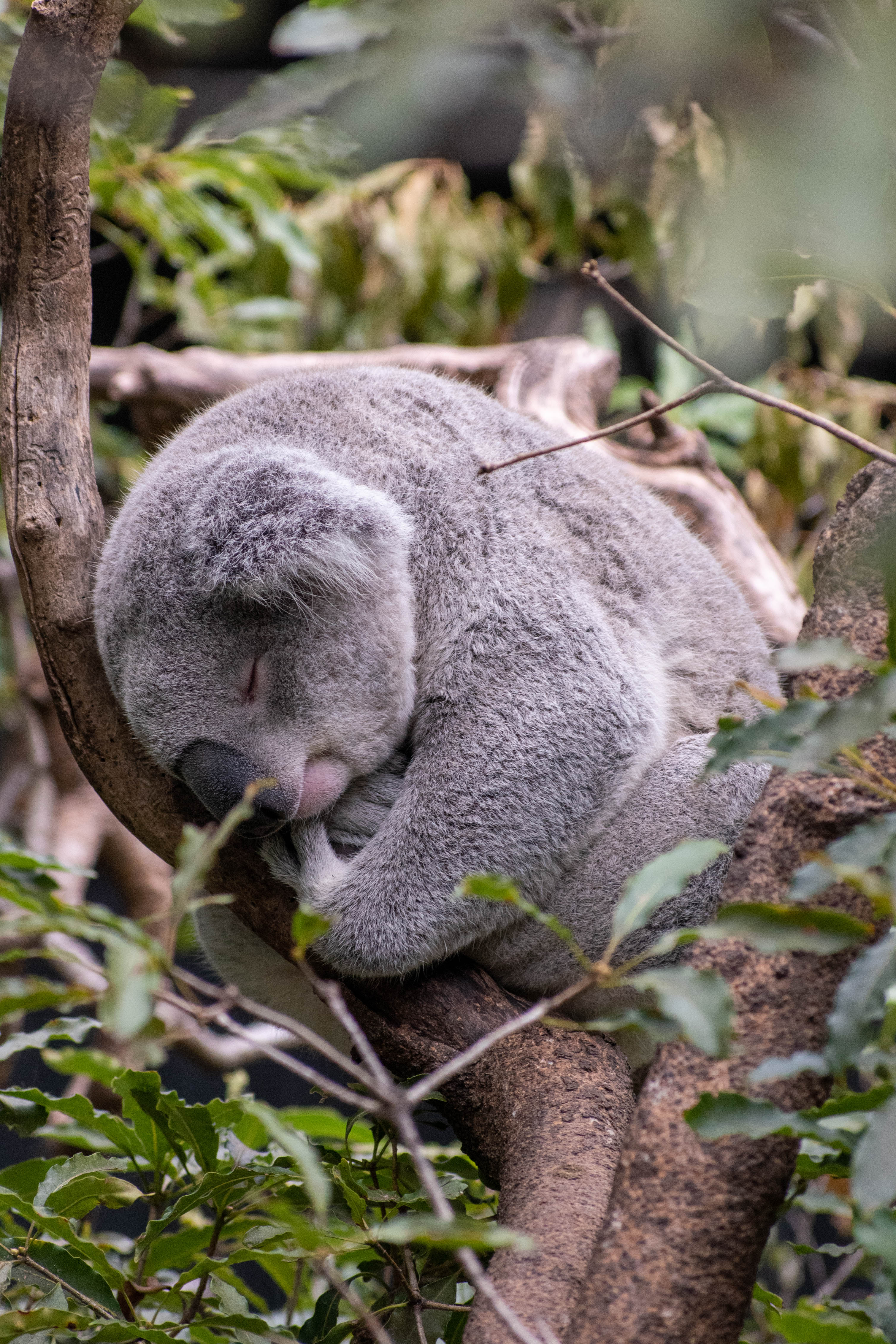
A koala napping among the eucalyptus
After leaving the koala enclosure we entered the reptile world. The first animal we saw here was a komodo dragon; despite the cooler weather it was outside, walking around its enclosure. I hadn’t seen a komodo dragon in person before, and I have to say it’s an impressive creature. I would not want to run across one in the wild! We then saw some snake-neck turtles swimming in the freshwater crocodile enclosure, but we didn’t see the crocodiles. After passing by the crocodile enclosure we entered a series of interconnected buildings that housed a number of different reptiles; including frogs, lizards, and snakes. Todd wasn’t a huge fan of the snakes, but the setup was pretty interesting.
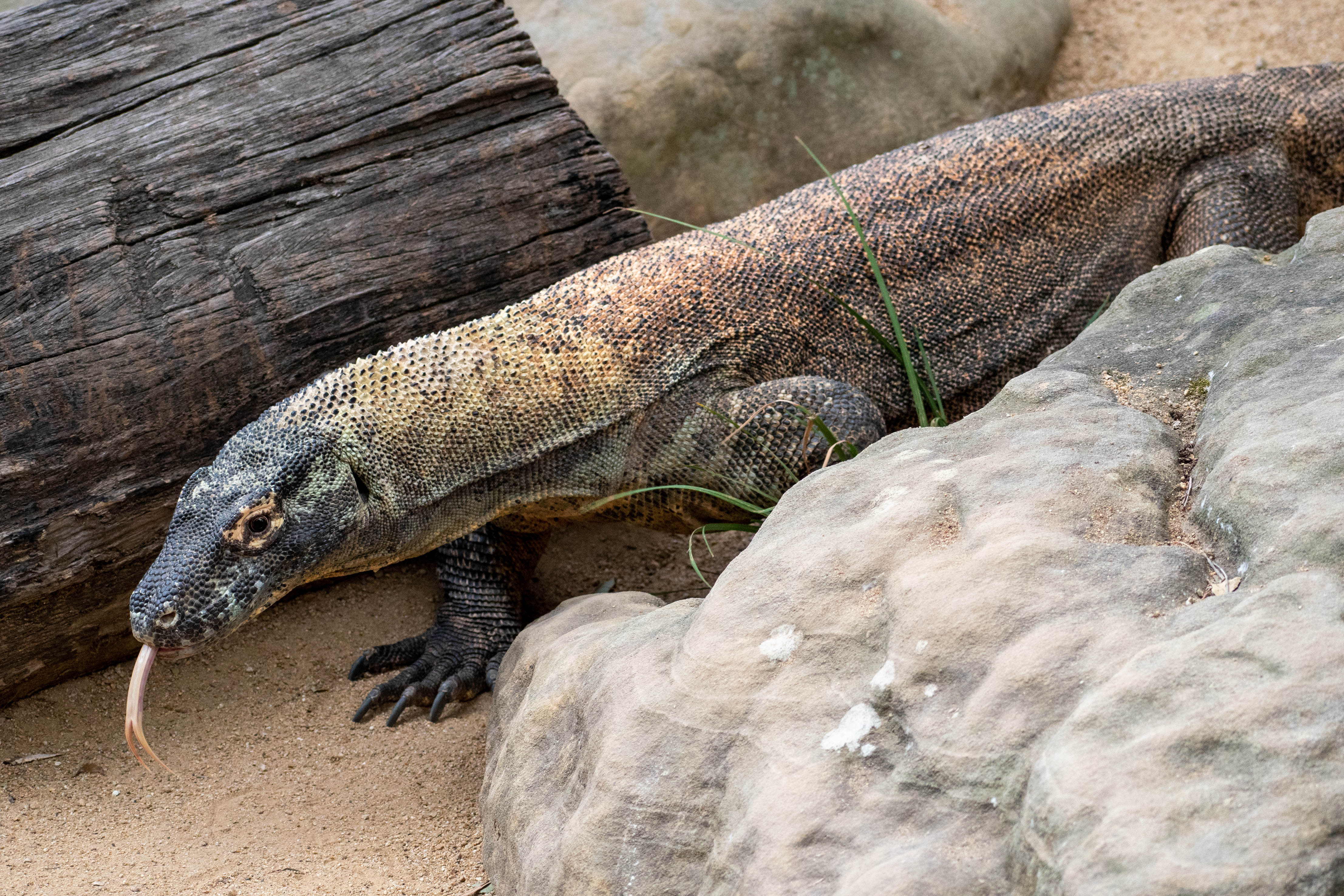
A komodo dragon
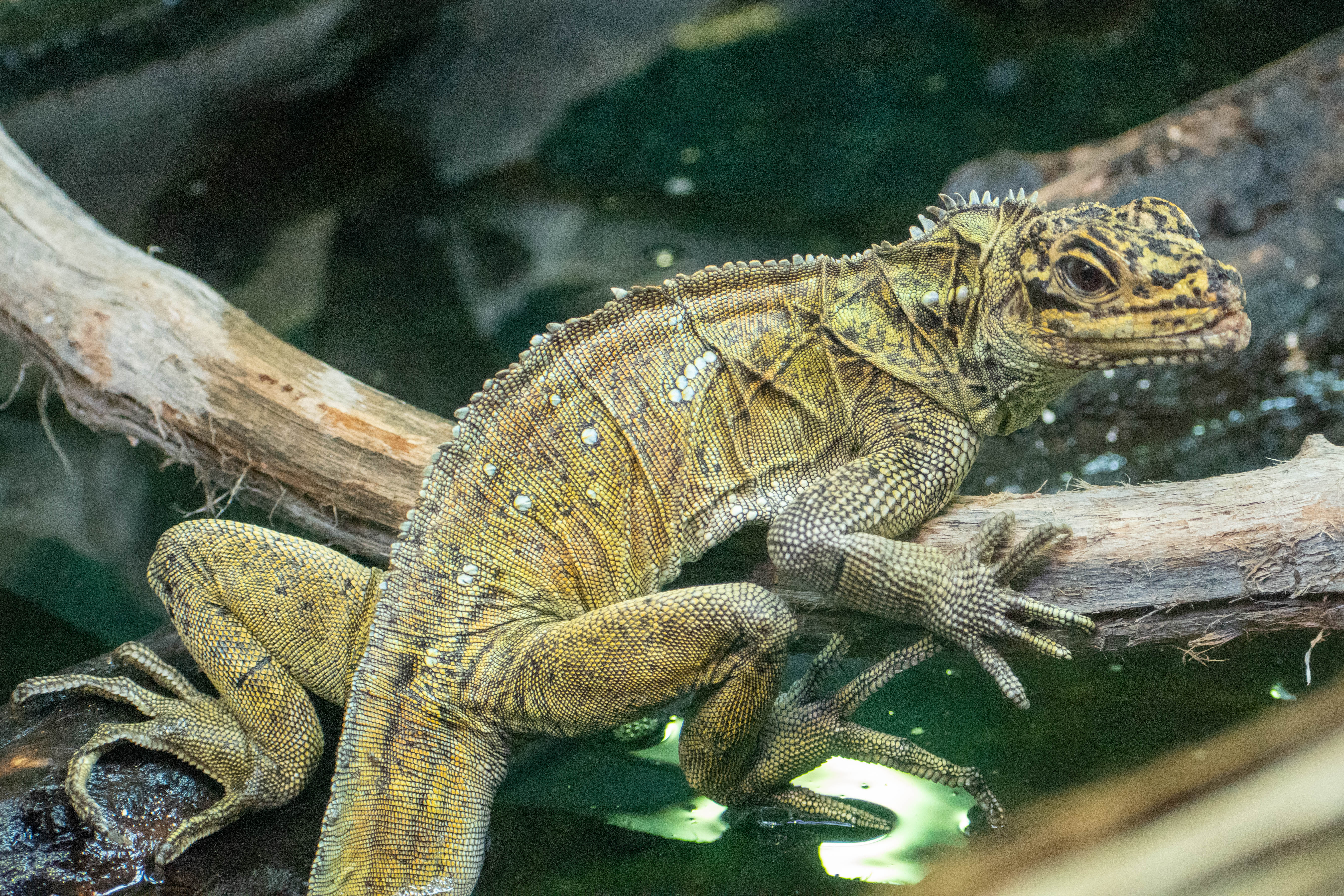
A lizard just out of water
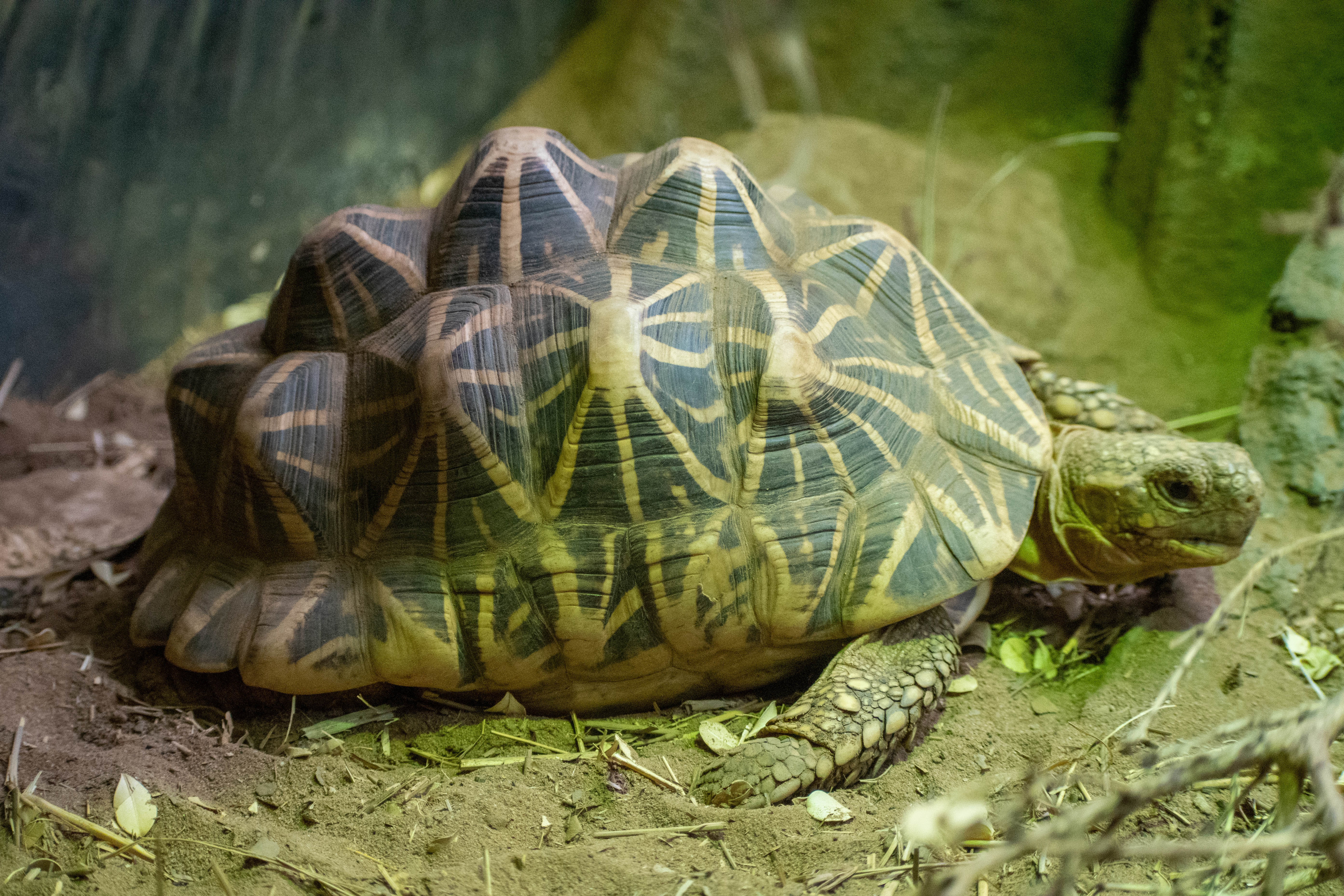
An Indian star tortoise
After leaving the reptile buildings we passed back by the freshwater crocodile enclosure, where we saw one of them chilling on the bottom of the pond. It wasn’t terribly active, so after a quick glance we moved on to the bush birds section. Here there were four enclosures full of birds native to Australia that are typically found in the Outback. There were a number of very colourful birds that we saw, and we spent a fair bit of time watching them fly around. I was able to get a number of good photos with my zoom lens - it was able to focus on the birds instead of on the enclosure fencing, which led to some great photos.
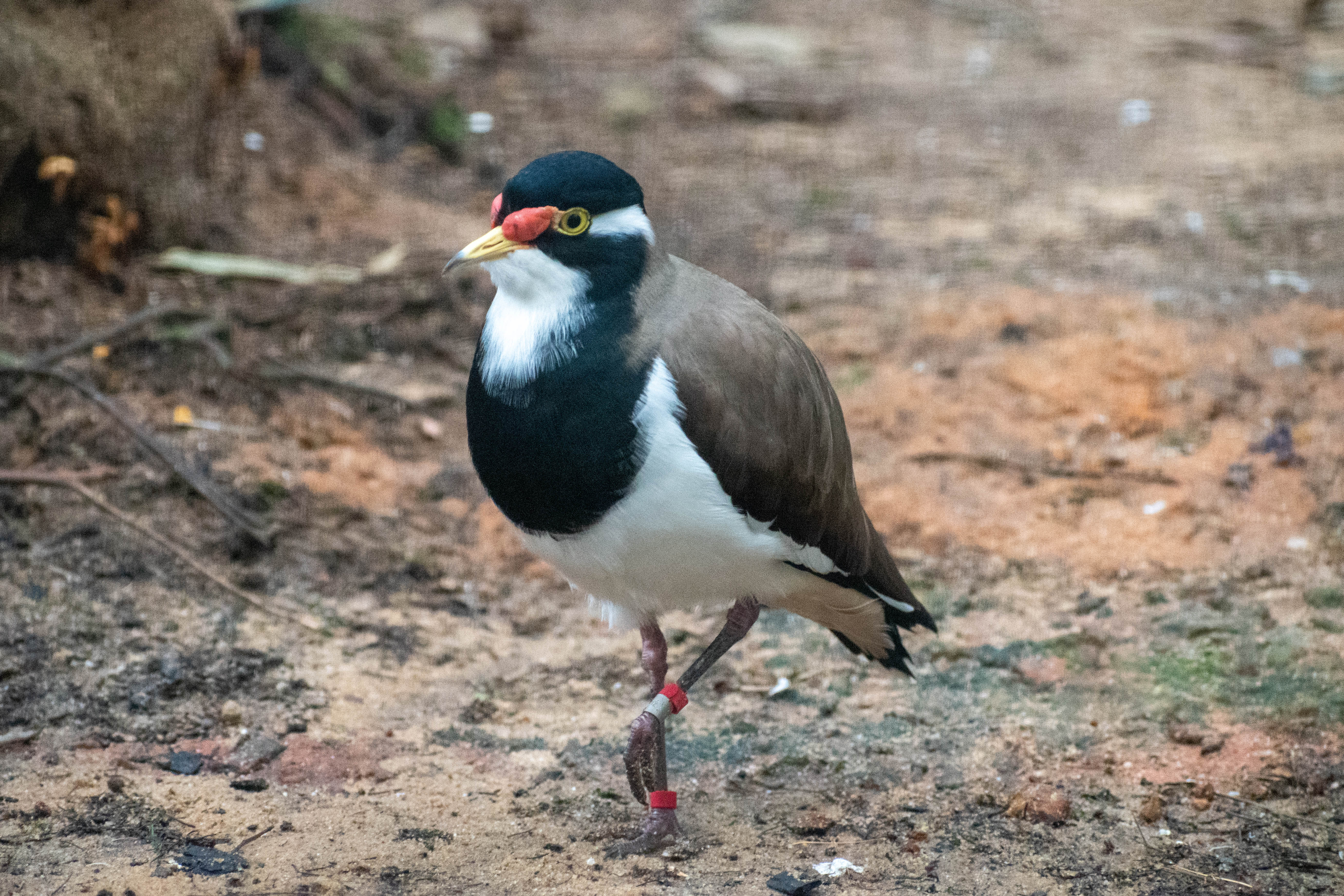
Bird
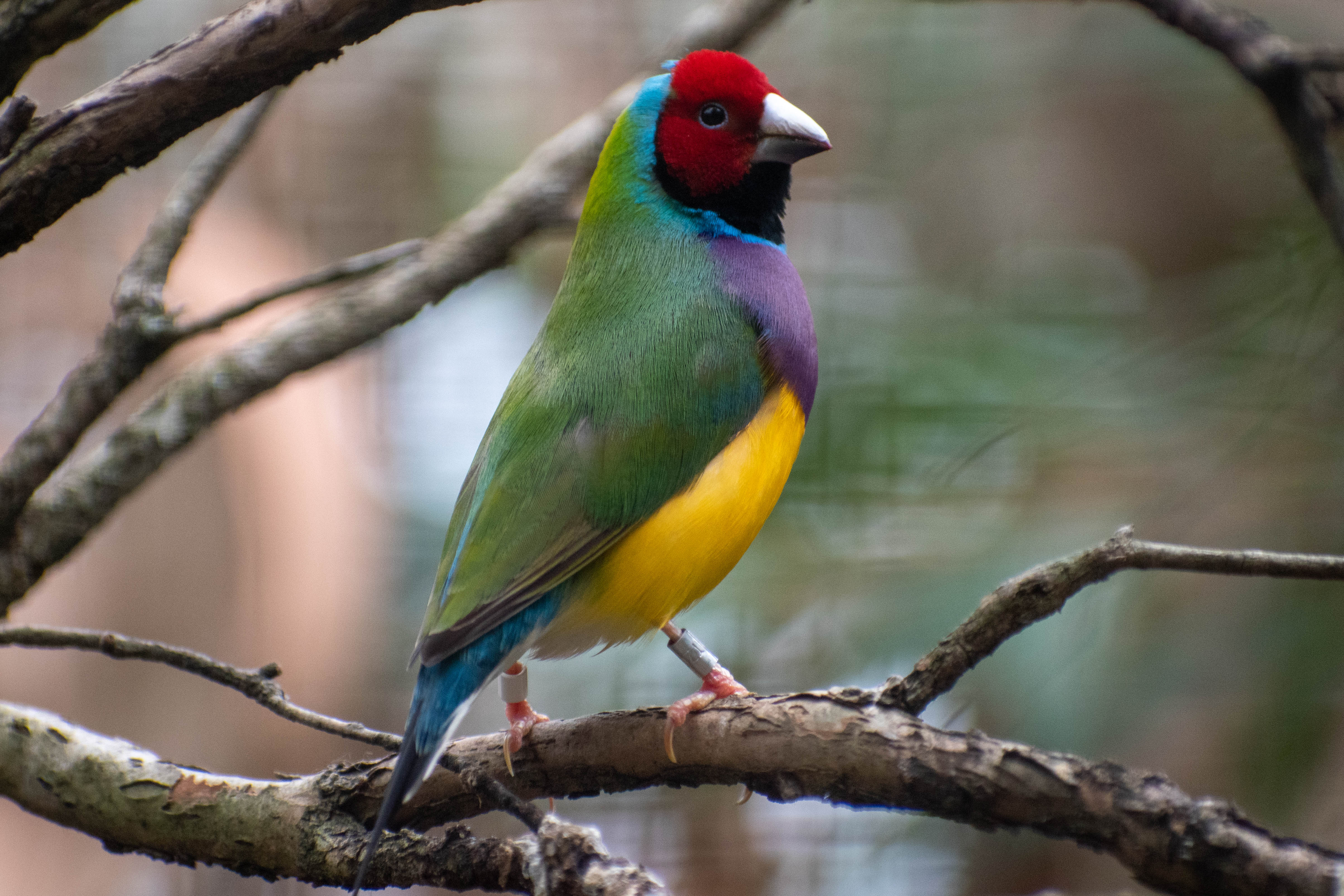
Bird
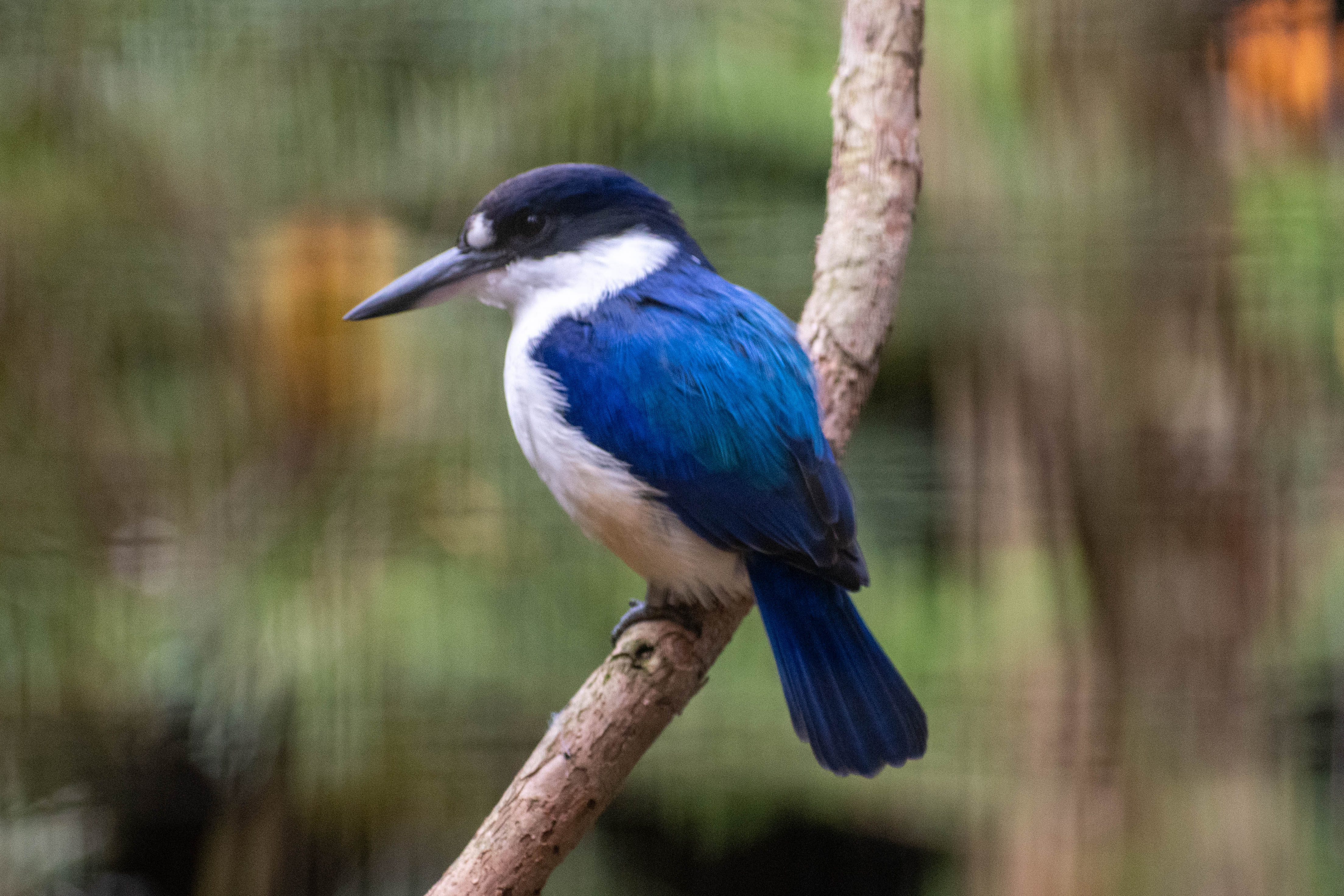
Bird
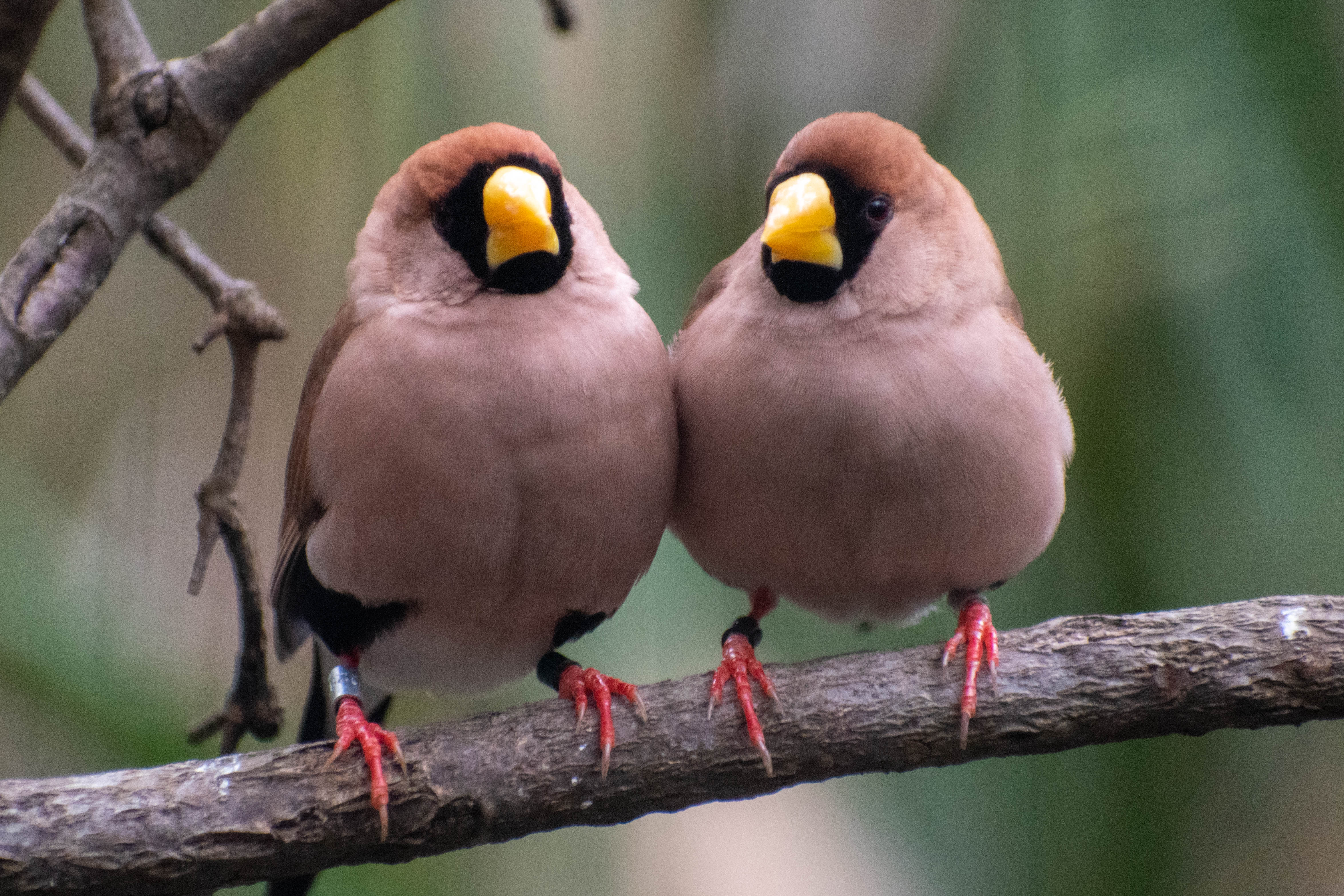
Bird buddies
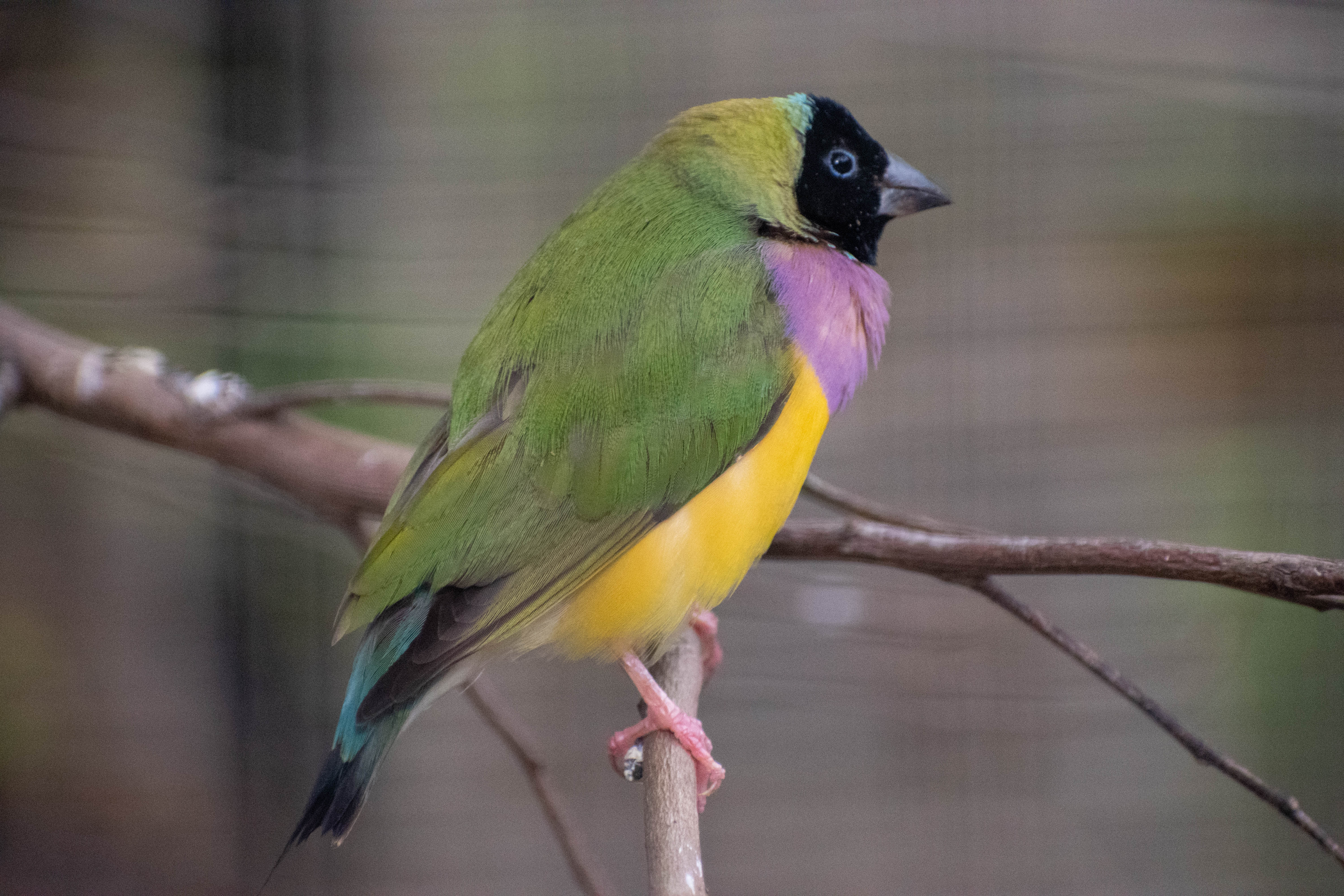
Bird
We continued walking to the Australian wildlife section, where we were able to finally see some platypuses! Even in the zoo it was hard to get a good look at these strange creatures, as they prefer the dark and are very fast swimmers. They were not in the outdoor section of their enclosure, but we were able to see them swimming in the water section of their indoor habitat. As they are predominantly nocturnal animals the indoor habitat was lit as if it was night time, which made it difficult to see them in any detail, but we were able to get a first hand view of their swimming abilities. We left the platypus enclosure after a short while and proceeded on to the Australian animal enclosure. This area was unique in the park, as we were able to walk into the enclosure and see a number of different animals living together. There were kangaroos, wallabies, and emus all sharing the space with us visitors. We arrived during the lunch feeding time, so we got to see the kangaroos and wallabies eating carrots and other vegetables, while the emus were pecking along the wall of the enclosure. We did get to see a couple of kangaroos walking around, however none of them really hopped.
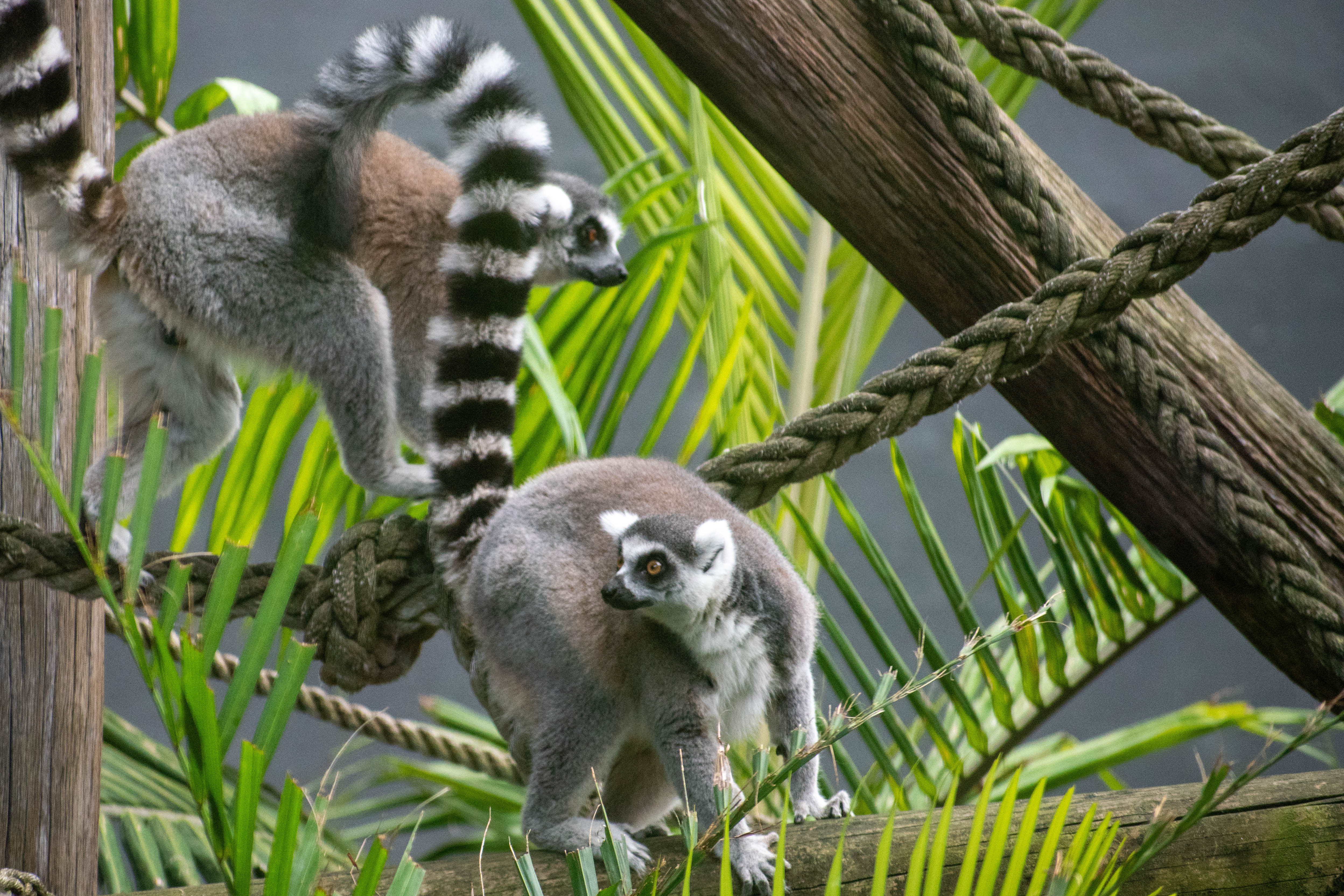
Lemurs
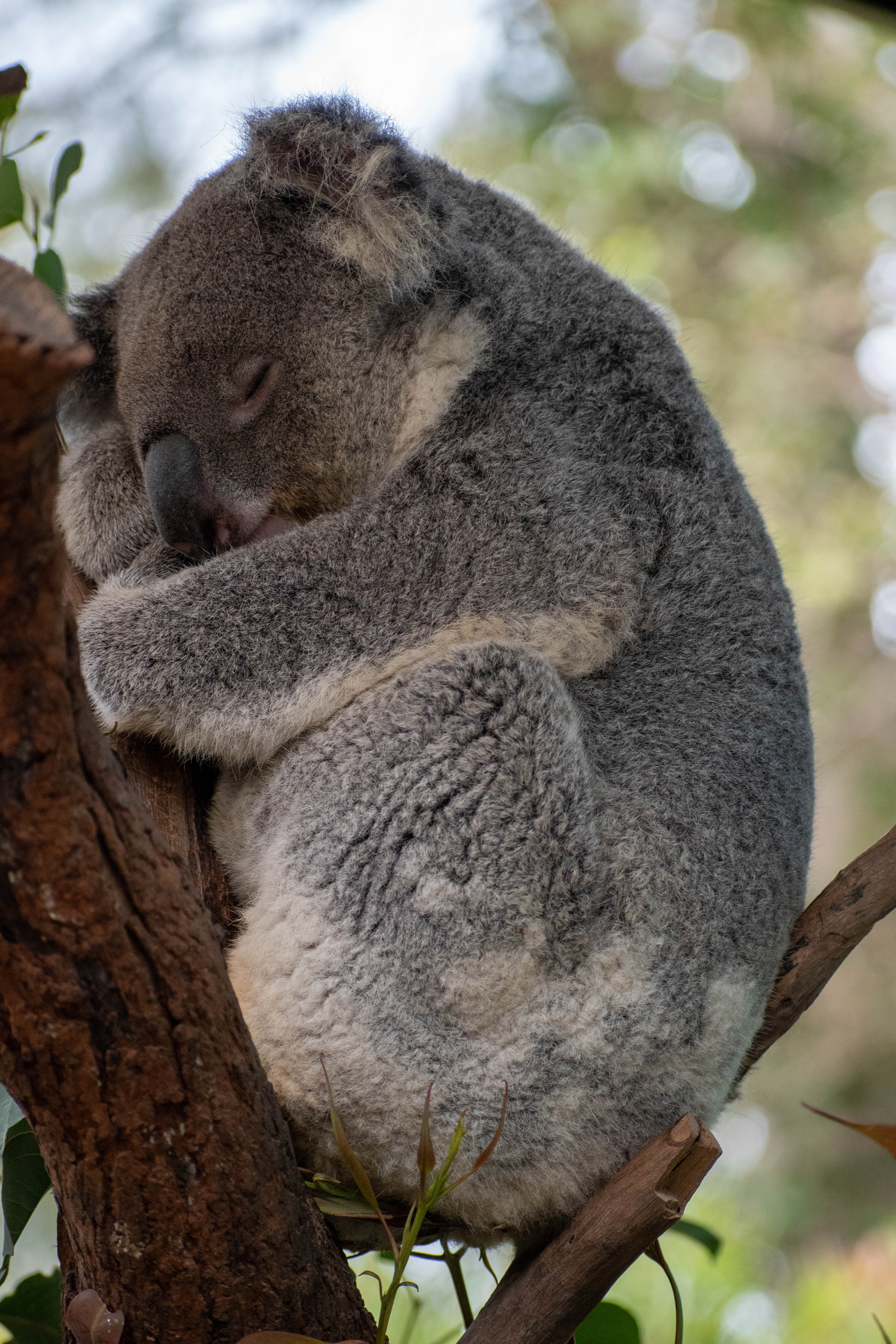
Another sleeping koala
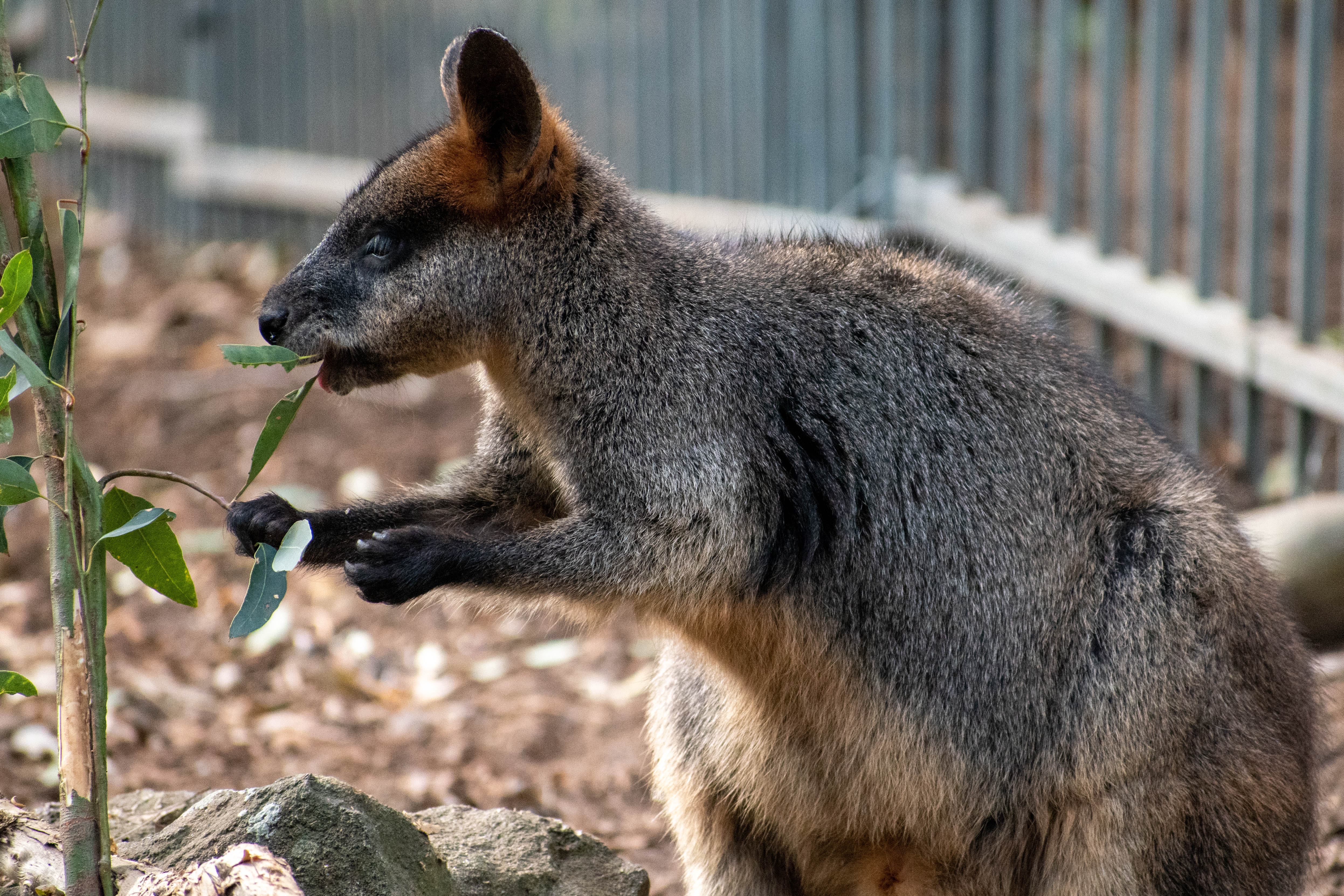
A wallaby snacking away
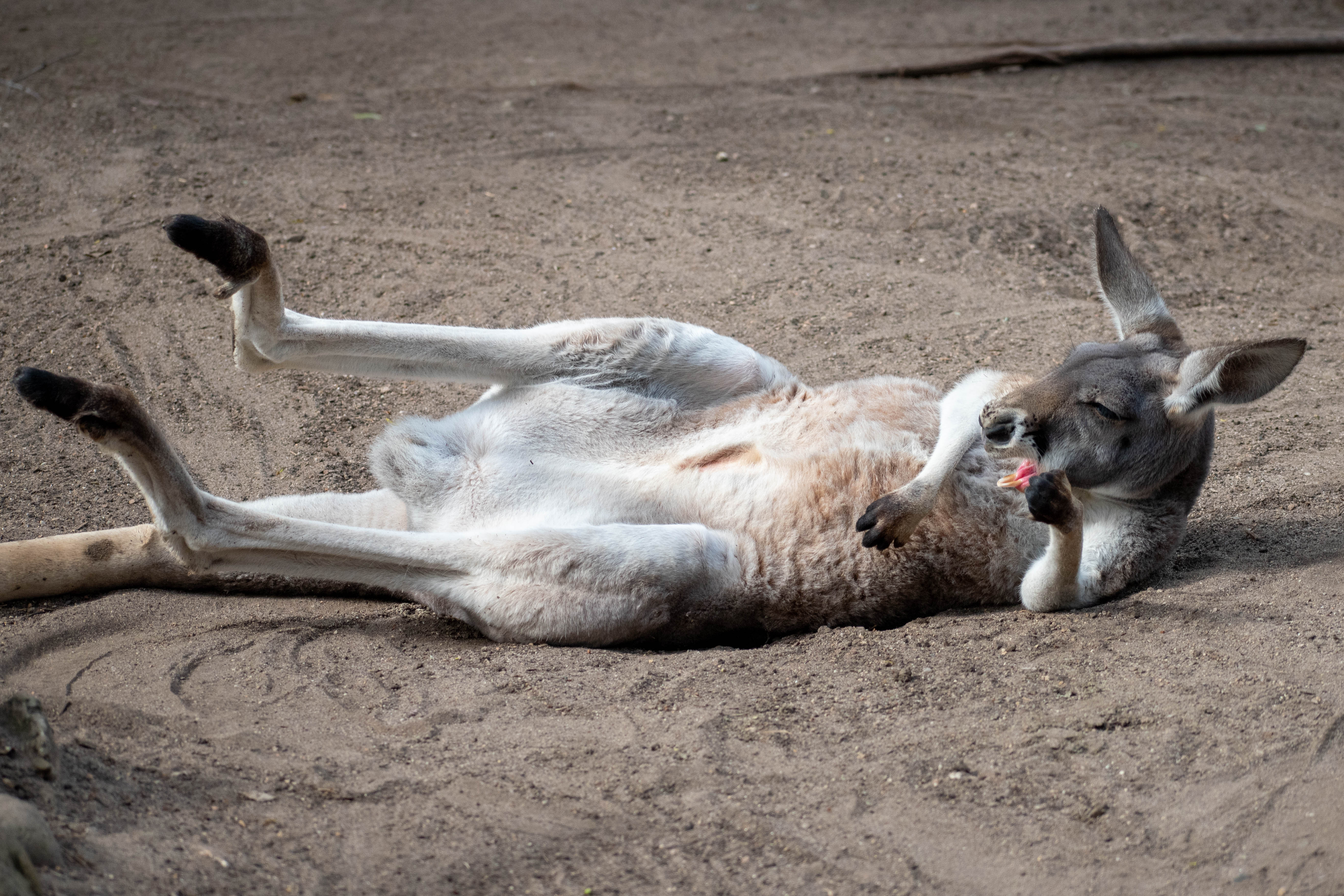
This kangaroo was tired
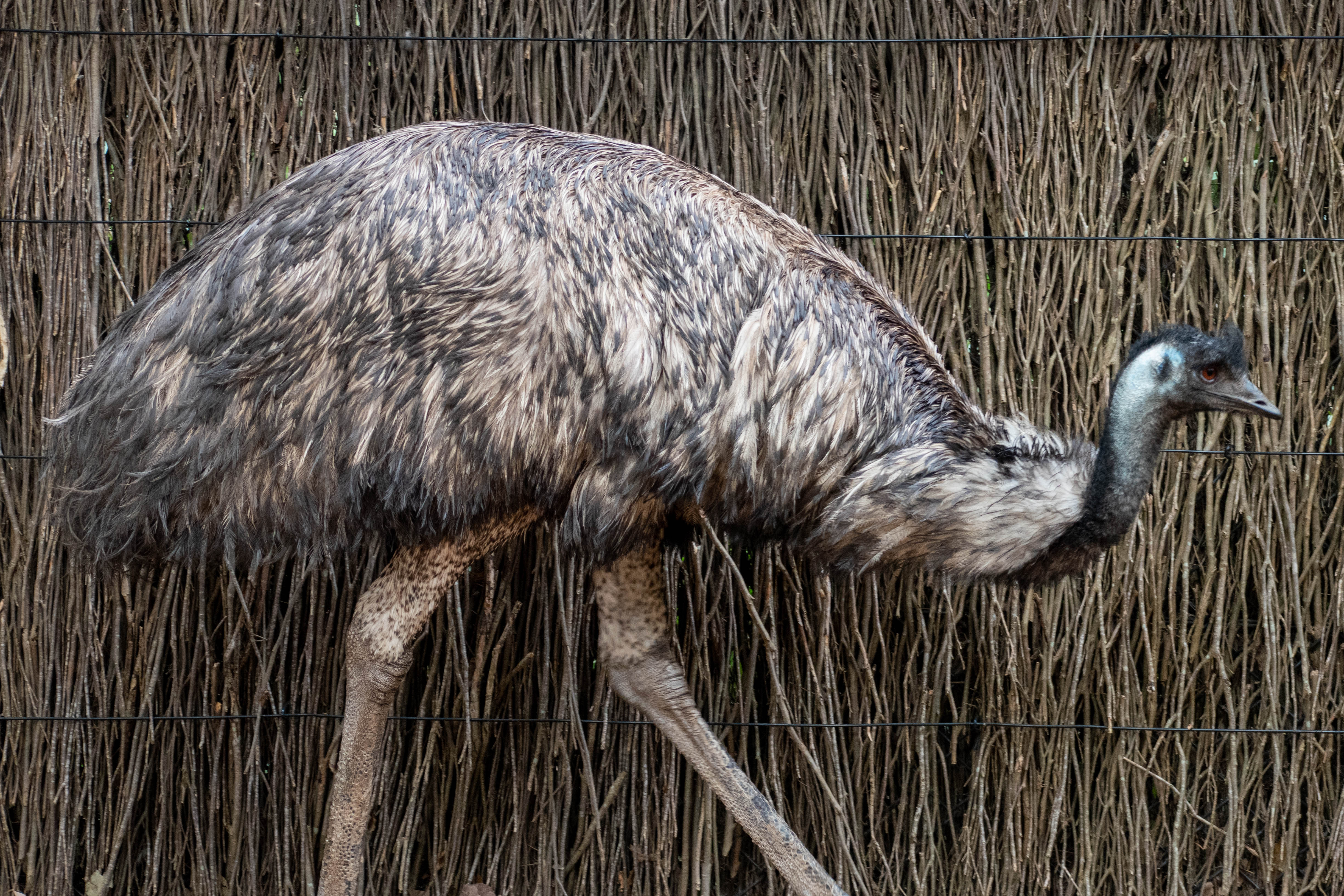
This emu was pacing along the fence
We left the large Australian animal enclosure and found our way to the nocturnal Australian animal building. Here were a number of smaller animals that only come out at night, and so they had a building designed to mimic the nighttime for visitors to be able to see these creatures during the day. Many of these animals are smaller, including a variety of rodent-like animals, a Tasmanian devil, some birds, and a few snakes. There was an interesting enclosure styled like a standard backyard that was home to some animals - the idea was to show how these animals make a living in our own backyards.
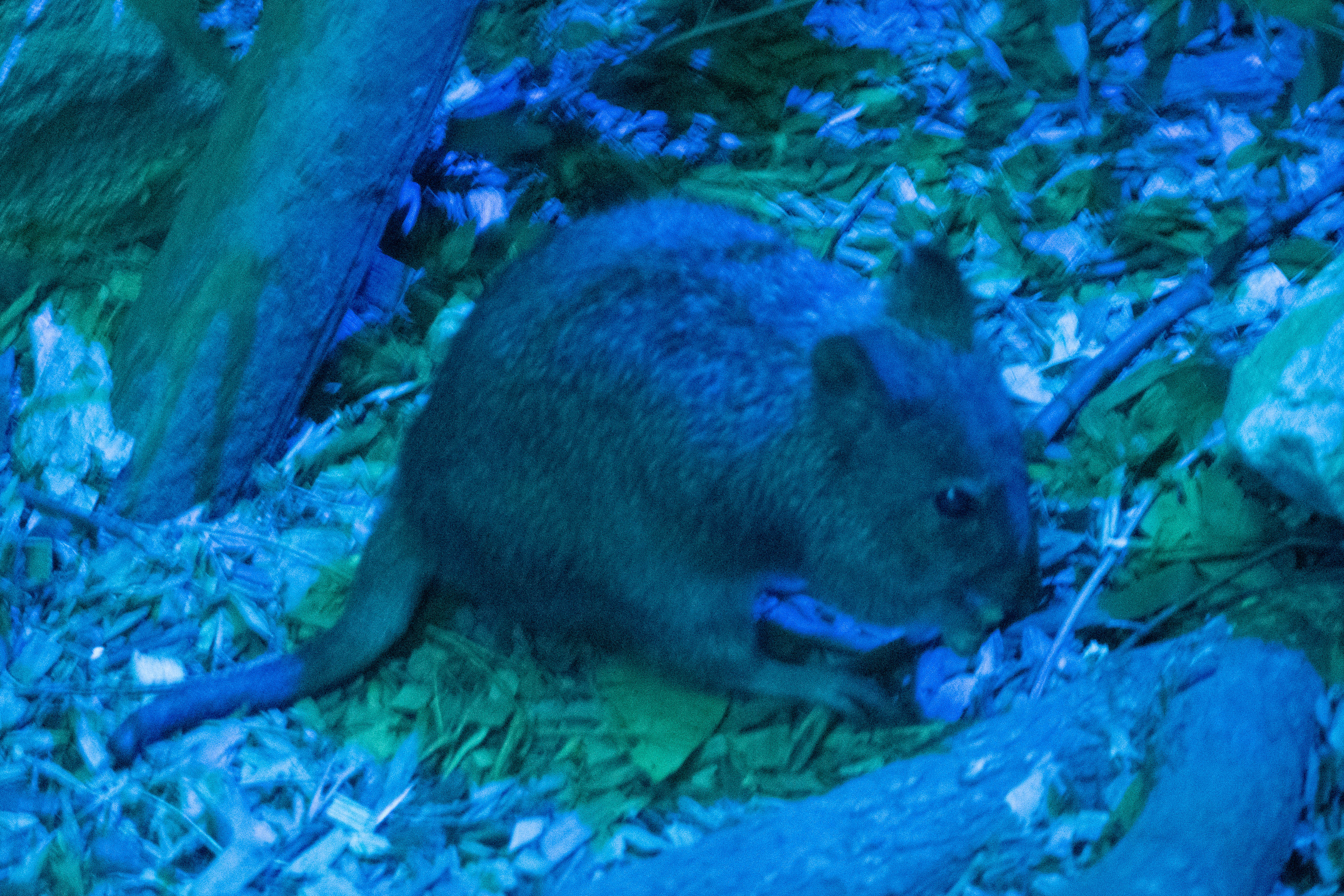
Nocturnal animals are hard to capture in photo
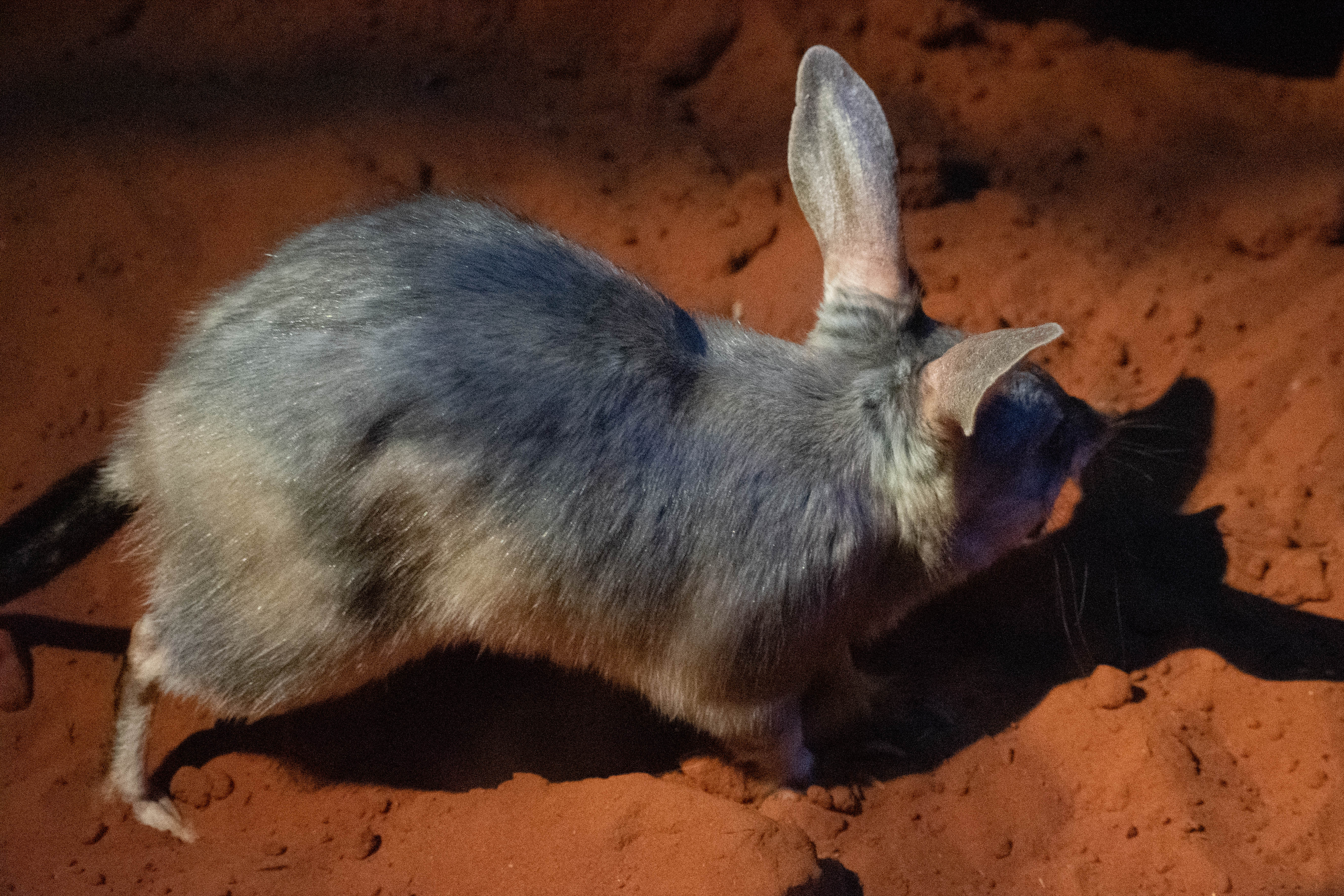
This guy didn't want to look at the camera
We left the nocturnal Australian animal building, then walked into an aviary containing a number of Australian tropical birds. This large aviary was a bit cool as there were a number of large trees providing shade, and these trees made it hard to pick out individual birds. We walked through it a couple times in an attempt to see more of the birds, as we didn’t see many birds on our first pass through. We were able to pick out a number of different birds on the second pass, however! After leaving the aviary we went to find the last of the Australian animals in the area - the cassowary. This impressive animal had its own enclosure that was adjacent to the aviary, and after a bit of searching we were able to locate the two cassowaries behind some trees in the middle of the enclosure. It looked like one of the cassowaries was preening the other, which made it hard to get a good photo of the two of them together. We spent a few minutes watching these birds before moving on.
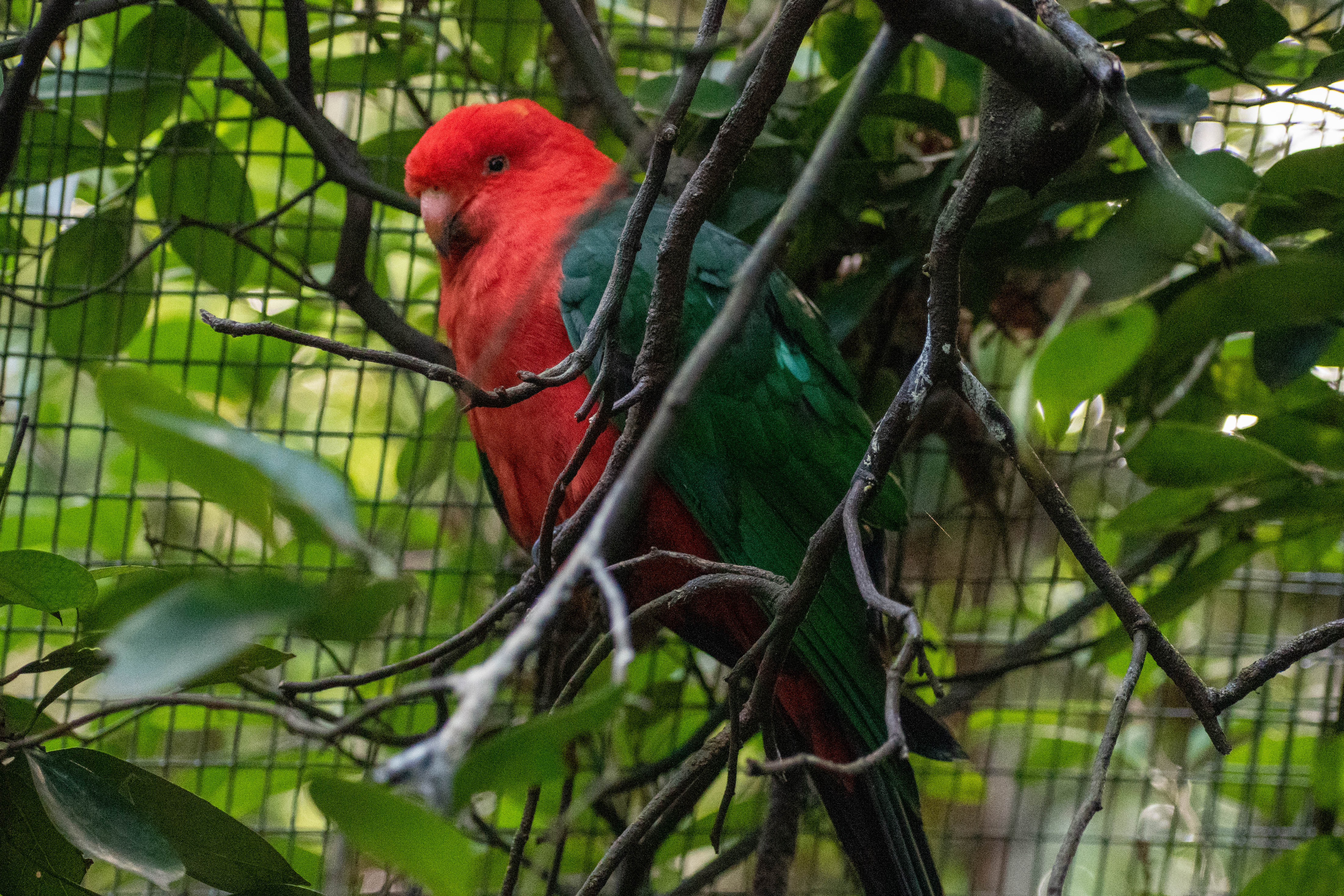
A bird
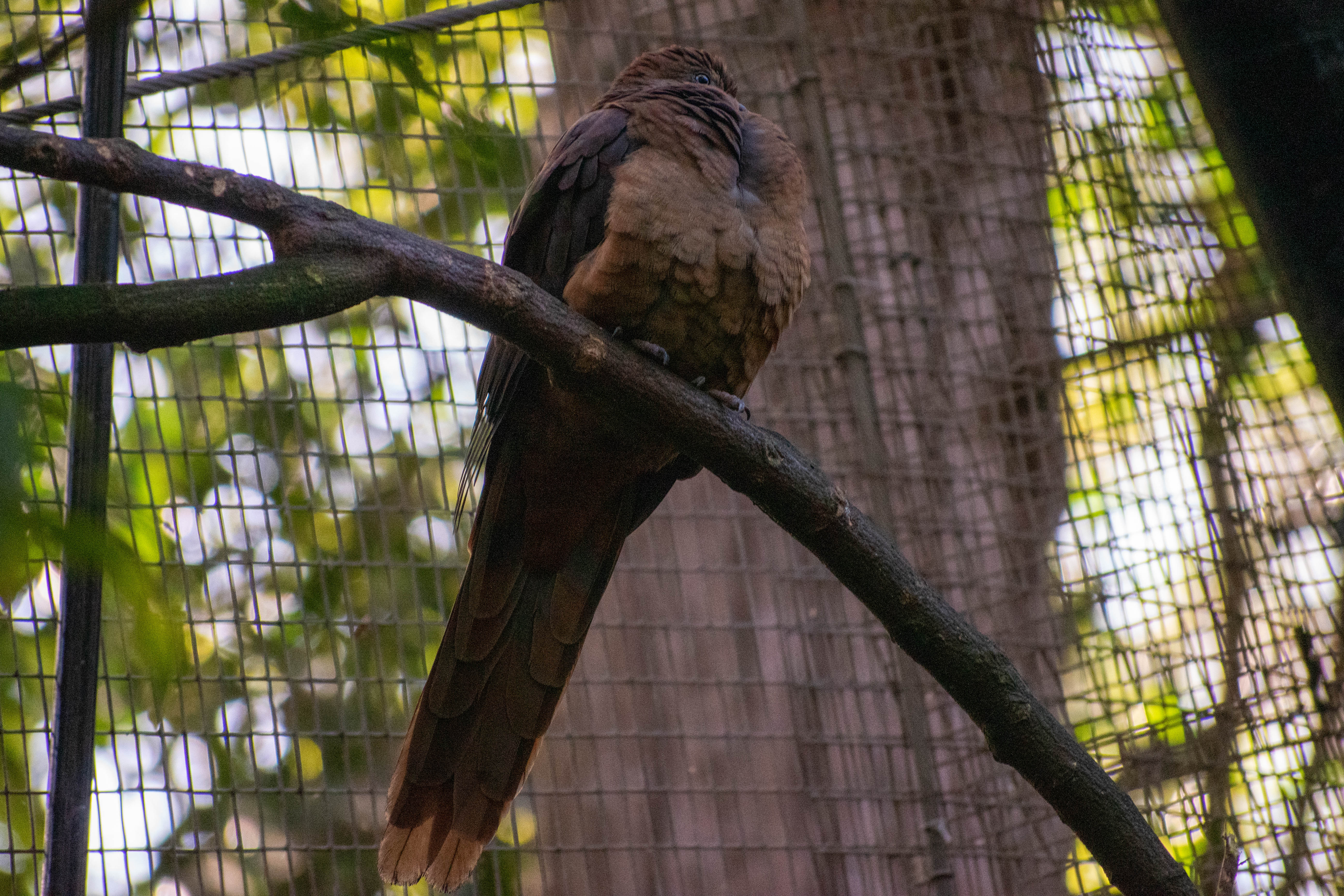
A bird
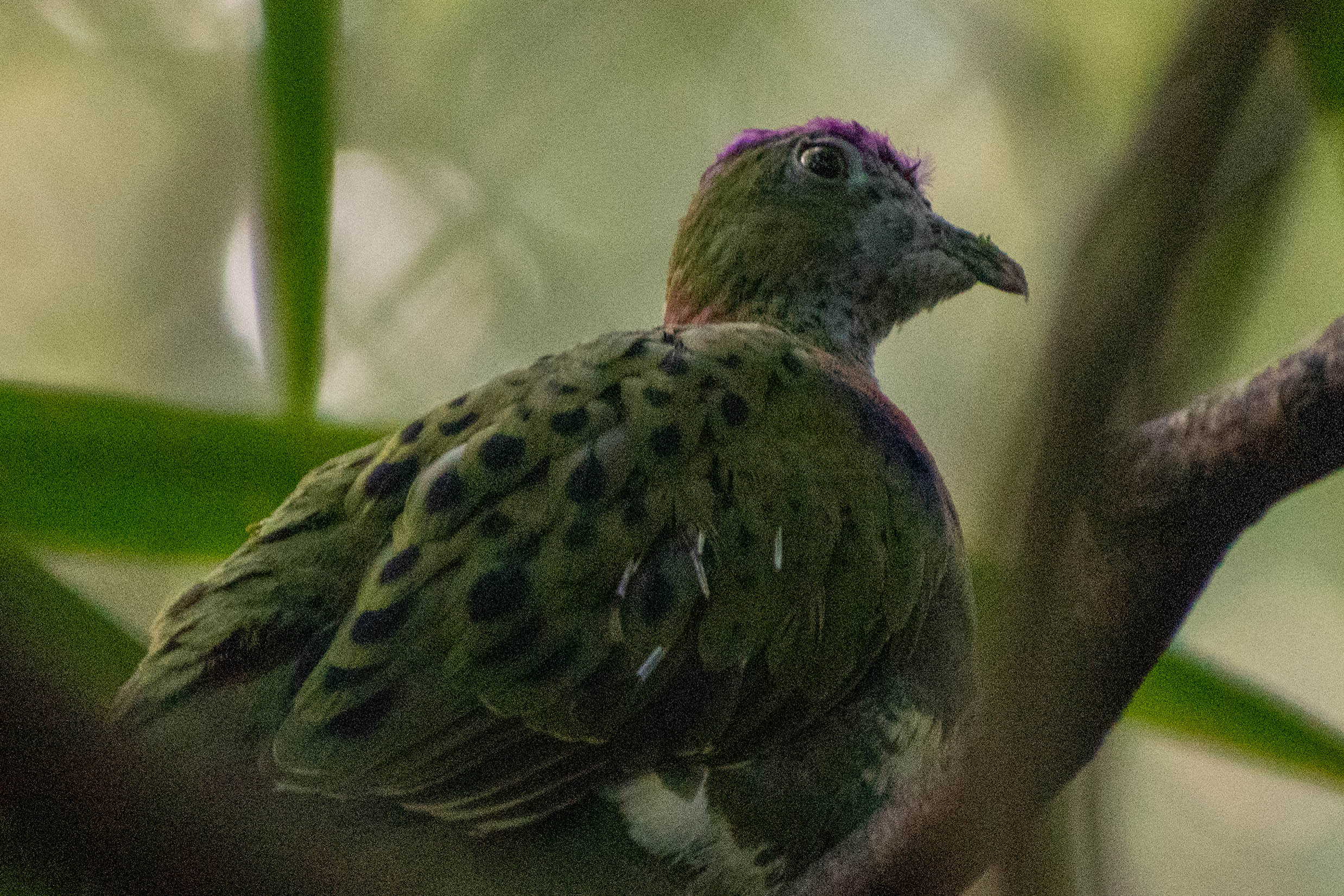
A bird
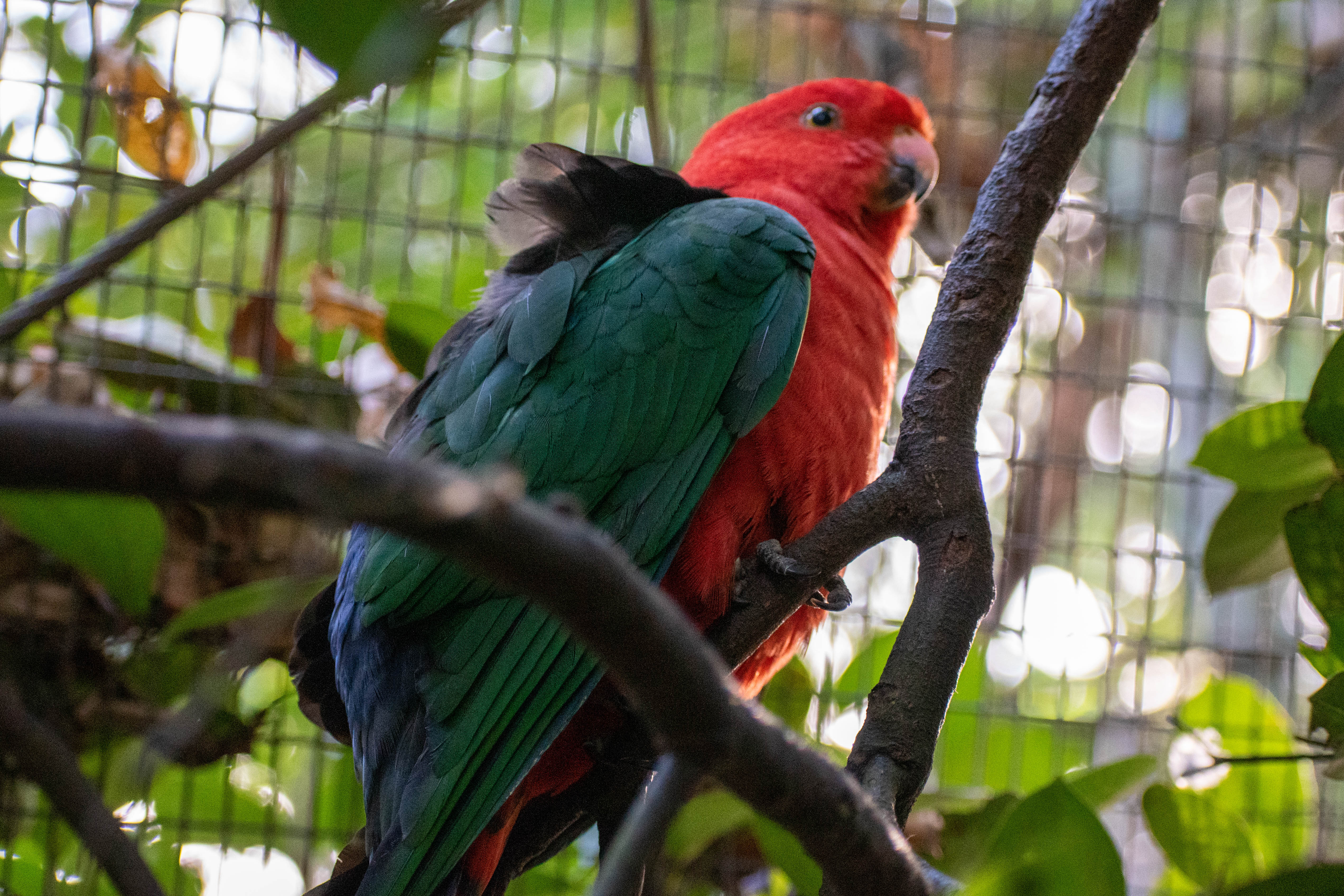
A bird
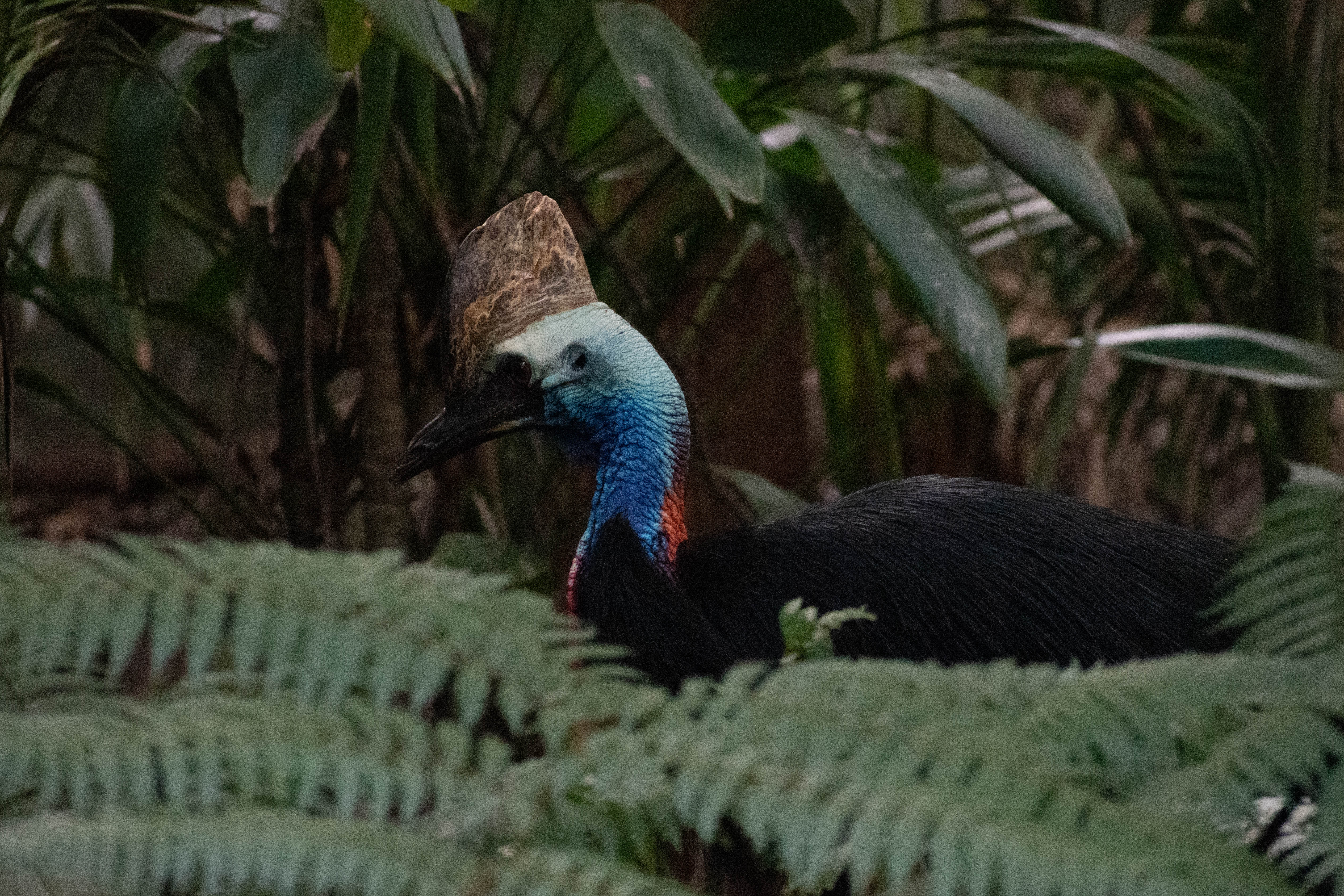
A cassowary
It was about 12:30 at this point, so we found a picnic bench and ate the lunch we had packed earlier in the morning. We chose an area that was out of the wind so it wasn’t too cold, however as we ate we noticed a wild turkey getting progressively closer to us. We had to shoo it away, as it was getting close to us and clearly looking for food. Shooing the bird was pretty effective, and we weren’t disturbed again afterwards. It was a quick lunch, giving us lots of time to get back to the park.
Our next section was an aviary containing birds from the Australian highlands. This aviary also had a path that allowed us to walk through it, and while there were ostensibly rock wallabies that lived in the enclosure we didn’t see any. They were probably sleeping. After leaving the aviary we wandered towards the African plains area. The first animal we encountered were the giraffes, who were in a temporary enclosure (the old elephant enclosure). The Taronga Zoo was undertaking a major renovation project in the middle of the park, creating a whole new African Savannah exhibit that will open in 2020. During construction a number of the African animals were moved to partner zoos, however the giraffes were still living at Taronga. We saw three living in a nice open space, but it was hardly as exciting as seeing them in the wild on safari. Next to the giraffes was the original elephant house, one of the oldest structures at the zoo (built in 1915) and preserved as a building of historical significance. This was a small, dark building, and it was depressing to think that animals as large as elephants used to call this building home.
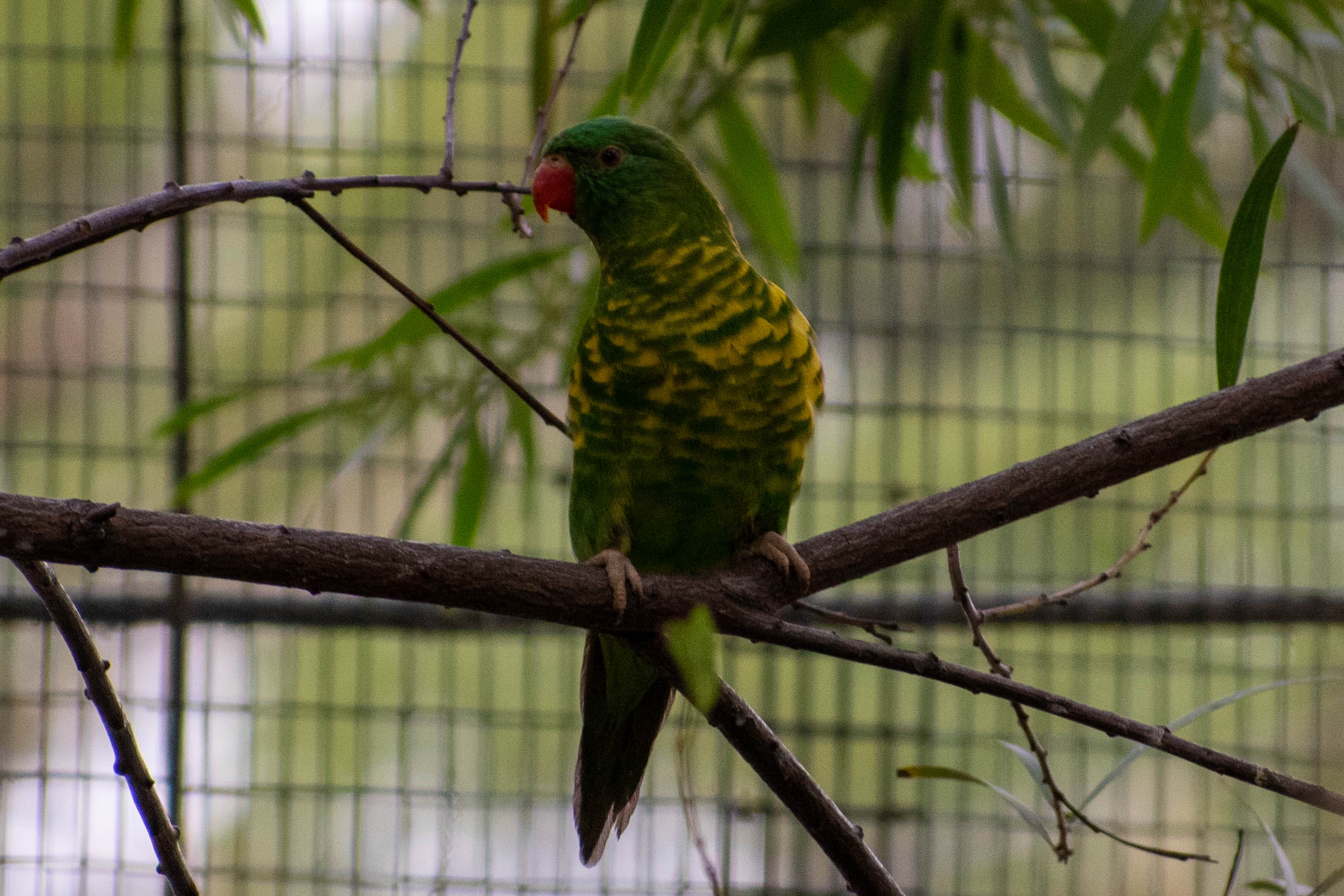
A bird
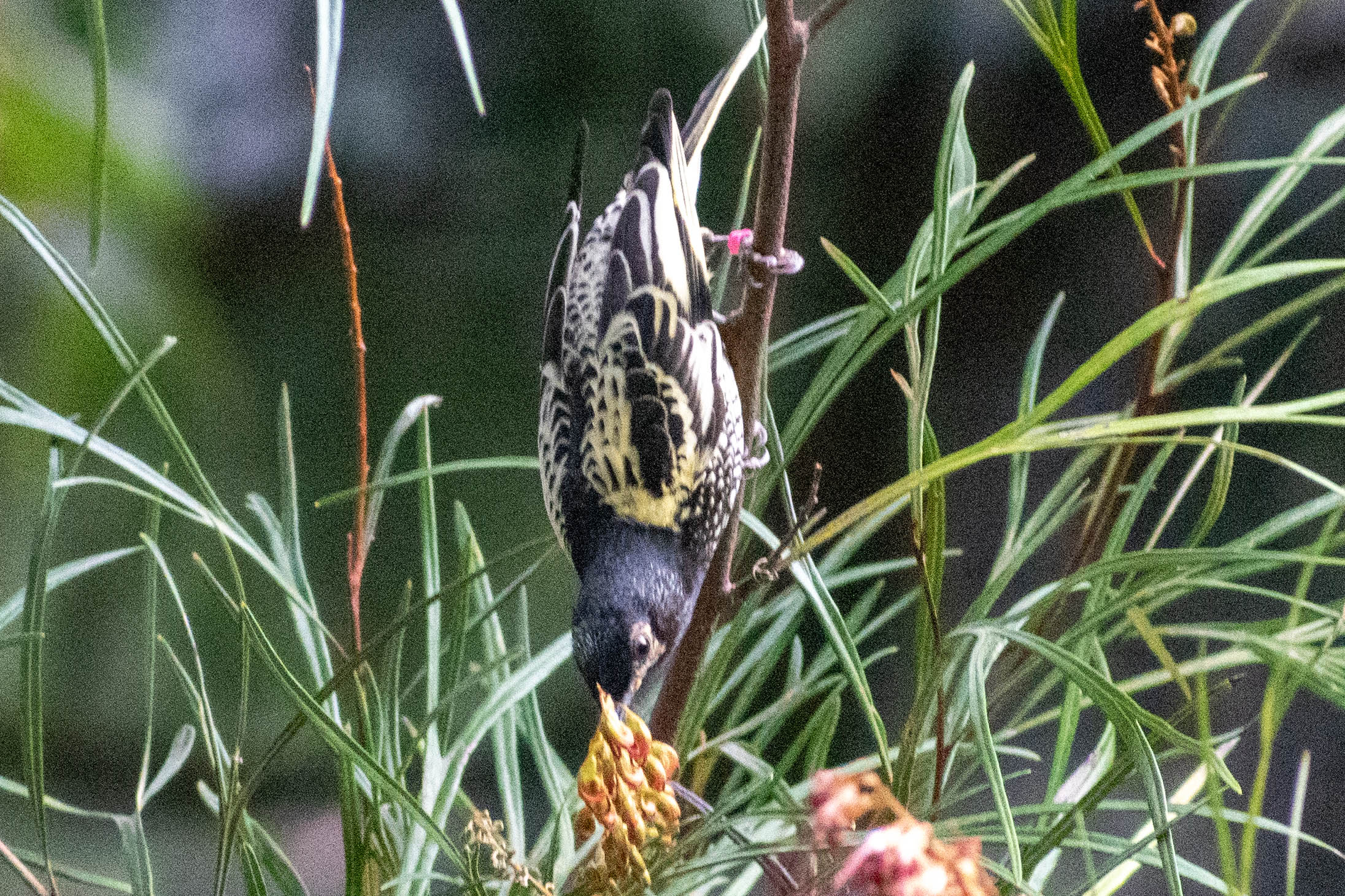
A bird snacking on some berries
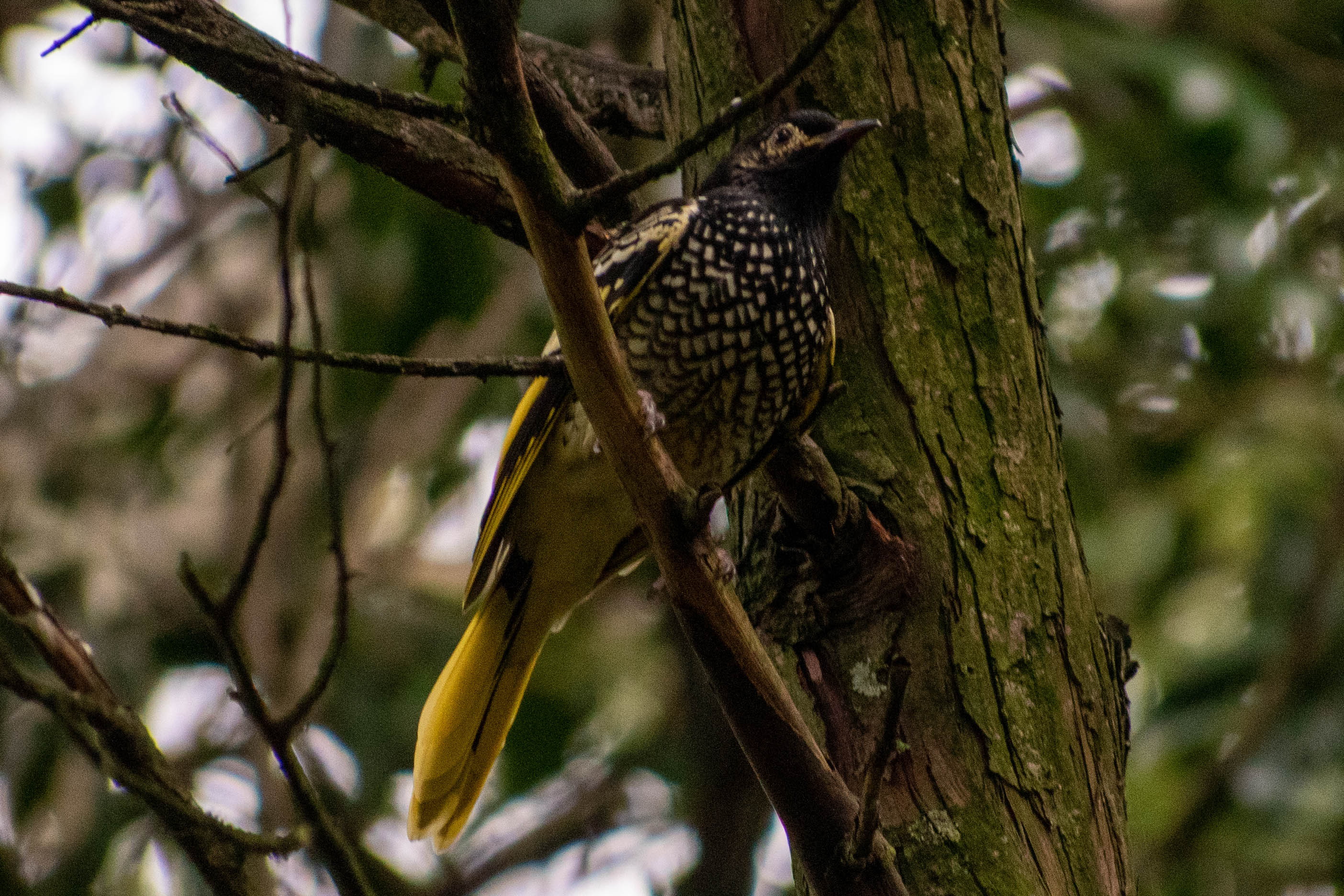
Another bird!
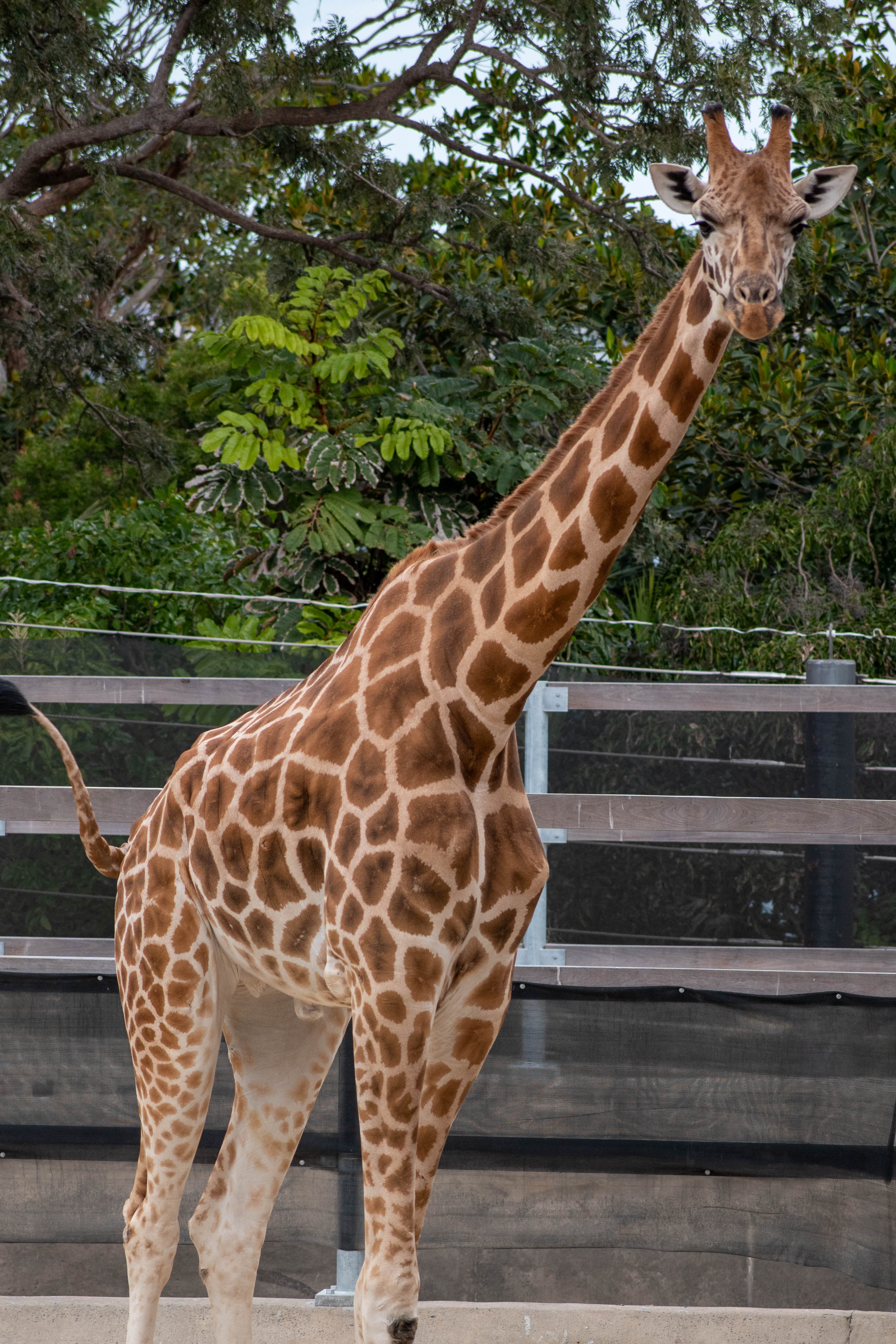
The giraffe looks quizzically towards us
We continued on from the giraffes and visited the meerkat enclosure. There were a number of meerkats living together, and due to the cooler weather a number of them were huddled together underneath a heat lamp. There were a few adventurous meerkats who were out exploring and digging, which was nice to see. We continued on, passing back by the cassowaries in the hope that they were more visible. While they were no longer preening they had moved farther back into the enclosure, which made seeing them even more difficult than before. We continued on to an enclosure containing tamarins, and then passed by the saltwater crocodile enclosure. We were able to see one saltwater crocodile calmly resting in the water, just the eyes and the top of its snout visible. We passed by another aviary (this one did not allow entrance) that held some large parrots. We then passed on by the gorilla enclosure, unfortunately we weren’t able to see any gorillas.
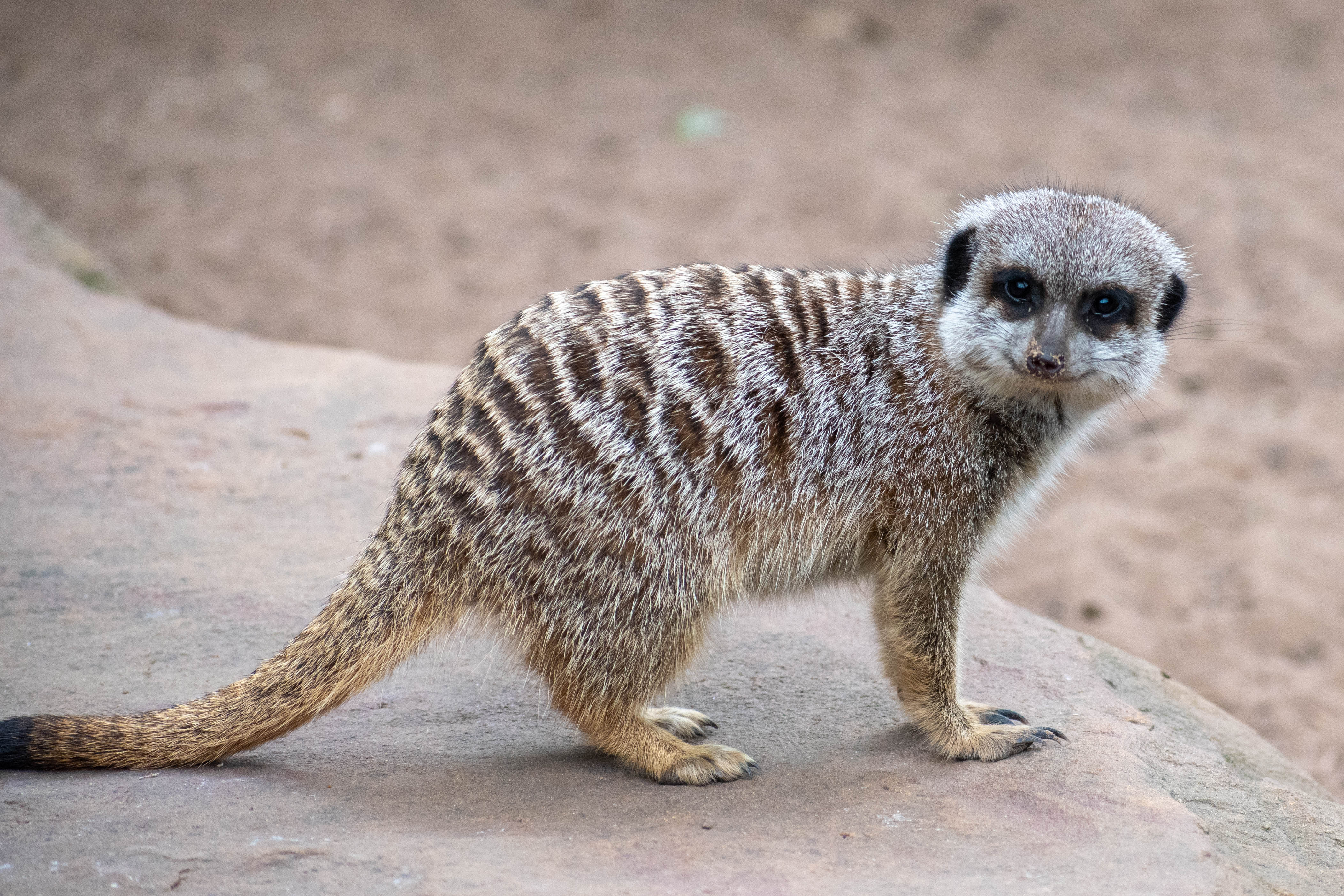
A meerkat looking towards us
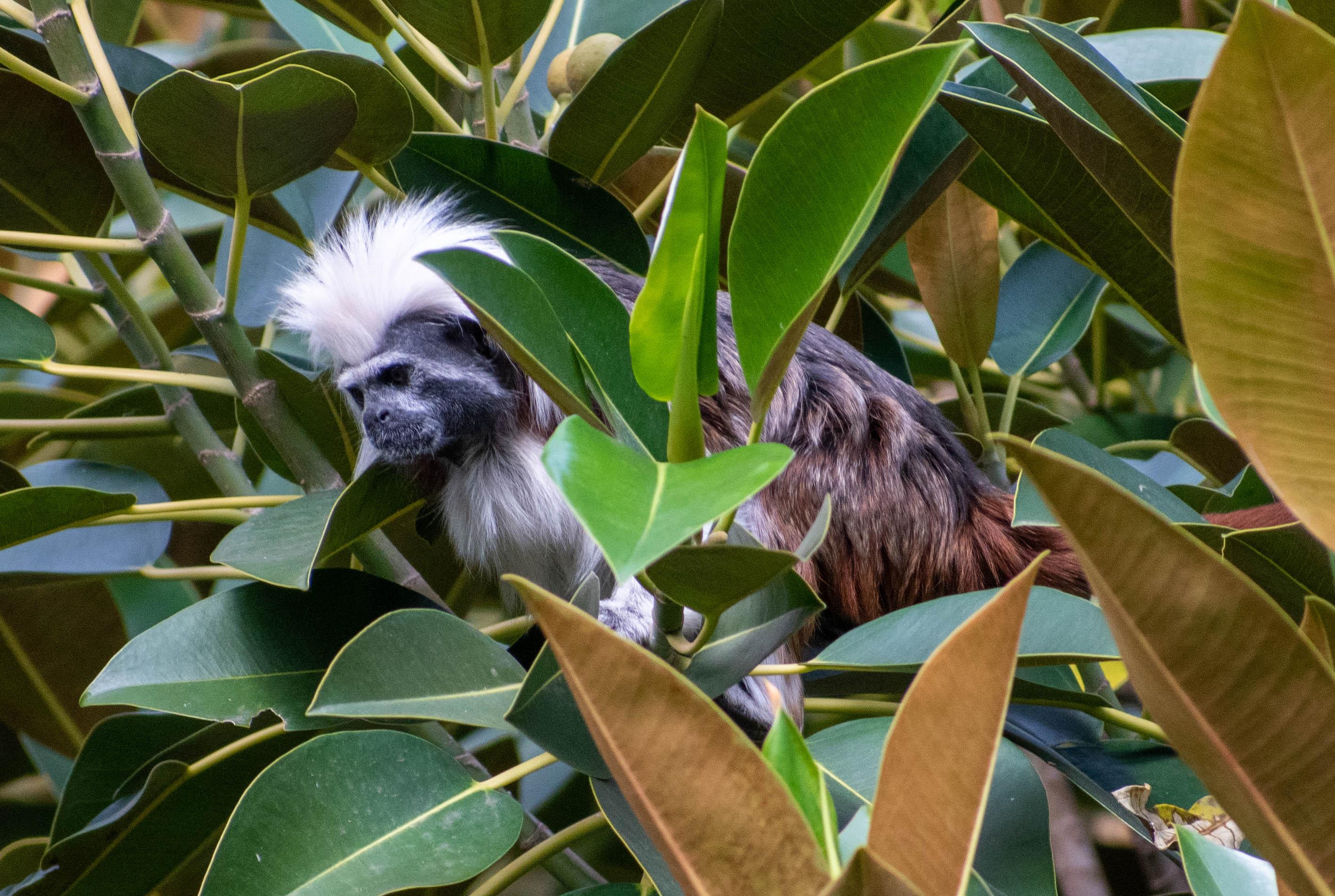
The tamarins were all playing in a large tree
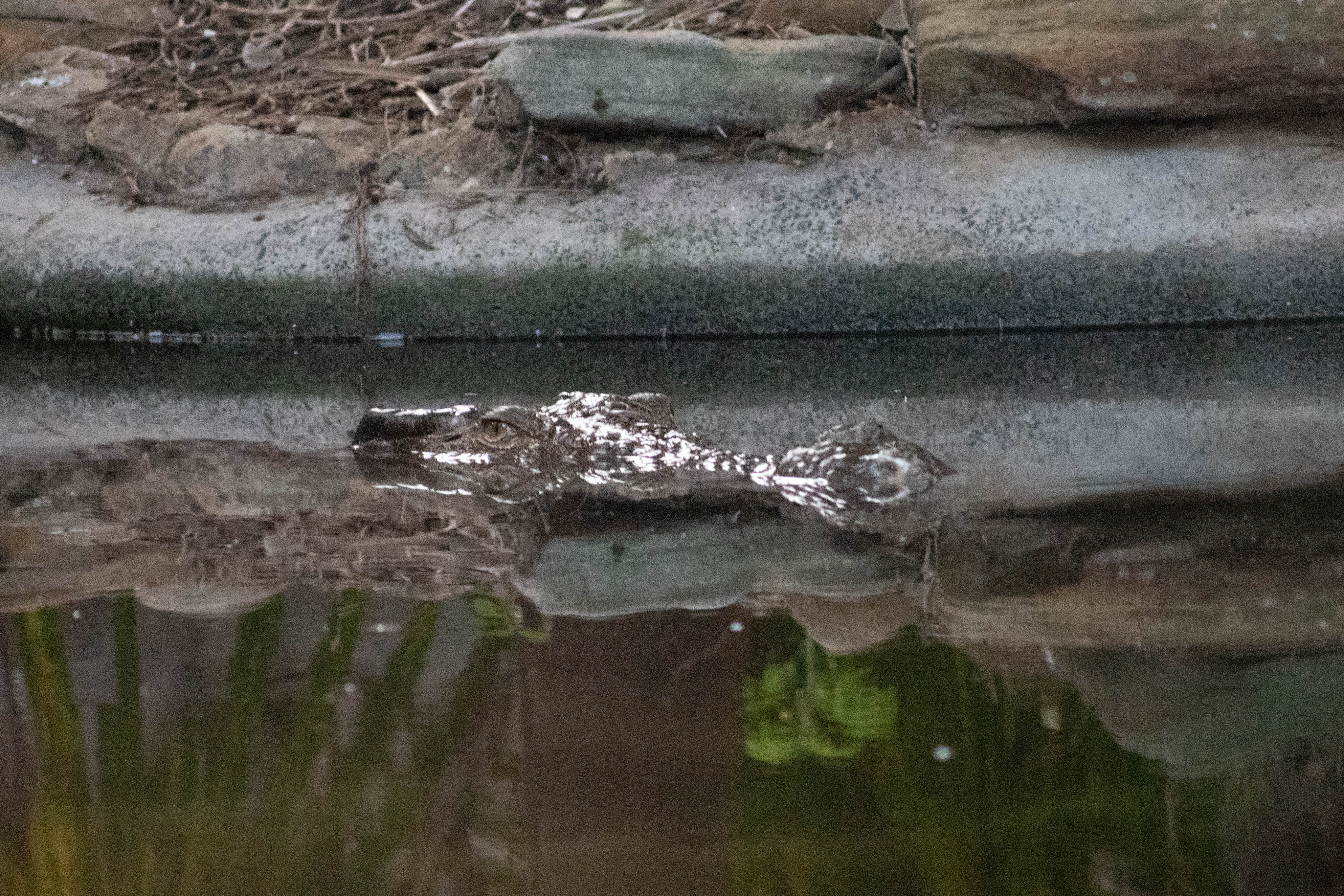
The saltie was pretty well camouflaged
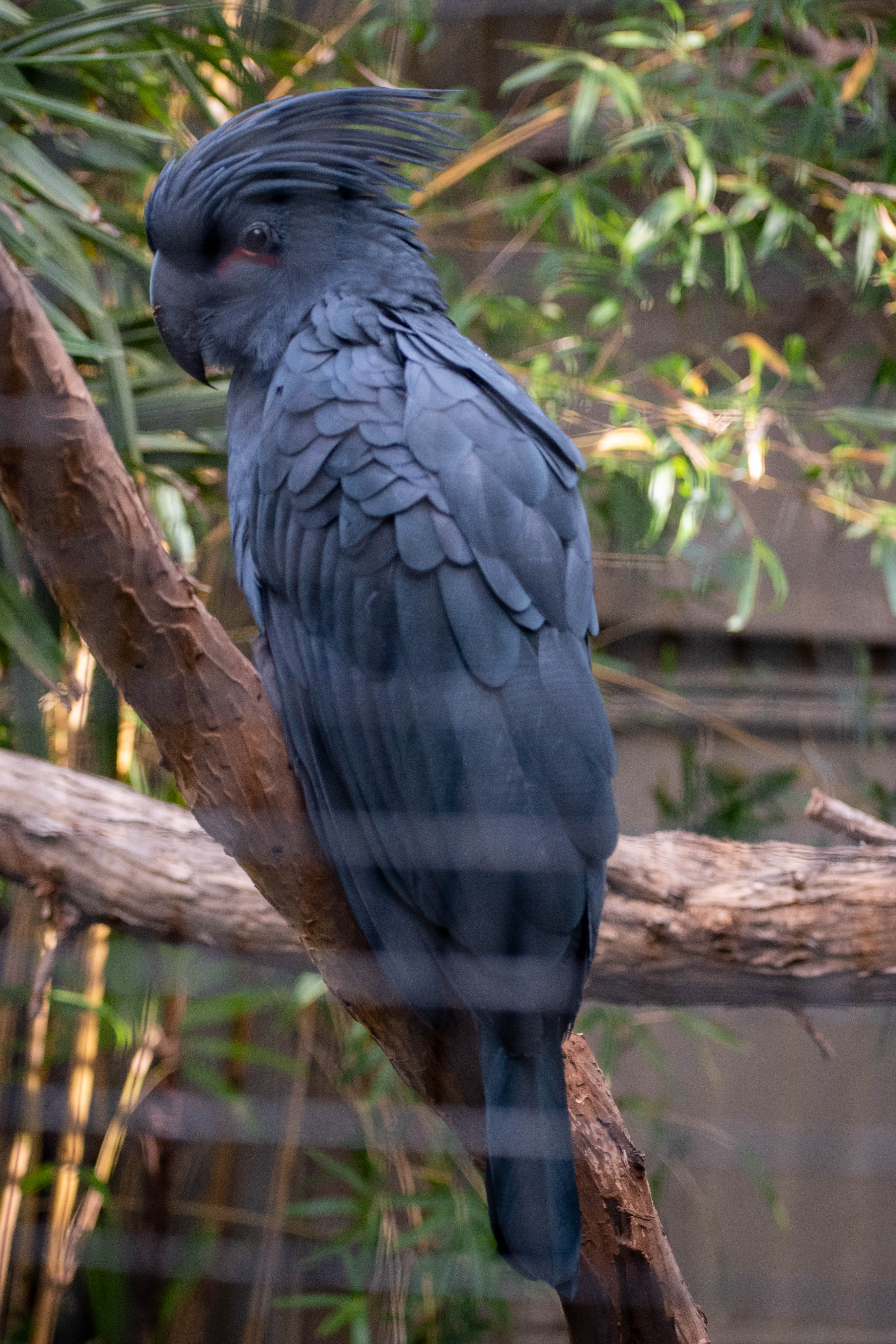
A parrot
The next area of the zoo that we visited contained a number of oceanic animals. We arrived just after 14:00, which was the starting time of a sea lion show and we sat down in the stands just as it was beginning. The sea lions showed off their skills by watching for hand signals from their trainers and using those as a cue to perform certain actions, such as diving off a platform for fish. There was a strong focus on ocean conservation during the show, with the trainers explaining the threats these animals face and explain why sustainably fished oceans are critical to our future. I couldn’t decide if the show itself was something to feel bad about, as the zoo itself clearly has high standards and doesn’t do things that would be harmful to the animals, and I’m sure the sea lions enjoyed the mental stimulation that comes from such a performance, yet there is always the question of whether the animals should even be in the zoo in the first place. It certainly is a complicated thing to consider.
Once the show was over we continued on, seeing an enclosure with several pelicans, a separate pool enclosure that had sea lions that did not participate in the show, and yet another enclosure that held some Australian penguins.
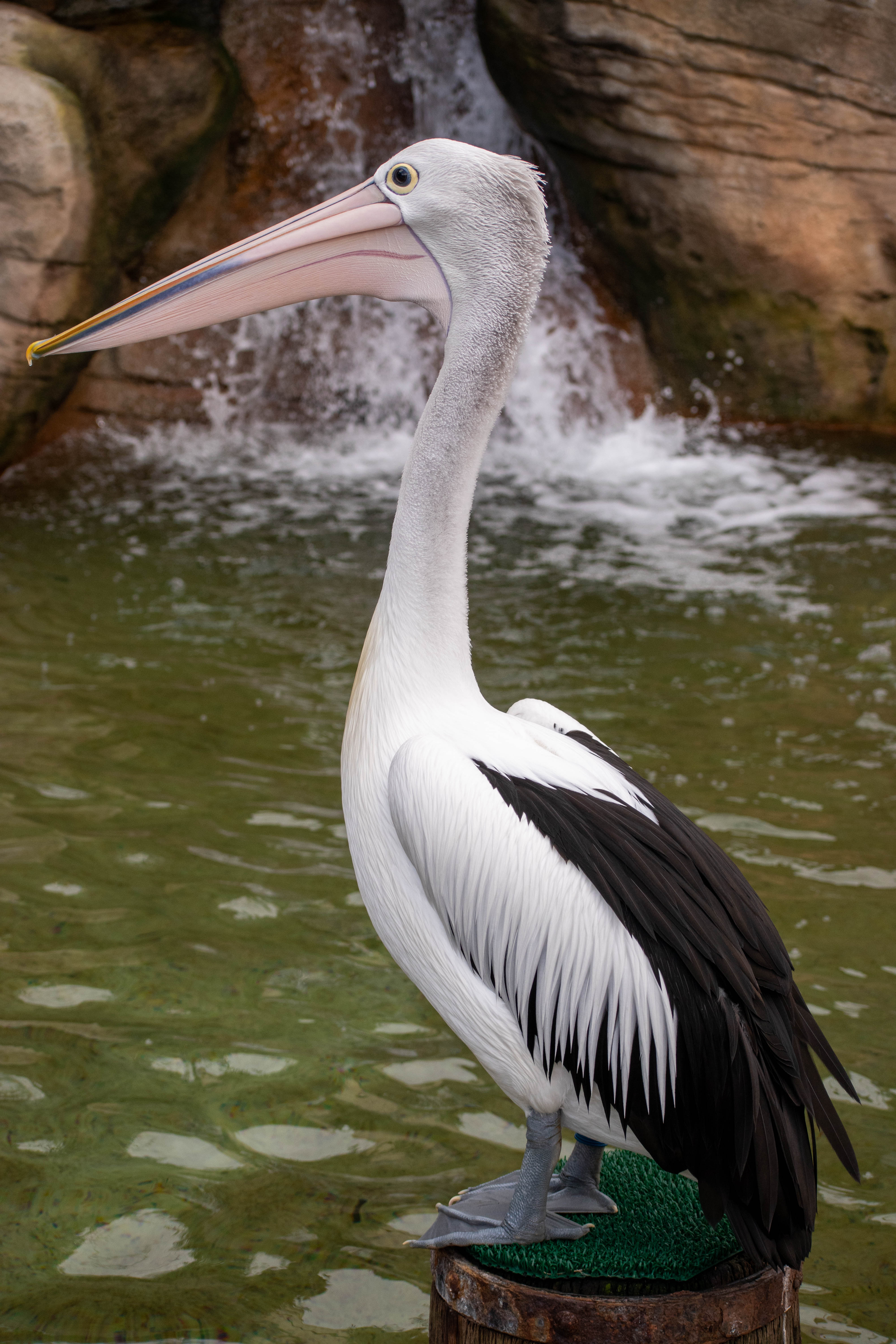
A pelican
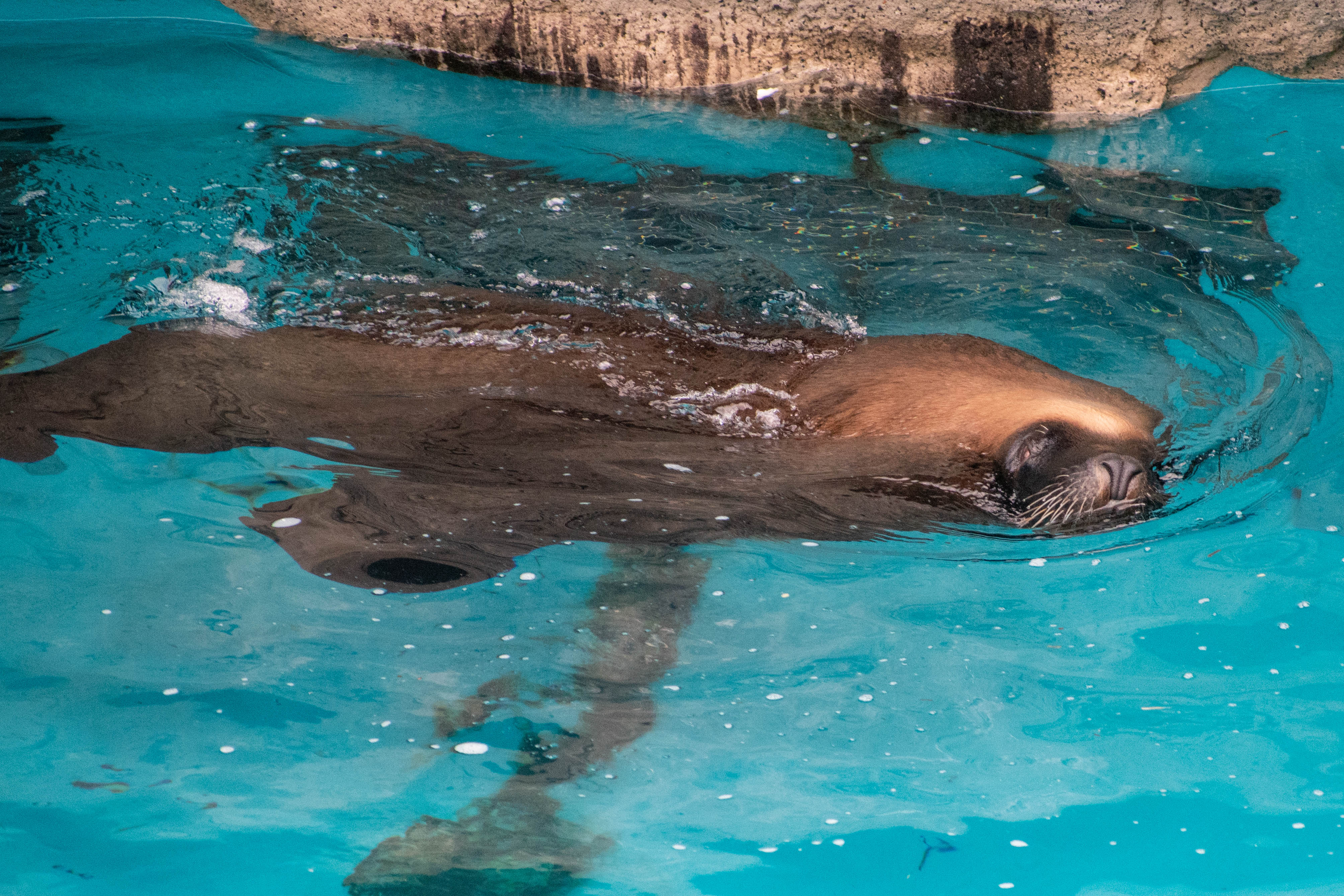
A sea lion swimming around
After leaving the ocean section we continued on to the wetlands area. We started at the wetlands aviary, which had even more colourful birds to see. Next was an enclosure with several fishing cats, these animals are cats that are known to fish using its paws. Next we saw the otter enclosure, however the otters were napping under a piece of bark at the time. Next we saw a binturong sleeping in its hut, a hippo strolling through its enclosure, and then a bongo eating leaves on the trees. The bongo was a particularly impressive animal - it had horns that were similar to the kudu we saw in South Africa but the colouring of the body reminded me of the zebra. A very interesting, yet critically endangered, animal. The last species in this area were the leaf monkeys. Just past the leaf monkeys was the palm aviary, where we saw some very energetic little birds, along with a particularly interesting bird whose feather coat had the same multi-colour sheen you see on an oil slick.
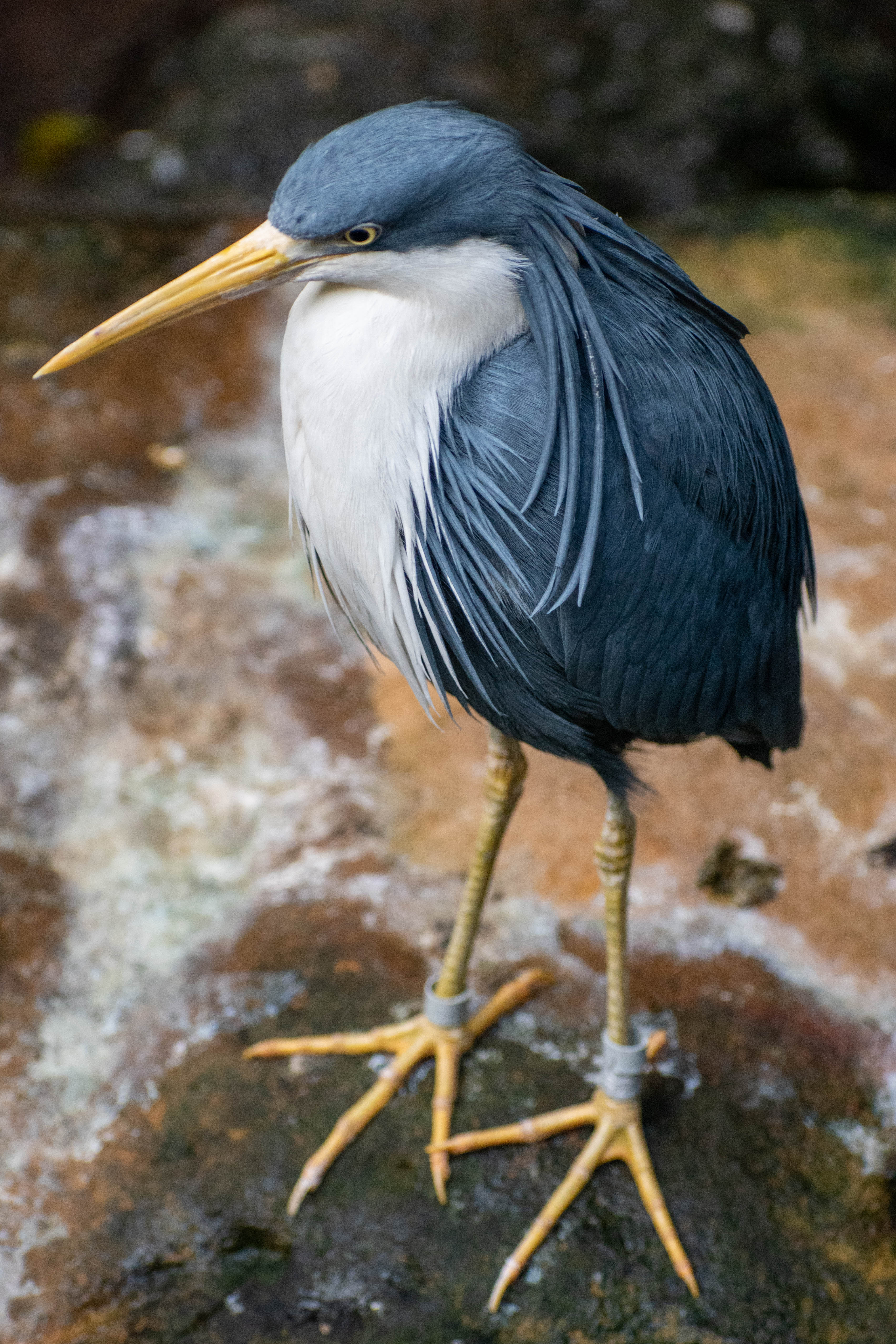
This wetland bird had really interesting 'mullet' growing at the back of its head
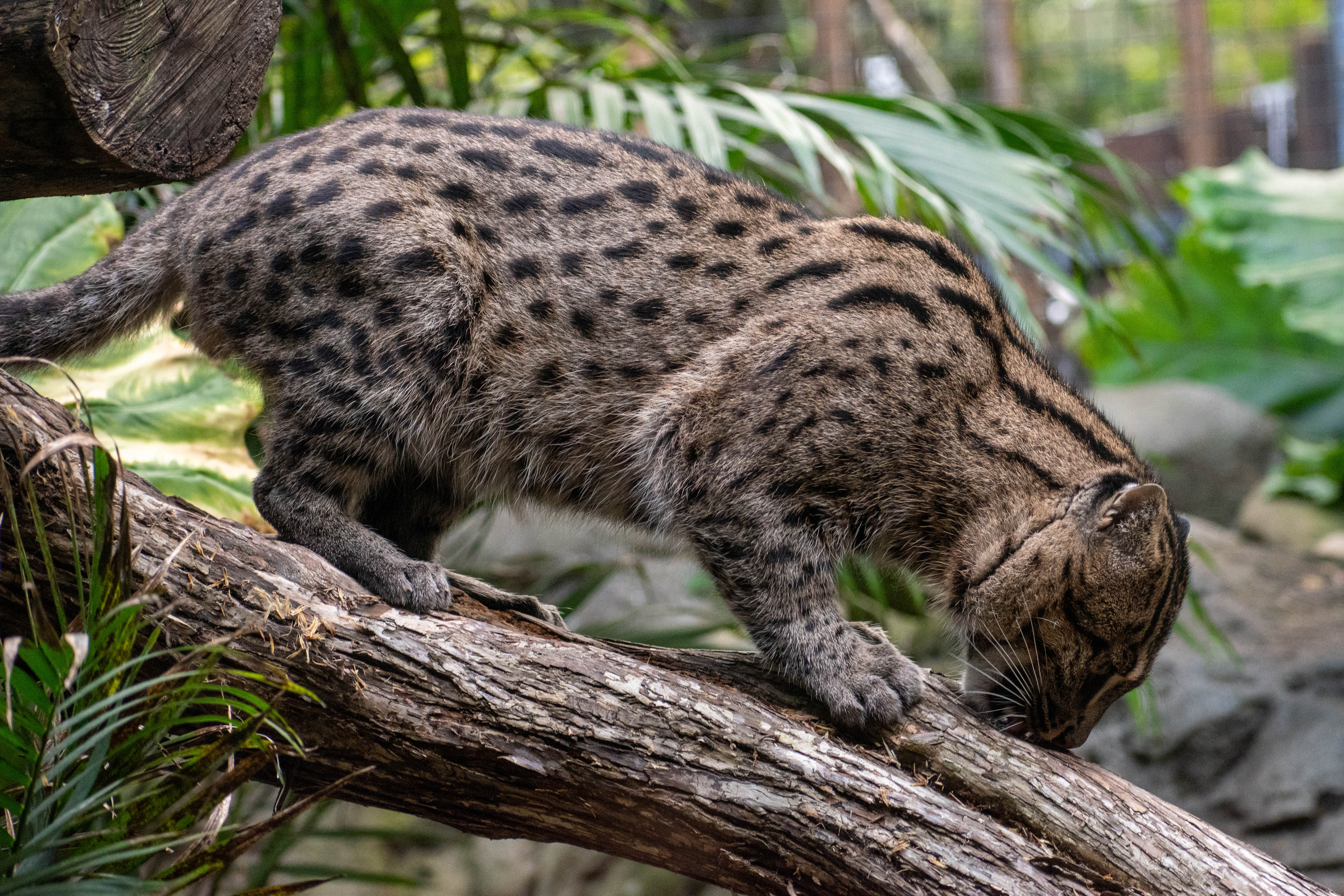
A fishing cat eating
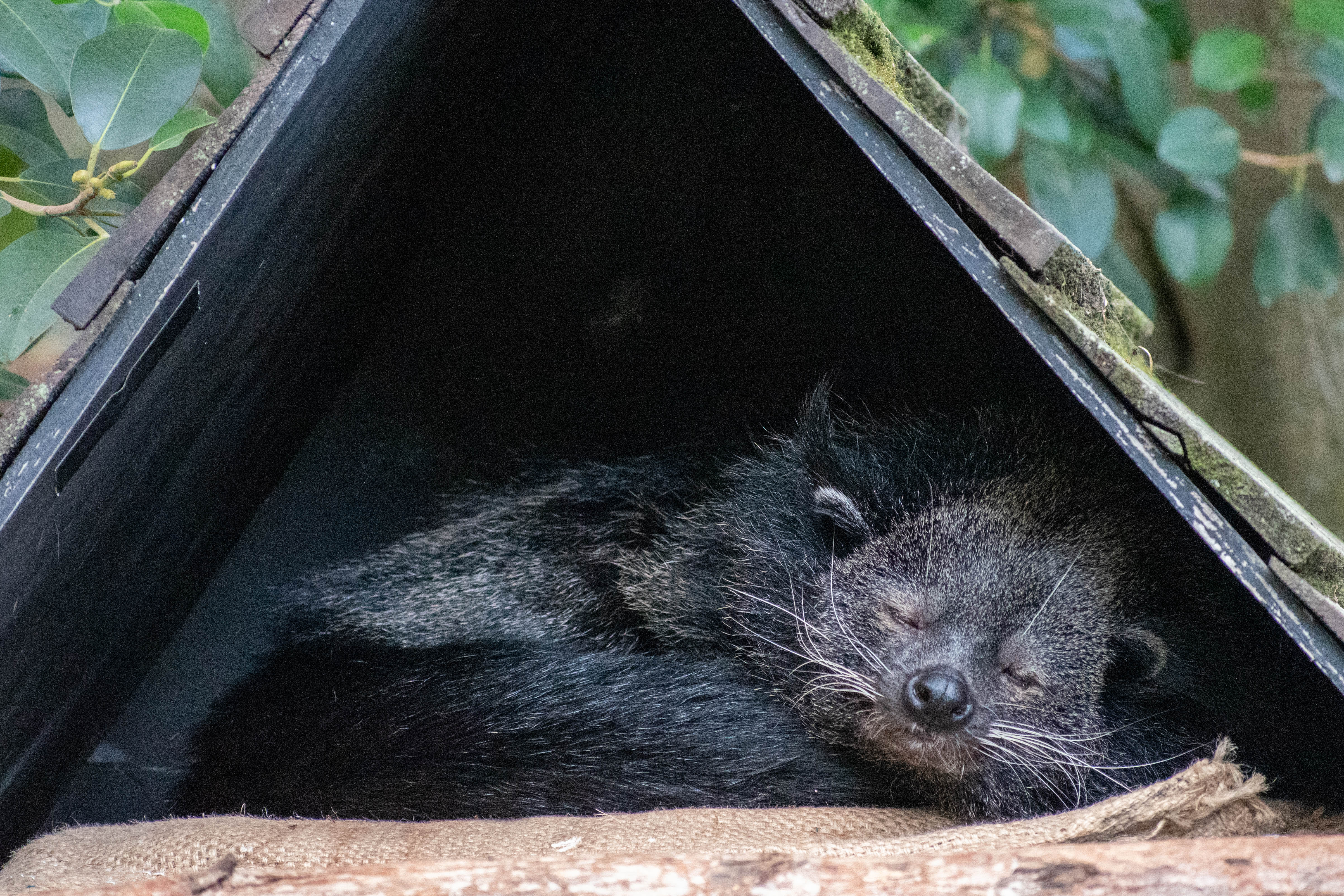
A binturong taking a nap
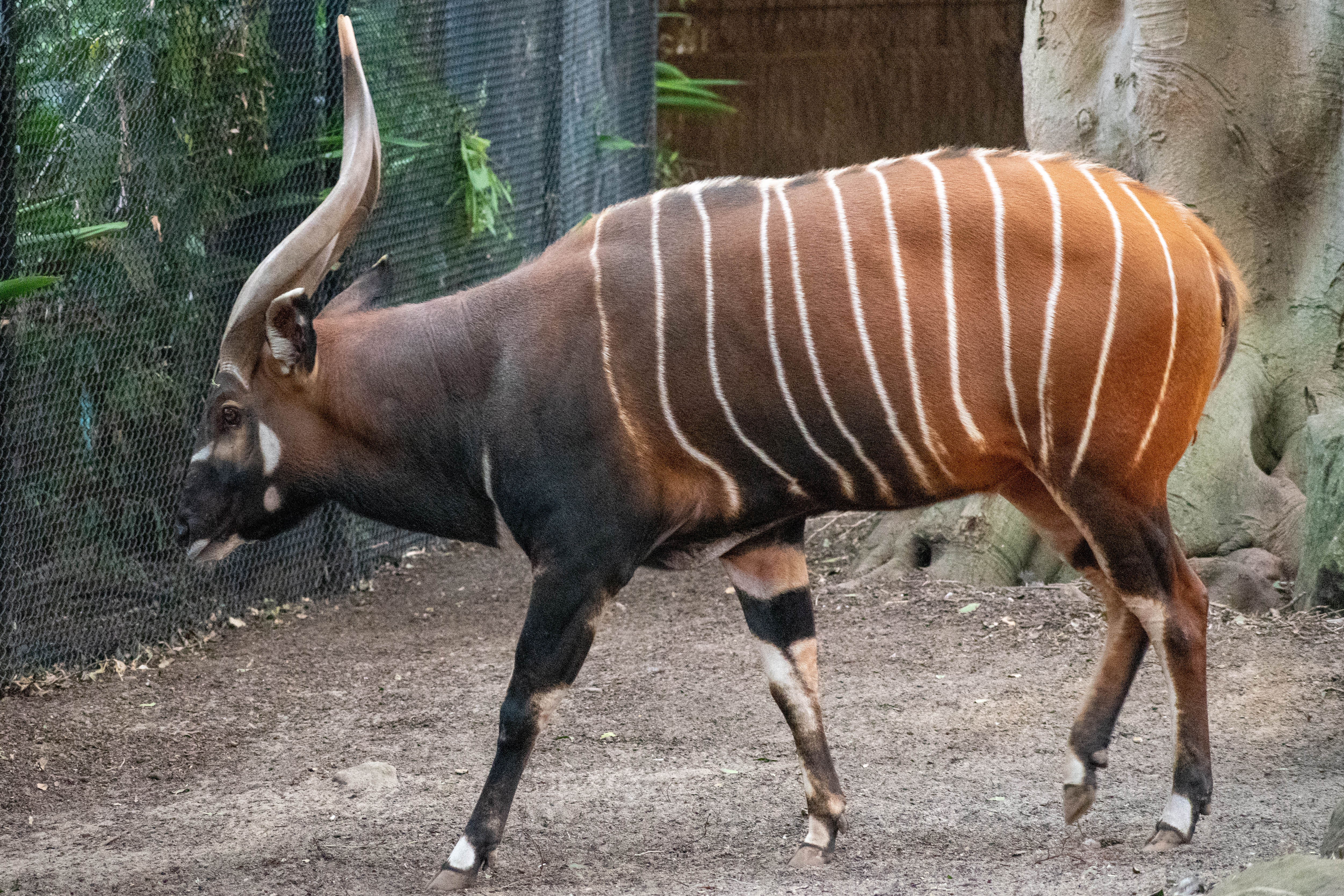
A bongo going for a walk
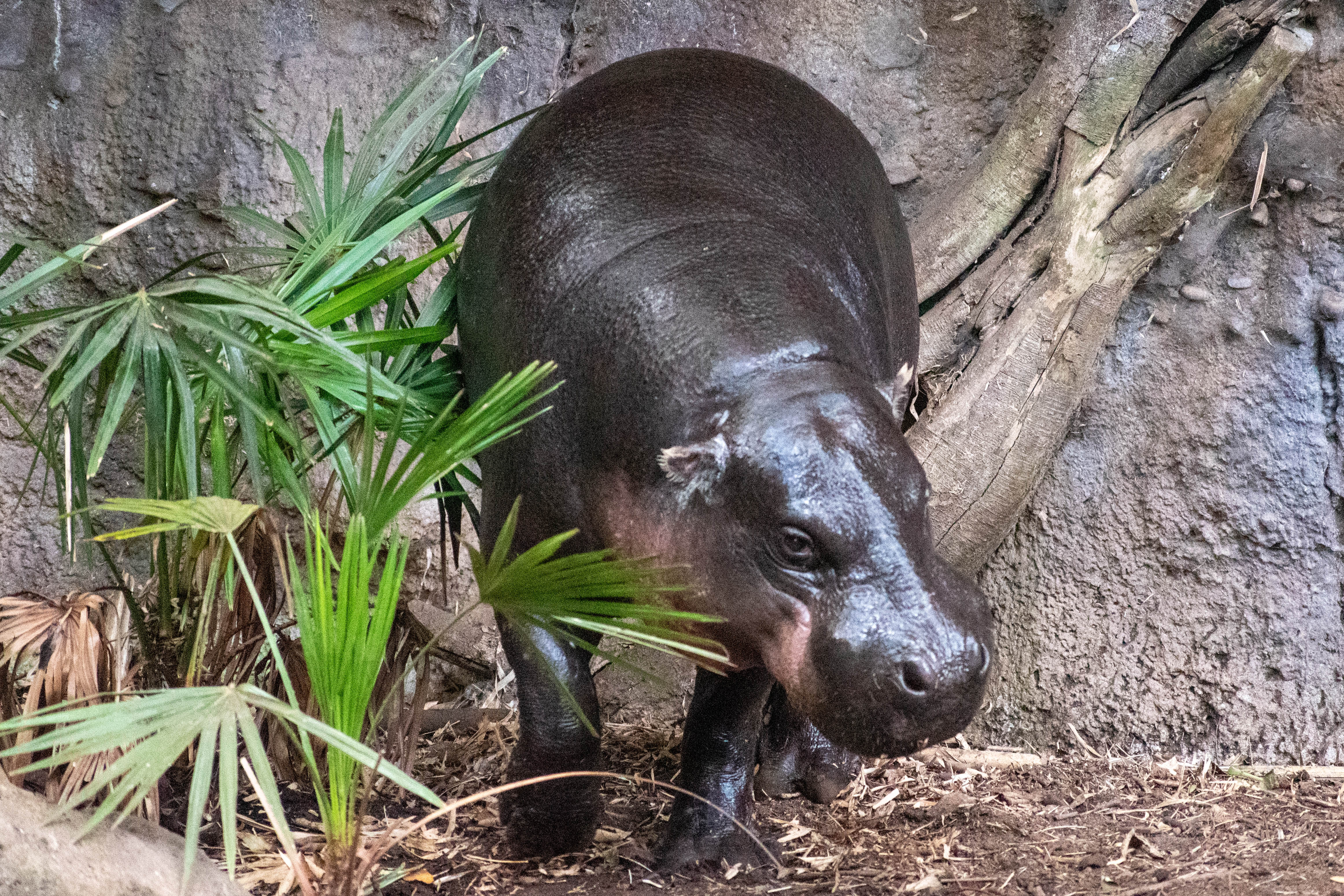
Mr. Hippo is also going for a walk
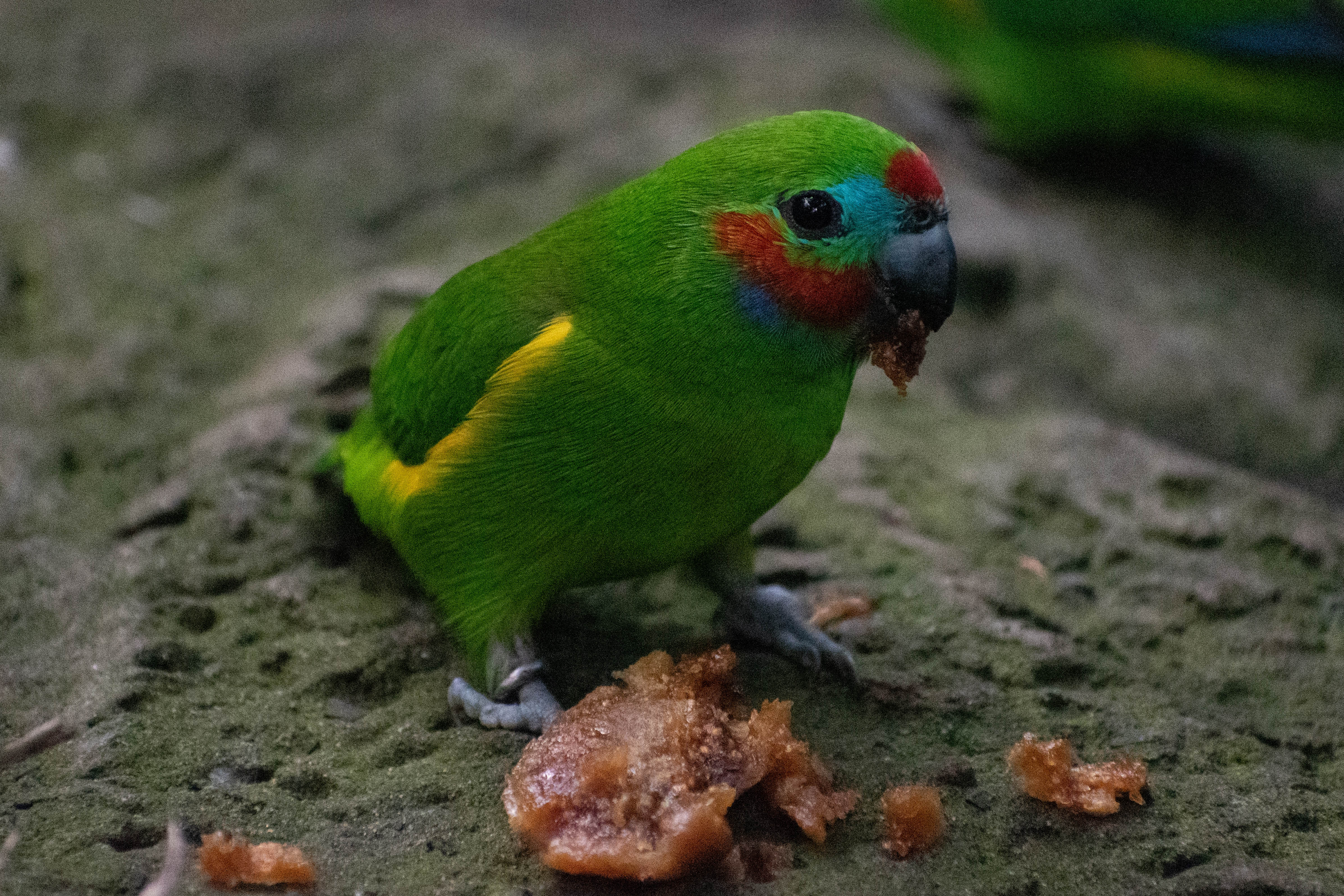
A small bird eating a fruit
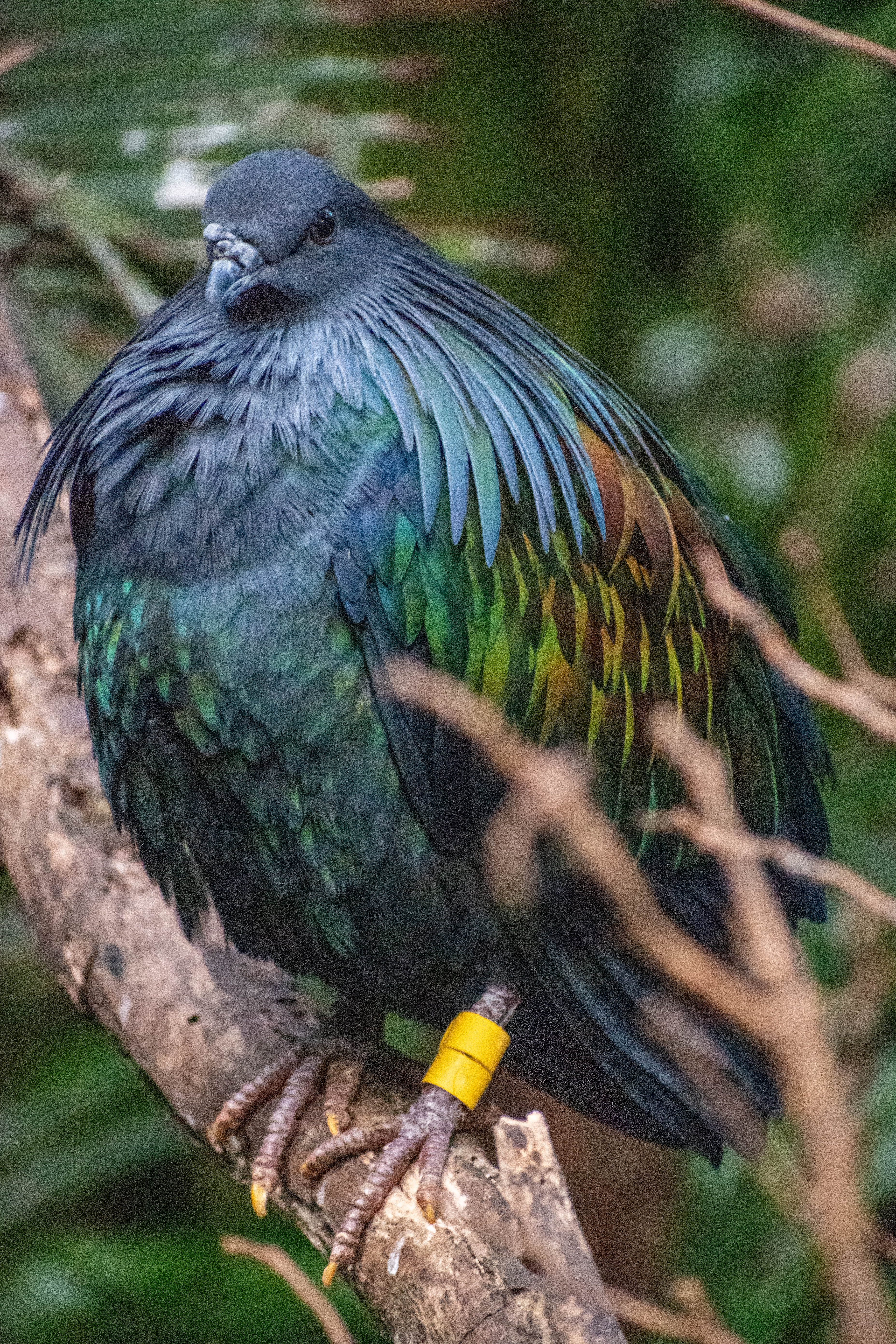
The feathers on this bird were very impressive
After we left the aviary we took a right turn and found the elephant enclosure. Here we saw a pair of Asian elephants grazing on some grass. Once again, an impressive animal that wasn’t quite as impressive seeing in a zoo. The next animal enclosure we went to was the sun bear enclosure, which was also where we began lining up to see the new tiger cubs. The Taronga zoo has an ambush of tigers from Sumatra, one of who gave birth late last year, and they had a special exhibit setup to showcase these magnificent animals. It took about 5 minutes of waiting before we were able to enter the tiger exhibit. They had built a mock-up of an airplane, and showed a short video that gave us the impression that we had flown from the zoo to the jungle of Sumatra, and once the video was complete a door on the far side of the plane opened and allowed us to walk into the tiger area. I suspect this was something they set up in order to help manage the crowd, but it was actually a really clever way to transport people into a different mindset ahead of viewing something special. The first tiger enclosure held the grandparents of the tiger cubs - there were two tigers sleeping on a platform. The next enclosure held the mom and her three children, who were playing around while their mom watched. We spent a good ten minutes watching the young cubs play, first just amongst themselves but then eventually with their mother. The cubs were no longer babies but were clearly not full grown either. It was a great experience. The final enclosure in the tiger area held the father, all on his own. He was initially just lounging on the ground, however as I stopped to get a photo I did something which got his attention - he looked up, right at me, roared, then leapt to his feet and began to charge towards me. It was a pretty startling moment, luckily he stopped before reaching the fence, turned around, and went back to lounging where he had started. It was a very unsettling experience - watching this large animal begin running towards me got my adrenaline pumping. I still don’t know what I did that would have caught his attention - my camera flash was off and I had already taken several pictures without any notice. Regardless, it was an interesting story to be able to tell.
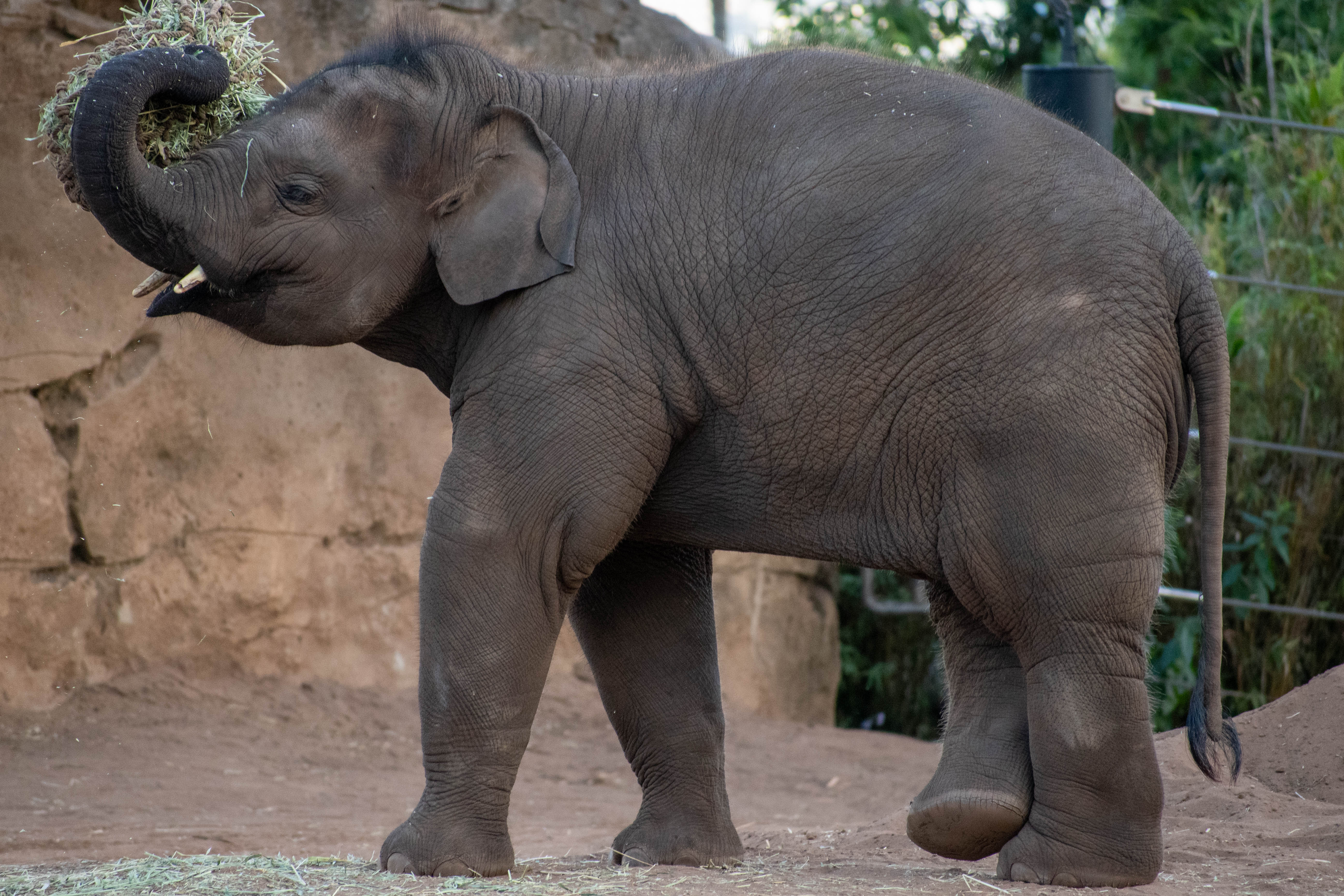
Even the elephants were eating!
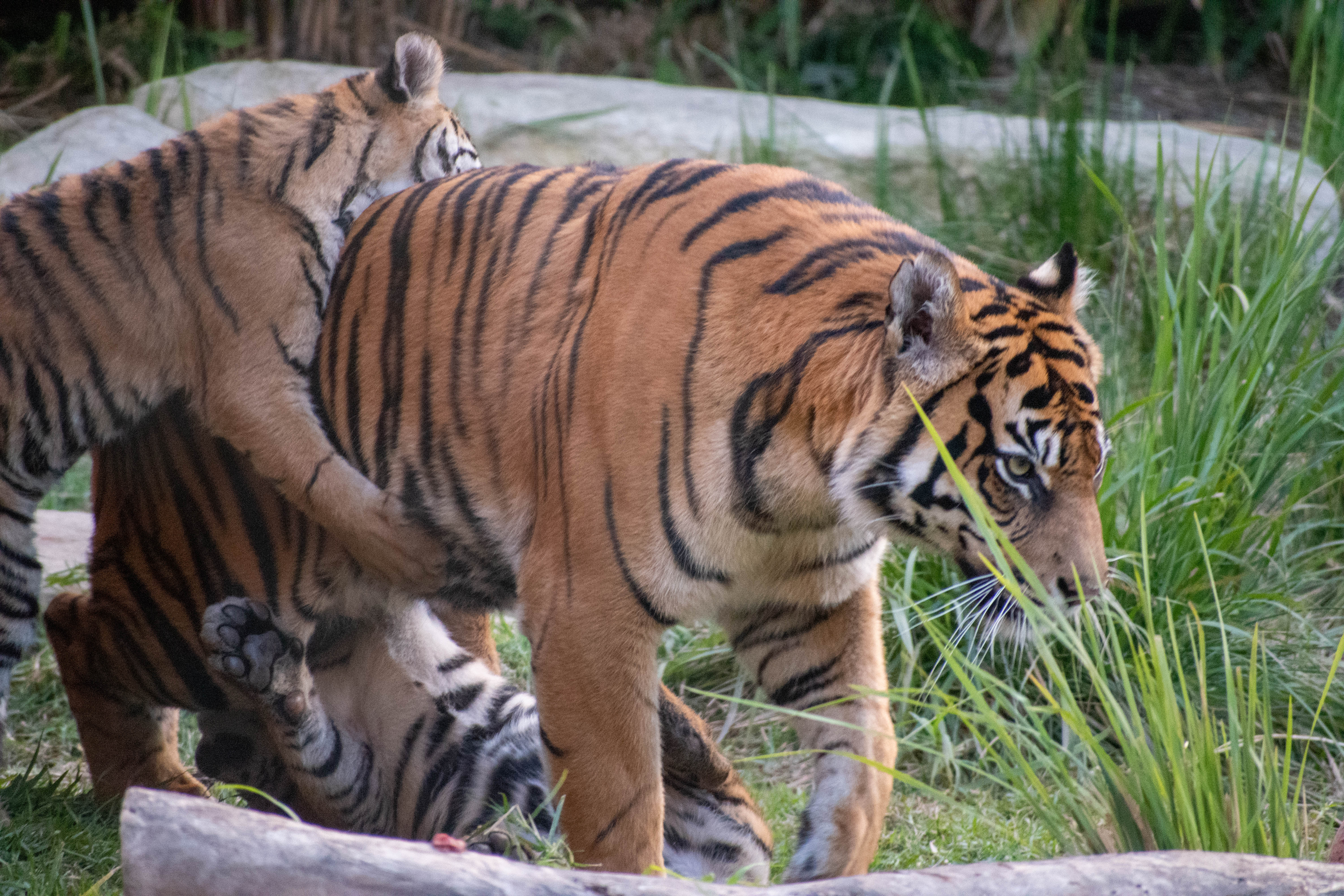
Cubs playing with mom
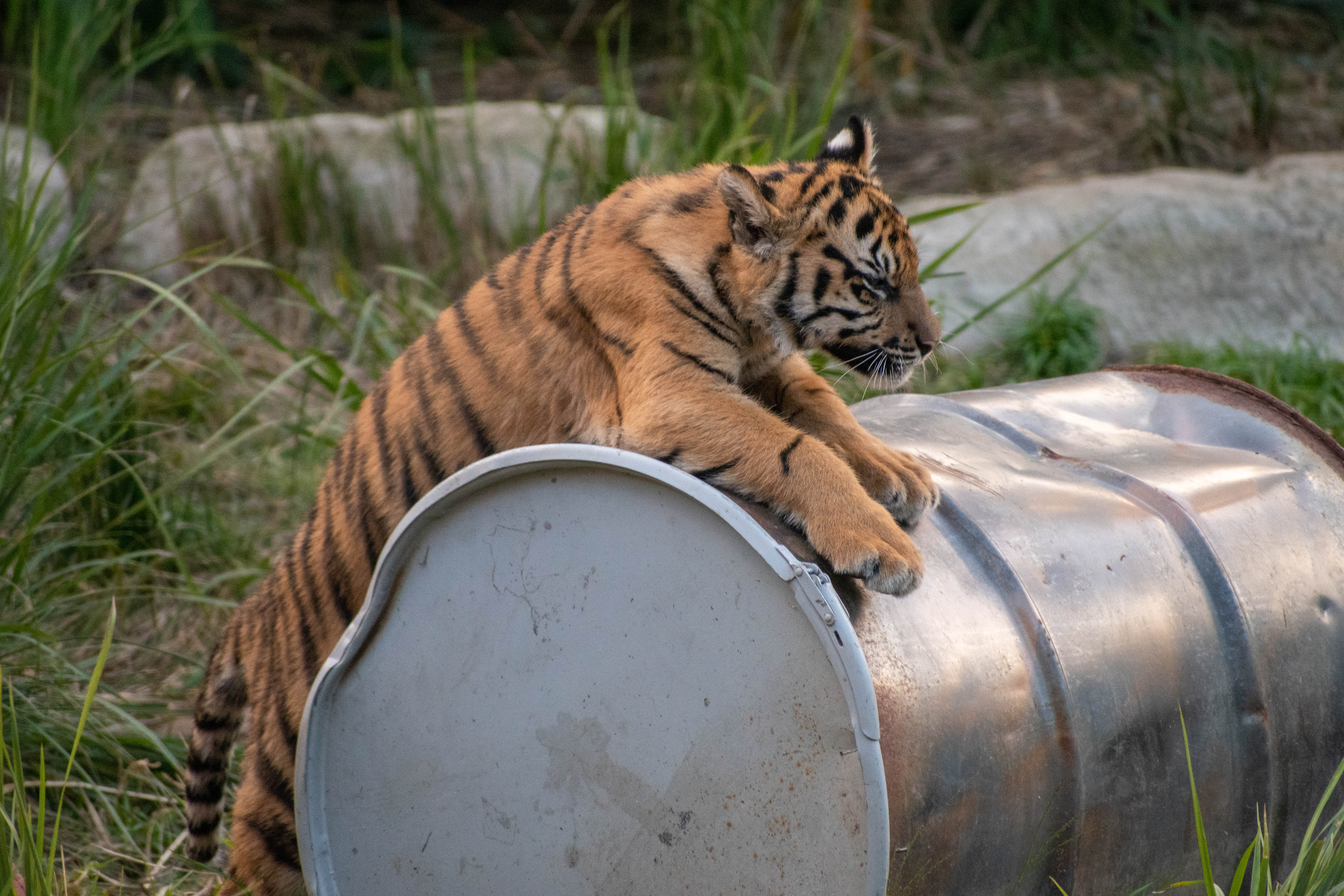
Playing on a barrel
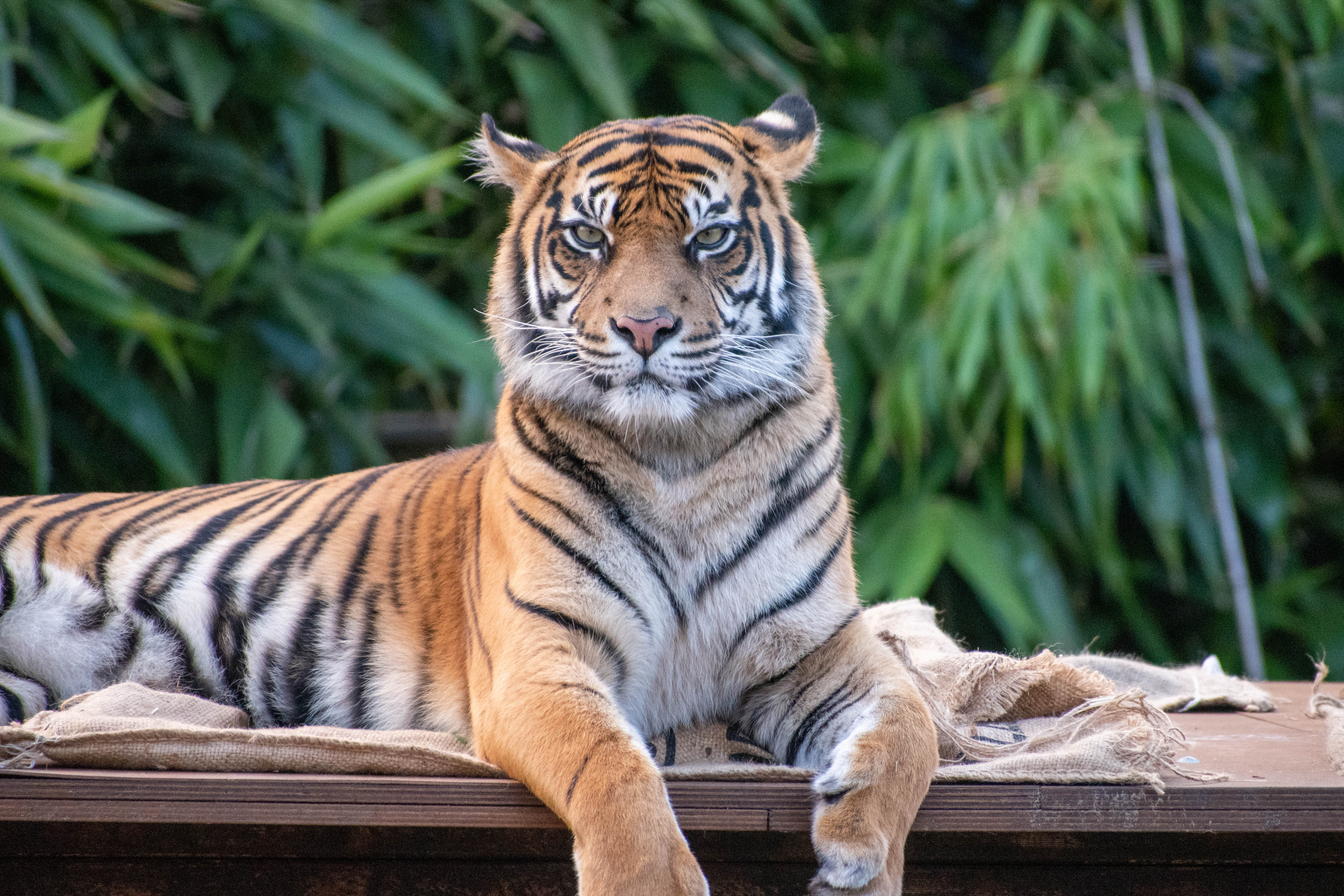
Mom on the lookout
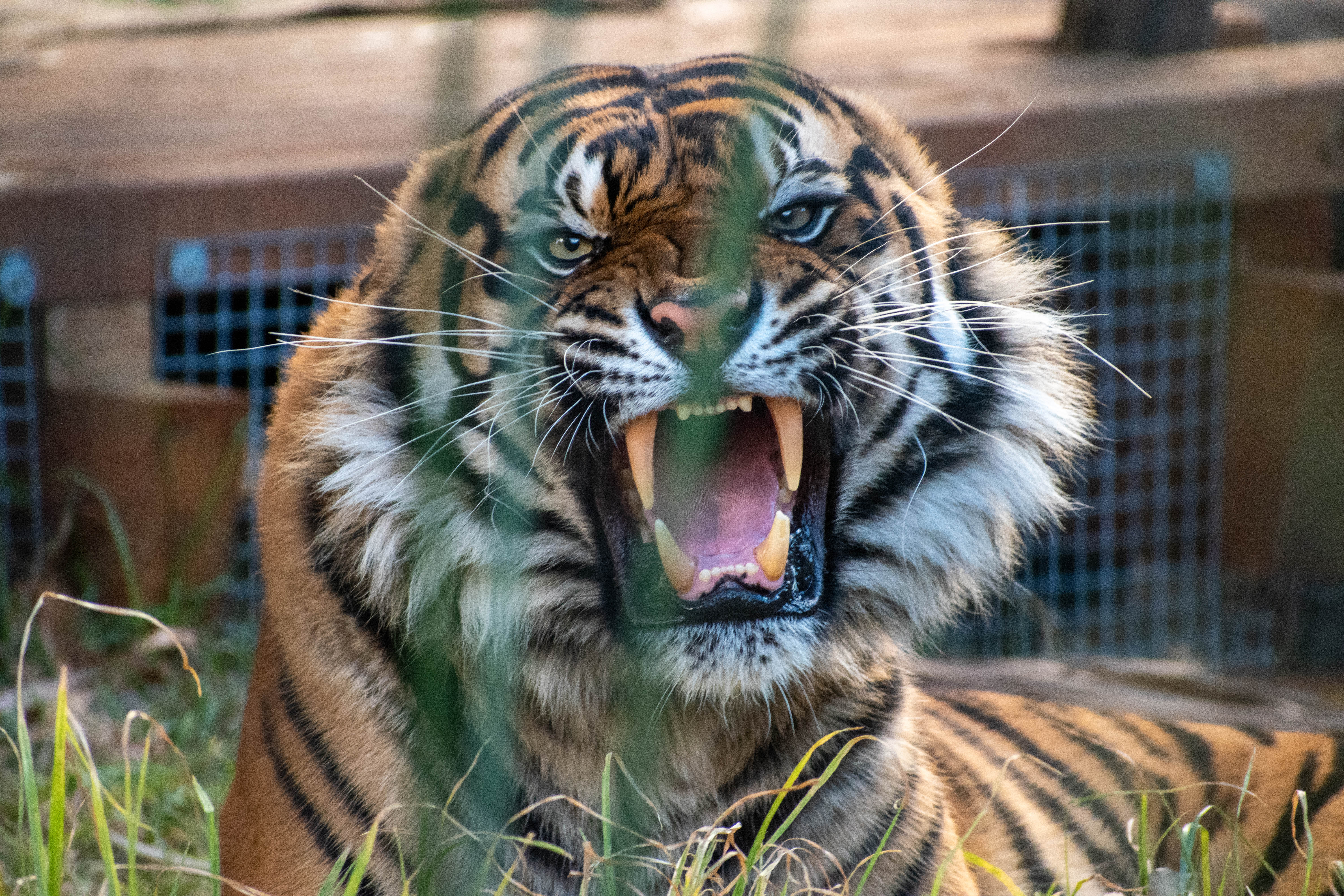
Dad making his presence known
After leaving the tiger area we began walking down towards the sky safari. It was getting late at this point, just before 16:00, but we wanted to try and get one last look at the cassowaries. On our walk down to the sky safari entrance we walked past the red pandas, and we were able to watch them snack on some food that had just been set out. We got onto the sky safari just after 16:00, and as we re-entered the park at the main entrance we were reminded that the park was only open until 16:30. We hurried down to the cassowary enclosure, unfortunately when we reached it the cassowaries were even farther back in their enclosure and we didn’t really get a great view of them. A great photo of the cassowary just wasn’t in the cards this trip.
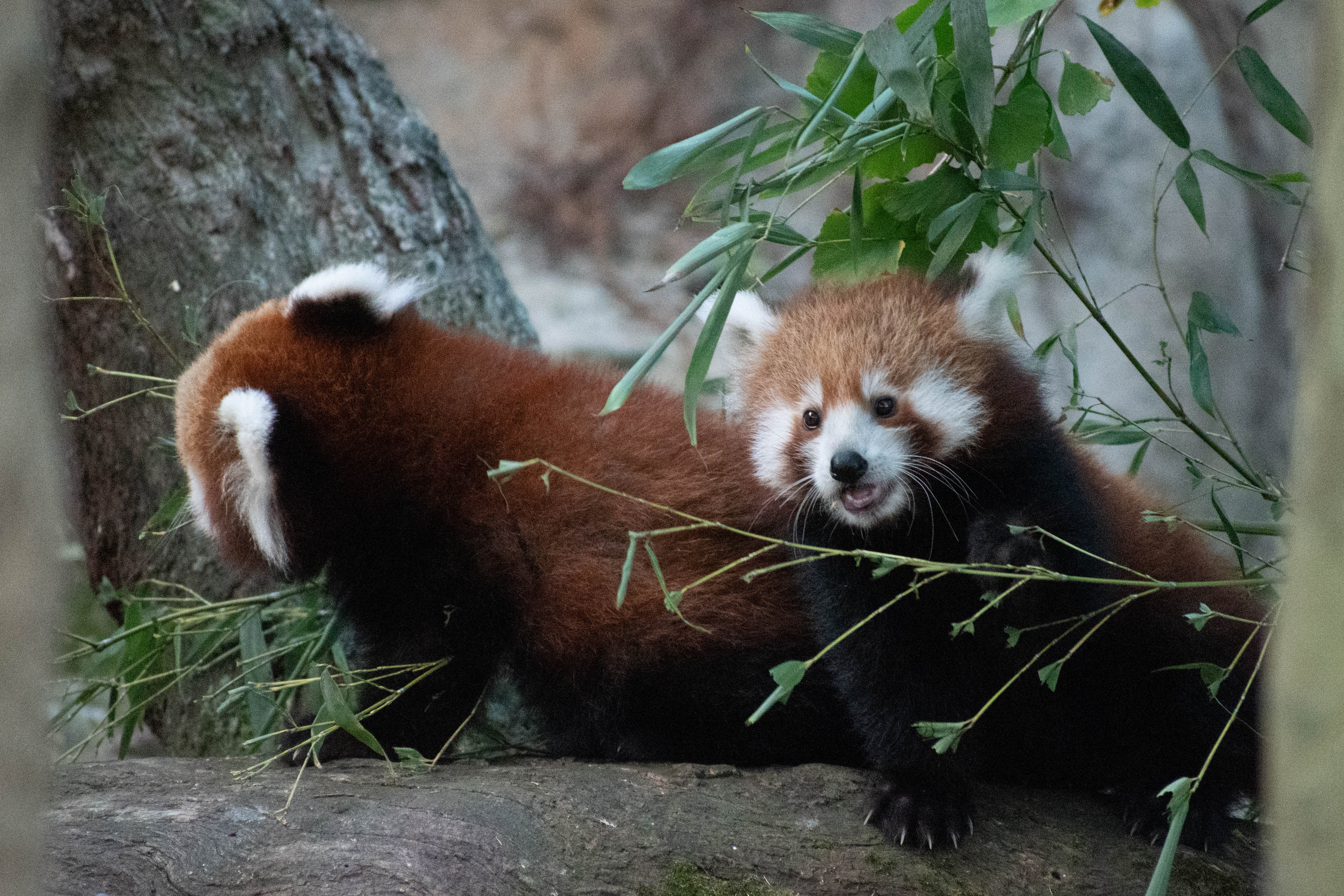
A couple of red pandas relaxing
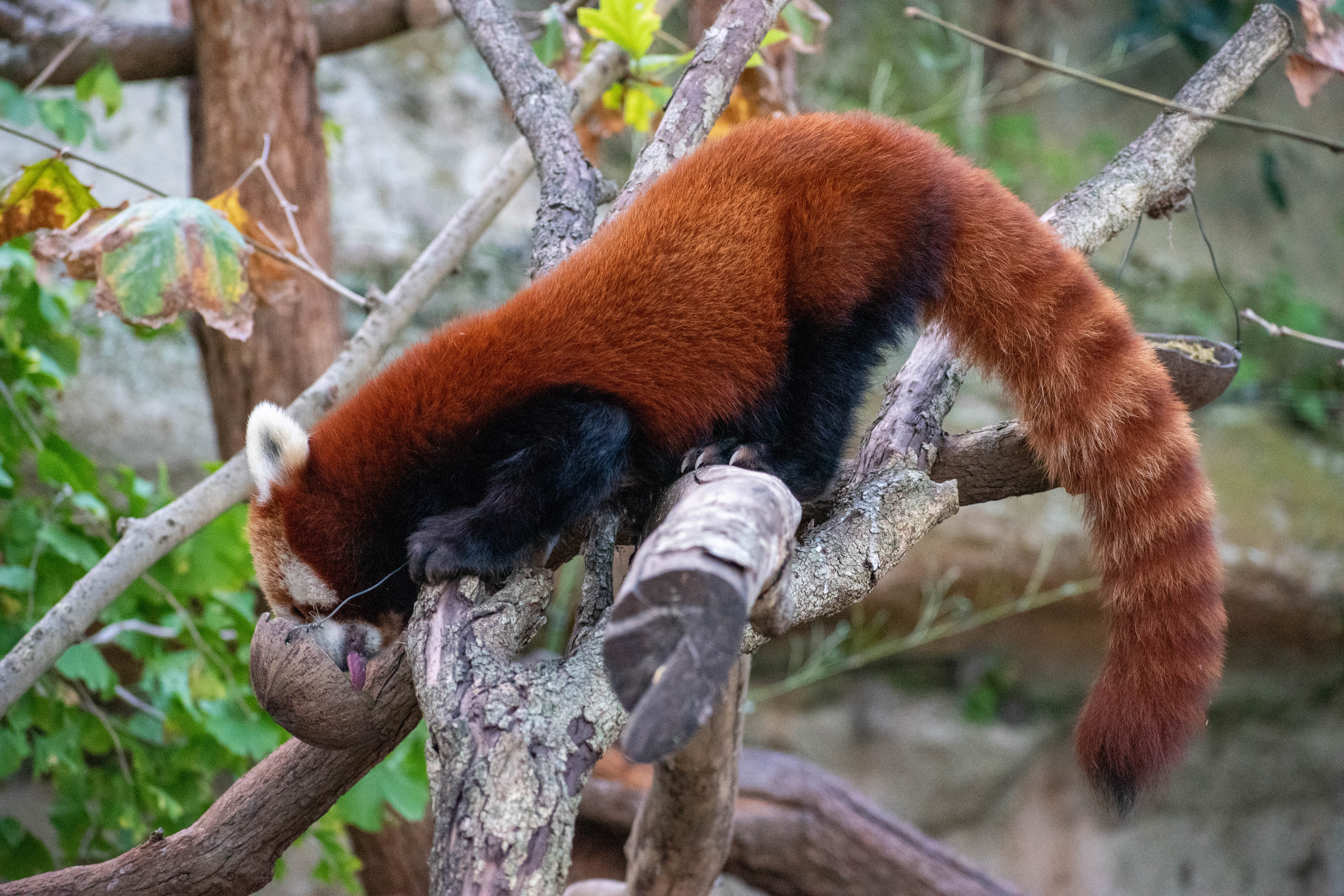
A red panda having some dinner
We walked down through the rest of the zoo, and left just as the park was closing. The wharf was busy with families leaving the zoo, but we were able to find seats on the next ferry. It was a quick ride back to Circular Quay as the sun was beginning to set. We arrived shortly after 17:00, and since the sun wasn’t fully down the Vivid exhibit hadn’t started. We chose to do dinner downtown, and then see the Vivid exhibit. We pulled out Google Maps and decided to have dinner at a well-reviewed Japanese restaurant, named Kid Kyoto. It was a short walk from the station, and we arrived to a restaurant that was pretty much empty. When we asked for a table, however, we learned there was only one table free as the rest were reserved. It was our lucky night! We ordered a nice selection of dishes, including a pair of katsu pork bao sandwiches, tuna sashimi, chicken skewers, and a pork rump dish with pork. Each dish was delicious, and we really enjoyed our meal. After dinner we walked out into the CBD and begin exploring the Vivid displays. We started on the western side of the wharf, where there was a full building projection on the Museum of Modern Art that we spent a few minutes watching. We then walked along to the wharf and were able to see both the lights setup on the Harbour Bridge along with the video being projected onto the Opera House roof. This display was spectacular - the projection was incredibly crisp and bright even though it was being projected from across the harbour onto the building. This was clearly a very technically advanced display.
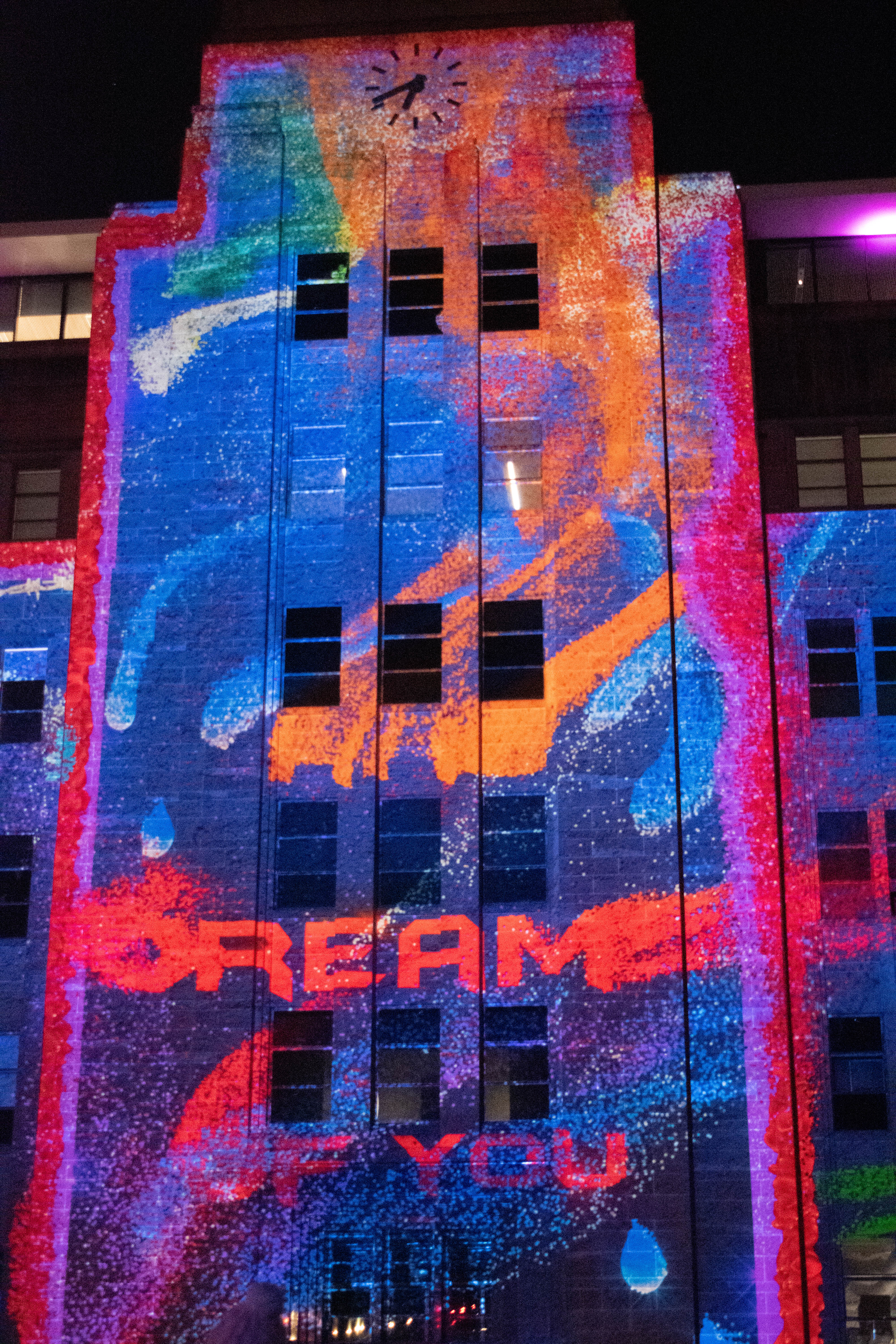
A Vivid display on the Museum of Contemporary Art
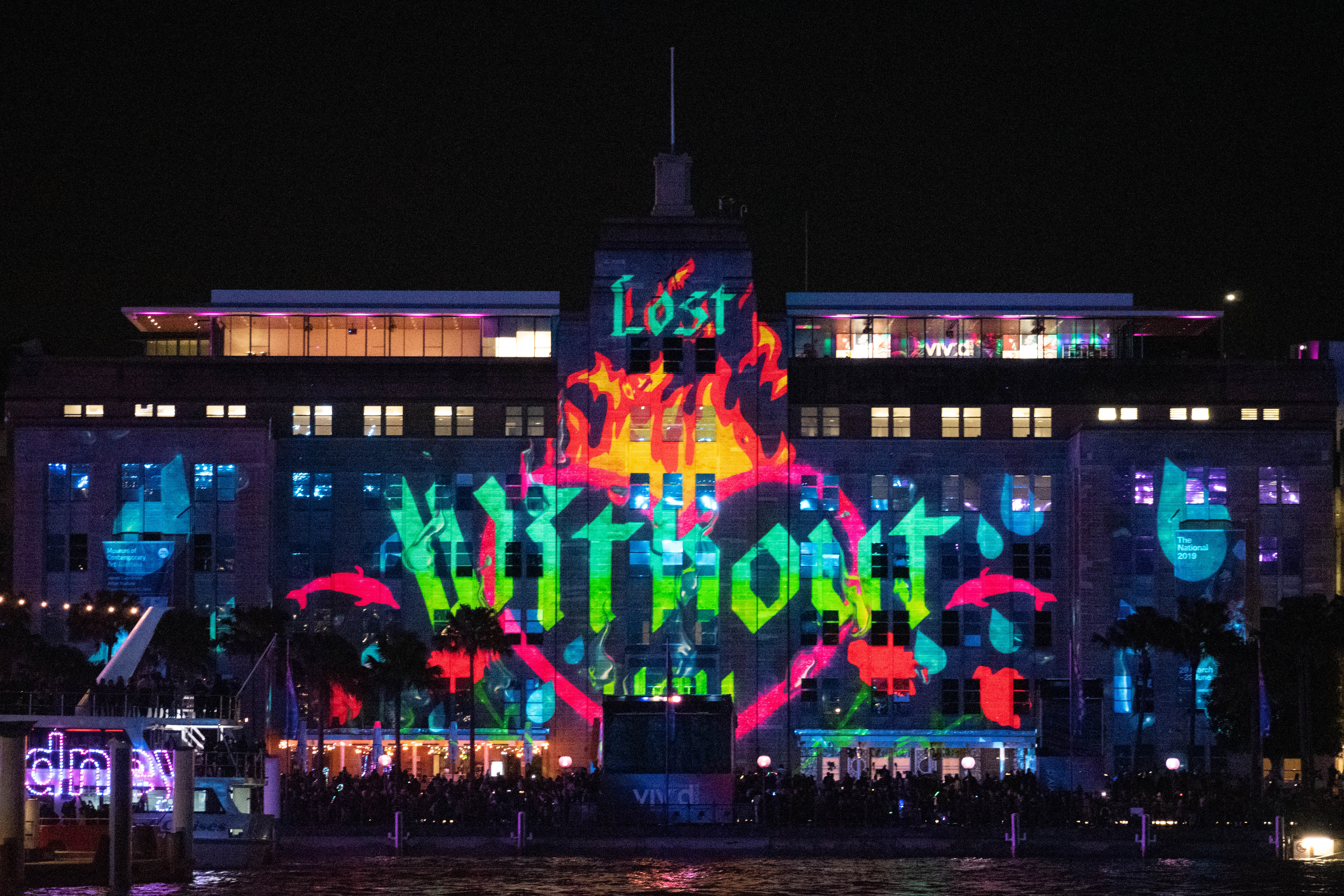
Another view of the Museum of Contemporary Art on display
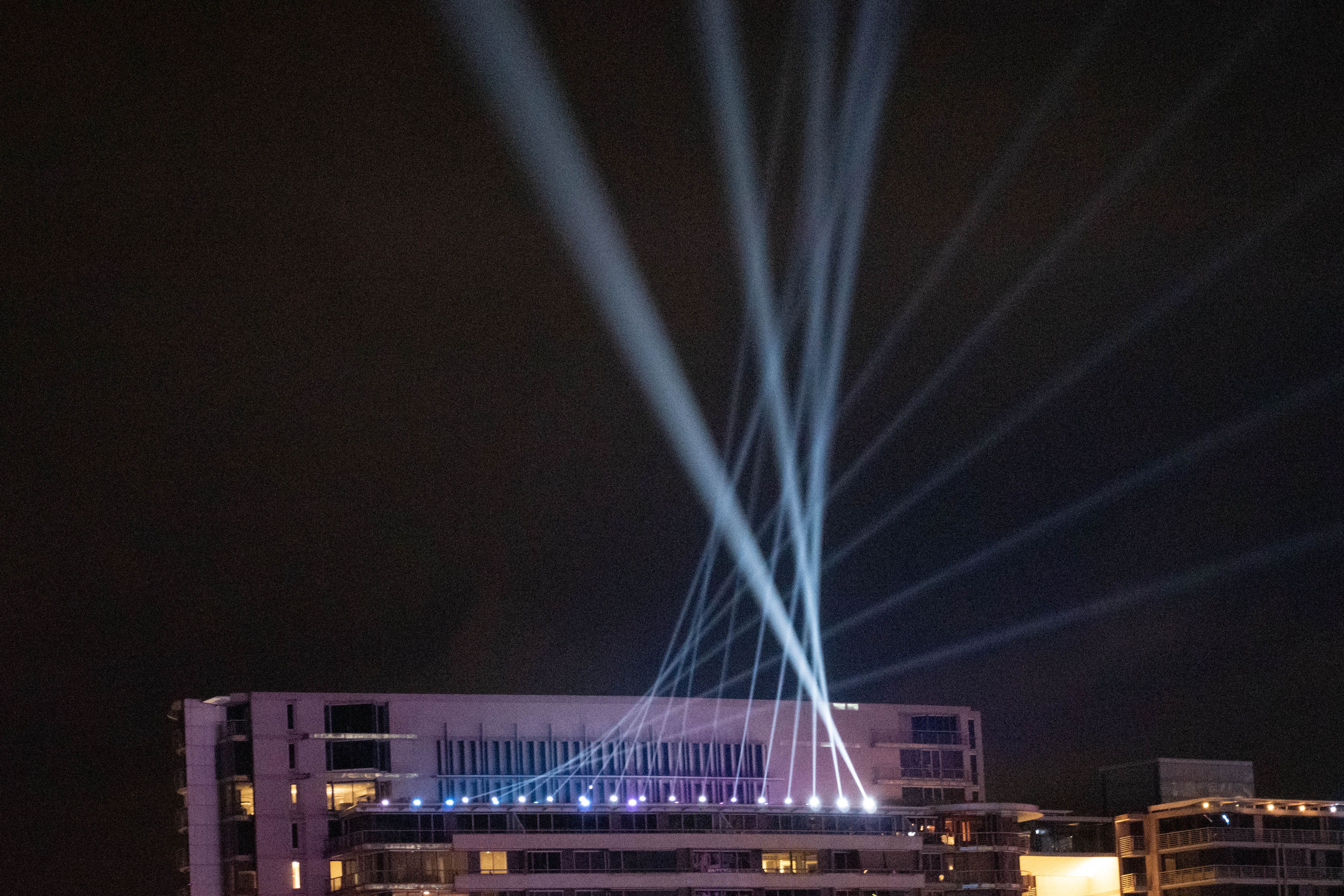
Lights projected into the sky from a residence across the quay
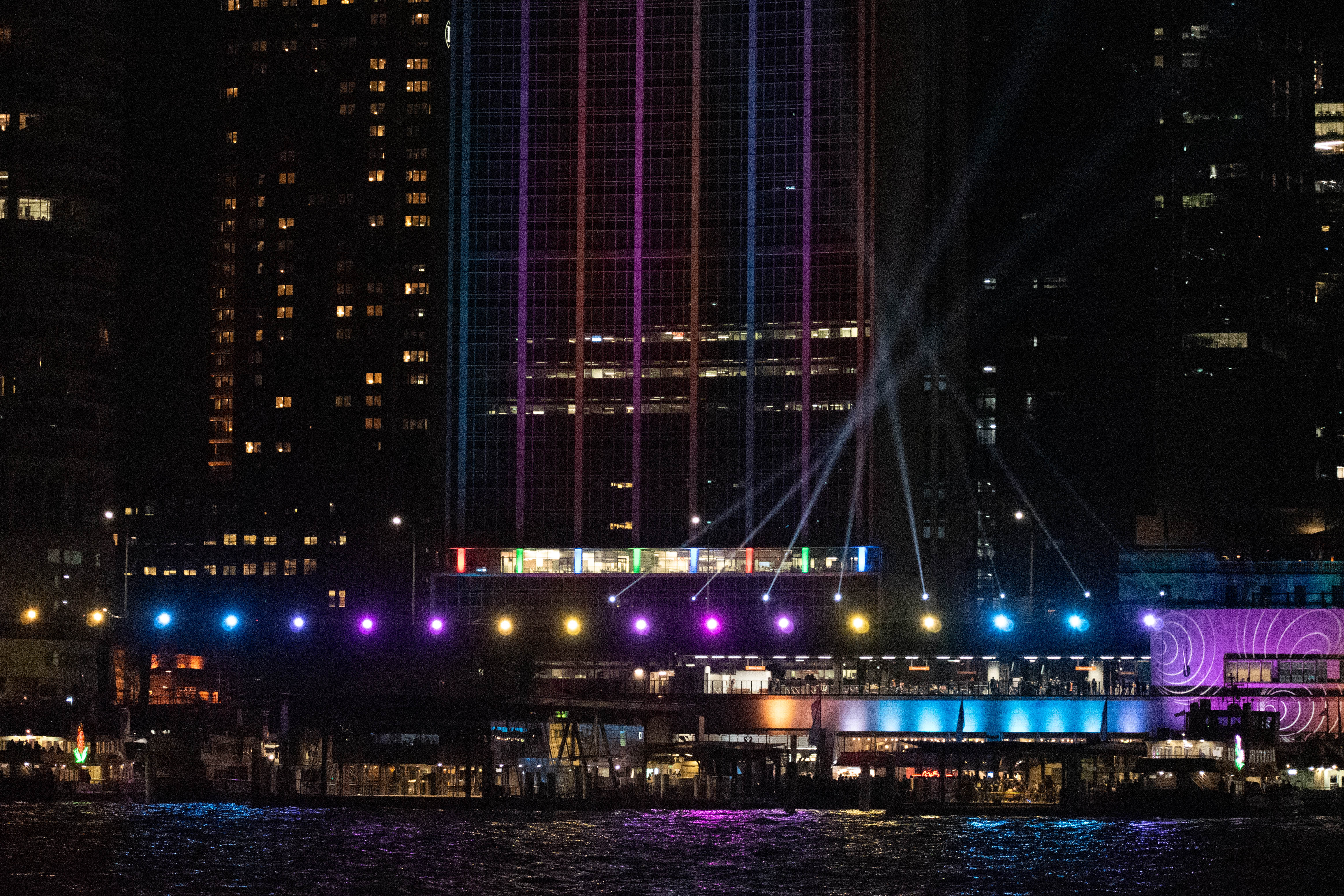
Circular Quay Station lit up
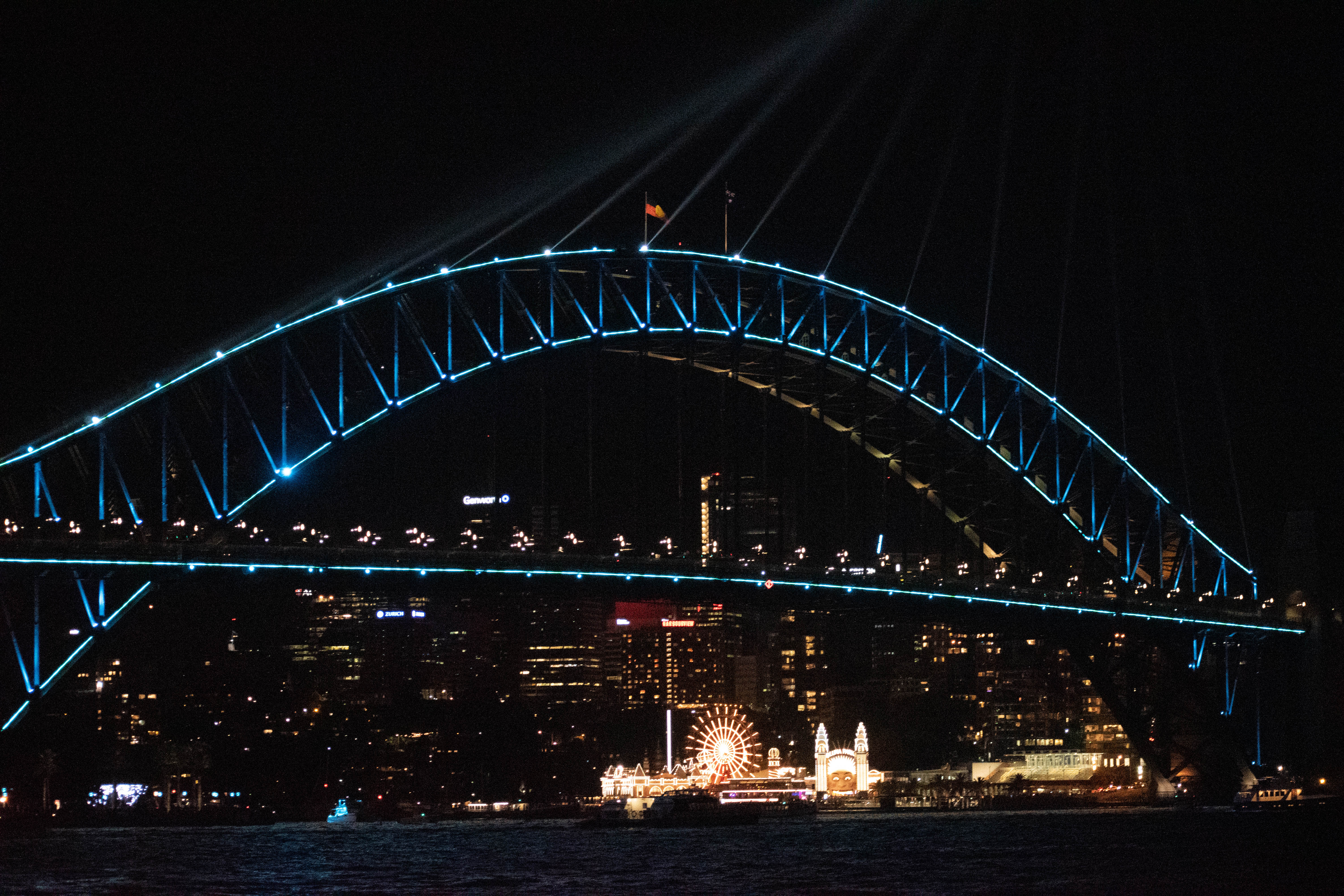
The Harbour Bridge lit up, with Luna Park visible in the background
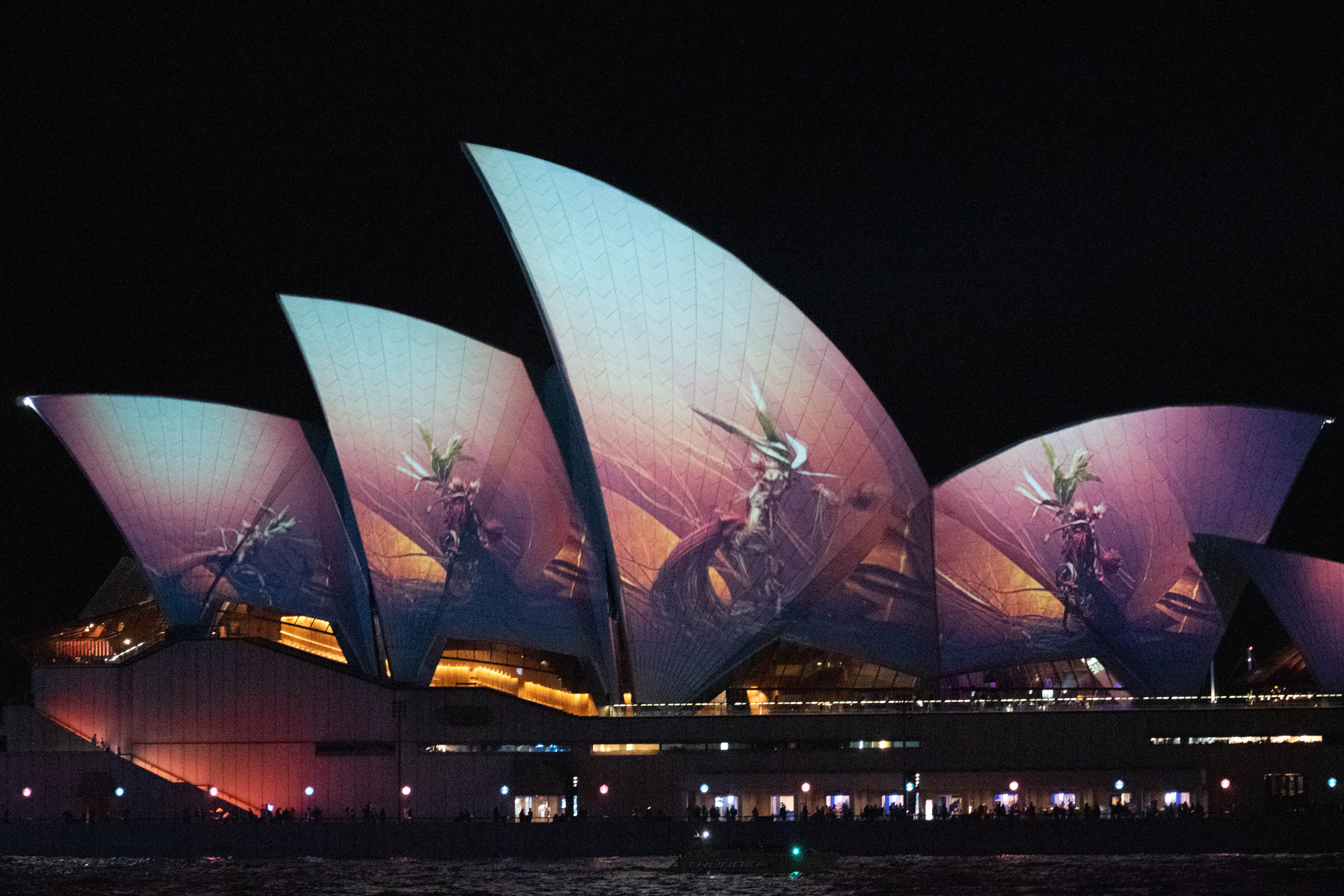
A Vivid display on the Opera House
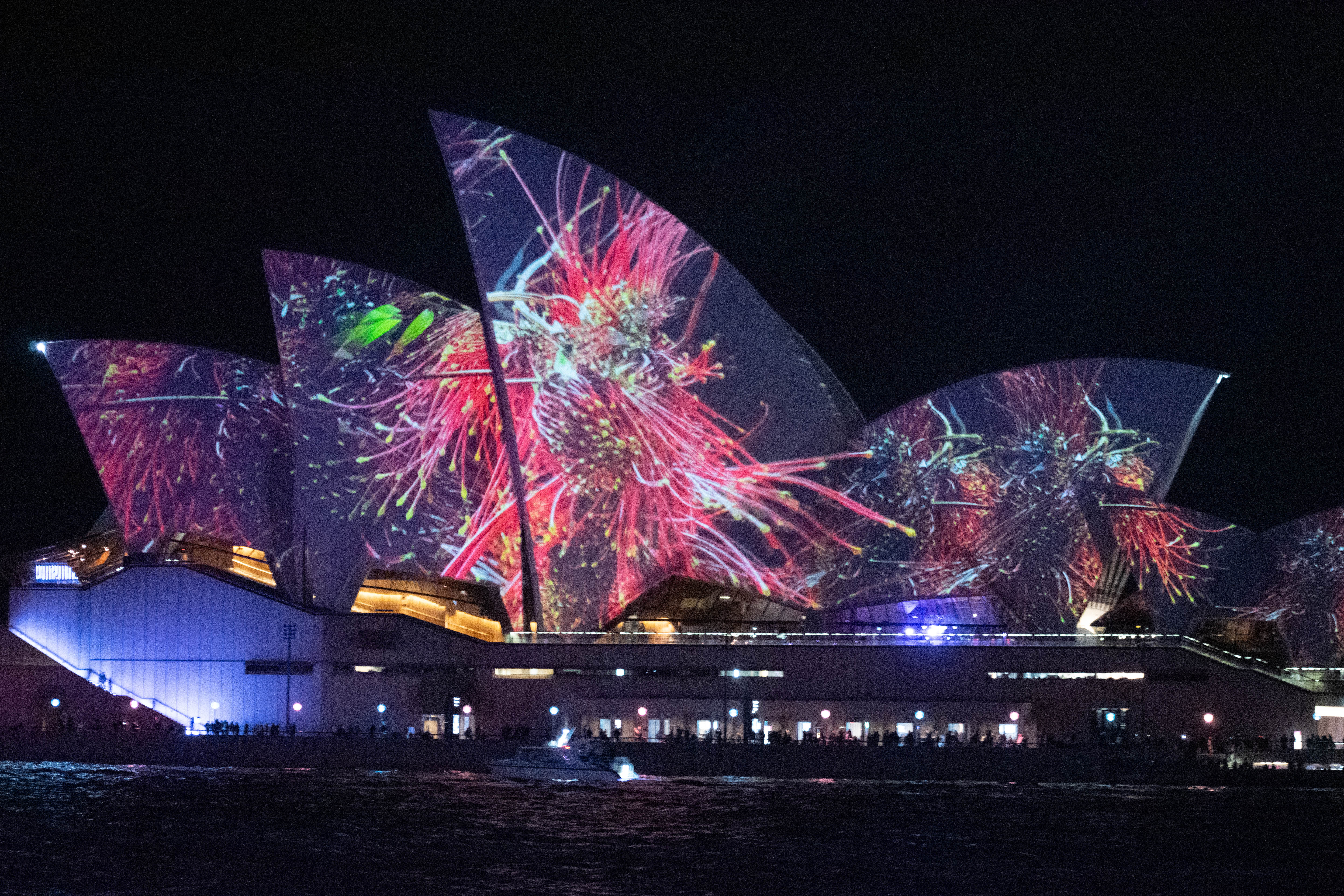
Another art piece on the Opera House
As we walked back along the wharf we noticed a small-scale display setup in the cruise ship terminal - it was a grid of soccer-ball sized lights that were attached to strings that were changing both their heights and colours in a synchronized pattern. We stopped and watched this for about ten minutes - the display was very interesting to watch. We continued on past the old Customs House where another light display was present, then looped around to the Opera House. We circled the building and then decided to save the walk through the Botanical Gardens for the next evening. We returned to the Circular Quay subway stop and caught the first train headed to the Museum station stop, and after arriving at Museum we walked the rest of the way to the AirBnB.
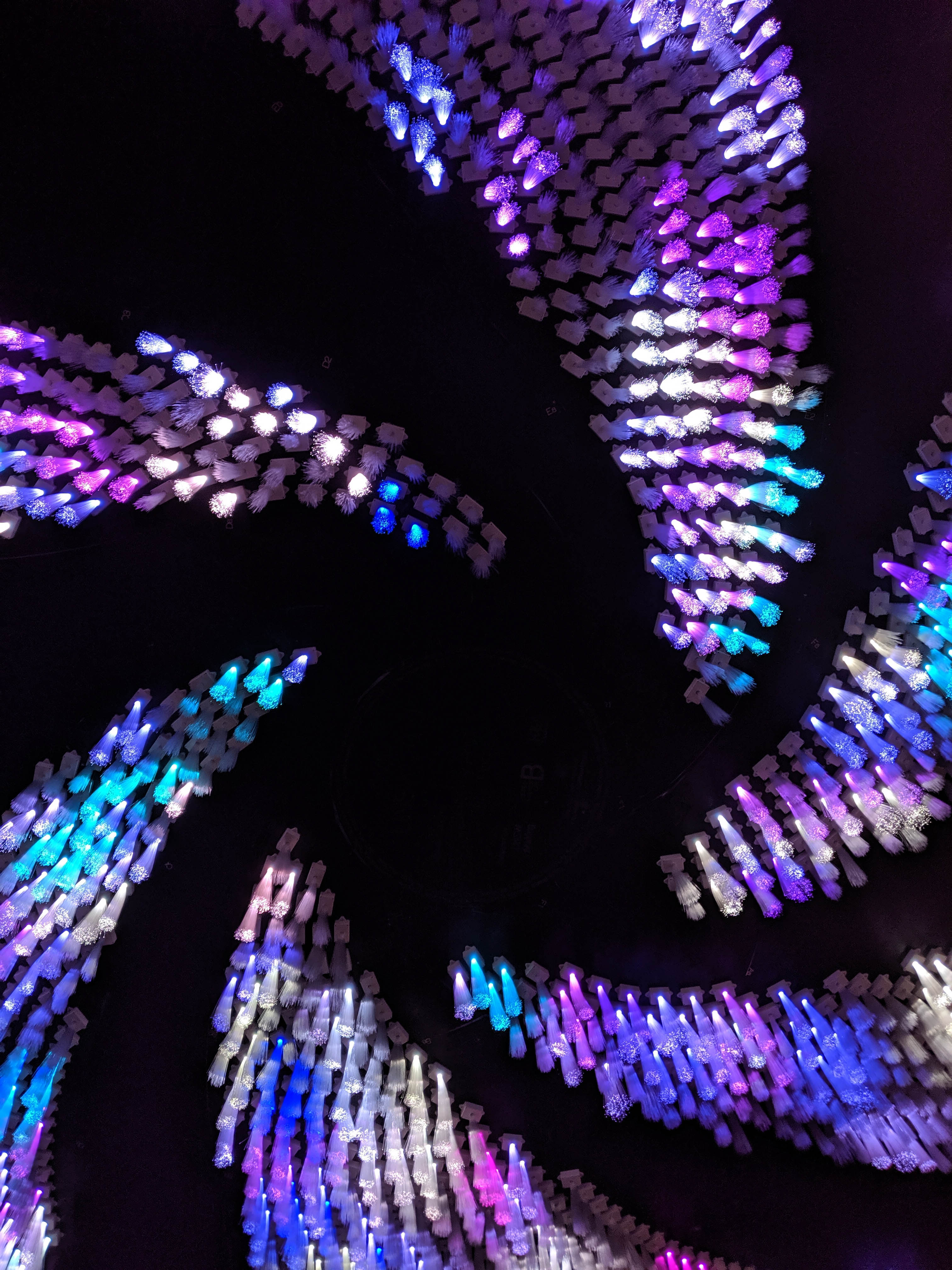
A random light display near the cruise ship terminal
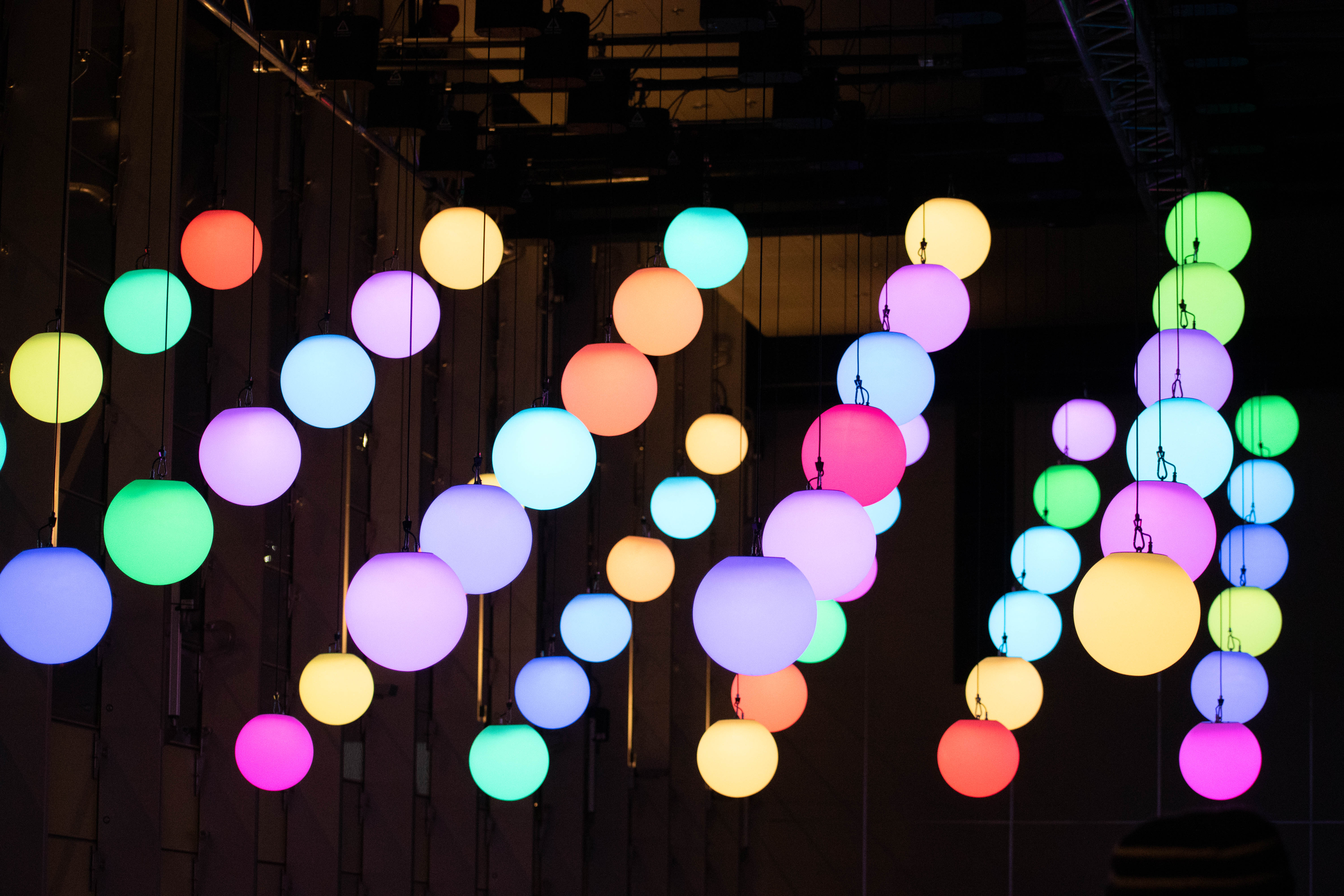
The light display in the cruise ship terminal
It was Saturday night, and one thing we wanted to do was experience a Sydney gay dance club. We got back to the AirBnB around 20:30, which gave us a couple of hours to rest up and get ready to go out. Todd and I both took short naps, hoping to get some energy ahead of what was sure to be a late night. We started getting ready around 22:30, and left the AirBnB for the club just after 23:00. We arrived at our destination, ARQ shortly after 23:15. The cover was fairly expensive ($25 AUD), and when we got inside the club was fairly empty. It was a two level setup similar to Fly in Toronto, with the bar and dance floor on the first level, and a second level that was mostly open to the first floor where people could sit down and look out onto the dance floor. We grabbed a drink ($9.50 AUD for a mixed drink) and sat down, hoping that things would start filling in. The music was a pretty good house mix, and shortly before midnight the crowd started to grow and it felt more like a dance club. Lesson learned - don’t show up before midnight. One thing that ARQ did really well that stood out was their laser light show - it was really elaborate; they had just the right amount of fog that allowed the lasers to be on full display without making the air unbreathable, and it was well timed to the music. Their machines were capable of mixing four colours at the same time, which was something I hadn’t seen before. We had a great time dancing until 1:30 in the morning, which was when we called it a night and returned back to the AirBnB for a well-earned sleep.
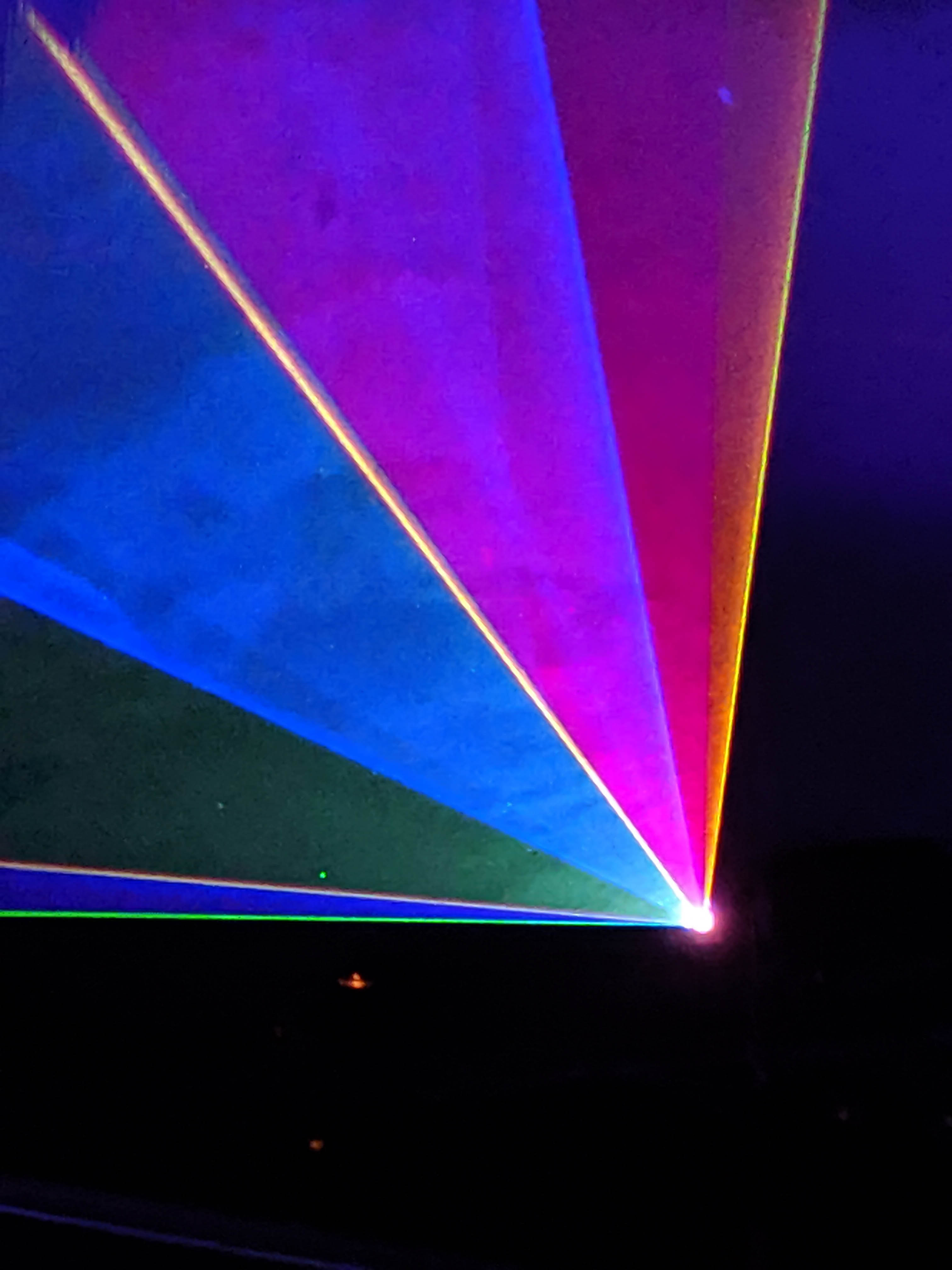
A laser light in ARQ
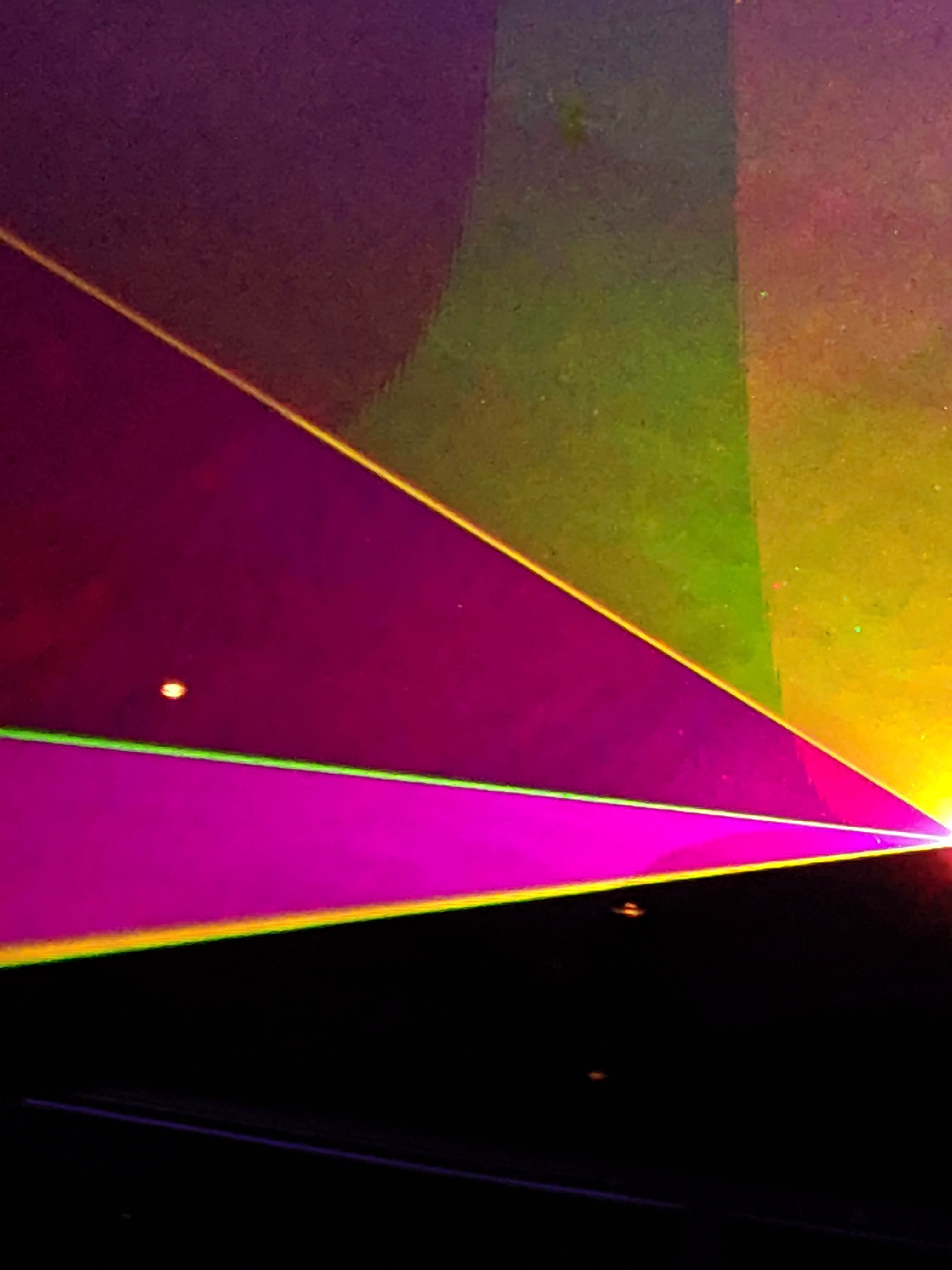
Another laser light in ARQ